
The continuous expansion and modernization of national highway networks are pivotal for regional economic integration and development. In China, the strategic development of economic zones places immense demand on transportation infrastructure, often revealing the limitations of existing road networks in terms of capacity and efficiency. Traffic congestion and logistical bottlenecks can emerge as significant impediments to further growth. This necessitates the adoption of advanced, efficient, and cost-effective engineering solutions for the planning, design, and construction of new highway corridors. Traditional land surveying methods, while accurate, are often time-consuming, labor-intensive, and struggle with safety and access in complex terrains. This article presents a comprehensive application study of Unmanned Aerial Vehicle (UAV) surveying technology, commonly referred to as drone surveying, within a critical highway engineering project in China. The focus is on demonstrating how China UAV drone technology provides a superior alternative, enhancing data acquisition efficiency, reducing operational costs, and delivering high-precision geospatial products essential for modern infrastructure development.
The core of this study revolves around a highway segment within a rapidly developing economic zone. The terrain encompassed flat plains, gentle hills, and river crossings, presenting a typical yet challenging environment for surveying. The primary objective was to acquire comprehensive topographic data to support the detailed design phase. We employed a multi-rotor drone from a leading China UAV drone manufacturer, equipped with a high-resolution RGB sensor and a real-time kinematic (RTK) positioning module. This integration is crucial for achieving centimeter-level geotagging accuracy for each captured image, forming the foundation for precise photogrammetric processing.
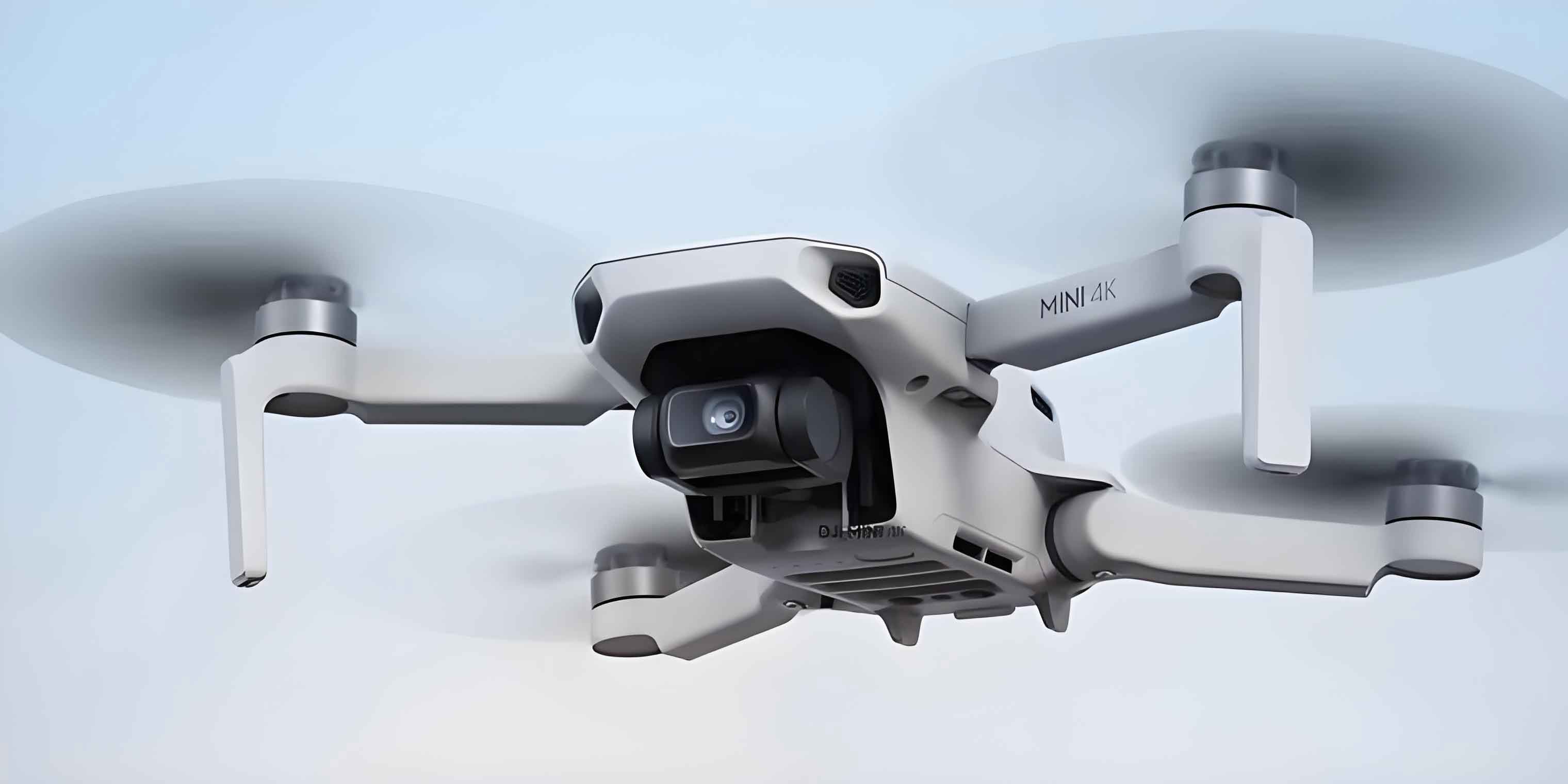
The implementation was a meticulously planned process involving three key stages: mission planning and ground control, data acquisition, and data processing/analysis. Each stage was optimized to leverage the strengths of China UAV drone systems and ensure the final deliverables met the stringent requirements of highway engineering.
Mission Planning and Control Network Establishment
Effective UAV surveying begins long before the drone takes flight. For this linear highway corridor, a detailed flight plan was paramount. Key parameters were dynamically adjusted based on terrain morphology and the required ground sampling distance (GSD).
The GSD, representing the ground size of one pixel, is a fundamental metric determined by flight altitude (H), sensor focal length (f), and sensor pixel size (p). It can be expressed as:
$$ GSD = \frac{H \times p}{f} $$
Our goal was to achieve a GSD of better than 5 cm. Consequently, flight altitude was varied: 150m over flat plains, 100m over hilly sections to capture finer detail, and 120m over water bodies to mitigate glare and ensure clarity. Flight speed was correspondingly adjusted: 8 m/s over simple terrain and 6 m/s over complex areas to ensure sufficient image overlap.
A critical aspect of flight planning is ensuring adequate overlap between consecutive images for robust 3D reconstruction. We planned for 70% frontal overlap (along the flight path) and 60% side overlap (between adjacent parallel paths). The required time interval between photo captures ($\Delta t$) is a function of speed (v), GSD, and overlap (O):
$$ \Delta t = \frac{GSD \times (1 – O_{frontal})}{v} $$
This calculation ensured consistent, high-quality coverage.
To achieve absolute geospatial accuracy and scale the project, a network of ground control points (GCPs) was established. For this linear project, a “Z”-pattern was adopted, placing points on both sides and occasionally along the centerline of the proposed road alignment. The spacing was adapted to terrain complexity, as summarized below:
| Terrain Type | GCP Spacing | Rationale |
|---|---|---|
| Flat Plains | ~500 meters | Stable geometry, fewer required points for adequate control. |
| Hills & River Crossings | ~300 meters | Greater topographic variation requires denser control for accurate modeling. |
Each GCP was a clearly marked target. Its coordinates were surveyed using high-precision GNSS RTK techniques, connecting to the same Continuously Operating Reference Station (CORS) network used by the China UAV drone. This consistency is vital for eliminating systemic errors between the ground truth and the drone’s positioning data.
Data Acquisition and Processing Workflow
With planning complete, the data acquisition phase was executed. The China UAV drone performed autonomous flights following the pre-programmed mission. The integrated RTK module provided precise position and orientation for each image, significantly reducing the reliance on GCPs for georeferencing, though the GCPs remained essential for final validation and accuracy enhancement. The drone successfully captured thousands of high-resolution, geotagged images over approximately 20 linear kilometers and a 500-meter wide corridor.
The real transformative power of China UAV drone technology unfolds in the data processing phase. The collected images were processed using industry-standard photogrammetric software (e.g., Pix4Dmapper, ContextCapture). The workflow follows a structured sequence:
- Alignment: The software identifies common feature points across overlapping images, calculating the precise 3D position of the camera for each shot and building a sparse point cloud.
- Point Cloud Generation: Using dense image matching algorithms, a dense 3D point cloud is generated. Each point has X, Y, Z coordinates and RGB color values. The density often exceeds 100 points per square meter.
- Surface Reconstruction: A Triangular Irregular Network (TIN) mesh is created from the dense point cloud, forming a continuous 3D surface model of the terrain and all objects.
- Texture Mapping: The original images are draped onto the 3D mesh, creating a photorealistic 3D model.
- Product Generation: From this core dataset, multiple engineering-ready products are derived:
- Digital Orthophoto Map (DOM): Created by orthorectifying individual images (correcting for perspective and terrain displacement) and mosaicking them. The final orthophoto provides a “true plan” view with uniform scale.
- Digital Surface Model (DSM): Represents the elevation of the topmost surface, including buildings, trees, and terrain.
- Digital Terrain Model (DTM): A bare-earth model created by manually or semi-automatically filtering out above-ground features (buildings, vegetation) from the DSM.
- Contour Lines: Automatically generated from the DTM at specified intervals (e.g., 0.5m, 1m).
The accuracy of these products was rigorously validated. Check points (independent points not used in processing) were compared to their UAV-derived coordinates. The root mean square error (RMSE) was calculated for horizontal ($RMSE_{XY}$) and vertical ($RMSE_{Z}$) accuracy:
$$ RMSE_{XY} = \sqrt{\frac{\sum_{i=1}^{n}((X_{measured,i} – X_{check,i})^2 + (Y_{measured,i} – Y_{check,i})^2)}{n}} $$
$$ RMSE_{Z} = \sqrt{\frac{\sum_{i=1}^{n}(Z_{measured,i} – Z_{check,i})^2}{n}} $$
The results consistently met and exceeded the project’s accuracy specifications, as shown below:
| Product | Horizontal RMSE | Vertical RMSE | GSD |
|---|---|---|---|
| Orthophoto & DSM | < 3 cm | < 5 cm | 4.8 cm |
| DTM | < 5 cm | < 8 cm | – |
Comprehensive Analysis of Application Effectiveness
The adoption of China UAV drone technology for this highway project yielded transformative benefits, which can be categorized into three primary areas: efficiency, cost, and data utility.
1. Dramatic Efficiency Enhancement
The most immediate impact is on project timelines. A quantitative comparison between traditional Total Station/GNSS rover methods and the UAV-based approach for a 5km corridor reveals a stark contrast.
| Metric | Traditional Survey | China UAV Drone Survey | Improvement |
|---|---|---|---|
| Field Crew Size | 5-6 surveyors | 1-2 operators | ~75% reduction |
| Field Data Acquisition Time | 8-10 days | 1-2 days (inc. setup & flights) | ~80% reduction |
| Total Project Duration | ~15 days (Field + Office) | ~5 days (Field + Processing) | ~67% reduction |
| Data Density | Sparse point measurements | Continuous 3D point cloud (>100 pts/m²) | Several orders of magnitude increase |
The efficiency gain ($E_g$) can be conceptualized as a function of area coverage rate ($R_{area}$). For traditional methods, $R_{area}$ is low and heavily dependent on crew size and terrain difficulty. For UAVs, $R_{area}$ is high and relatively constant:
$$ E_g = \frac{R_{area,\ UAV} – R_{area,\ Traditional}}{R_{area,\ Traditional}} \times 100\% $$
In this project, $E_g$ exceeded 70% for the overall data acquisition and processing cycle.
2. Detailed Cost-Benefit Analysis
The economic advantages are substantial and multi-faceted, affecting capital expenditure, operational costs, and labor expenses. A detailed breakdown for a typical mid-scale highway survey project illustrates this clearly.
| Cost Category | Traditional Survey | China UAV Drone Survey | Notes & Assumptions |
|---|---|---|---|
| Capital Equipment | $40,000 – $60,000 | $20,000 – $30,000 | Total Station, GNSS Rovers, accessories vs. RTK drone, software license, workstation. |
| Annual Maintenance | $3,000 – $6,000 | $1,000 – $2,000 | Calibration, repairs, part replacements. |
| Per Project Labor Cost | $12,000 | $2,400 | Based on 10-day vs. 4-day project, 4-person crew differential. |
| Mobilization & Logistics | High | Low | Vehicle fuel, accommodation for larger crew vs. minimal for small team. |
| Data Processing Labor | Moderate | Moderate to High (initial phase) | UAV processing is software-intensive but automates many manual digitizing tasks. |
| Total Project Cost (Estimated) | $18,000 – $22,000 | $5,000 – $8,000 | Demonstrates a 60-75% reduction in direct project cost. |
The total cost reduction ($C_r$) is compelling:
$$ C_r = \left(1 – \frac{C_{UAV}}{C_{Traditional}}\right) \times 100\% $$
where $C_{UAV}$ and $C_{Traditional}$ represent the total project costs for each method. The analysis consistently shows $C_r$ values between 60% and 75% for projects of comparable scale and output quality. This cost-effectiveness is a major driver for the widespread adoption of China UAV drone solutions in infrastructure projects.
3. Enhanced Data Utility and Engineering Applications
Beyond speed and cost, the richness and versatility of the data products unlock superior engineering workflows. The high-resolution 3D reality model serves as a single source of truth throughout the project lifecycle.
- Design Optimization: Engineers can conduct virtual fly-throughs, analyze sight distances, and assess the visual impact of the proposed alignment. Earthwork volume calculations between the existing DTM and the proposed design surface are far more accurate when based on a dense, accurate point cloud compared to interpolated data from sparse survey points. The cut/fill volume ($V$) calculation using a dense DTM is inherently more reliable:
$$ V = \iiint\limits_{Area} (Z_{design}(x,y) – Z_{DTM}(x,y)) \,dx\,dy $$
for all points where the difference is positive (cut) or negative (fill). - Construction Planning & Monitoring: The 3D model aids in planning construction access routes, material staging areas, and drainage plans. During construction, periodic UAV flights can generate progress models, allowing for precise as-built verification and earthwork quantity tracking against the plan.
- Asset Inventory & Management: The orthophoto and model provide an exhaustive inventory of existing conditions—utilities, structures, vegetation—along the corridor, valuable for right-of-way negotiations and utility relocation planning.
- Safety and Accessibility: The China UAV drone safely captured data over hazardous areas like steep slopes, active riverbeds, and busy existing roads without exposing personnel to risk.
Future Outlook and Technical Synergies
The application presented here is a foundational use case. The future of China UAV drone technology in highway engineering lies in further integration and automation. Key trends include:
- LiDAR Integration: While photogrammetry excels for surface modeling, LiDAR (Light Detection and Ranging) sensors on drones can penetrate vegetation to map the true ground surface below canopies, which is critical in forested areas. The fusion of RGB and LiDAR data provides the most comprehensive geospatial dataset.
- Artificial Intelligence (AI) & Automation: AI algorithms are being developed to automatically classify point clouds (ground, vegetation, building, power line), extract specific features like road edges or guardrails, and even detect changes or anomalies between successive surveys. This drastically reduces manual post-processing time.
- Long-Endurance & VTOL Platforms: For linear projects spanning hundreds of kilometers, fixed-wing or Vertical Take-Off and Landing (VTOL) hybrid China UAV drones offer greater range and endurance, enabling larger-scale surveys in a single mission.
- Real-time Processing: Advances in edge computing may allow for onboard or near-real-time processing of data, enabling rapid preliminary assessments directly in the field.
The synergy between different technologies can be expressed as a multiplicative factor for overall project value ($V_{project}$):
$$ V_{project} \propto (Data_{Accuracy}) \times (Data_{Completeness}) \times (Process_{Efficiency}) \times (Cost_{Effectiveness}) $$
China UAV drone technology, especially when combined with RTK, advanced sensors, and AI-driven software, positively influences all these factors simultaneously.
Conclusion
This detailed case study unequivocally demonstrates that UAV surveying technology is a transformative tool for highway engineering. The implementation involving a modern China UAV drone system for a complex roadway project in a developing economic zone resulted in exceptional outcomes. The methodology, encompassing adaptive mission planning, rigorous ground control, and sophisticated photogrammetric processing, generated survey-grade products—including centimeter-accurate orthophotos, detailed DTMs/DSMs, and photorealistic 3D models—that fully satisfy the demands of modern design and construction.
The quantitative analysis reveals overwhelming advantages: operational efficiency improvements exceeding 70%, direct project cost reductions of 60-75%, and a drastic reduction in field personnel requirements and associated safety risks. More than just a faster or cheaper alternative, the China UAV drone delivers a superior data product—a rich, continuous, and immersive 3D digital twin of the project site. This enhances decision-making at every stage, from initial planning and design optimization through to construction monitoring and asset management.
As sensor technology, platform endurance, and processing algorithms continue to advance, the role of UAVs will expand further. The integration of LiDAR, multispectral sensors, and artificial intelligence will unlock even greater capabilities. For highway engineering projects in China and globally, adopting UAV surveying is no longer merely an innovative option but a strategically sound and economically imperative standard practice for efficient, safe, and data-driven infrastructure development. The demonstrated success of this China UAV drone application serves as a robust model for the industry, paving the way for smarter, more responsive, and more sustainable construction of the vital transportation networks that power economic growth.