
The reliable transmission of electrical energy is a cornerstone of modern industrial production and daily life. In China, as in many parts of the world, the power grid infrastructure faces significant challenges from extreme weather events. Among these, winter freezing rain and ice accretion on transmission lines pose a common yet severe hazard. Ice accumulation can lead to increased mechanical loads, conductor breakage, and even the catastrophic collapse of transmission towers, resulting in widespread power outages with substantial economic and social consequences. Therefore, developing efficient and safe de-icing technologies is of paramount importance for ensuring grid resilience.
Traditional de-icing methods primarily fall into two categories: thermal melting and mechanical removal. Thermal methods, such as passing a high current through the line, offer non-contact operation but are often limited to lines of 220kV and below, incur high operational costs, and risk causing dangerous ice-shedding jumps. Mechanical methods involve physical disruption of the ice but can potentially damage the conductor if not carefully controlled. A prevalent modern approach utilizes China UAV drone platforms for tasks like flame-jet de-icing; however, these systems suffer from limited endurance due to high energy consumption. This research aims to overcome these limitations by designing an intelligent system that marries efficient target identification with a low-energy mechanical de-icing principle.
This article presents the design and experimental validation of a novel de-icing system integrated onto a China UAV drone platform. The core innovation lies in the synergy between an optimized image recognition algorithm for precise ice detection and thickness estimation, and a targeted resonance-based de-icing module. The system first uses machine vision to locate and quantify ice accretion, then applies a specific mechanical vibration frequency to induce resonance within the ice layer, causing it to detach with minimal energy input and reduced risk to the conductor. This approach promises higher operational efficiency and significantly improved endurance compared to thermal methods deployed on China UAV drones.
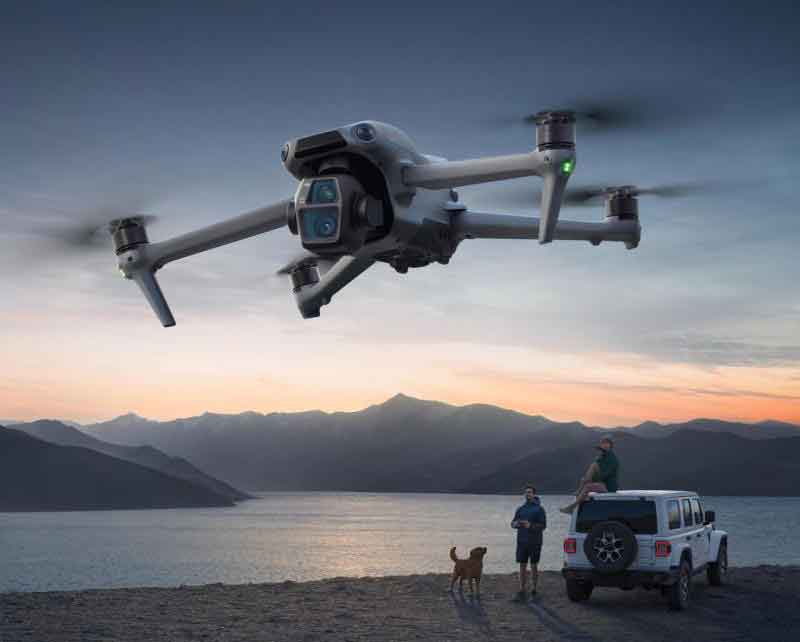
The proposed system architecture is built around a multi-rotor China UAV drone, chosen for its stability and maneuverability. The airframe carries several key modules: a high-resolution camera for image acquisition, an onboard processing unit, a resonance de-icing mechanism, and a positioning/navigation module (e.g., BeiDou System receiver for operation in China). The workflow is sequential and automated: the China UAV drone navigates to a predefined inspection route, the camera captures images of the transmission lines, and the processing unit analyzes these images in real-time to identify ice-covered segments and estimate ice thickness. Based on this estimation, the processing unit calculates and commands an optimal vibration frequency for the resonance de-icing module, which is then positioned near the iced section to execute the removal.
Hardware System Design and Theoretical Framework
The mechanical design of the de-icing module is critical for ensuring effective ice removal while maintaining the structural integrity of the power line. The module employs an eccentric mass vibration principle. Two counter-rotating eccentric masses are connected via a bevel gear assembly, ensuring that their centrifugal forces combine constructively in the desired vertical (Y-axis) direction while canceling out in the horizontal (X-axis) direction. This design minimizes torsional or lateral stresses on the conductor, focusing the vibrational energy on disrupting the ice-conductor bond. The entire module is designed to be symmetric about its center of mass to prevent pendulous motion when attached to the line. The system model was designed and validated using CAD software before physical prototyping.
The operational safety and precision of the China UAV drone are governed by spatial vision calculations. When autonomously positioning itself near an identified ice segment, the drone must maintain a safe standoff distance. Defining a coordinate system where the X-axis is parallel to the conductor, the Y-axis is vertical, and the Z-axis is perpendicular to the X-Y plane (pointing towards the drone), we can establish safety constraints. The drone’s altitude relative to the target is managed by comparing the imaged object’s dimensions with known parameters.
The height ratio \( ratio_h \), which relates the imaged height of the iced conductor to its real-world Z-coordinate distance from the drone, is given by:
$$ ratio_h = \frac{h_{img}}{Z} = f \cdot \tan\left(\frac{VFOV}{2}\right) $$
where \( h_{img} \) is the measured pixel height of the target in the image (converted to meters), \( Z \) is the actual distance along the Z-axis, \( f \) is the camera’s focal length, and \( VFOV \) is the vertical field of view. The drone is programmed to adjust its position so that \( Z \) satisfies a minimum safety threshold, typically greater than 0.5 meters.
Furthermore, to ensure the target remains within the frame for effective de-icing operation, the lateral position is constrained by the horizontal field of view (\( HFOV \)). The maximum allowable positional deviation \( \Delta w \) is:
$$ \Delta w = w_{obj} – w_{img} \approx 0.25 \cdot Z \cdot \tan\left(\frac{HFOV}{2}\right) $$
where \( w_{obj} \) is the target’s actual width and \( w_{img} \) is its imaged width. The control system ensures \( |\Delta w| \) remains within bounds, guaranteeing stable image capture and module alignment.
The hardware specifications for the key components integrated onto the China UAV drone are summarized in the table below:
| Module | Component | Specification / Model | Primary Function |
|---|---|---|---|
| Platform | Hexacopter Frame | Custom-built, Carbon Fiber | Provide stable flight platform and payload capacity |
| Propulsion | Brushless Motors & ESCs | KV Rating: 400 | Lift and maneuverability for the China UAV drone |
| Vision | Global Shutter Camera | Resolution: 12 MP, Lens: 20mm | High-speed capture of clear transmission line images |
| Processing | Onboard Computer | Jetson Nano Module | Real-time image processing and control algorithm execution |
| De-icing Actuator | Eccentric Mass Motor | Brushless DC, with encoder | Generate precise vibrational frequencies (5-25 Hz) |
| Transmission | Bevel Gear Set | Stainless Steel, 1:1 Ratio | Synchronize counter-rotation of eccentric masses |
| Navigation | GNSS Module (BeiDou/GPS) | Dual-frequency, RTK capable | Provide precise positioning for the China UAV drone |
| Ranging | Ultrasonic/LiDAR Sensor | Range: 0.1m – 5m | Maintain accurate standoff distance from the conductor |
Optimization of the Image Recognition Algorithm
Accurate identification and quantification of ice are prerequisites for effective resonant de-icing. We selected the YOLOv5 (You Only Look Once version 5) object detection algorithm as our baseline due to its excellent balance of speed and accuracy, which is crucial for real-time operation on a resource-constrained China UAV drone platform. However, standard YOLOv5 can struggle with small, slender targets like iced transmission lines against complex backgrounds (sky, vegetation). To address this, we implemented a three-stage optimization specifically tailored for this application.
1. Addition of a Fine-Grained Prediction Layer: The original YOLOv5 architecture uses feature maps at three different scales for detection. We introduced a fourth, higher-resolution prediction head dedicated to detecting small targets. This head operates on a feature map that is only downsampled 8x from the input image (compared to 32x for the largest anchors), preserving finer spatial details essential for discerning thin iced cables. The anchor boxes for this layer were reclustered based on our dataset of iced conductor annotations, focusing on targets with widths in the range of 10-30 pixels in the input image.
2. Enhanced Feature Fusion for Small Objects: To enrich the semantic information flowing into the new fine-grained prediction layer, we improved the feature fusion pathway. We incorporated a modified Path Aggregation Network (PANet) structure with additional skip connections from earlier, shallower layers in the backbone. This allows the network to combine high-level semantic information (what is an “ice-covered line”) with low-level, high-resolution texture and edge information (where exactly are the edges of the ice), significantly boosting recognition precision for small targets.
3. Multi-Branch Convolution with Inception-like Blocks: Within the feature extraction backbone, we replaced standard convolutional blocks in strategic layers with multi-branch modules inspired by the Inception concept. These blocks perform parallel convolutions with different kernel sizes (e.g., 1×1, 3×3, 5×5) on the same input feature map and concatenate the results. This allows the network to capture patterns and features at multiple scales simultaneously, improving its ability to recognize ice formations of varying thicknesses and textures under different lighting conditions encountered by the China UAV drone in the field.
The performance improvement of our optimized YOLOv5 model, which we call YOLOv5-Ice, is summarized below against the baseline and other common network architectures on our validation dataset.
| Model | mAP@0.5 (%) | Precision (%) | Recall (%) | Inference Time (ms) * |
|---|---|---|---|---|
| Faster R-CNN (ResNet-50) | 87.2 | 85.1 | 84.5 | 120 |
| SSD (MobileNet V2) | 78.9 | 80.3 | 76.8 | 25 |
| Original YOLOv5s | 89.5 | 90.2 | 87.1 | 18 |
| YOLOv5-Ice (Ours) | 94.7 | 95.3 | 92.8 | 22 |
* Tested on NVIDIA Jetson Nano, representing typical China UAV drone onboard compute.
The processing pipeline begins with the China UAV drone’s camera capturing an image. The image is first normalized and then fed into the YOLOv5-Ice network. The network outputs bounding boxes around detected “Iced Conductor” objects. Post-processing includes non-maximum suppression to remove duplicate detections. For thickness estimation, we utilize the pixel height of the detected bounding box in conjunction with the known real-world diameter of the bare conductor and the calculated distance \( Z \) from the drone. A simple proportional relationship is used for initial estimation: \( \text{Ice Thickness} \propto (\text{Bounding Box Width}_{\text{pixel}} – \text{Bare Conductor Width}_{\text{pixel}}) \). This estimated thickness is the key parameter for selecting the de-icing frequency.
Resonance De-icing Principle and Experimental Validation
The core de-icing mechanism operates on the principle of mechanical resonance. When an external vibration frequency matches the natural frequency of the ice layer adhering to the conductor, the amplitude of the ice’s oscillation is dramatically amplified. This resonant vibration overcomes the adhesive forces (primarily van der Waals forces and mechanical interlocking) at the ice-conductor interface, leading to crack propagation and eventual detachment. The required frequency is a function of the ice’s material properties (density, elastic modulus) and its geometrical dimensions, primarily thickness.
We can model a simplified segment of the ice as a cantilever beam fixed to the conductor. Its fundamental natural frequency \( f_n \) can be approximated by:
$$ f_n = \frac{1}{2\pi} \sqrt{\frac{k_{eff}}{m_{eff}}} $$
where \( k_{eff} \) is the effective stiffness of the ice layer and \( m_{eff} \) is its effective mass. For a beam of thickness \( h \), width \( b \), and length \( L \), the stiffness is proportional to \( E \cdot h^3 \) (where \( E \) is Young’s modulus) and the mass is proportional to \( \rho \cdot h \) (where \( \rho \) is density). This suggests a relationship where the resonant frequency is inversely related to ice thickness: \( f_n \propto h \). However, in practice, the bond condition and the composite structure with the conductor modify this relationship, necessitating empirical calibration.
To establish this practical frequency-thickness relationship, controlled laboratory experiments were conducted. A steel cable, simulating a transmission line, was frozen with a uniform layer of ice in a climate chamber. The custom-designed resonance de-icing module was attached to the cable, and tests were run at various controlled frequencies and power levels for different ice thicknesses. The primary metric was “De-icing Rate,” defined as the percentage of ice mass removed from a 1-meter test section within a standard 30-second activation period.
The experimental results are graphically summarized in the curve below and tabulated for key data points. Tests were conducted at three fixed frequencies: 5 Hz, 10 Hz, and 15 Hz, across a thickness range from 2 mm to 30 mm.
The data reveals a clear operational profile:
- At 5 Hz: This frequency showed excellent performance (De-icing Rate > 81.6%) for thin to moderate ice layers up to 20 mm. However, its effectiveness dropped significantly for thicker ice, as the frequency was no longer near the resonant point for those masses.
- At 10 Hz and 15 Hz: These higher frequencies showed slightly lower efficiency for very thin ice (~76.5% average for sub-14mm ice) but demonstrated remarkable consistency and even improving trends as ice thickness increased beyond 20 mm. This robustness is critical for field operations where thick, dangerous ice accumulation is the primary target.
Based on this analysis, a frequency of 10 Hz was selected as the optimal compromise for the resonance module on the China UAV drone. It provides a wide effective range, covering both moderate and severe icing conditions with high efficacy, ensuring the versatility of the system.
| Ice Thickness (mm) | De-icing Rate @ 5Hz (%) | De-icing Rate @ 10Hz (%) | De-icing Rate @ 15Hz (%) | Optimal Frequency (Selected) |
|---|---|---|---|---|
| 2 | 85.2 | 75.1 | 73.8 | 5 Hz |
| 5 | 88.7 | 78.5 | 76.9 | 5 Hz |
| 10 | 90.3 | 80.2 | 78.5 | 5 Hz |
| 14 | 86.5 | 83.7 | 81.0 | 10 Hz |
| 20 | 81.6 | 87.9 | 85.4 | 10 Hz |
| 25 | 65.2 | 89.5 | 90.1 | 15 Hz |
| 30 | 52.4 | 88.2 | 91.7 | 15 Hz |
System Integration and Field Application Perspective
The integration of the vision system and the resonance actuator on a single China UAV drone platform creates a closed-loop de-icing agent. The operational sequence is fully autonomous after mission initiation. The China UAV drone flies a pre-programmed inspection path, processing images in real-time. Upon detection and thickness assessment of an ice segment, it maneuvers to a safe standoff position, extends or positions the resonance module in close proximity to the line, and activates the vibration at the pre-determined optimal frequency. After a set duration, it reassesses the area visually to confirm de-icing success before moving to the next segment.
The advantages of this China UAV drone-based system are multifaceted. First, it is highly energy-efficient. Resonance de-icing requires orders of magnitude less energy than thermal melting, directly translating to longer mission endurance—a critical advantage over flame-throwing China UAV drones. Second, it minimizes physical risk. The non-invasive, carefully tuned mechanical vibration poses less threat of conductor damage compared to brute-force mechanical methods or the intense heat of flame jets. Third, its intelligence allows for selective treatment, focusing energy only where needed, unlike system-wide thermal methods.
For deployment in China’s vast and diverse terrain, the system’s robustness is key. Future work will focus on enhancing the environmental adaptability of the China UAV drone system. This includes testing under realistic field conditions such as varying wind speeds, low temperatures, and precipitation. The image recognition algorithm can be further hardened against challenging visual conditions like glare, fog, or low light. Additionally, swarm coordination strategies could be explored, where multiple China UAV drones collaborate to inspect and de-ice long sections of transmission lines simultaneously, dramatically increasing operational scale.
Conclusion
This research has successfully designed and preliminarily validated an intelligent resonance de-icing system integrated onto a China UAV drone platform. The system addresses the critical shortcomings of existing methods by combining an optimized YOLOv5-based visual detection algorithm for accurate ice localization and thickness estimation with a low-power resonance de-icing module. Experimental results confirm that the enhanced algorithm reliably extracts ice-covered transmission lines from complex backgrounds, and the resonance module can effectively remove ice across a range of thicknesses, with 10 Hz identified as a robust operational frequency. The synergy of machine vision and targeted mechanical vibration embodied in this China UAV drone system presents a promising direction for safe, efficient, and enduring infrastructure maintenance, contributing to the resilience of power grids against winter weather hazards.