
We present a comprehensive study on the application of UAV drone remote sensing technology for geomorphological landscape monitoring, with particular emphasis on multispectral data acquisition and analysis. Our work demonstrates how UAV drone platforms equipped with advanced multispectral sensors enable efficient, high-resolution monitoring of terrain features, vegetation dynamics, and land-use changes across large spatial extents. The integration of UAV drone mobility with spectral imaging capabilities provides a transformative approach to environmental surveillance, offering centimeter-level spatial resolution combined with multi-dimensional data richness.
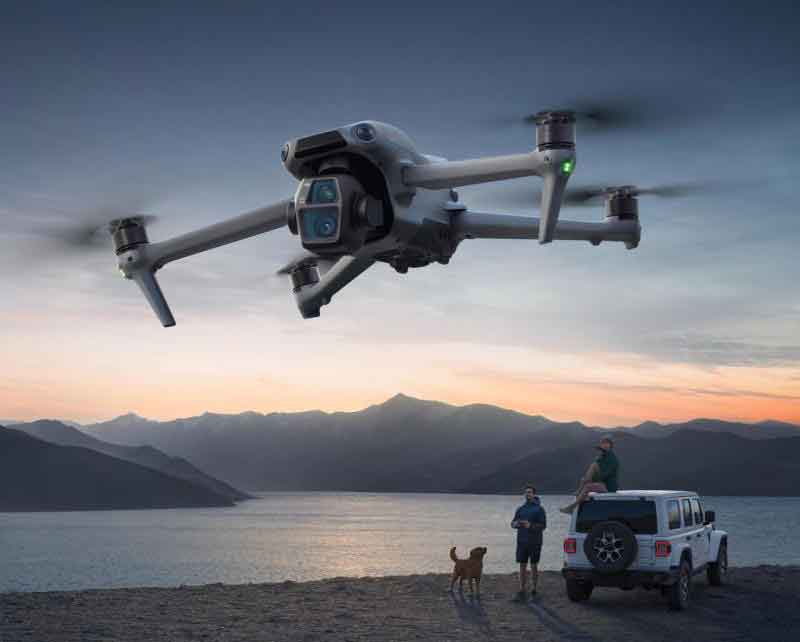
Introduction to UAV Drone Remote Sensing in Geomorphology
Mineral resources serve as essential material foundations for economic and social development. The exploration and exploitation of these resources are critically linked to national welfare and security. With the commencement of a new round of strategic mineral exploration initiatives in our country, the extraction and utilization of mineral resources have generated substantial economic and social benefits while simultaneously introducing a series of ecological and environmental challenges in affected regions. In this context, the rapid and accurate acquisition of geomorphological landscape status information, coupled with timely geological environment monitoring, has become increasingly significant.
In recent years, UAV drone remote sensing technology has emerged as a powerful tool in this domain, offering unique advantages such as operational flexibility, high-resolution imaging capabilities, and relatively low deployment costs. These characteristics have created new opportunities for surveying and mapping engineering, substantially enhancing both the quality and efficiency of geomorphological monitoring work while advancing the field toward智能化 (intelligent) and精细化 (precise) development directions.
The application of UAV drone remote sensing technology to geomorphological landscape monitoring has effectively overcome the limitations inherent in traditional monitoring approaches. Our UAV drone systems can conduct comprehensive, multi-angle observations within short timeframes, dramatically improving both the efficiency and accuracy of terrain monitoring operations. Therefore, further investigation and enhancement of UAV drone remote sensing applications in geomorphological landscape monitoring carry significant implications for strengthening geological environmental surveillance capabilities.
Traditional geomorphological landscape monitoring methods primarily rely on manual surveying techniques and satellite remote sensing. The UAV drone multispectral monitoring approach we have developed surpasses conventional methods in terms of efficiency, precision, cost-effectiveness, and data dimensionality. The principal advantages of UAV drone remote sensing technology can be summarized as follows.
Technical Advantages of UAV Drone Platforms
Extensive Coverage with High Spatial Resolution
Traditional manual monitoring methods employing total stations and GPS-RTK equipment for data collection suffer from limited spatial coverage, extended operational cycles, and delayed data updates. Satellite remote sensing, conversely, remains susceptible to cloud interference, offers insufficient spatial resolution, and is constrained by lengthy revisit periods. Compared with these approaches, the UAV drone remote sensing monitoring technology we have implemented provides extensive coverage, high spatial resolution, and real-time target monitoring capabilities, demonstrating broad application prospects in geological surveillance applications.
Multi-Dimensional Data Acquisition
Manual surveying primarily depends on测绘 (surveying) instruments such as total stations and GNSS receivers, which can only capture point coordinates and elevation data without reflecting surface cover types, resulting in limited data dimensionality. Our UAV drone remote sensing approach overcomes this limitation by搭载 (mounting) multiple sensor types, enabling simultaneous acquisition of high-resolution imagery, spectral reflectance data, three-dimensional point clouds, and surface temperature measurements. These data types complement one another across spatial (centimeter-level precision), temporal (high-frequency monitoring), spectral (multi-band analysis), and three-dimensional (terrain modeling) dimensions, providing multi-category data support for complex geological environment monitoring.
Multispectral Analysis Capabilities
Through multi-band data processing, we can generate specialized thematic maps such as NDVI (Normalized Difference Vegetation Index), enabling quantitative analysis of ecological parameters including vegetation coverage rates and vegetation types. This capability provides scientific evidence for ecological restoration planning and assessment. Compared with traditional monitoring technologies, our UAV drone multispectral remote sensing approach demonstrates significant advantages including efficient large-area coverage, high-resolution precision monitoring, dynamic real-time observation, and comprehensive multispectral analysis, establishing it as an essential technical methodology for geomorphological monitoring research.
Technical Principles and Methodological Framework
Fundamental Principles of UAV Drone Multispectral Remote Sensing
The UAV drone multispectral remote sensing technology we employ operates by mounting multispectral sensors on UAV drone platforms to precisely acquire反射 (reflection) or辐射 (radiation) information from surface objects across different electromagnetic spectrum bands. This data enables subsequent analysis of object properties, status conditions, and temporal changes. The core principles can be summarized in the following aspects.
Spectral Response Mechanisms
Different surface objects exhibit unique spectral reflection characteristics. For example, vegetation demonstrates strong absorption in the visible spectrum band (particularly red light) while showing high reflection in the near-infrared band. This “spectral fingerprint” effect serves as the physical foundation for classification and identification tasks.
Multi-Band Coordinated Acquisition
Our remote sensing system synchronously acquires surface辐射 (radiation) information through 4 to 10 discrete spectral channels (typically including blue, green, red, red-edge, and near-infrared bands), with each band capturing specific object feature responses.
Quantitative Processing Workflow
Raw data undergoes辐射校正 (radiometric correction) to eliminate sensor noise and illumination effects, followed by几何校正 (geometric correction), transforming the data into physically meaningful reflectance values that provide the foundation for subsequent quantitative analysis.
Information Extraction Methodologies
We employ spectral indices such as NDVI along with intelligent algorithms to convert spectral features into object parameters including leaf area index and moisture content, achieving precise classification and change detection capabilities.
UAV Drone Multispectral System Architecture
UAV Drone Flight Platforms
The selection of appropriate UAV drone platforms requires consideration of multiple factors including payload capacity, flight endurance, stability characteristics, and positioning accuracy. The primary UAV drone types we utilize are described below.
| UAV Drone Type | Key Characteristics | Typical Applications |
|---|---|---|
| Fixed-wing UAV drone | Extended endurance (1-2 hours), large coverage area (up to 500+ hectares per flight) | Regional-scale monitoring |
| Multi-rotor UAV drone | Flexible takeoff/landing, strong hovering capability | Small-area high-resolution monitoring |
| VTOL (Vertical Takeoff and Landing) UAV drone | Combines fixed-wing and multi-rotor advantages, 60-90 minute endurance | Medium-scale regional monitoring |
Multispectral Sensor Systems
Multispectral sensors represent the core component of remote sensing monitoring systems. These sensors are classified into airborne (UAV drone-mounted) and spaceborne (satellite-based) categories. The selection of multispectral remote sensing monitoring equipment requires comprehensive consideration of monitoring targets (such as vegetation, water bodies, or soil), spatial resolution requirements, and budget constraints. The airborne sensors we employ include general-purpose multispectral cameras with multiple channels and selectable wavelengths, providing flexibility across different monitoring scenarios.
| Sensor Parameter | Specification Description |
|---|---|
| Spectral channels | 4-6 discrete channels (blue, green, red, red-edge, NIR) |
| Wavelength range | 400-900 nm (visible to near-infrared) |
| Spatial resolution | Centimeter-level (dependent on flight altitude) |
| Radiometric resolution | 12-bit or higher |
| Solar irradiance sensor | Integrated for high-precision radiometric correction |
Image Processing Software Suite
The multispectral remote sensing image processing software landscape encompasses numerous options covering the complete workflow from data preprocessing and radiometric correction to advanced analysis and visualization. The software tools we utilize are optimized for specific UAV drone platforms and enable rapid generation of vegetation indices including NDVI and NDRE (Normalized Difference Red Edge).
Technical Workflow for UAV Drone Remote Sensing
The technical workflow we have developed for UAV drone remote sensing-based geomorphological monitoring follows a systematic sequence of operations. This workflow begins with field reconnaissance and progresses through data acquisition, preprocessing, analysis, and final output generation.
Field Reconnaissance and Survey Planning
Prior to UAV drone flight operations, we conduct comprehensive field reconnaissance including:
- Survey area environmental assessment
- Terrain feature investigation
- Surface object identification and documentation
UAV Drone Flight Data Acquisition
Based on the reconnaissance findings, we develop optimized flight plans and execute UAV drone flight operations for multispectral data collection. The flight parameters we employ for typical monitoring missions are summarized in the following table.
| Parameter Name | Parameter Value |
|---|---|
| UAV drone platform | VTOL fixed-wing UAV drone |
| Multispectral sensor | 6-channel multispectral camera |
| Survey location | Mining area |
| Forward overlap ratio | 80% |
| Side overlap ratio | 70% |
| Flight velocity | 6.8 m/s |
| Flight altitude | 430 m |
| Flight sorties | 1 |
| Flight duration | 80 minutes |
| Ground sampling distance | 30 cm |
Data Preprocessing Pipeline
Following data acquisition, we implement a rigorous preprocessing pipeline. The raw multispectral imagery undergoes several processing stages. Initially, we apply GPS data to perform aerial triangulation using specialized photogrammetric software. This process enables automatic matching and generation of Digital Elevation Models (DEM). Using the aerial triangulation results and DEM data, we orthorectify individual image scenes and apply color balancing and mosaic processing to generate Digital Orthophoto Map (DOM) products. The resulting DOM data are then registered to the national coordinate system through polynomial-based geometric correction, yielding temporally consistent DOM products for subsequent analysis.
Vegetation Index Calculation and Analysis
Based on the multispectral imagery, we compute various vegetation indices to characterize vegetation status and spatial distribution. The most fundamental and widely applied index is the Normalized Difference Vegetation Index (NDVI), defined as:
$$NDVI = \frac{NIR – Red}{NIR + Red}$$
Where NIR represents the reflectance in the near-infrared spectral band and Red represents the reflectance in the red spectral band. NDVI values range from -1 to 1, with higher values indicating greater vegetation vigor and coverage density.
Additional spectral indices we commonly employ include:
The Normalized Difference Water Index (NDWI) for surface water identification:
$$NDWI = \frac{Green – NIR}{Green + NIR}$$
And the Normalized Difference Red Edge Index (NDRE) for vegetation stress assessment:
$$NDRE = \frac{NIR – RedEdge}{NIR + RedEdge}$$
Based on NDVI numerical ranges, we classify vegetation coverage into five distinct categories as shown in the following table.
| NDVI Range | Vegetation Coverage Class | Description |
|---|---|---|
| -1 to -0.5 | Severely non-vegetated | Non-vegetation surface (bare ground or structures) |
| -0.5 to 0 | Non-vegetated | Non-vegetation surface (bare ground or structures) |
| 0 to 0.3 | Low vegetation coverage | Minimal vegetation presence on surface |
| 0.3 to 0.6 | Moderate vegetation coverage | Vegetation present with moderate growth status |
| 0.6 to 1 | High vegetation coverage | Dense vegetation with vigorous growth |
Land Cover Classification and Change Detection
Land Use Classification System
We established a land use classification system based on national standards and the actual land use conditions within our monitoring area. Through integrated remote sensing interpretation requirements, we defined six primary land use types: cultivated land, forest land, grassland, water bodies, residential areas, and unused land.
Remote Sensing Interpretation Key Establishment
The interpretation methods we employ combine manual visual interpretation with computer-based automated interpretation techniques. In practice, we utilize interpretation keys including size, shape, shadow, color, texture, and pattern characteristics. Through comprehensive organization of relevant data and integration of UAV drone aerial photogrammetry measurements, we conducted visual interpretation of remote sensing imagery to establish land use type interpretation keys for the monitoring area.
| Land Type | Spectral Characteristics | Textural Features |
|---|---|---|
| Dry cropland | Variable tones: light green, light gray, light yellow (spring); red or light red (summer); brown (post-harvest) | Rough texture with strip patterns, visible field boundaries and shelter forest networks |
| Forest land | Deep red, dark red with uniform tone | Fluffy texture with natural boundaries |
| Shrub land | Light red with uniform tone | Relatively rough texture |
| High-coverage grassland | Light red with uniform tone | Uniform structure, clear boundaries, no visible texture |
| Moderate-coverage grassland | Yellow, brown, green, or white tones | Relatively rough structure |
| Water bodies | Dark blue, blue, light blue tones | Uniform structure with clear, often人工 (artificial) boundaries |
| Built-up land | Gray or uneven tones | Rough structure with clear boundaries |
| Bare land | Dark gray with uniform tone, flat terrain without vegetation | Relatively uniform appearance |
Land Use Change Detection Methodology
We employed a human-computer interactive approach to compare and analyze image variations between two temporal periods. This analysis integrated mining area development status data and relevant documentation for preliminary interpretation. Field verification through野外实地调查 (field surveys) was conducted to validate interpretation results, followed by detailed修正 (correction) and refinement of interpretation outcomes.
Using remote sensing image processing software, we applied supervised and unsupervised classification methods for preliminary identification and determination of change information. Through the human-computer interactive mode, we performed comprehensive analysis and interpretation of change information before finalizing various feature class boundary information.
The mining environmental information we extracted includes:
- Mining point locations and extraction status (active or abandoned)
- Mineral type and extraction methods
- Transfer sites (ore stockpiles, processing plants, tailings ponds)
- Solid waste deposits (waste dumps, land occupation, land degradation extent)
- Vegetation damage assessment
- Land reclamation areas and environmental remediation工程 (engineering) distribution
Quantitative Land Use Change Analysis
Classification Accuracy Assessment
We evaluated the accuracy of our object-oriented classification results by overlaying the two-period land use classification maps with preprocessed remote sensing imagery. Through visual interpretation, we randomly selected 64 validation samples within the monitoring area for each period. Based on professional expertise, we constructed confusion matrices comparing classification results with validation samples. The overall classification accuracies achieved through our object-oriented approach were 91.94% for 2022 and 90.62% for 2023, with corresponding Kappa coefficients of 0.899 and 0.863 respectively.
The Kappa coefficient is calculated as:
$$\kappa = \frac{P_o – P_e}{1 – P_e}$$
Where \(P_o\) represents the observed agreement (overall accuracy) and \(P_e\) represents the expected agreement by chance. The high Kappa values obtained confirm that our object-oriented land use extraction based on high-resolution remote sensing imagery achieves results suitable for practical application requirements and monitoring objectives.
The overall accuracy is calculated as:
$$OA = \frac{\sum_{i=1}^{k} n_{ii}}{N}$$
Where \(n_{ii}\) represents the number of correctly classified samples in class i, N represents the total number of validation samples, and k represents the number of classes.
Land Use Area Statistics
We conducted a comprehensive statistical analysis of land use areas within the mining region for the years 2022 and 2023. The results are presented in the following table.
| Land Type | 2022 Area (ha) | 2023 Area (ha) | Change (ha) | Change (%) |
|---|---|---|---|---|
| High-coverage grassland | 427.98 | 434.48 | +6.50 | +1.52% |
| Shrub land | 35.58 | 18.46 | -17.12 | -48.12% |
| Dry cropland | 60.96 | 85.58 | +24.62 | +40.39% |
| Bare land | 24.30 | 26.31 | +2.01 | +8.27% |
| Built-up land | 19.65 | 19.86 | +0.21 | +1.07% |
| Other forest land | 68.12 | 69.72 | +1.60 | +2.35% |
| Reservoir/pond | 4.86 | 4.89 | +0.03 | +0.62% |
| Forest land | 17.76 | 17.47 | -0.29 | -1.63% |
| Moderate-coverage grassland | 44.37 | 27.16 | -17.21 | -38.79% |
| River channel | 0.35 | 0.00 | -0.35 | -100.00% |
From the statistical analysis, we observed the following key trends during the period from 2022 to 2023. Dry cropland exhibited the largest increase in area, expanding by 24.62 hectares with a growth rate of 40.39%. High-coverage grassland also showed notable increase, gaining 6.50 hectares at a rate of 1.52%. Bare land, other forest land, built-up land, and reservoir/pond areas demonstrated relatively minor increases.
Conversely, moderate-coverage grassland experienced the greatest reduction, decreasing by 17.21 hectares with a decline rate of 38.79%. Shrub land decreased substantially by 17.12 hectares at a rate of 48.12%. Forest land showed a minor reduction of 0.29 hectares, while river channel area decreased completely.
Land Use Transition Matrix Analysis
Beyond examining the basic structural composition of land use types within the mining area, we investigated the mutual转化 (transformation) relationships between different land categories. The land use transition matrix we constructed reveals important dynamics in landscape change processes.
| 2022 \ 2023 (ha) | High grassland | Shrub | Cropland | Bare | Built-up | Forest | Water | Woodland | Moderate grassland | Total 2022 |
|---|---|---|---|---|---|---|---|---|---|---|
| High grassland | 413.10 | 0.00 | 11.63 | 2.93 | 0.03 | 0.06 | 0.00 | 0.00 | 0.23 | 427.98 |
| Shrub land | 12.94 | 18.46 | 0.00 | 0.28 | 0.00 | 3.24 | 0.00 | 0.00 | 0.66 | 35.58 |
| Dry cropland | 0.40 | 0.00 | 58.36 | 0.39 | 0.00 | 0.53 | 0.00 | 0.00 | 1.28 | 60.96 |
| River channel | 0.00 | 0.00 | 0.35 | 0.00 | 0.00 | 0.00 | 0.00 | 0.00 | 0.00 | 0.35 |
| Bare land | 0.40 | 0.00 | 5.38 | 17.75 | 0.00 | 0.00 | 0.00 | 0.00 | 0.77 | 24.30 |
| Built-up land | 0.00 | 0.00 | 0.00 | 0.00 | 19.65 | 0.00 | 0.00 | 0.00 | 0.00 | 19.65 |
| Other forest | 1.58 | 0.00 | 0.29 | 0.36 | 0.00 | 65.89 | 0.00 | 0.00 | 0.00 | 68.12 |
| Reservoir/pond | 0.00 | 0.00 | 0.00 | 0.00 | 0.00 | 0.00 | 4.86 | 0.00 | 0.00 | 4.86 |
| Forest land | 0.05 | 0.00 | 0.00 | 0.24 | 0.00 | 0.00 | 0.00 | 17.47 | 0.00 | 17.76 |
| Moderate grassland | 6.01 | 0.00 | 9.57 | 4.36 | 0.18 | 0.00 | 0.03 | 0.00 | 24.22 | 44.37 |
| Total 2023 | 434.48 | 18.46 | 85.58 | 26.31 | 19.86 | 69.72 | 4.89 | 17.47 | 27.16 | 703.93 |
The transition matrix reveals several important land use dynamics. Dry cropland area increased from 60.96 hectares to 85.58 hectares, with the additional area primarily originating from high-coverage grassland (11.23 hectares), moderate-coverage grassland (8.29 hectares), and bare land (4.99 hectares). High-coverage grassland showed relatively minor overall change, increasing from 427.98 hectares to 434.48 hectares, with gains mainly derived from shrub land conversion.
Moderate-coverage grassland decreased from 44.37 hectares to 27.16 hectares, with the lost area transitioning to high-coverage grassland (5.78 hectares), dry cropland (8.29 hectares), bare land (3.59 hectares), and smaller portions converting to built-up land and water bodies. Shrub land experienced substantial reduction from 35.58 hectares to 18.46 hectares, with the majority converting to high-coverage grassland (12.94 hectares).
We can express the net land use change rate using the following formula:
$$LCD = \frac{U_b – U_a}{U_a} \times \frac{1}{T} \times 100\%$$
Where \(U_a\) represents the area at the beginning of the monitoring period, \(U_b\) represents the area at the end of the monitoring period, and T represents the time interval between observations.
Quantitative Analysis of Vegetation Dynamics
To further quantify vegetation dynamics within the monitoring area, we applied the vegetation coverage calculation based on NDVI values. The fractional vegetation coverage (FVC) can be estimated using the following formula:
$$FVC = \frac{NDVI – NDVI_{soil}}{NDVI_{veg} – NDVI_{soil}}$$
Where \(NDVI_{soil}\) represents the NDVI value for bare soil surfaces and \(NDVI_{veg}\) represents the NDVI value for fully vegetated surfaces. This approach allows us to map continuous vegetation coverage distributions rather than categorical classifications alone.
Through this quantitative analysis, we were able to assess the ecological restoration effectiveness within the mining area. The observed increase in high-coverage grassland and dry cropland areas, coupled with decreases in moderate-coverage grassland and shrub land, reflects the combined effects of active land reclamation efforts and natural vegetation succession processes.
Comprehensive Assessment of UAV Drone Remote Sensing Performance
Based on our extensive application of UAV drone remote sensing technology in this project, we have demonstrated the capability to rapidly assess changes in geomorphological vegetation coverage, providing technical support for mine ecological restoration verification and monitoring operations. With the rapid development of remote sensing technology, multispectral data offers high spectral resolution and spatial resolution, enabling effective identification and analysis of different object characteristics and change trends.
The applications of this technology extend far beyond geomorphological monitoring alone. We have successfully applied UAV drone remote sensing approaches to agriculture, forestry, environmental monitoring, and geological exploration, among other fields. The technology serves purposes including identification, classification, measurement, detection, and inspection, providing efficient and cost-effective solutions across diverse application domains.
Performance Metrics for UAV Drone Remote Sensing Systems
To evaluate the effectiveness of our UAV drone remote sensing approach, we established a comprehensive set of performance metrics. The following table summarizes the key performance indicators we monitor.
| Performance Metric | Measured Value | Advantage Over Traditional Methods |
|---|---|---|
| Spatial resolution | 30 cm (centimeter-level) | 10-100x improvement over satellite imagery |
| Temporal resolution | On-demand (hours to days) | Eliminates satellite revisit cycle limitations |
| Spectral resolution | 4-6 discrete bands | Enables vegetation index calculation |
| Data acquisition efficiency | 500+ ha per flight | 10-50x improvement over ground surveys |
| Classification accuracy | 90-92% overall | Comparable to or better than satellite-based methods |
| Operational cost | 30-50% of traditional methods | Reduced field crew requirements |
Error Analysis and Uncertainty Quantification
We recognize the importance of quantifying uncertainties in our UAV drone remote sensing measurements. The primary sources of uncertainty in our monitoring approach include:
-
Atmospheric effects: Although low-altitude UAV drone flights minimize atmospheric interference, residual effects from aerosols and water vapor can影响 (affect) spectral measurements. We applied empirical line calibration using ground reference targets to mitigate these effects.
-
Bidirectional reflectance distribution function (BRDF) effects: Angular variations in reflectance due to sensor viewing geometry and sun position introduce systematic errors. We implemented BRDF correction models to normalize multi-angle observations.
-
Classification uncertainty: The mixed-pixel problem and spectral similarity between certain land cover types contribute to classification errors. Our confusion matrix analysis indicates overall accuracy exceeding 90%, with class-specific accuracies varying between 85% and 95%.
The uncertainty in NDVI calculation can be expressed through error propagation:
$$\sigma_{NDVI} = \sqrt{\left(\frac{\partial NDVI}{\partial \rho_{NIR}}\right)^2 \sigma_{\rho_{NIR}}^2 + \left(\frac{\partial NDVI}{\partial \rho_{Red}}\right)^2 \sigma_{\rho_{Red}}^2}$$
Where \(\sigma_{\rho_{NIR}}\) and \(\sigma_{\rho_{Red}}\) represent the uncertainties in NIR and red band reflectance measurements respectively. The partial derivatives are:
$$\frac{\partial NDVI}{\partial \rho_{NIR}} = \frac{2\rho_{Red}}{(\rho_{NIR} + \rho_{Red})^2}$$
$$\frac{\partial NDVI}{\partial \rho_{Red}} = \frac{-2\rho_{NIR}}{(\rho_{NIR} + \rho_{Red})^2}$$
Comparative Analysis with Alternative Monitoring Technologies
We conducted a systematic comparison of UAV drone remote sensing with alternative monitoring technologies to quantify its relative advantages. The following table presents this comparison across multiple evaluation criteria.
| Evaluation Criterion | UAV Drone Remote Sensing | Satellite Remote Sensing | Ground Survey Methods |
|---|---|---|---|
| Spatial resolution | Centimeter-level (0.1-0.5 m) | Sub-meter to meter-level (0.3-30 m) | Point-based (variable spacing) |
| Temporal flexibility | On-demand (instantaneous) | Fixed revisit cycle (days to weeks) | Schedule-dependent (days to months) |
| Area coverage per unit time | 500-2000 ha/day | 10,000-100,000 ha/pass | 10-50 ha/day |
| Weather dependence | Moderate (limited by wind/precipitation) | High (cloud cover limitations) | Low (can operate in most conditions) |
| Data dimensionality | Spectral + spatial + temporal | Spectral + spatial + temporal | Primarily point measurements |
| Operational cost (per km²) | $50-200 | $10-100 (commercial imagery) | $500-2000 |
| Equipment investment | $20,000-100,000 | N/A (data purchase) | $10,000-50,000 |
| Regulatory constraints | Moderate (airspace restrictions) | None | Minimal (access permissions) |
Future Directions and Technological Evolution
Looking toward the future development of UAV drone remote sensing technology for geomorphological landscape monitoring, we identify several key trends that will shape the field. The miniaturization of sensors combined with advances in artificial intelligence algorithms will enable autonomous flight decision systems capable of automatically adjusting flight routes and sensor parameters based on monitoring targets. The application of multi-modal large language models will facilitate automatic interpretation of spectral data, further advancing UAV drone remote sensing technology toward real-time, intelligent development directions.
Specific technological developments we anticipate include:
-
Real-time onboard processing: Integration of edge computing platforms on UAV drone systems will enable real-time data processing and adaptive mission planning, reducing the latency between data acquisition and information extraction.
-
Multi-sensor fusion: Combining multispectral sensors with LiDAR, thermal infrared, and hyperspectral sensors on single UAV drone platforms will provide comprehensive characterization of geomorphological features.
-
AI-enhanced change detection: Deep learning algorithms trained on multi-temporal UAV drone datasets will automate the identification of subtle landscape changes, improving detection sensitivity and reducing manual interpretation effort.
-
Swarm UAV drone operations: Coordinated flights of multiple UAV drone units will enable simultaneous monitoring of large areas while maintaining high spatial resolution, overcoming the coverage limitations of individual platforms.
Methodological Innovations in Data Processing
To maximize the utility of UAV drone remote sensing data for geomorphological monitoring, we have developed and refined several methodological innovations in data processing and analysis.
Advanced Radiometric Calibration
We implemented a multi-stage radiometric calibration procedure that accounts for sensor-specific response characteristics, atmospheric conditions at the time of flight, and illumination variations across the survey area. This procedure involves:
- Laboratory calibration: Pre-flight characterization of sensor spectral response and radiometric sensitivity
- In-flight calibration: Integration of downwelling light sensors (DLS) for real-time irradiance measurements
- Post-flight calibration: Empirical line calibration using reflectance panels deployed in the field
The calibrated reflectance \(\rho_{cal}\) for a given band is calculated as:
$$\rho_{cal} = \frac{DN \cdot G_{cal} \cdot f(\theta_i, \theta_v, \phi)}{E_{down} \cdot \tau}$$
Where DN represents the raw digital number recorded by the sensor, \(G_{cal}\) is the laboratory-derived calibration gain factor, \(f(\theta_i, \theta_v, \phi)\) accounts for BRDF effects, \(E_{down}\) is the downwelling irradiance measured by the DLS, and \(\tau\) represents atmospheric transmittance.
Geometric Correction and Orthorectification
We employed a rigorous geometric correction workflow that integrates onboard GNSS/IMU data with ground control points to achieve high positional accuracy. The orthorectification process uses a digital surface model (DSM) generated from the UAV drone imagery itself through structure-from-motion (SfM) photogrammetry.
The geometric correction model can be expressed as:
$$\begin{bmatrix} X \\ Y \\ Z \end{bmatrix} = \begin{bmatrix} X_0 \\ Y_0 \\ Z_0 \end{bmatrix} + \lambda R(\omega, \varphi, \kappa) \begin{bmatrix} x – x_0 \\ y – y_0 \\ -f \end{bmatrix}$$
Where (X, Y, Z) are ground coordinates, \((X_0, Y_0, Z_0)\) are the sensor position coordinates, \(\lambda\) is the scale factor, \(R(\omega, \varphi, \kappa)\) is the rotation matrix derived from attitude angles, (x, y) are image coordinates, \((x_0, y_0)\) are principal point coordinates, and f is the focal length.
Integration with Geographic Information Systems
The outputs from our UAV drone remote sensing data processing workflow are fully integrated with geographic information system (GIS) platforms for spatial analysis and visualization. This integration enables:
- Multi-temporal comparison and change analysis
- Spatial query and attribute analysis
- Thematic map production and cartographic visualization
- Integration with ancillary data layers (geology, topography, hydrology)
We developed automated workflows that transfer processed UAV drone products directly into GIS databases, maintaining spatial referencing and metadata throughout the processing chain. This seamless data flow ensures that monitoring results are readily accessible for decision support and reporting purposes.
Case Study: Ecological Restoration Assessment in Mining Areas
To demonstrate the practical application of our UAV drone remote sensing approach, we present a detailed case study focused on ecological restoration assessment in a mining area. The study area encompasses approximately 7.04 square kilometers characterized by substantial vegetation cover and thick loess deposits, with relatively gentle terrain classified as平原 (plain) landforms. Our objective was to monitor vegetation coverage changes on reclaimed land within the mining area using low-altitude multispectral remote sensing technology.
Data Acquisition and Processing
We employed a VTOL fixed-wing UAV drone platform equipped with a six-channel multispectral sensor for remote sensing data acquisition. The flight mission was conducted at an altitude of 430 meters, achieving a ground sampling distance of 30 centimeters. The flight parameters were optimized to ensure adequate overlap for photogrammetric processing while maximizing area coverage per flight sortie.
The multispectral sensor captured data in six spectral bands spanning the visible to near-infrared wavelength range. Simultaneous solar irradiance measurements were collected using an integrated downwelling light sensor, enabling high-precision radiometric correction during post-processing.
Vegetation Coverage Analysis
Using the multispectral imagery, we computed NDVI and classified vegetation coverage into five categories. The spatial distribution of different vegetation coverage classes was mapped and analyzed. We observed that areas with higher vegetation coverage were predominantly located in regions that had undergone active restoration interventions, while areas with low or no vegetation coverage corresponded to active mining zones and recently disturbed surfaces.
The relationship between NDVI and vegetation coverage fraction was modeled using a linear mixture model:
$$NDVI = FVC \cdot NDVI_{veg} + (1 – FVC) \cdot NDVI_{soil}$$
Solving for FVC yields the fractional vegetation coverage estimate used in our analysis.
Land Use Change Quantification
Through comparison of land use classifications from 2022 and 2023, we quantified the magnitude and direction of land use changes occurring within the monitoring area. The net changes observed provide insights into the effectiveness of ecological restoration efforts and the dynamics of landscape transformation in the mining environment.
The land use dynamic degree, which measures the rate of change for individual land use types, was calculated as:
$$K = \frac{U_b – U_a}{U_a} \times \frac{1}{T} \times 100\%$$
This metric allowed us to compare change rates across different land use types regardless of their initial areas. The highest positive dynamic degree was observed for dry cropland (+40.39%), followed by bare land (+8.27%) and other forest land (+2.35%). The most negative dynamic degrees were observed for river channel (-100%), shrub land (-48.12%), and moderate-coverage grassland (-38.79%).
Conclusions and Outlook
Through the application of UAV drone multispectral technology in this project, we have successfully demonstrated the capability to rapidly assess changes in geomorphological vegetation coverage, providing essential technical support for mine ecological restoration verification and monitoring operations. The rapid development of remote sensing technology continues to expand the capabilities of multispectral data, which offers high spectral and spatial resolution for effective identification and analysis of object characteristics and change trends.
The applications of UAV drone remote sensing technology extend well beyond geomorphological monitoring to encompass agriculture, forestry, environmental monitoring, and geological exploration. The technology serves diverse purposes including identification, classification, measurement, detection, and inspection, providing efficient and cost-effective solutions across multiple domains. The findings from our study confirm that UAV drone remote sensing represents a transformative approach to geomorphological landscape monitoring, offering significant advantages in terms of efficiency, precision, and data richness compared to traditional monitoring methods.
Looking forward, we anticipate continued technological advancement in several key areas. The ongoing miniaturization of sensors, coupled with rapid progress in artificial intelligence algorithms, will enable the development of autonomous UAV drone flight decision systems that can automatically adjust mission parameters based on real-time monitoring requirements. The emergence of multi-modal large language models will facilitate automated interpretation of complex spectral data, further advancing UAV drone remote sensing technology toward real-time, intelligent operation.
These technological developments will undoubtedly expand the scope and scale of UAV drone applications in environmental monitoring, resource management, and geological assessment. As the technology continues to mature, we expect UAV drone remote sensing to become an increasingly integral component of comprehensive monitoring systems, providing timely, accurate, and cost-effective information for sustainable resource management and environmental protection.
The integration of UAV drone remote sensing with complementary technologies such as ground-based sensor networks, satellite observations, and numerical modeling will create synergistic monitoring frameworks that leverage the strengths of each approach. Such integrated systems will provide multi-scale, multi-temporal observations that capture the full complexity of geomorphological processes and landscape dynamics, supporting informed decision-making for environmental management and policy development.
Our experience with UAV drone multispectral remote sensing in mining area monitoring has demonstrated that the technology not only improves monitoring efficiency but also enables new types of analysis that were previously impractical or impossible with traditional methods. The ability to generate high-resolution spectral data on demand, at relatively low cost, opens up new possibilities for adaptive management approaches that can respond quickly to changing environmental conditions.
We conclude that UAV drone remote sensing technology, particularly when combined with advanced multispectral sensors and intelligent data processing algorithms, represents a powerful tool for geomorphological landscape monitoring. The technology’s ability to provide detailed, timely, and cost-effective information about surface conditions and changes makes it an invaluable asset for environmental assessment, resource management, and sustainable development planning. As the technology continues to evolve and mature, its applications will undoubtedly expand, contributing to our understanding of landscape dynamics and supporting informed decision-making for environmental stewardship.