
In the face of accelerating global environmental change and the increasing demand for sustainable resource management, the stewardship of forest ecosystems has entered a critical phase. The traditional paradigms of forest inventory, reliant on labor-intensive ground surveys and periodic aerial photography, are proving inadequate for the dynamic, data-intensive requirements of modern forestry. These methods often suffer from significant temporal lags, spatial incompleteness, high operational costs, and inherent risks in inaccessible terrain. Consequently, there is a pressing global need for innovative technologies that can provide rapid, accurate, and comprehensive spatial data. In this context, China has emerged as a leading force in adopting and advancing Unmanned Aerial Vehicle (UAV) remote sensing technology. The proliferation of sophisticated, cost-effective China UAV drone platforms, coupled with advancements in sensor miniaturization and artificial intelligence, is revolutionizing how forest resources are monitored, measured, and managed. This technological shift is central to China’s national strategy for developing “Smart Forestry” and ecological civilization.
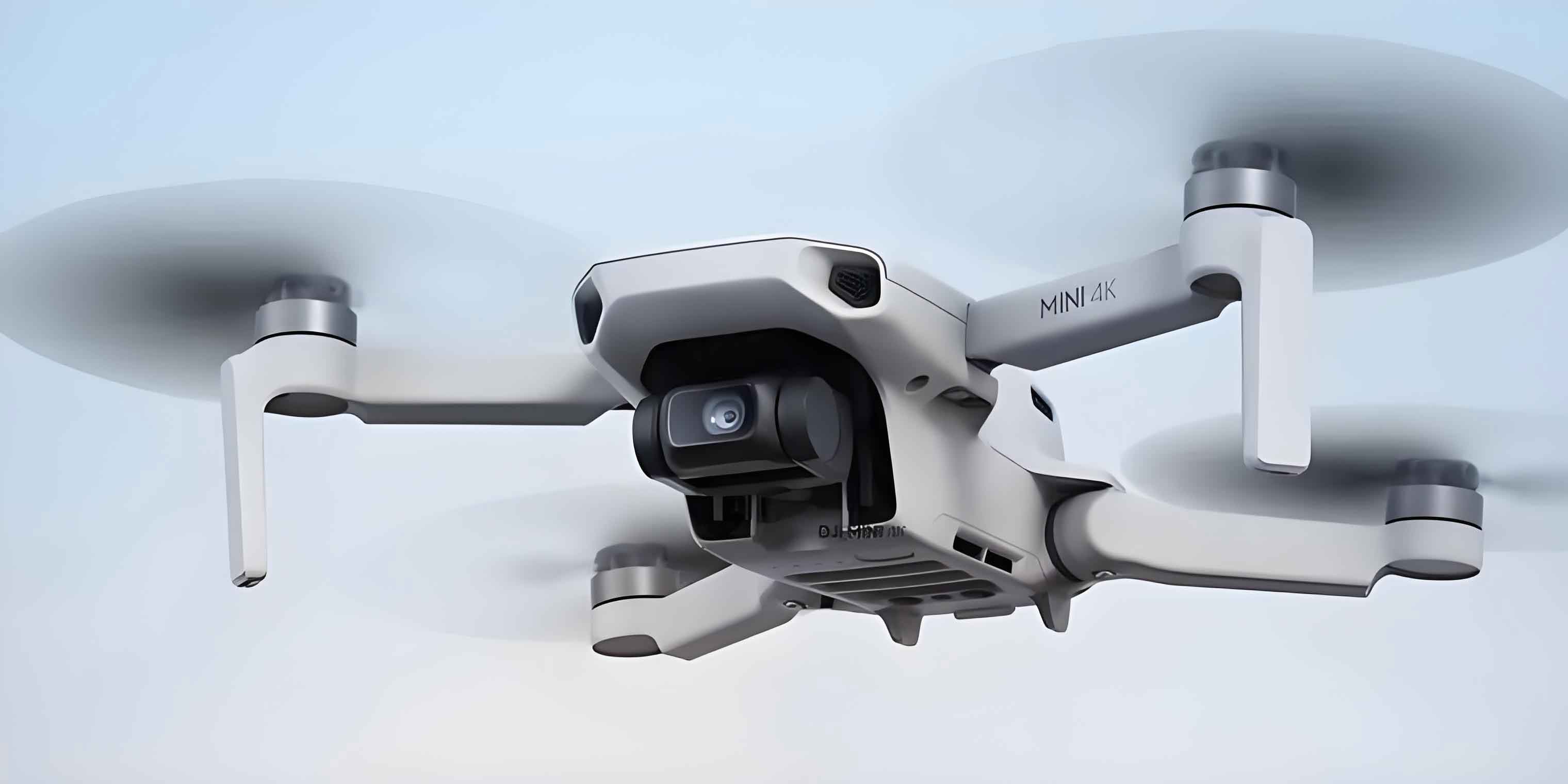
This article explores the transformative role of UAV remote sensing in the digital acquisition of forest resource data. I will delve into the technical foundations of the technology, elucidate its distinct advantages over conventional methods, and provide a detailed examination of its concrete applications across the forestry workflow. Throughout this discussion, I will emphasize the integration of China UAV drone systems within a cohesive “Acquisition–Processing–Analysis–Decision Support” framework, highlighting how this integration enhances the timeliness, accuracy, and actionable intelligence available to forest managers and ecologists.
1. The UAV Remote Sensing Technological Ecosystem
UAV remote sensing is not a single tool but a synergistic technological ecosystem comprising the aerial platform, a suite of sensors, positioning systems, data communication links, and sophisticated processing software. The core of this system in modern forestry applications is the UAV itself. China’s manufacturing sector produces a wide array of drones suitable for forestry, from multi-rotor platforms (e.g., DJI Matrice 350 RTK) offering exceptional hover stability and vertical take-off/landing for detailed site inspections, to fixed-wing models (e.g., fixed-wing mapping drones) capable of covering vast forest tracts of hundreds of hectares in a single flight due to their superior endurance.
The value of a China UAV drone is unlocked by its payload. Modern forestry drones are equipped with an array of sensors that capture different dimensions of forest information:
- RGB Cameras: Provide very high-resolution (centimeter-level) imagery for visual interpretation, photogrammetry, and creating detailed orthomosaics and 3D models.
- Multispectral Sensors: Capture data in specific non-visible wavelength bands (e.g., Red Edge, Near-Infrared). This data is crucial for calculating vegetation indices that reveal plant health, vigor, and stress levels beyond what is visible to the human eye.
- LiDAR (Light Detection and Ranging): An active sensor that emits laser pulses to measure distances. It penetrates the forest canopy to accurately model the underlying terrain (Digital Terrain Model – DTM) and the canopy surface (Digital Surface Model – DSM), enabling direct measurement of tree height, canopy structure, and biomass.
- Thermal Infrared Sensors: Detect emitted heat, enabling the identification of fire hotspots, assessment of plant water stress, and even detection of certain animal populations.
The integration of Real-Time Kinematic (RTK) or Post-Processed Kinematic (PPK) Global Navigation Satellite System (GNSS) modules is now standard for high-end China UAV drone platforms. This provides geotagging accuracy of 1-3 centimeters without the need for extensive ground control points, dramatically increasing the geometric fidelity of the collected data.
The data workflow is a critical component. After acquisition, imagery from photogrammetric flights is processed using Structure-from-Motion (SfM) algorithms in software like Pix4D, Agisoft Metashape, or DroneDeploy to generate key deliverables. LiDAR point clouds are processed to filter ground points and extract forest metrics. This processed data then feeds into Geographic Information Systems (GIS) and specialized analytics platforms for in-depth analysis.
| Sensor Type | Measured Property | Primary Forestry Data Outputs | Typical Spatial Resolution |
|---|---|---|---|
| High-Resolution RGB | Reflected visible light | Orthomosaic, Digital Surface Model (DSM), 3D Point Cloud, Visual tree crown delineation | 1-5 cm |
| Multispectral | Reflected light in specific bands (R, G, B, Red Edge, NIR) | Spectrally-derived Vegetation Indices (NDVI, NDRE), Chlorophyll maps, Stress detection | 3-10 cm |
| LiDAR | Laser pulse return time and intensity | Canopy Height Model (CHM), Digital Terrain Model (DTM), Canopy cover, Vertical structure profiles | 10-50 pts/m² |
| Thermal Infrared | Emitted thermal radiation | Surface temperature maps, Fire hotspot detection, Water stress indicators | 20-50 cm |
2. Advantages of UAVs in Forest Data Acquisition
The adoption of China UAV drone technology for forest resource surveys is driven by a compelling set of advantages that address the core limitations of traditional methods.
2.1 Unparalleled Operational Flexibility and Cost-Effectiveness. UAVs can be deployed rapidly by a small crew, flying at low altitudes below cloud cover on-demand. This eliminates the long lead times, high costs, and weather dependencies associated with manned aircraft campaigns. For repetitive monitoring, the cost per unit area surveyed by a drone is significantly lower, enabling frequent, high-temporal-resolution data collection that is financially unfeasible with other aerial methods.
2.2 Ultra-High Spatial Resolution and Geometric Accuracy. Flying at altitudes of 50-150 meters, UAVs capture imagery with ground sample distances (GSD) in the centimeter range. This resolution allows for the identification of individual trees, detailed canopy gap analysis, and precise measurement of forest structural elements. When combined with RTK/PPK GNSS, the resulting maps and models have survey-grade absolute accuracy, enabling reliable change detection and integration with other spatial datasets.
2.3 Access to Complex and Hazardous Terrain. Mountainous regions, dense forests, wetlands, and post-disturbance areas (e.g., after a storm or fire) are often dangerous or impossible to survey comprehensively on foot. A China UAV drone can safely and systematically cover these areas, ensuring no “data gaps” in management plans. This capability is particularly vital for biodiversity surveys in protected areas where minimizing human footprint is essential.
2.4 Rich, Multi-Dimensional Data Fusion. A single UAV platform can be equipped with multiple co-registered sensors (e.g., RGB, multispectral, and thermal). This allows for the simultaneous collection of complementary data layers. For instance, high-resolution RGB imagery can be used for tree identification, while concurrent multispectral data assesses the health of those same trees, and LiDAR data quantifies their height and volume. This multi-dimensional perspective provides a far more holistic understanding of the forest ecosystem.
2.5 Enhanced Safety. UAVs remove personnel from potentially hazardous situations such as active fire perimeters, unstable slopes, or areas with dangerous wildlife. Monitoring and initial assessment can be conducted entirely from a safe location.
3. Core Applications in Digital Forest Resource Acquisition
The practical applications of China UAV drone technology permeate every stage of forest management, from foundational mapping to emergency response.
3.1 High-Precision Forest Boundary Demarcation and Base Mapping
Accurate, up-to-date forest stand boundaries are the foundational layer for all management activities, including inventory, planning, and legal compliance. UAVs generate centimeter-accurate orthomosaics and digital surface models that clearly delineate the interface between forested and non-forested land, different forest types, roads, and streams. Object-based image analysis (OBIA) techniques can be applied to these datasets to automatically classify and vectorize forest stands based on spectral, textural, and elevation characteristics.
$$ \text{Segmentation Score} = f(\text{Color}_{RGB}, \text{Texture}_{GLCM}, \text{Height}_{CHM}) $$
Where a segmentation algorithm evaluates pixel similarity based on color (from RGB), texture (e.g., from a Gray-Level Co-occurrence Matrix), and height (from the Canopy Height Model) to group pixels into homogeneous objects representing distinct forest stands.
3.2 Quantitative Forest Structure and Inventory Parameter Extraction
This is one of the most transformative applications. Photogrammetric point clouds from RGB imagery and, more accurately, LiDAR point clouds enable the direct measurement of key forest structural parameters.
- Individual Tree Detection (ITD) and Crown Delineation: Algorithms identify individual tree crowns from the CHM using local maxima detection and watershed segmentation.
- Tree Height: Calculated as the difference between the DSM (top of canopy) and the DTM (ground). For a tree \(i\), height \(H_i\) is:
$$ H_i = Z_{DSM, i} – Z_{DTM, i} $$ - Stem Density and Canopy Cover: Derived directly from ITD results and the analysis of canopy gap fraction.
- Basal Area and Timber Volume: Allometric models that traditionally rely on diameter at breast height (DBH) can be informed by UAV-derived metrics. While DBH is challenging to measure directly from above, strong correlations exist between crown diameter (\(C_d\)), tree height (\(H\)), and stem volume (\(V\)). Species-specific models can be developed:
$$ V = \beta_0 + \beta_1 \cdot (C_d^2 \cdot H) + \epsilon $$ - Above-Ground Biomass (AGB) Estimation: LiDAR metrics like canopy height percentiles and canopy cover are powerful predictors of AGB.
$$ AGB = \alpha \cdot \left( \sum \text{LiDAR metrics} \right)^\gamma $$
| Inventory Parameter | Primary Sensor | Derivation Method | Typical Accuracy vs. Ground Truth |
|---|---|---|---|
| Tree Height | LiDAR (optimal), Photogrammetry | CHM = DSM – DTM; Local Maxima | R² > 0.95 (LiDAR), >0.85 (Photo) |
| Stem Count / Density | LiDAR, RGB | Individual Tree Detection (ITD) algorithms on CHM | Detection Rate: 80-95% (depends on density) |
| Canopy Cover / Closure | LiDAR, RGB, Multispectral | Percentage of returns/px above height threshold | Very High (>95%) |
| Crown Diameter | RGB, LiDAR | Watershed segmentation on CHM or orthomosaic | R² ~ 0.7-0.9 |
| Above-Ground Biomass | LiDAR | Regression models using height metrics, canopy cover | R² ~ 0.8-0.95 |
| Stand Volume | LiDAR | Allometric models using height, crown area, species | R² ~ 0.75-0.9 |
3.3 Dynamic Monitoring of Ecological Change and Disturbance
The high temporal resolution of UAV flights makes them ideal for monitoring forest dynamics. By conducting repeat flights over the same area, managers can quantify and visualize change.
Forest Growth and Productivity: Time-series of CHMs can be differenced to calculate periodic height growth.
$$ \Delta H_{t1-t2} = CHM_{t2} – CHM_{t1} $$
Disturbance Detection: Illegal logging, windthrow, pest outbreaks, and drought stress cause detectable changes in canopy structure and spectral reflectance. Comparing vegetation indices like NDVI over time is a common method for change detection. The Normalized Difference Vegetation Index is defined as:
$$ NDVI = \frac{(NIR – Red)}{(NIR + Red)} $$
A significant decrease in NDVI in a localized area between two surveys may indicate tree stress or mortality.
Natural Regeneration and Restoration Monitoring: UAVs can effectively map the extent and density of seedling establishment in clear-cut or burned areas, assessing the success of reforestation projects with much greater detail than satellite imagery.
3.4 Integrated Forest Fire Management: Prevention, Detection, and Assessment
China UAV drone systems are becoming indispensable for all phases of fire management.
- Pre-Fire Risk Assessment: High-resolution maps identify and map fuel loads (dense undergrowth, deadwood), track vegetation moisture stress using thermal or NDVI data, and help plan fuel-break networks.
- Active Fire Detection & Monitoring: Thermal sensors on UAVs can detect hotspots long before they become visible flames, especially at night or in smoky conditions. During a fire, drones provide real-time intelligence on fire perimeter, direction, and intensity, guiding ground crew deployment and aerial tanker drops without risking pilot lives.
- Post-Fire Burn Severity Assessment: Comparing pre- and post-fire NDVI or using specific burn indices (e.g., dNBR – differenced Normalized Burn Ratio) derived from multispectral data allows for rapid, accurate mapping of burn severity. This is critical for planning soil erosion control and ecological rehabilitation.
3.5 Precision Pest and Disease Management
Early detection is key to controlling forest pests and diseases. UAVs enable a precision agriculture approach to forest health.
- Early Detection: Multispectral and hyperspectral sensors can identify spectral signatures associated with specific stresses before symptoms are visible to the naked eye. For example, pine wilt disease or bark beetle infestation alters the water content and pigment composition of needles, creating a detectable spectral shift.
- Mapping Infestation Extent: Once identified, UAVs can map the full spatial extent of an affected area, quantifying the number of impacted trees and the infestation’s progression.
- Targeted Intervention: UAVs equipped with spray systems can apply pesticides, biologics, or nutrients with centimeter-level precision only to affected trees or zones, dramatically reducing chemical usage, operational cost, and environmental impact compared to blanket aerial spraying.
| Phase | Key Activities | Technologies/Tools | Output |
|---|---|---|---|
| 1. Mission Planning | Define objective, area of interest, required GSD, select sensor. Plan autonomous flight path (lawnmower pattern). Set RTK base station. | Flight planning software (e.g., DJI Pilot, UgCS), GNSS networks | Flight plan file, Safety checks completed |
| 2. Data Acquisition | Deploy China UAV drone. Execute autonomous flight. Monitor live telemetry (battery, signal, images captured). | UAV Platform, Onboard Sensors, RTK/PPK GNSS, Live video downlink | Geotagged raw images (.jpg, .tif), LiDAR point cloud (.las), telemetry logs |
| 3. Data Processing | Upload data to processing software. Run SfM pipeline (for imagery) or point cloud classification (for LiDAR). | Photogrammetry Software (Pix4D, Metashape), LiDAR software (LAStools, TerraSolid) | Orthomosaic, DSM, DTM, CHM, 3D Point Cloud, Multispectral Indices |
| 4> Data Analysis & Insight Generation | Conduct GIS analysis, ITD, change detection, model fitting (biomass, volume). Classify forest health. | GIS (ArcGIS, QGIS), Python/R scripts, Machine Learning libraries, Specialized forestry software | Maps of tree locations, height, biomass; Change detection reports; Health assessment layers |
| 5. Decision Support & Action | Integrate insights into management plans. Guide ground verification. Direct intervention (e.g., targeted spraying). Update forest resource database. | Forest Management Planning Systems, Mobile data viewers for field crews | Updated management maps, Prescriptions for action, Alerts for anomalies |
4. The Future Trajectory and Conclusion
The integration of UAV remote sensing into forestry is an irreversible and accelerating trend. The future will be shaped by several key developments, many of which are actively being pursued by researchers and companies in China and globally. First, we will see greater automation and intelligence through AI. Machine learning models, particularly deep learning convolutional neural networks (CNNs), will move beyond simple tree detection to automated species identification, precise DBH estimation from fused sensor data, and predictive analytics for growth and disturbance. Second, the concept of “Swarm Robotics” may emerge, where multiple China UAV drone units collaborate to survey vast areas simultaneously, with some drones acting as communication relays in dense forests. Third, the integration with other data sources will deepen. UAV data will be seamlessly fused with real-time data from IoT ground sensors (soil moisture, sap flow) and moderate-resolution satellite imagery (like Sentinel-2) to create multi-scale monitoring systems. Finally, edge computing will allow for real-time onboard processing; a drone could detect a fire hotspot or a diseased tree during the flight and immediately alert managers, compressing the decision loop from hours to minutes.
In conclusion, the China UAV drone has evolved from a novel gadget to a fundamental pillar of modern, digital forestry. Its ability to provide frequent, high-resolution, and multi-dimensional data on demand is filling critical gaps in our understanding and management of forest ecosystems. By enabling precise mapping, quantitative inventory, dynamic monitoring, and targeted intervention, UAV technology is making forest management more scientific, efficient, and responsive. As the technology continues to advance, becoming more intelligent, integrated, and autonomous, its role will only expand, solidifying its position as the cornerstone of data-driven, sustainable forest management and a key tool in global efforts to monitor and protect these vital ecosystems. The widespread adoption and continuous innovation of China UAV drone systems are not just a technological upgrade but a necessary evolution for effective stewardship in the 21st century.