
The integration of Unmanned Aerial Vehicles (UAV drones) into geotechnical monitoring represents a paradigm shift. In the context of large-scale industrial park development, ensuring slope stability is paramount for safety, project timeline adherence, and cost control. Traditional monitoring techniques, often reliant on manual surveys or sparse networks of fixed sensors, struggle with the demands of modern construction sites: they are labor-intensive, offer limited spatial coverage, and provide data at frequencies that may miss critical, rapid deformation events. This article explores the comprehensive application of UAV drones for slope monitoring, drawing upon practical methodologies to detail their immense value. The discussion encompasses the technological foundation, specific application protocols, data processing strategies, and the organizational framework necessary for successful implementation.
The core advantage of UAV drones lies in their ability to act as highly mobile, sensor-agnostic data acquisition platforms. They bridge the gap between satellite imagery’s broad scale and ground surveying’s high accuracy, offering an unprecedented combination of coverage, resolution, and temporal frequency. For a monitoring engineer, this translates into a powerful tool for proactive risk management. Instead of interpolating conditions between a few discrete points, I can now obtain a complete, centimeter-accurate digital representation of an entire slope after every flight mission. This holistic view is critical for identifying early signs of failure, such as tension crack propagation, localized bulging, or changes in surface water flow patterns, which might be invisible to a ground-based observer or a sparse sensor array.
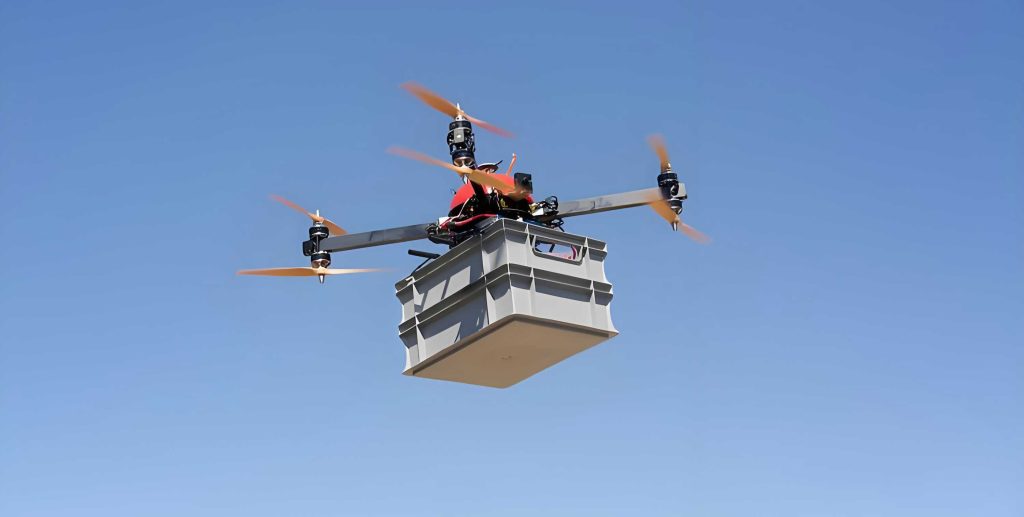
1. Overview of UAV Drone Technology
UAV drones, or Unmanned Aerial Vehicles, are aircraft systems operated without a human pilot onboard. Their functionality is governed by an integrated system of components, each critical for reliable operation in demanding environments like construction sites. The selection of the appropriate UAV drone platform is the first critical decision, dictated by the specific monitoring requirements.
| UAV Drone Type | Key Characteristics | Optimal Monitoring Use Case | Typical Endurance |
|---|---|---|---|
| Fixed-Wing | High speed, long range, efficient aerodynamics. | Rapid, large-scale topographic mapping of extensive project perimeters or regional stability assessment. | 60 – 120+ minutes |
| Multi-Rotor (e.g., Quadcopter, Hexacopter) | Vertical Take-Off and Landing (VTOL), high maneuverability, stable hover. | High-detail, close-range inspection of specific slope faces, infrastructure, and complex terrain. Ideal for frequent, targeted missions. | 20 – 45 minutes |
| Hybrid VTOL | Combines fixed-wing efficiency with multi-rotor hover capability. | Projects requiring both large-area coverage and the ability to loiter over points of interest for detailed inspection. | 45 – 90 minutes |
The operational efficacy of any UAV drone is determined by its core subsystems:
- Airframe: The physical structure. Material (e.g., carbon fiber, composites) and design determine durability, weight, and stability in wind.
- Flight Control System (FCS): The “brain.” It integrates data from onboard sensors (IMU – Inertial Measurement Unit, GNSS, barometer) and executes control algorithms to maintain stable flight and follow pre-programmed routes. The autopilot’s precision is fundamental for consistent data capture. A common stability control algorithm can be simplified as a Proportional-Integral-Derivative (PID) controller:
$$ u(t) = K_p e(t) + K_i \int_0^t e(\tau) d\tau + K_d \frac{de(t)}{dt} $$
Where \( u(t) \) is the control output (e.g., motor speed adjustment), \( e(t) \) is the error between desired and actual attitude, and \( K_p \), \( K_i \), \( K_d \) are tuning constants.
- Data Link: Includes the downlink for telemetry (drone status, position) and video, and the uplink for pilot commands and mission updates. Redundant links are essential for safety in complex environments.
- Payload: The mission-specific sensors. For slope monitoring, the primary payloads are:
- RGB Photogrammetry Cameras: High-resolution optical cameras for creating 3D models and orthomosaics via Structure-from-Motion (SfM) algorithms.
- Multispectral/Spectral Cameras: Detect vegetation health (NDVI) and moisture content, indirect indicators of subsurface water or stress.
- LiDAR (Light Detection and Ranging): An active sensor that emits laser pulses to measure exact distances, generating highly accurate 3D point clouds even through sparse vegetation. The fundamental ranging equation is: $$ R = \frac{c \cdot \Delta t}{2} $$ where \( R \) is range, \( c \) is the speed of light, and \( \Delta t \) is the time difference between pulse emission and return.
- Ground Control Station (GCS): The operator’s interface for mission planning, real-time monitoring, and initial data review.
2. The Application Value of UAV Drones in Slope Monitoring
The deployment of UAV drones transcends mere technological substitution; it fundamentally enhances the quality, safety, and economics of geotechnical monitoring. The value proposition can be quantified across several dimensions.
| Aspect | Traditional Methods (Total Station, GNSS Rovers) | UAV Drone-Based Monitoring |
|---|---|---|
| Spatial Coverage & Density | Limited to accessible points; data is sparse. | Comprehensive, covering 100% of the area of interest with dense point clouds (100+ pts/m²). |
| Data Acquisition Speed | Slow; hours to days for a large slope. | Extremely fast; a 50-hectare site can be mapped in under an hour. |
| Measurement Frequency | Low (weekly, monthly). Misses rapid deformation events. | High (daily, hourly if needed). Enables true time-series analysis. |
| Personnel Safety | High risk; personnel must access unstable or hazardous terrain. | Minimal risk; operations conducted from a safe standoff location. |
| Data Type & Richness | Primarily discrete point coordinates. | High-res imagery, continuous 3D surface models, volumetric data, spectral indices. |
| Cost per Unit Area | High (labor-intensive). | Low after initial investment; highly scalable. |
Enhanced Accuracy and Quantitative Analysis: The high-resolution data from UAV drones enables moving beyond qualitative assessment. For instance, calculating displacement vectors between two surveys becomes a robust, area-wide process. Using a derived Digital Elevation Model (DEM), the volume of material moved in a slump or erosion event can be precisely calculated using a differential DEM (DoD) analysis:
$$ \Delta V = \iint_{Area} (DEM_{t2}(x,y) – DEM_{t1}(x,y)) \,dx\,dy $$
Where \( \Delta V \) is the volumetric change, and \( DEM_{t1} \) and \( DEM_{t2} \) are the models from time 1 and time 2, respectively.
Proactive Early Warning: The frequency and detail afforded by UAV drones allow for the establishment of trend-based alarms, not just threshold-based ones. By monitoring the rate of change of key parameters, such as crack widening velocity or crest settlement acceleration, instability can be predicted well before catastrophic failure. This is a cornerstone of modern Risk-Based Asset Management.
3. Methodological Framework for UAV Drone Application
Realizing the full potential of UAV drones requires a disciplined, systematic methodology. Haphazard flights yield inconsistent data. The following framework outlines the critical phases of a professional monitoring program.
3.1. Precise Mission Planning and Georeferencing
Before the first UAV drone takes off, meticulous planning is essential. This involves:
- Flight Path Design: Using mission planning software, I define the flight area, set altitude (governing Ground Sample Distance – GSD), sidelap (60-80%), and frontlap (70-85%) to ensure complete stereoscopic coverage. The required image overlap is critical for accurate 3D reconstruction.
- Ground Control Points (GCPs): For high-accuracy surveys, a network of visible, stable targets with known coordinates (surveyed with RTK-GNSS) is distributed across the site. These GCPs tie the UAV drone’s relative model to an absolute coordinate system, reducing errors to centimeter-level. The number and placement of GCPs significantly impact final accuracy, following empirical rules based on project size and terrain.
- Use of Real-Time Kinematic (RTK) / Post-Processed Kinematic (PPK) on the UAV Drone: Modern UAV drones can be equipped with RTK/PPK GNSS receivers. This technology drastically reduces the dependency on numerous GCPs. The drone’s camera positions are recorded with centimeter-level accuracy, streamlining fieldwork and processing while maintaining high precision.
3.2. Systematic Data Acquisition and Payload Management
Data acquisition is not a single-sensor activity. A strategic approach involves selecting and operating the right payload for the specific monitoring objective.
| Monitoring Objective | Primary Payload | Key Parameters & Outputs |
|---|---|---|
| High-resolution 3D surface model, crack mapping | RGB Camera (Photogrammetry) | GSD < 2 cm, Orthomosaic, Dense Point Cloud, DEM, DSM. |
| Volumetric change calculation, erosion quantification | RGB Camera or LiDAR | DoD (DEM of Difference), Cut/Fill volumes. |
| Detection under vegetation, ultra-precise topography | LiDAR | Point cloud density (e.g., 200 pts/m²), Digital Terrain Model (DTM). |
| Vegetation health stress (potential water seepage) | Multispectral Camera | NDVI (Normalized Difference Vegetation Index): $$ NDVI = \frac{(NIR – Red)}{(NIR + Red)} $$ |
| Thermal anomalies (seepage, voids) | Thermal Infrared Camera | Surface temperature maps, identification of differential cooling/heating. |
Consistent flight parameters (altitude, speed, camera angle) between missions are crucial for ensuring data comparability over time.
3.3. Advanced Image Processing and Analysis
The raw data from UAV drones is processed into actionable information. This pipeline typically involves:
- Photogrammetric Processing (for RGB/Multispectral): Using software like Pix4D, Agisoft Metashape, or OpenDroneMap, the overlapping images are aligned. The SfM algorithm solves for camera positions and a sparse point cloud, which is then densified. GCPs or RTK data are used for optimization and georeferencing, producing the final deliverables: geotiff orthomosaics and 3D models.
- LiDAR Point Cloud Processing: Raw LiDAR data (.las/.laz) is classified (ground vs. vegetation vs. noise) using algorithms. The classified ground points are then interpolated to create a highly accurate Digital Terrain Model (DTM).
- Change Detection & Feature Extraction: This is the core analytical phase. Specialized software (e.g., CloudCompare, GIS with specialized plugins) is used to:
- Co-register sequential 3D models.
- Compute 3D displacement vectors by using the M3C2 (Multiscale Model to Model Cloud Comparison) algorithm, which is robust for complex topography: $$ d_{M3C2}(P, C_1, C_2) = \frac{\sum_{i=1}^{n} w_i \cdot (d_{i} – \bar{d})}{\sum_{i=1}^{n} w_i} $$ where \( d_{M3C2} \) is the signed distance, \( P \) is a core point, \( C_1, C_2 \) are the point clouds, \( d_i \) are point-to-plane distances, and \( w_i \) are weights based on point cloud properties.
- Automatically extract and track linear features like cracks. The length (\(L\)) and average width (\(W_{avg}\)) of a detected crack can be calculated, and its evolution monitored: $$ \text{Crack Growth Rate} = \frac{\Delta L}{\Delta t} \quad \text{or} \quad \frac{\Delta W_{avg}}{\Delta t} $$
3.4. Quantitative Warning Indicator Framework
Transforming data into decisions requires clear, quantitative thresholds. Warning indicators must be project-specific, based on design parameters, regulatory guidelines, and observed baseline behavior. A tiered alarm system (e.g., Attention, Warning, Alarm) is often implemented.
| Alert Level | Displacement Rate (mm/day) | Cumulative Displacement (mm) | Crack Width (mm) | Action |
|---|---|---|---|---|
| Level 1: Attention | 2 – 5 | 20 – 50 | New crack < 5 | Increase monitoring frequency. Review construction activity logs and weather data. |
| Level 2: Warning | 5 – 10 | 50 – 100 | Crack widening to 5-15 | Formal notification to project management. Initiate detailed engineering assessment. Prepare contingency measures. |
| Level 3: Alarm | > 10 | > 100 | Crack widening >15 or new scarp formation | Immediate evacuation of risk zone. Execute emergency response plan. Halt adjacent construction activities. |
These thresholds are not universal; for a rock slope, displacement rates might be lower, and crack detection more significant than width. The key is that UAV drones provide the dense, frequent data needed to reliably measure against these thresholds.
3.5. Robust Operational Protocols: Maintenance and Environment
The reliability of a UAV drone program hinges on strict operational discipline.
- Pre- and Post-Flight Checklists: Mandatory checks of battery health, propeller integrity, sensor cleanliness, and communications links.
- Predictive Maintenance: Logging flight hours for motors, batteries, and other consumables. Battery management is critical, adhering to strict charge/discharge cycles to prevent failure in flight.
- Environmental Adaptation: UAV drones must operate in diverse conditions. Flight planning must account for wind speed limits (typically below 10-12 m/s for multirotors), precipitation (most consumer drones are not waterproof), and extreme temperatures that affect battery performance. Mission parameters may need adjustment; for example, flying lower in high winds to maintain image sharpness, albeit with reduced coverage per image.
3.6. Integrated Data Management and Analysis Strategy
The volume of data from regular UAV drone flights necessitates a structured management and analysis strategy.
- Data Fusion: The most powerful insights come from fusing data streams. For example, superimposing a crack map derived from an RGB orthomosaic onto a LiDAR-derived DTM allows me to analyze the crack’s relationship to the underlying topography (e.g., following a ridgeline). Similarly, correlating areas of high displacement from photogrammetry with low NDVI values from multispectral data can pinpoint zones of both physical movement and vegetation stress.
- GIS-Centric Workflow: All georeferenced outputs (orthomosaics, DTMs, displacement shapefiles) should be managed within a Geographic Information System (GIS). This allows for layered analysis with other project data: geological maps, drainage plans, infrastructure layouts, and data from in-situ sensors (piezometers, inclinometers).
- Automated Reporting: Scripting tools (e.g., using Python with libraries like GDAL, Rasterio, Pandas) can automate the generation of key plots and reports, such as time-series graphs of maximum displacement or maps highlighting areas exceeding warning thresholds. This streamlines the workflow from data capture to decision-support.
3.7. Team Structure and Competency Development
The technology is only as good as the team operating it. A successful UAV drone monitoring team requires diverse, coordinated expertise.
| Role | Core Responsibilities | Required Skills |
|---|---|---|
| UAV Drone Pilot / Operator | Safe mission execution, field equipment management, raw data offload. | Certified pilot (FAA Part 107 or local equivalent), airspace awareness, field problem-solving. |
| Geospatial Data Analyst | Processing raw data, performing change detection, generating deliverables and preliminary reports. | Expertise in photogrammetry/LiDAR software, GIS, scripting (Python), geotechnical principles. |
| Geotechnical Engineer | Interpreting results in an engineering context, defining alarm thresholds, recommending mitigation actions. | Geotechnical engineering expertise, slope stability analysis, risk assessment. |
| Project Manager / Coordinator | Overseeing the monitoring program, ensuring schedule and budget adherence, communicating findings to stakeholders. | Project management, communication, contract management. |
Continuous training is vital. This includes recurrent flight training, software updates, and most importantly, cross-disciplinary training where data analysts understand geotechnical needs and engineers understand the capabilities and limitations of UAV drone data.
4. Conclusion
The application of UAV drones in slope monitoring for industrial park construction is a transformative practice. It moves the industry from reactive, point-based checking to proactive, surface-wide management of geotechnical risk. The methodology outlined—from rigorous mission planning and multi-sensor data acquisition through advanced analytics and clear warning frameworks—provides a blueprint for implementation. The return on investment is measured not just in reduced survey costs, but more importantly, in the prevention of costly delays, damage, and most critically, the preservation of safety. As sensor technology advances, with improvements in miniaturization, endurance, and AI-driven onboard processing, the role of UAV drones will only become more central, evolving from a monitoring tool to an integral component of the intelligent, data-driven construction ecosystem.