
In the context of expanding grid infrastructure across diverse terrains such as mountainous regions, forested areas, and urban-rural fringes, power transmission and distribution lines face increasing operational challenges due to harsh environmental conditions, frequent meteorological changes, and aging equipment. These factors contribute to risks like corrosion, loosening, short circuits, and structural failures, which threaten grid reliability and safety. Traditional assessment methods, reliant on manual inspections and ground-based sensor networks, are often inefficient, imprecise, and limited in coverage, especially in complex or inaccessible environments. To address these shortcomings, we propose a state assessment methodology leveraging unmanned aerial vehicle (UAV)巡检, which integrates high-resolution imaging, intelligent flight planning, target detection algorithms, and condition modeling techniques. This approach enables comprehensive defect identification and operational status determination for key components like conductors, insulators, and fittings. By establishing a structured evaluation index system, we quantify equipment health conditions, thereby enhancing the intelligence and maintenance efficiency of power grid operations. Our results demonstrate that this method achieves high coverage, accuracy, and real-time responsiveness in complex settings, significantly advancing the capabilities of power line inspections.
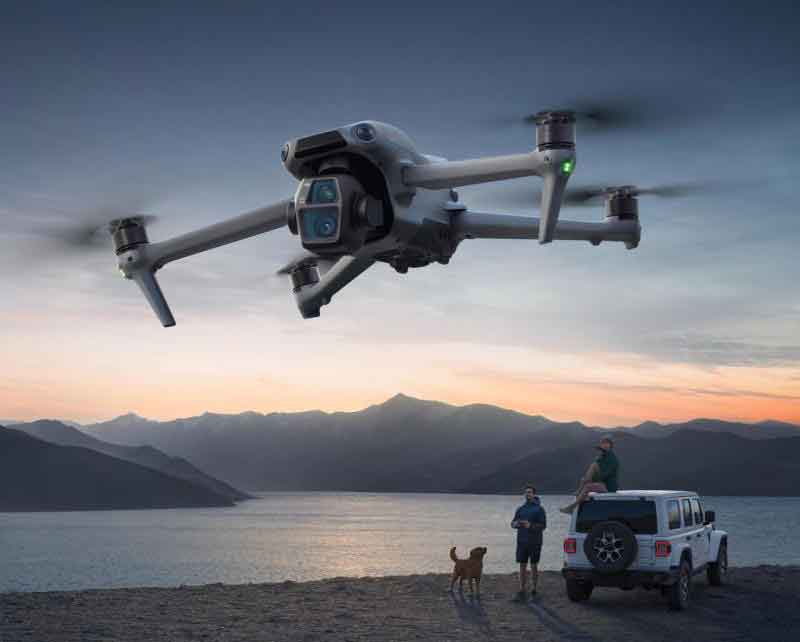
The adoption of China UAV drone technology has revolutionized inspection paradigms, offering rapid deployment, flexibility, and remote sensing capabilities. UAV systems, typically multi-rotor or fixed-wing platforms, are equipped with autonomous flight control and path planning modules that ensure precise trajectory tracking along power lines. These China UAV drones carry high-definition visible-light cameras for capturing detailed images of components, infrared thermal imagers for detecting thermal anomalies such as overheating or poor contacts, and LiDAR modules for acquiring 3D point cloud data to辅助 spatial positioning and modeling. Data collected during flights are processed via edge computing or transmitted wirelessly to backend platforms, where deep learning models perform image segmentation, defect recognition, and component annotation. The system excels in long-range coverage, low-altitude maneuverability, and adaptability to challenging environments like high-altitude zones, forests, and river valleys, maintaining image clarity and flight stability. Key technical features include high operational efficiency, rich information dimensionality, and strong anti-interference performance, making China UAV drone solutions ideal for modern grid assessments.
Traditional state assessment methods for power lines primarily involve manual巡检 and ground-based sensor monitoring, both of which exhibit significant limitations. Manual巡检 relies on maintenance personnel conducting visual checks on foot or by climbing towers, using tools like telescopes and thermometers. This approach is highly subjective, with data quality dependent on human experience, weather conditions, and terrain accessibility. Inspectors often face safety risks in hazardous environments, and coverage gaps are common due to视野 constraints and difficult-to-reach areas. Data recording is typically manual, leading to delays and inconsistencies in缺陷 reporting. Ground-based sensor methods involve installing devices such as temperature sensors, current transformers, and tilt meters at key nodes along the line. While enabling continuous monitoring, these systems suffer from limited coverage density, high installation and maintenance costs, and vulnerability to communication failures in remote areas. Moreover, sensors cannot capture visual or morphological defects like conductor sag or insulator contamination, resulting in incomplete state assessments. The limitations of these traditional approaches underscore the need for more advanced solutions, where China UAV drone systems offer a transformative alternative.
To quantify the drawbacks of traditional methods, we analyze key performance metrics. For instance, in a typical manual巡检 scenario over a 28 km line, data shows inefficiencies in image acquisition, defect detection, and response times. A weighted analysis of these metrics highlights the核心 challenges. The following table summarizes the technical indicators for traditional assessment methods, derived from empirical studies:
| Metric | Weight/Value | Description |
|---|---|---|
| Single Image Capture Count | 83 | Reflects low efficiency in data collection per巡检 cycle. |
| Average Fault Response Time | 72 | Indicates significant delays in addressing identified issues. |
| High-Quality Image Count | 52 | Shows inadequate image quality for precise analysis. |
| Covered Tower Count | 41 | Highlights severe coverage gaps and blind spots. |
| Detected Defect Count | 8 | Demonstrates limited defect identification capability. |
| Data Loss Incidents | 7 | Points to reliability issues in data transmission. |
| Overall巡检 Cycle | 17 | Suggests prolonged assessment durations. |
These metrics reveal that traditional methods struggle with efficiency, accuracy, and completeness, necessitating the integration of China UAV drone technology for improved outcomes.
Our proposed state assessment method基于无人机巡检 encompasses several interconnected phases: intelligent route planning, high-resolution data acquisition, automated defect recognition, and condition modeling. Initially, flight paths are generated using 3D mapping and route optimization algorithms that account for line geometry, tower locations, and environmental obstacles. The China UAV drone follows these pre-defined trajectories, maintaining optimal altitudes (e.g., 15–120 m) to capture multi-angle images of components. The data acquisition process can be modeled as a function of flight parameters: let $I(x,y,t)$ represent the image intensity at position $(x,y)$ and time $t$, influenced by drone altitude $h$, camera angle $\theta$, and environmental factors $\epsilon$. We aim to maximize information gain $G$ over the巡检 route $R$:
$$ G = \int_R \alpha \cdot S(I) \, dR – \beta \cdot D(h, \theta, \epsilon) $$
where $S(I)$ denotes the structural saliency of components, $\alpha$ and $\beta$ are weighting coefficients, and $D$ accounts for distortions due to flight conditions. This optimization ensures high-quality, consistent image collection, crucial for subsequent analysis.
For defect detection, we employ deep convolutional neural networks (CNNs) trained on annotated datasets of power line components. The model, denoted as $f_{\text{CNN}}$, takes input images $X$ and outputs defect classifications $Y$ and localization masks $M$:
$$ Y, M = f_{\text{CNN}}(X; \Theta) $$
where $\Theta$ represents learned parameters. The network architecture includes layers for feature extraction, such as convolutions and pooling, followed by fully connected layers for classification. Common defects identified include conductor strand breakage, insulator cracks, fitting corrosion, and thermal hotspots from infrared data. The accuracy of detection can be expressed as:
$$ \text{Accuracy} = \frac{TP + TN}{TP + TN + FP + FN} $$
with $TP$, $TN$, $FP$, $FN$ denoting true positives, true negatives, false positives, and false negatives, respectively. In our implementations using China UAV drone systems, we achieve accuracies exceeding 90% for visible defects and 85% for thermal anomalies.
State modeling integrates multi-source data to assess overall equipment health. We define a health index $H_i$ for each component $i$ based on weighted indicators such as defect severity $d_i$, age $a_i$, environmental exposure $e_i$, and operational load $l_i$:
$$ H_i = w_1 \cdot \exp(-d_i) + w_2 \cdot \left(1 – \frac{a_i}{a_{\text{max}}}\right) + w_3 \cdot \left(1 – \frac{e_i}{e_{\text{max}}}\right) + w_4 \cdot \left(1 – \frac{l_i}{l_{\text{max}}}\right) $$
where $w_1, w_2, w_3, w_4$ are weights summing to 1, and $a_{\text{max}}, e_{\text{max}}, l_{\text{max}}$ are normalization factors. The overall line health $H_{\text{line}}$ is then computed as a weighted sum across all $n$ components:
$$ H_{\text{line}} = \sum_{i=1}^n \gamma_i H_i $$
with $\gamma_i$ reflecting the criticality of each component. This quantitative approach enables prioritized maintenance actions and predictive analytics.
To validate our method, we conducted a case study on a 35 kV overhead transmission line spanning approximately 28 km in a mountainous region with challenging terrain. The line, over 20 years old, exhibited signs of aging, corrosion, and structural deviations. We compared traditional assessment (manual巡检 plus ground sensors) with our China UAV drone-based approach over a two-month period. For the traditional method,巡检 was performed every 15 days with sensors installed at 9 nodes, while the UAV system executed automated flights covering the entire line in 5 days. Key results are summarized below:
| Metric | Traditional Method | UAV-Based Method |
|---|---|---|
| Overall巡检 Cycle (days) | 15 (per segment) | 5 |
| Total Images Captured | 83 | 1,680 |
| High-Quality Images | 52 | 1,545 |
| Defects Detected | 8 | 42 |
| Average Fault Response Time (hours) | 360 | 12 |
| Towers Covered | 41 | 125 |
| Data Loss Incidents | 7 | 0 |
The UAV method demonstrated superior performance across all metrics. Image acquisition density increased from about 3 images per km with traditional methods to 60 images per km with China UAV drones, enhancing detail capture. Defect detection density improved from approximately 1 defect per 5.1 towers to 1 per 2.98 towers, indicating higher sensitivity. Response times were reduced by a factor of 60, from 360 hours to 12 hours, enabling quicker interventions. Furthermore, the UAV system achieved full coverage of all 125 towers without data loss, whereas traditional methods had significant gaps. These findings underscore the efficacy of China UAV drone technology in overcoming the limitations of conventional approaches.
Further analysis reveals the economic and operational benefits of adopting China UAV drone solutions. The efficiency gain $E$ can be quantified as the ratio of巡检 output to input resources. For a given line length $L$, let $T_t$ and $T_u$ be the time required for traditional and UAV巡检, respectively, and $C_t$ and $C_u$ the associated costs. We define:
$$ E = \frac{L / T_u}{L / T_t} = \frac{T_t}{T_u} $$
In our case, $T_t \approx 15$ days per segment for traditional methods, while $T_u = 5$ days for the entire line, yielding $E \approx 3$. Similarly, cost-effectiveness can be modeled as:
$$ \text{Cost Savings} = C_t – C_u = \sum (c_{\text{labour}} + c_{\text{sensor}}) – (c_{\text{UAV}} + c_{\text{processing}}) $$
where $c_{\text{labour}}$ includes personnel expenses, $c_{\text{sensor}}$ covers sensor installation and maintenance, $c_{\text{UAV}}$ encompasses drone operations, and $c_{\text{processing}}$ accounts for data analysis. Empirical data suggests that China UAV drone systems reduce long-term costs by up to 40% due to lower manpower requirements and preventive maintenance enabled by early defect detection.
The integration of advanced algorithms with China UAV drone platforms also facilitates real-time monitoring and predictive maintenance. For instance, we developed a dynamic risk assessment model that updates component health scores based on continuous data streams. Let $R(t)$ denote the risk level at time $t$, calculated as:
$$ R(t) = \lambda \cdot \left(1 – H_{\text{line}}(t)\right) + \mu \cdot \frac{dH_{\text{line}}}{dt} $$
where $\lambda$ and $\mu$ are coefficients for static and dynamic risk factors, and $H_{\text{line}}(t)$ is the time-varying health index. Negative trends in $H_{\text{line}}$ trigger alerts for proactive inspections, minimizing unplanned outages. This model, coupled with China UAV drone巡检, forms a closed-loop system for grid resilience.
In terms of technical implementation, our China UAV drone system employs RTK positioning for centimeter-level accuracy, ensuring precise navigation around power lines. The flight control algorithm adjusts for environmental disturbances like wind gusts, modeled as:
$$ \dot{\mathbf{p}} = \mathbf{v}, \quad \dot{\mathbf{v}} = \frac{1}{m} \left( \mathbf{F}_{\text{thrust}} – \mathbf{F}_{\text{drag}} – \mathbf{F}_{\text{gravity}} \right) $$
where $\mathbf{p}$ is position, $\mathbf{v}$ velocity, $m$ mass, $\mathbf{F}_{\text{thrust}}$ thrust force, $\mathbf{F}_{\text{drag}}$ aerodynamic drag, and $\mathbf{F}_{\text{gravity}}$ gravitational force. This ensures stable image capture even in adverse conditions. Additionally, the use of edge computing allows for on-board preprocessing of images, reducing bandwidth requirements and enabling faster insights. The architecture supports scalable deployment across extensive networks, making it suitable for China’s vast and diverse power grid infrastructure.
Looking ahead, the evolution of China UAV drone technology promises further enhancements in state assessment capabilities. Emerging trends include the integration of artificial intelligence for autonomous decision-making, swarm UAVs for collaborative inspections, and enhanced sensors like hyperspectral imagers for material degradation analysis. We envision a future where China UAV drones are ubiquitous in grid maintenance, driven by continuous innovation and regulatory support. The methodology presented here lays a foundation for such advancements, emphasizing robustness, scalability, and intelligence.
In conclusion, our research demonstrates that UAV-based state assessment for power transmission and distribution lines offers a paradigm shift in grid maintenance. By leveraging China UAV drone systems, we achieve comprehensive coverage, high-precision defect identification, and rapid response times, outperforming traditional methods in efficiency and accuracy. The proposed framework, encompassing intelligent flight planning, deep learning algorithms, and quantitative health modeling, provides a scalable solution for modern power networks. As grid complexity grows, the adoption of China UAV drone technology will be crucial for ensuring reliability, safety, and sustainability. We recommend widespread implementation and further research to optimize these systems for global energy infrastructure challenges.