
From my perspective as a practitioner deeply involved in the integration of modern geomatics, the advent of Unmanned Aerial Vehicle (UAV) aerial survey technology represents a paradigm shift in engineering measurement. This technology, often synonymous with drone-based photogrammetry and LiDAR, has transcended its nascent stages to become a cornerstone for efficient, accurate, and safe data acquisition across diverse projects. The core principle revolves around deploying a remotely piloted or autonomously flying platform equipped with high-resolution imaging or laser scanning sensors to capture geospatial data of a site. The subsequent processing of this data yields highly accurate topographic maps, digital surface models (DSMs), digital terrain models (DTMs), orthomosaics, and intricate 3D models. The efficacy of this workflow is not merely a function of advanced hardware but is critically dependent on comprehensive drone training for personnel involved in flight planning, data capture, and processing. This article delves into the technical foundations, application workflows, and, most importantly, the integral role of systematic drone training in harnessing the full potential of UAV technology for engineering surveys.
The technological foundation of UAV surveying rests on a synergistic system comprising the aerial platform, the sensor payload, the ground control station (GCS), and sophisticated processing software. The UAV itself, whether multi-rotor for flexibility or fixed-wing for endurance, serves as a stable carrier. The payload, typically a high-accuracy Global Navigation Satellite System (GNSS) receiver coupled with an Inertial Measurement Unit (IMU) for precise positioning and orientation, and the primary sensor—a RGB camera, multispectral camera, or LiDAR scanner—form the data acquisition heart. The GCS allows the pilot or surveyor to plan missions, monitor telemetry, and control the aircraft. The critical technical requirement, especially for photogrammetry, is maintaining sufficient image overlap. For robust 3D reconstruction, forward overlap (along the flight path) is typically set at 70-80%, and side overlap (between adjacent flight lines) at 60-70%. These values ensure every point on the ground is captured in multiple images, providing the parallax necessary for stereo viewing and accurate point cloud generation. The relationship for base-to-height ratio, crucial for this, can be expressed as:
$$ \text{Overlap} = \left(1 – \frac{B}{GSD \cdot n}\right) \times 100\% $$
Where \( B \) is the airbase (distance between two consecutive photo centers), \( GSD \) is the Ground Sampling Distance (the size of one pixel on the ground), and \( n \) is the number of pixels along the flight direction in the image. The achievable accuracy is paramount. The final product’s precision is a function of the GSD, the quality of the Ground Control Points (GCPs), and the bundle adjustment process. Standards often define the horizontal and vertical accuracy in terms of the GSD. A common rule of thumb is that the horizontal accuracy (RMSE) can be 1-3x the GSD, and vertical accuracy 1.5-3x the GSD, depending on the terrain and processing methodology. These requirements are often formalized in project specifications, as summarized in the table below for common engineering map scales.
| Topographic Map Scale | Plane Accuracy RMSE (m) | Vertical Accuracy RMSE (m) – Flat/Undulating | Vertical Accuracy RMSE (m) – Mountainous |
|---|---|---|---|
| 1:200 | 0.06 | 0.05 | 0.10 |
| 1:500 | 0.15 | 0.10 | 0.20 |
| 1:1000 | 0.30 | 0.25 | 0.50 |
| 1:2000 | 0.60 | 0.50 | 1.00 |
The practical application of UAV surveying follows a structured pipeline, each stage demanding specific expertise reinforced by targeted drone training. The process begins with Pre-Flight Planning and Reconnaissance. This involves defining the area of interest (AOI), checking airspace restrictions (a critical component of regulatory drone training), assessing weather conditions, and conducting a site visit to identify potential hazards and suitable locations for GCPs. Mission planning software is then used to design the flight path. Key parameters are calculated: flight altitude (determining GSD), forward and side overlap, and the resulting ground speed to ensure sharp imagery. The required ground coverage and resolution dictate the mission plan, which can be summarized by the following relationship for area coverage rate:
$$ A_{rate} = \frac{W \cdot S \cdot (1 – S_{lap})}{10000} $$
where \( A_{rate} \) is the coverage rate in hectares per minute, \( W \) is the swath width (m), \( S \) is the ground speed (m/min), and \( S_{lap} \) is the side overlap ratio (e.g., 0.6 for 60%).
The next phase is Field Deployment and Data Acquisition. This encompasses the deployment of surveyed GCPs, typically using high-precision GNSS receivers in RTK or PPK mode. These points, marked with distinct targets, provide the absolute geospatial reference to correct and scale the photogrammetric model. The UAV is then launched on its automated mission. In-flight, the pilot monitors system health, but the autonomy of the platform highlights why pre-flight drone training on contingency procedures—like Return-to-Home (RTH) functions—is vital. The sensor captures hundreds or thousands of geotagged images or a continuous stream of LiDAR points. Post-flight, the raw data is downloaded, and initial quality checks are performed on image sharpness and coverage.
The most computationally intensive stage is Data Processing and Product Generation. This is where the magic of photogrammetry happens. Using specialized software, the images are aligned based on their key points in a process called Structure from Motion (SfM). This creates a sparse point cloud. The surveyed coordinates of the GCPs are then imported to georeference and scale the project accurately. A bundle adjustment is performed, a least-squares optimization that minimizes the reprojection error of all points, mathematically represented as:
$$ \min \sum_{i=1}^{n} \sum_{j=1}^{m} v_{ij}^T v_{ij} \quad \text{where} \quad v_{ij} = x_{ij} – P_i(X_j) $$
Here, \( v_{ij} \) is the residual for point \( j \) in image \( i \), \( x_{ij} \) is the measured image coordinate, and \( P_i(X_j) \) is the projection of the 3D point \( X_j \) onto image \( i \) using the estimated camera parameters. Following this, a dense point cloud is generated, which serves as the basis for all derived products: the DSM, the DTM (by classifying and filtering out non-ground points), the orthomosaic (a geometrically corrected “map” view), and textured 3D meshes. For volumetric calculations, such as stockpile measurement, the DTM is crucial. The volume \( V \) between two surfaces (e.g., a design surface and an actual surface) is computed by integrating the difference over the area \( A \):
$$ V = \iint_A \left( z_{actual}(x,y) – z_{design}(x,y) \right) \,dx\,dy $$
In practice, this is done by analyzing the difference between two dense point clouds or DTMs.
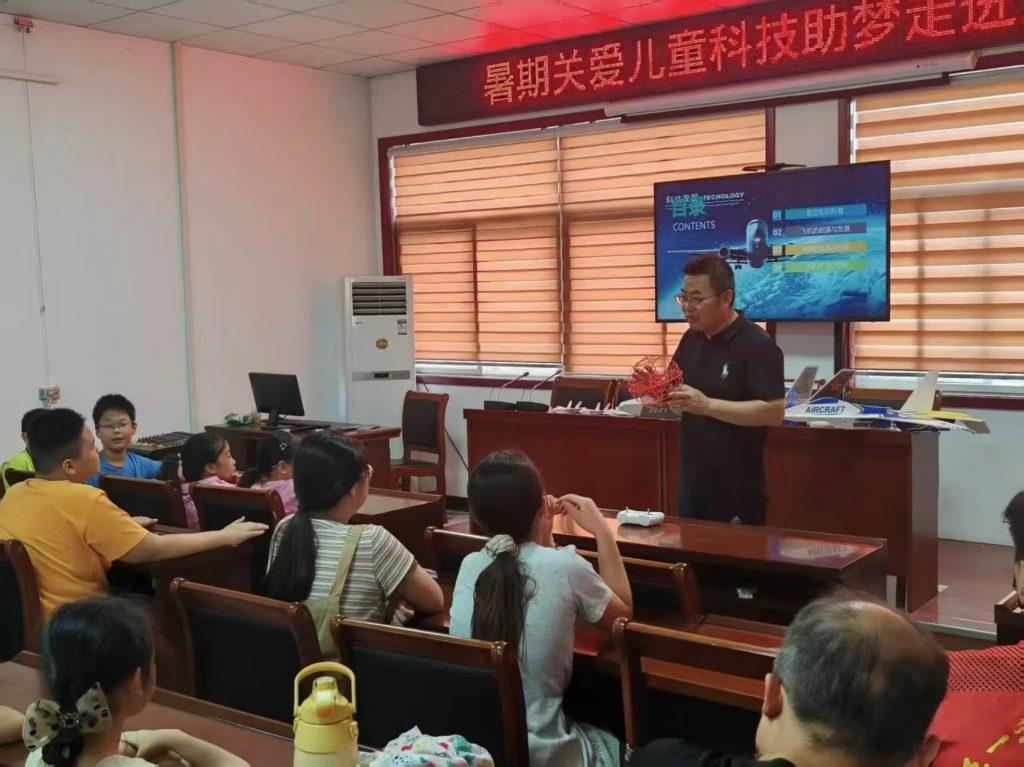
This image underscores a fundamental truth: the sophisticated hardware and software are only as effective as the human operator. This leads to the central pillar of successful implementation: a robust drone training and competency framework. Effective drone training extends far beyond basic piloting skills. It must be a holistic curriculum that transforms a surveyor or engineer into a certified and proficient UAV mapping specialist. The curriculum should be multi-faceted, as outlined below.
| Training Module | Core Objectives | Key Skills and Knowledge |
|---|---|---|
| Regulatory & Safety | Legal compliance and risk mitigation. | National aviation authority regulations (e.g., FAA Part 107, EASA A1/A3), airspace classification, operational risk assessment, insurance, emergency procedures, meteorology. |
| Platform-Specific Piloting | Safe and proficient manual and automated flight control. | Pre-flight checks, battery management, manual flight maneuvers, mission planning software operation, handling system failures and contingencies. |
| Geomatics & Mission Planning | Designing surveys for accuracy and efficiency. | Photogrammetry/LiDAR fundamentals, coordinate systems, GSD calculation, overlap optimization, GCP network design, GNSS principles for PPK/RTK. |
| Data Processing & Analysis | Transforming raw data into reliable engineering deliverables. | Software proficiency (Pix4D, Agisoft, Global Mapper, CAD), SfM workflow, point cloud classification, DTM generation, orthomosaic production, accuracy validation, volumetric analysis. |
| Maintenance & Logistics | Ensuring equipment longevity and field readiness. | Basic maintenance, sensor calibration, data management and backup strategies, field logistics planning. |
Such structured drone training is not a one-time event but an ongoing process. Technology evolves, regulations change, and new best practices emerge. Continuous professional development through advanced drone training courses is essential to stay at the forefront. This investment in human capital directly correlates with data quality, project efficiency, and safety, ultimately defining the return on investment (ROI) for the UAV program. The ROI can be modeled by considering the reduction in field time and personnel against traditional survey methods, factoring in the costs of equipment, software, and drone training.
The applications in engineering are vast and transformative. In Construction and Earthworks, UAVs provide weekly or daily progress monitoring through repeated surveys, enabling accurate cut/fill volume calculations, as-built verification against design models (BIM), and tracking stockpile inventories. The formula for volume calculation between sequential surveys is applied routinely. For Linear Infrastructure projects like roads, railways, and pipelines, UAVs efficiently capture topography for corridor mapping, reducing the need for dangerous fieldwork on steep slopes or near live traffic. In Mining and Quarrying, they are indispensable for high-frequency volumetric measurements of ore stocks and overburden, pit modeling, and stability monitoring. Environmental and Agricultural Engineering benefits from multispectral sensors for analyzing plant health (via NDVI calculations: \( NDVI = \frac{(NIR – Red)}{(NIR + Red)} \)), erosion assessment, and wetland mapping. Structural Inspection of bridges, dams, and tall buildings is made safer, with drones capturing detailed imagery and 3D models for defect identification without the need for scaffolding or rope access.
Despite its advantages, the technology faces challenges. Regulatory hurdles in dense urban airspace, limitations in flying under poor weather conditions (rain, high winds), and the need for specialized drone training to handle complex sensors like LiDAR are persistent issues. The future, however, is bright and points toward greater automation and integration. We are moving towards fully automated “drone-in-a-box” solutions for periodic monitoring, the increased use of artificial intelligence for real-time object detection and change identification directly from the imagery, and the seamless fusion of UAV data with other sources like terrestrial laser scans and IoT sensor networks. Furthermore, the development of enhanced sense-and-avoid systems and advanced BVLOS (Beyond Visual Line of Sight) regulations will unlock even broader applications.
In conclusion, UAV aerial survey technology has firmly established itself as a revolutionary tool in the engineering measurement toolkit. Its value proposition of enhanced safety, superior efficiency, and high-fidelity data is undeniable. However, its successful deployment is intrinsically linked to a profound understanding of its underlying principles, a meticulous adherence to a structured application workflow, and, above all, a committed investment in comprehensive and ongoing drone training for the operational team. The hardware and software are the vessels, but the knowledge, skill, and judgment instilled through effective drone training are the navigators. As the technology continues to evolve at a rapid pace, the commitment to continuous learning and adaptation through advanced drone training will remain the single most critical factor in leveraging this powerful technology to solve the complex measurement challenges of modern engineering.