
As a professional deeply involved in agricultural technology, I have observed firsthand how DJI UAVs are revolutionizing the farming landscape. The integration of DJI drones into agricultural practices has addressed critical gaps in traditional ground-based machinery, particularly in crop protection. In this article, I will explore the applications, benefits, and future trends of DJI UAVs in agriculture, emphasizing their role in enhancing efficiency, safety, and sustainability. Through detailed analysis, including tables and mathematical models, I aim to demonstrate why DJI drone technology is pivotal for modern farming.
The adoption of DJI UAVs in agriculture has filled voids left by conventional methods, such as manual spraying and tractor-based systems. For instance, DJI drones eliminate the need for labor-intensive processes, reducing human exposure to harmful chemicals and increasing operational speed. In my experience, a single DJI drone can cover vast areas in minimal time, thanks to its advanced navigation and spraying systems. This shift not only boosts productivity but also aligns with global efforts to promote precision agriculture. The following sections delve into specific aspects of DJI UAV operations, supported by empirical data and formulas.
One of the most significant advantages of DJI UAVs is their ability to perform precise aerial spraying. The downward airflow generated by the rotors enhances pesticide penetration, ensuring uniform coverage on both sides of leaves. This results in higher efficacy and reduced chemical usage. For example, the spraying efficiency of a DJI drone can be modeled using the formula for area coverage: $$ A = v \times w \times t $$ where \( A \) is the area covered in hectares, \( v \) is the flight velocity in meters per second, \( w \) is the effective spray width in meters, and \( t \) is the time in seconds. Typically, DJI drones operate at speeds of 3 to 6 m/s, with a spray width of up to 11 meters, allowing them to achieve efficiencies of 5.3 to 6.7 hectares per hour. This is substantially higher than traditional methods, as illustrated in Table 1.
| Method | Average Efficiency (hectares/hour) | Labor Required | Chemical Usage Reduction |
|---|---|---|---|
| Manual Spraying | 0.1 | High | Low |
| Tractor-Based Systems | 2.0 | Medium | Moderate |
| DJI UAV | 6.0 | Low | High |
In addition to efficiency, DJI drones excel in safety and adaptability. They can operate in diverse terrains, such as rice paddies and orchards, without causing soil compaction or crop damage. The integration of technologies like active phased-array radar and binocular vision systems enables obstacle avoidance, ensuring safe flights. Moreover, the use of DJI UAVs minimizes human contact with pesticides, addressing health concerns. The economic benefits are also notable; for instance, the reduction in labor costs can be expressed as: $$ C_{savings} = L_{traditional} – L_{UAV} $$ where \( C_{savings} \) represents cost savings, \( L_{traditional} \) is the labor cost of traditional methods, and \( L_{UAV} \) is the cost associated with DJI drone operations. In many cases, farmers report savings of up to 50% due to decreased manpower and chemical expenses.
The promotion of DJI UAVs has been facilitated through government initiatives, such as subsidies and training programs. In my role, I have participated in workshops where farmers learn to operate DJI drones, including models like the DJI FPV for demonstration purposes. These efforts have accelerated adoption, particularly among young entrepreneurs who see agriculture as a viable career. The DJI drone ecosystem has spawned related industries, including repair services and specialized pesticide sales, further embedding this technology into the agricultural sector. Table 2 summarizes key promotion strategies and their impacts.
| Strategy | Description | Impact |
|---|---|---|
| Subsidies | Financial support covering 30-50% of purchase costs | Increased affordability and uptake |
| Training Workshops | Hands-on sessions on DJI UAV operation and maintenance | Enhanced skills and confidence among users |
| Field Demonstrations | Live showcases of DJI drone capabilities | Raised awareness and trust in technology |
Technological advancements in DJI UAVs continue to drive their evolution. For example, the latest DJI models feature co-axial dual-rotor designs and magnetic drive impeller pumps, which improve payload capacity and spraying accuracy. The droplet size and distribution can be optimized using formulas like the Nukiyama-Tanasawa equation for spray characterization: $$ D_{32} = \frac{C}{\sigma \rho}^{1/3} $$ where \( D_{32} \) is the Sauter mean diameter, \( C \) is a constant, \( \sigma \) is surface tension, and \( \rho \) is density. This ensures finer雾化, leading to better adhesion and reduced waste. Additionally, the DJI FPV model, with its immersive first-person view, has been instrumental in training and field assessments, making complex operations more accessible.
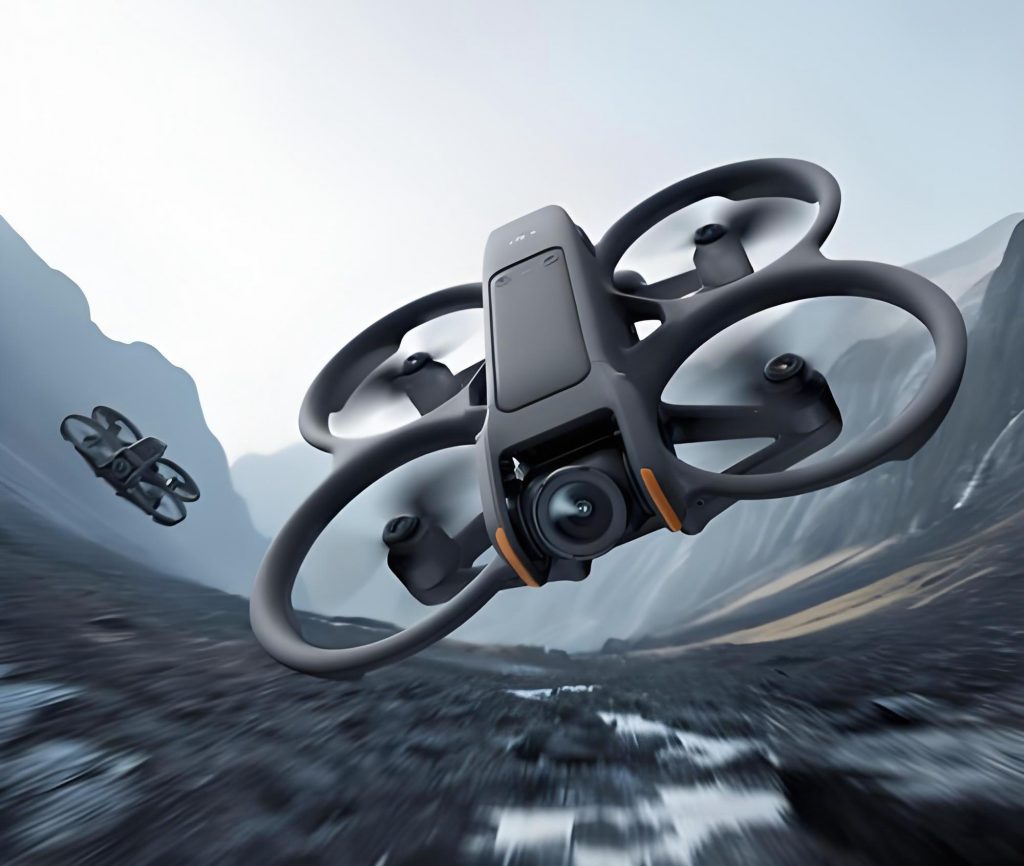
Looking ahead, the future of DJI UAVs in agriculture appears promising. Trends indicate a shift towards fully autonomous systems integrated with AI for real-time decision-making. For instance, DJI drones could use machine learning algorithms to detect pests and adjust spraying parameters dynamically. The potential for scaling is immense; in large-scale farms, the efficiency gain can be modeled as: $$ E_{total} = \sum_{i=1}^{n} A_i \times R_i $$ where \( E_{total} \) is the total efficiency, \( A_i \) is the area per operation, and \( R_i \) is the rate of application. With ongoing innovations, DJI UAVs are set to become central to smart farming initiatives, supporting goals like reduced chemical usage and increased yields.
However, challenges remain, such as the suitability of DJI drones for specific terrains and herbicide applications. In my observations, continuous improvement in sensor technology and software will address these issues. The growing community of young DJI UAV operators is a testament to the technology’s appeal, fostering a cycle of innovation and adoption. As we move towards comprehensive agricultural mechanization, DJI drones will undoubtedly play a critical role in shaping a sustainable and productive future.
In conclusion, the integration of DJI UAVs into agriculture has proven transformative, offering unparalleled benefits in efficiency, safety, and environmental stewardship. Through continued support and technological refinement, DJI drone technology will empower farmers worldwide, driving the industry toward a more mechanized and intelligent era. The journey with DJI UAVs is just beginning, and I am excited to be part of this revolution.