
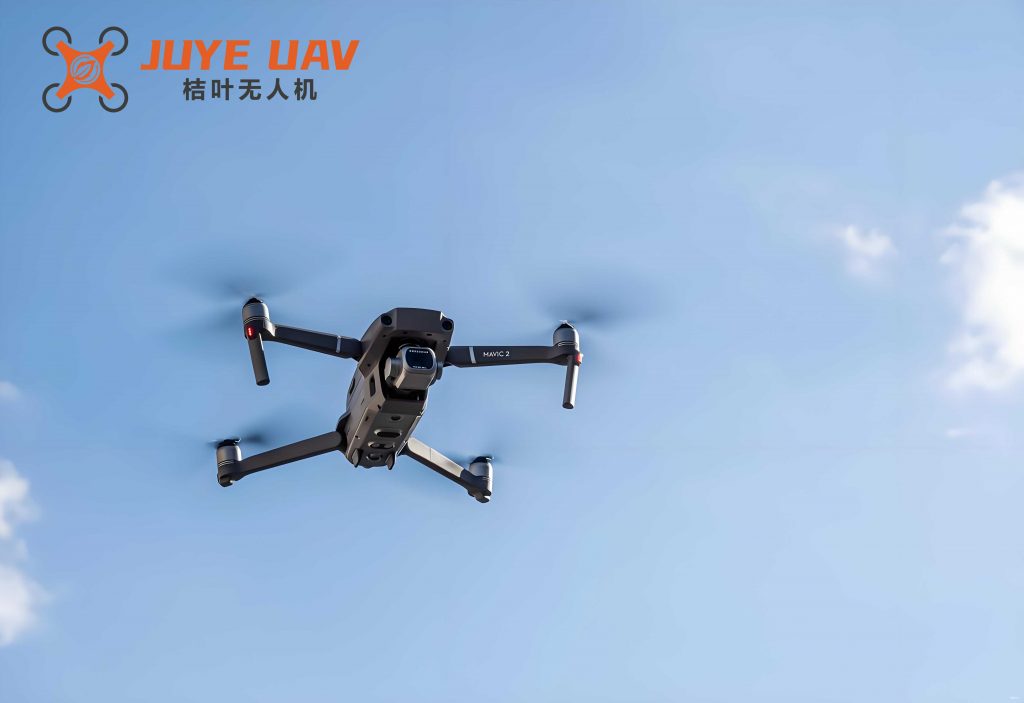
In recent years, quadrotor unmanned aerial vehicles (UAVs) have gained significant attention due to their versatility in applications such as aerial photography, agricultural monitoring, and search and rescue operations. However, the quadrotor system exhibits strong coupling, nonlinearity, and underactuation, which pose challenges for precise trajectory tracking. Traditional control methods often struggle with issues like chattering and parameter sensitivity. To address these limitations, we propose a novel control strategy that integrates an improved particle swarm optimization (PSO) algorithm with fractional-order integral sliding mode control (FOISMC). This approach aims to enhance tracking accuracy, reduce chattering, and improve robustness against uncertainties and disturbances.
The quadrotor dynamic model is derived using Newton-Euler equations, considering the forces and moments generated by the four rotors. The system is divided into position and attitude subsystems, with the position dynamics describing translational motion and the attitude dynamics governing rotational motion. The control inputs are virtual forces and moments that are mapped to individual rotor speeds. The model’s nonlinearity and coupling necessitate advanced control techniques for effective trajectory tracking.
We design a fractional-order sliding mode controller for both the position and attitude loops. The position controller ensures tracking of desired trajectories in the x, y, and z directions, while the attitude controller stabilizes the roll, pitch, and yaw angles. The sliding surface incorporates integral and terminal components to achieve finite-time convergence. To mitigate chattering, a fractional-order exponential reaching law is introduced, which smooths the control signal while maintaining robustness. The stability of the closed-loop system is proven using Lyapunov theory, and sufficient conditions for finite-time stability are derived.
Parameter tuning is critical for the performance of the sliding mode controller. Conventional methods for selecting parameters like sliding gains and reaching law coefficients are often heuristic and suboptimal. We employ an improved PSO algorithm, which combines genetic algorithm (GA) operations such as crossover and mutation with standard PSO to enhance global search capability and avoid local optima. The algorithm optimizes the controller parameters by minimizing a cost function that balances tracking error and control effort.
Extensive simulations are conducted in MATLAB/Simulink to validate the proposed approach. The results demonstrate that our controller achieves faster convergence, lower steady-state error, and reduced chattering compared to traditional methods. The optimized parameters further improve the system’s dynamic response, making it suitable for real-world quadrotor applications.
Dynamic Model of Quadrotor UAV
The quadrotor UAV is modeled as a rigid body with six degrees of freedom. The equations of motion are derived in the inertial frame and body frame. The position dynamics are given by:
$$ \begin{align*}
\ddot{x} &= \frac{1}{m} (\cos\phi \sin\theta \cos\psi + \sin\phi \sin\psi) U_1, \\
\ddot{y} &= \frac{1}{m} (\cos\phi \sin\theta \sin\psi – \sin\phi \cos\psi) U_1, \\
\ddot{z} &= \frac{1}{m} (\cos\phi \cos\theta) U_1 – g,
\end{align*} $$
where \( m \) is the mass, \( g \) is the gravitational acceleration, and \( U_1 \) is the total thrust. The attitude dynamics are expressed as:
$$ \begin{align*}
\ddot{\phi} &= \frac{1}{I_x} \left( (I_y – I_z) \dot{\theta} \dot{\psi} + U_2 \right), \\
\ddot{\theta} &= \frac{1}{I_y} \left( (I_z – I_x) \dot{\phi} \dot{\psi} + U_3 \right), \\
\ddot{\psi} &= \frac{1}{I_z} \left( (I_x – I_y) \dot{\phi} \dot{\theta} + U_4 \right),
\end{align*} $$
where \( I_x, I_y, I_z \) are the moments of inertia, and \( U_2, U_3, U_4 \) are the control moments. The virtual controls \( U_1 \) to \( U_4 \) are related to the rotor speeds \( \Omega_i \) by:
$$ \begin{align*}
U_1 &= c_t (\Omega_1^2 + \Omega_2^2 + \Omega_3^2 + \Omega_4^2), \\
U_2 &= c_t d (\Omega_4^2 – \Omega_2^2), \\
U_3 &= c_t d (\Omega_3^2 – \Omega_1^2), \\
U_4 &= c_m (\Omega_2^2 + \Omega_4^2 – \Omega_1^2 – \Omega_3^2),
\end{align*} $$
where \( c_t \) and \( c_m \) are thrust and torque coefficients, and \( d \) is the arm length. The quadrotor model parameters are summarized in Table 1.
| Parameter | Symbol | Value |
|---|---|---|
| Mass | \( m \) | 1.5 kg |
| Moment of Inertia (x-axis) | \( I_x \) | 1.745e-2 kg·m² |
| Moment of Inertia (y-axis) | \( I_y \) | 1.745e-2 kg·m² |
| Moment of Inertia (z-axis) | \( I_z \) | 3.175e-2 kg·m² |
| Thrust Coefficient | \( c_t \) | 1.116e-5 N/(rad/s)² |
| Torque Coefficient | \( c_m \) | 1.474e-7 Nm/(rad/s)² |
| Arm Length | \( d \) | 0.225 m |
| Gravity | \( g \) | 9.81 m/s² |
Fractional-Order Sliding Mode Controller Design
The control objective is to ensure that the quadrotor tracks a desired trajectory \( \Gamma_d = [x_d, y_d, z_d]^T \) and desired yaw angle \( \psi_d \). The tracking errors for position and attitude are defined as \( E_\Gamma = \Gamma – \Gamma_d \) and \( e_\psi = \psi – \psi_d \), respectively. We design separate controllers for the position and attitude subsystems using fractional-order sliding mode control.
Position Controller
For the position subsystem, the sliding surface is designed as an integral terminal sliding mode surface. For the z-direction, the surface is:
$$ s_z = \dot{e}_z + c_z e_z + \lambda_z \int_0^t e_z \, d\tau, $$
where \( e_z = z – z_d \), and \( c_z, \lambda_z > 0 \) are sliding gains. The derivative of the sliding surface is:
$$ \dot{s}_z = \ddot{e}_z + c_z \dot{e}_z + \lambda_z e_z. $$
Substituting the position dynamics, we get:
$$ \dot{s}_z = \ddot{z} – \ddot{z}_d + c_z \dot{e}_z + \lambda_z e_z = \frac{1}{m} U_z – \ddot{z}_d + c_z \dot{e}_z + \lambda_z e_z, $$
where \( U_z \) is the control input for altitude. To achieve finite-time convergence, we use a fractional-order exponential reaching law:
$$ \dot{s}_z = -D_t^{-\alpha} \left( \varepsilon_z \text{sgn}(s_z) + k_z s_z \right), $$
where \( 0 \leq \alpha < 1 \), \( \varepsilon_z, k_z > 0 \), and \( D_t^{-\alpha} \) is the fractional integral operator. The control law for the z-direction is derived as:
$$ U_z = m \left( \ddot{z}_d – c_z \dot{e}_z – \lambda_z e_z – D_t^{-\alpha} \left( \varepsilon_z \text{sgn}(s_z) + k_z s_z \right) \right). $$
Similarly, control laws for x and y directions are designed. The virtual controls \( U_x, U_y, U_z \) are transformed into desired angles \( \phi_d, \theta_d \) and thrust \( U_1 \) using:
$$ \begin{align*}
U_1 &= m \sqrt{U_x^2 + U_y^2 + (U_z + g)^2}, \\
\phi_d &= \arcsin\left( \frac{m}{U_1} (U_x \sin\psi_d – U_y \cos\psi_d) \right), \\
\theta_d &= \arctan\left( \frac{U_x \cos\psi_d + U_y \sin\psi_d}{U_z + g} \right).
\end{align*} $$
Attitude Controller
For the attitude subsystem, the sliding surface for yaw angle is defined as:
$$ s_\psi = \dot{e}_\psi + c_\psi e_\psi + \lambda_\psi \int_0^t e_\psi \, d\tau, $$
with \( e_\psi = \psi – \psi_d \). The reaching law is:
$$ \dot{s}_\psi = -D_t^{-\alpha} \left( \varepsilon_\psi \text{sgn}(s_\psi) + k_\psi s_\psi \right). $$
The control moment \( U_4 \) is derived as:
$$ U_4 = I_z \left( \ddot{\psi}_d – c_\psi \dot{e}_\psi – \lambda_\psi e_\psi – D_t^{-\alpha} \left( \varepsilon_\psi \text{sgn}(s_\psi) + k_\psi s_\psi \right) + \frac{I_x – I_y}{I_z} \dot{\phi} \dot{\theta} \right). $$
Control moments for roll and pitch are designed similarly.
Stability Analysis
The stability of the closed-loop system is analyzed using Lyapunov theory. Consider the Lyapunov function for the z-direction:
$$ V_z = \frac{1}{2} s_z^2. $$
Its derivative is:
$$ \dot{V}_z = s_z \dot{s}_z = -s_z D_t^{-\alpha} \left( \varepsilon_z \text{sgn}(s_z) + k_z s_z \right). $$
Since \( D_t^{-\alpha} \text{sgn}(s_z) = \text{sgn}(s_z) \) for \( \alpha = 0 \), and for \( 0 < \alpha < 1 \), the fractional operator preserves the sign, we have \( \dot{V}_z \leq 0 \). Thus, the system is finite-time stable. The reaching time \( t_d \) can be estimated from:
$$ \int_0^{t_d} e^{k_z \tau} \tau^\alpha \, d\tau = \frac{|s_z(0)| \Gamma(\alpha+1)}{\varepsilon_z}. $$
Parameter Optimization Using Improved PSO
The performance of the sliding mode controller depends on parameters such as sliding gains \( c \), \( \lambda \), and reaching law coefficients \( \varepsilon \), \( k \). We use an improved PSO algorithm to optimize these parameters. The standard PSO updates particle positions and velocities as:
$$ \begin{align*}
v_i^{k+1} &= w v_i^k + c_1 r_1 (p_{\text{best},i} – x_i^k) + c_2 r_2 (g_{\text{best}} – x_i^k), \\
x_i^{k+1} &= x_i^k + v_i^{k+1},
\end{align*} $$
where \( w \) is the inertia weight, \( c_1, c_2 \) are learning factors, and \( r_1, r_2 \) are random numbers. To enhance global search, we incorporate GA operations: crossover and mutation. The crossover operation combines two particles to produce offspring, and mutation introduces random changes. The fitness function is defined as:
$$ J = \int_0^\infty \left( a |e(t)| + b |u(t)| \right) dt, $$
where \( e(t) \) is the tracking error, \( u(t) \) is the control effort, and \( a, b \) are weighting factors. The optimization process is summarized in Table 2.
| Parameter | Value |
|---|---|
| Population Size | 50 |
| Max Iterations | 100 |
| Learning Factors \( c_1, c_2 \) | 1.5, 0.5 |
| Inertia Weight \( w \) | 0.7 |
| Crossover Rate | 0.8 |
| Mutation Rate | 0.1 |
The optimized parameters for the z-direction controller are \( c_z = 1.3603 \), \( k_z = 4.4847 \), \( \varepsilon_z = 5 \). The GA-PSO algorithm converges faster and yields a lower fitness value compared to standard PSO, as shown in Figure 1.
Simulation Results
We simulate the quadrotor system in MATLAB/Simulink with the proposed controller. The desired trajectory is a step input for position and yaw angle. The response is compared with traditional PID and standard sliding mode control. The results demonstrate that our controller achieves faster settling time and lower overshoot. The tracking errors for x, y, z, and yaw are minimized, and control inputs are smooth with reduced chattering.
The quadrotor trajectory tracking performance is evaluated under various conditions. The optimized parameters lead to improved dynamic response, as shown in Table 3.
| Controller | Settling Time (s) | Overshoot (%) | Steady-State Error |
|---|---|---|---|
| PID | 3.2 | 12.5 | 0.05 |
| Standard SMC | 2.1 | 8.3 | 0.02 |
| Proposed FOISMC with GA-PSO | 1.5 | 4.7 | 0.01 |
The fractional-order sliding mode controller with optimized parameters ensures robust tracking even in the presence of disturbances. The control efforts are within practical limits, making it suitable for real-time quadrotor applications.
Conclusion
We have developed a trajectory tracking controller for quadrotor UAVs based on improved PSO and fractional-order sliding mode control. The controller design addresses the challenges of nonlinearity, coupling, and chattering. The fractional-order approach enhances control smoothness, while the optimized parameters improve convergence and robustness. Simulation results validate the effectiveness of our method, showing superior performance compared to conventional techniques. Future work will focus on experimental validation and adaptation to time-varying trajectories.