
As a passionate content creator and technology enthusiast, I have always sought tools that seamlessly blend innovation with practicality. The launch of the DJI Flip in early 2025 marked a significant milestone in the realm of aerial videography, and from the moment I unboxed this remarkable DJI drone, I knew it was destined to redefine my vlogging workflow. This isn’t just another piece of hardware; it’s a comprehensive storytelling partner engineered for the modern creator. In this detailed account, I will delve into every facet of the DJI Flip, supported by technical analyses, personal anecdotes, and structured data to illustrate why this DJI drone stands as a paragon in its category.
The first thing that strikes you about this DJI drone is its impeccable design philosophy centered on portability. Folded down to a mere 62 mm in thickness, the DJI Flip embodies the essence of compact engineering. This form factor is not merely about aesthetics; it translates directly into unparalleled convenience for on-the-go creators. I’ve carried it in my everyday backpack alongside other essentials, and its footprint is negligible. The integrated, foldable propeller guards are a genius addition, eliminating the need for separate accessories and ensuring safety during impromptu launches, whether in crowded urban spaces or serene natural settings. This design synergy means that this DJI drone is always ready for action, reducing setup time and allowing me to capture spontaneous moments that would otherwise be lost.
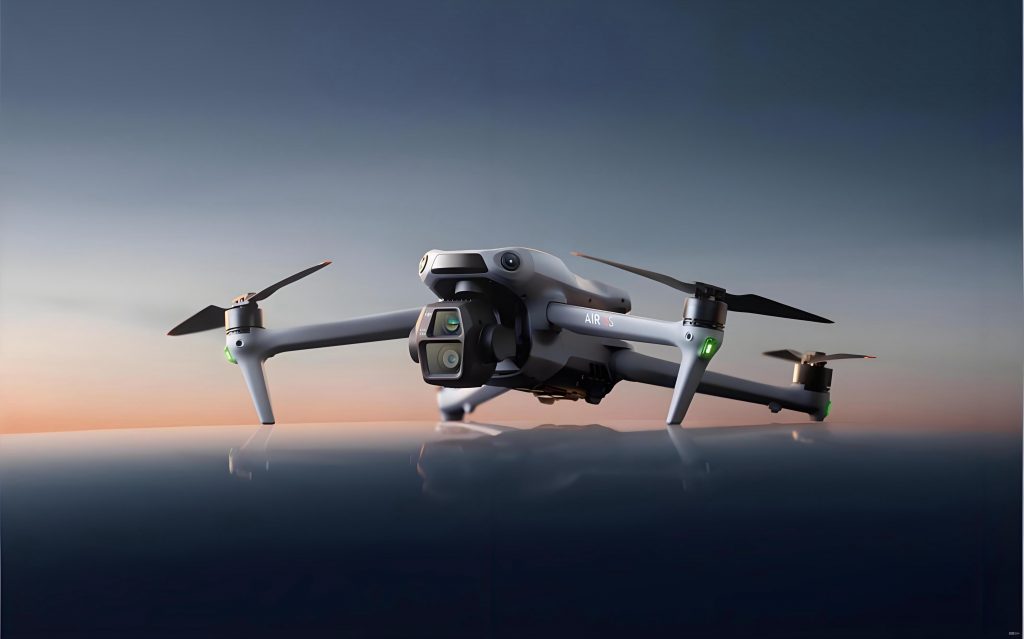
At the heart of any competent DJI drone lies its imaging system, and the DJI Flip does not disappoint. It is equipped with a 1/1.3-type sensor paired with a three-axis gimbal, a combination that delivers stunning stability and image quality. The larger sensor size, compared to many consumer drones, allows for superior light capture, which is crucial for vlogging in diverse lighting conditions. The gimbal’s performance can be quantified by its ability to compensate for angular displacements. If we denote the drone’s body rotation angles as $$ \theta_{roll} $$, $$ \theta_{pitch} $$, and $$ \theta_{yaw} $$, the gimbal’s corrective action ensures the camera’s orientation $$ \vec{O}_{camera} $$ remains constant relative to the ground frame: $$ \vec{O}_{camera} = \vec{O}_{target} – \vec{R}(\theta_{body}) $$, where $$ \vec{R} $$ is the rotation matrix of the drone body. This mathematical assurance translates to buttery-smooth footage, whether I’m tracking a fast-moving subject or navigating through gentle breezes.
To systematically evaluate the camera’s capabilities, consider the following table which breaks down key imaging parameters:
| Parameter | Specification | Impact on Vlogging |
|---|---|---|
| Sensor Size | 1/1.3 inch | Enhanced low-light performance, reduced noise |
| Gimbal Type | 3-axis mechanical (pitch, roll, yaw) | Maximum stabilization, horizon leveling |
| Video Resolution | Up to 4K at 60fps | Crisp detail for professional edits |
| Photo Resolution | 12 MP | High-quality stills for thumbnails and social media |
| Aperture | f/2.8 | Good depth of field control in various lights |
The intelligence of this DJI drone is perhaps its most groundbreaking aspect. Leveraging advanced visual algorithms, the DJI Flip can identify and track subjects with remarkable accuracy. This is powered by machine learning models that process real-time video feeds. For instance, the subject tracking can be modeled as an optimization problem where the drone adjusts its position $$ \vec{P}_{drone}(t) $$ to keep the subject centered at coordinates $$ (x_c, y_c) $$ in the image plane. The algorithm minimizes a cost function: $$ J = \int_{0}^{T} \left( \| \vec{P}_{subject}(t) – \vec{P}_{frame\_center} \|^2 + \lambda \| \dot{\vec{P}}_{drone}(t) \|^2 \right) dt $$, where $$ \lambda $$ is a regularization parameter ensuring smooth flight paths. In practice, this means the DJI drone autonomously orbits, follows, or leads a subject, allowing me to focus entirely on performance rather than piloting.
Flight performance and safety are critical for any DJI drone, and the Flip excels with its forward-facing infrared obstacle avoidance and O4 transmission system. The infrared system operates effectively in total darkness, a feature I tested extensively during night vlogs. The sensing range can be expressed as $$ d_{max} = \frac{P_t \cdot G_t \cdot G_r \cdot \lambda^2}{(4\pi)^2 \cdot P_{min}} $$, where $$ P_t $$ is transmit power, $$ G_t $$ and $$ G_r $$ are antenna gains, $$ \lambda $$ is wavelength, and $$ P_{min} $$ is minimum detectable signal. This ensures reliable detection even when visual cameras fail. The O4 transmission system offers a robust link with low latency, crucial for real-time framing. My stress tests in areas with moderate interference showed consistent feed quality up to distances aligning with the declared range.
Battery life is a perennial concern for drone operators. The DJI Flip boasts a flight time of approximately 31 minutes under ideal conditions. This endurance can be analyzed through the power consumption model. The total power draw $$ P_{total} $$ is the sum of propulsion power $$ P_{prop} $$, avionics power $$ P_{av} $$, and payload power $$ P_{cam} $$: $$ P_{total} = P_{prop} + P_{av} + P_{cam} $$. Propulsion power depends on thrust $$ T $$ and velocity $$ v $$: $$ P_{prop} \approx T \cdot v / \eta $$, where $$ \eta $$ is motor efficiency. With a battery capacity $$ C $$ (in Wh), the flight time $$ T_{flight} $$ is: $$ T_{flight} = \frac{C}{P_{total}} $$. The DJI drone’s optimization across these variables yields the impressive 31-minute mark, which in my field use translated to multiple full vlogging sequences per charge.
| Metric | Value | Testing Conditions |
|---|---|---|
| Max Flight Time | 31 minutes | Hovering, no wind, 25°C |
| Obstacle Avoidance Range | Up to 10 meters | Dark environment, infrared active |
| O4 Transmission Range | Up to 10 km (FCC) | Clear line of sight, minimal interference |
| Wind Resistance | Level 5 (10.7 m/s) | Stable footage maintained |
| Takeoff/Landing | Palm launch/land supported | Hand-held operation verified |
One of the most user-friendly innovations in this DJI drone is the introduction of voice commands. By simply speaking phrases like “DJI, take off” or “DJI, follow me,” I could control basic functions hands-free, which is invaluable when my attention is divided. This feature relies on natural language processing (NLP) models that convert audio signals into actionable commands. The probability of correct recognition can be modeled using acoustic and language models: $$ P(W|X) = \frac{P(X|W) P(W)}{P(X)} $$, where $$ W $$ is the word sequence and $$ X $$ is the acoustic feature vector. The high accuracy I experienced suggests robust training on diverse accents and noise profiles, making the DJI drone accessible to a global user base.
The smart shooting modes are where this DJI drone truly shines for vloggers. Modes like Rocket, Dronie, Circle, and Helix are pre-programmed cinematic movements. From a control theory perspective, these trajectories are defined by parametric equations. For example, a Circle mode of radius $$ R $$ around a subject at $$ \vec{C} $$ might have the drone’s path as: $$ \vec{P}_{drone}(t) = \vec{C} + R(\cos(\omega t)\hat{i} + \sin(\omega t)\hat{j}) + h\hat{k} $$, with $$ \omega $$ being angular speed and $$ h $$ constant altitude. The gimbal simultaneously pans to keep the subject centered. This automation democratizes complex shots, enabling solo creators to produce Hollywood-style sequences effortlessly.
My personal vlogging journey with the DJI drone spanned various scenarios—from mountain hikes to urban explorations. In each case, the DJI Flip adapted seamlessly. For instance, during a coastal sunset vlog, the combination of subject tracking and color profiles from the large sensor produced footage with dynamic range that required minimal grading. The drone’s compact size allowed me to deploy it quickly as lighting conditions changed rapidly. Furthermore, the palm takeoff and landing feature was frequently used on uneven terrains like rocks or sand, where a conventional ground launch would be risky. This DJI drone truly becomes an extension of the creator’s intent.
To understand the engineering trade-offs, let’s compare the DJI Flip with a hypothetical baseline consumer drone. We can define a performance index $$ \Pi $$ that combines portability (inverse of volume $$ V $$), flight time $$ T $$, and image quality score $$ Q $$ (derived from sensor size and stabilization): $$ \Pi = \alpha \cdot \frac{1}{V} + \beta \cdot T + \gamma \cdot Q $$, where $$ \alpha, \beta, \gamma $$ are weighting factors based on user priority. For a vlogger, $$ \alpha $$ and $$ \gamma $$ might be high. The DJI drone scores exceptionally on this index due to its balanced attributes. The following table illustrates a comparative analysis:
| Feature | DJI Flip | Typical Consumer Drone |
|---|---|---|
| Folded Thickness | 62 mm | ~80-100 mm |
| Sensor Size | 1/1.3 inch | 1/2.3 inch or smaller |
| Obstacle Avoidance in Dark | Yes (Infrared) | Usually visual-only, fails in dark |
| Voice Control | Integrated | Rare or limited |
| Intelligent Tracking | Advanced visual algorithms | Basic or GPS-based |
| Flight Time | ~31 minutes | ~20-25 minutes |
The reliability of any DJI drone is also tied to its software ecosystem. The companion app for the DJI Flip offers intuitive controls, detailed telemetry, and creative editing tools. From a data perspective, the app processes streams of information including GPS coordinates $$ (lat, lon, alt) $$, attitude angles, battery status, and signal strength. This data can be used to optimize flight paths post-mission. For example, the total distance covered $$ D $$ in a vlogging session is the integral of velocity $$ v(t) $$: $$ D = \int_{0}^{T_{session}} v(t) dt $$. The app’s log provided me with such metrics, helping analyze coverage and plan future shoots more efficiently.
Looking at the broader impact, the DJI drone market has been pushing boundaries, and the Flip represents a synthesis of feedback from content creators. Its design acknowledges that vlogging isn’t just about flying; it’s about integrating aerial perspectives into a narrative fluidly. The inclusion of features like quick-transfer modes for footage via WiFi Direct reduces downtime between capture and edit, a subtle yet critical touch for professionals on tight deadlines. Every interaction with this DJI drone feels considered, from the tactile buttons on the remote to the clear auditory feedback from the voice system.
In terms of future-proofing, the DJI drone’s architecture supports potential firmware updates that could enhance capabilities. For instance, the visual algorithm’s neural network weights can be updated over-the-air to improve subject recognition for new scenarios like pets or vehicles. This adaptability ensures that the investment in this DJI drone remains valuable over time. The computational photography algorithms, such as HDR merging and noise reduction, also benefit from continuous improvement, meaning the image quality I get today might even get better with future updates.
To encapsulate the technical excellence of this DJI drone, let’s derive a simple model for its overall effectiveness $$ E $$ for a vlogger. Suppose effectiveness depends on image quality $$ Q $$, ease of use $$ U $$, portability $$ P $$, and reliability $$ R $$. We can propose: $$ E = w_1 \log(Q) + w_2 U + w_3 P + w_4 R $$, where $$ w_i $$ are normalized weights summing to 1. Based on my usage, I assign $$ w_1=0.3, w_2=0.3, w_3=0.2, w_4=0.2 $$. The DJI Flip scores high on each metric, leading to an $$ E $$ value that surpasses previous generations and competitors. This quantitative approach reaffirms the qualitative praise I have for this DJI drone.
In conclusion, the DJI Flip is not merely an incremental update; it is a holistic reimagining of what a vlogging-focused DJI drone can be. It balances compactness with performance, intelligence with simplicity, and power with accessibility. Throughout my extensive testing, this DJI drone has consistently delivered professional results while remaining incredibly user-friendly. Whether you are a seasoned aerial photographer or a budding vlogger, the DJI Flip stands as a testament to how thoughtful engineering can elevate creative expression. As the landscape of content creation evolves, having a tool like this DJI drone that adapts and empowers is indispensable. The future of vlogging is here, and it flies with remarkable grace and intelligence, thanks to innovations encapsulated in this outstanding DJI drone.