
The rapid ascent of the low-altitude economy has transformed civilian UAVs (Unmanned Aerial Vehicles) from niche tools into pivotal engines for a new form of economic activity centered on low-altitude airspace utilization. This sector represents a fusion of advanced aviation technology and digital industries, aiming to unlock the vast potential of airspace beneath traditional controlled flight levels. Within this dynamic landscape, the governance of risks associated with civilian UAVs, particularly high-altitude falls, presents a critical challenge. Unlike traditional torts, the infringement liabilities stemming from these incidents are not confined to simple, linear cause-and-effect relationships. Instead, I observe a sophisticated, three-tiered risk architecture that escalates from the individual to the national level, threatening a corresponding hierarchy of legal interests.
The first tier involves the direct infringement of individual rights. A falling civilian UAV poses a severe threat to life and bodily integrity. Due to kinetic energy compounded by gravity, even lightweight models can cause significant injury or fatal trauma upon impact. In crowded public spaces, a falling drone can trigger mass panic and hysteria, compounding the physical danger with public disorder. The second tier escalates to public and property interests. Damage extends beyond the drone itself to public infrastructure, private property, and commercial assets. A civilian UAV crashing into a building, power line, or stadium can cause substantial direct damage and, in commercial settings, lead to significant indirect losses from operational disruptions, business interruption, and contractual delays. The third and most severe tier threatens national compound security. Incidents such as civilian UAVs disrupting airport operations, causing mass flight delays and financial losses, or being used for illicit cross-border activities (e.g., smuggling) highlight threats to transportation security, border integrity, and public health. Furthermore, unauthorized surveillance by civilian UAVs jeopardizes personal privacy, state secrets, and overall national security, demanding a coordinated response across civil, administrative, and criminal legal frameworks.
This multi-layered risk profile can be conceptually summarized by the following escalating structure:
$$
\text{Risk Tier}(RT) = RT_{\text{Individual}} \cup RT_{\text{Public/Property}} \cup RT_{\text{National Security}}
$$
Where:
$RT_{\text{Individual}} = f(\text{Life, Health, Personal Safety})$
$RT_{\text{Public/Property}} = f(\text{Infrastructure, Commerce, Public Order})$
$RT_{\text{National Security}} = f(\text{Transport Security, Border Integrity, State Secrets})$
Governance of these risks is fraught with complexities that traditional legal doctrines struggle to address. The core predicaments are multifaceted:
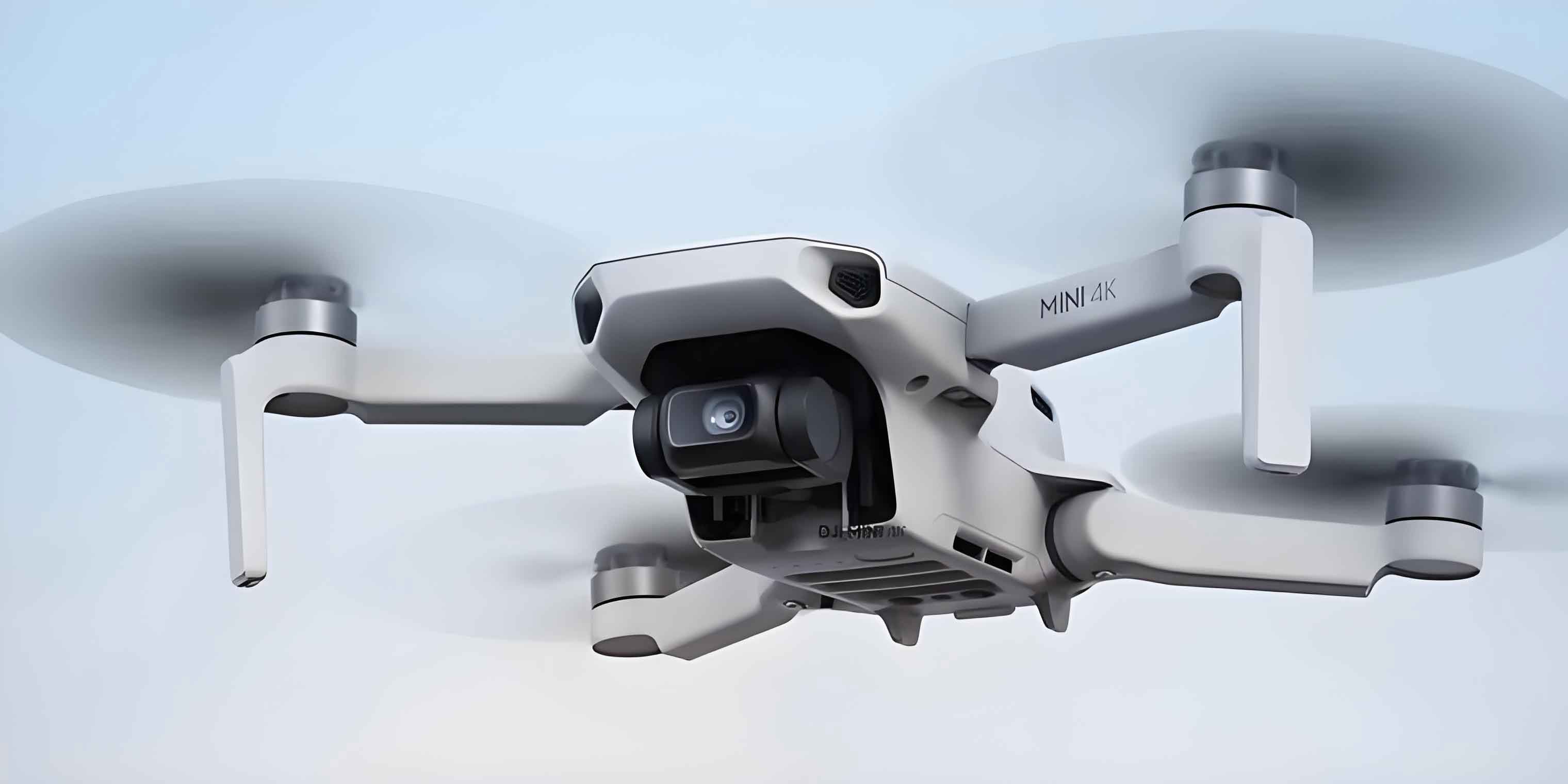
The widespread application of civilian UAVs across sectors like logistics, inspection, and cinematography underscores the urgency of effective governance.
1. Subject of Liability: The Trilemma of the Intelligent Era. The infusion of AI creates a “responsibility black hole.” When a civilian UAV’s fall results from an opaque algorithmic decision, liability attribution becomes ambiguous. Is it the operator, the software developer, the manufacturer, or the data service provider? Current laws, which often hinge on the “operator” or “owner,” are ill-equipped for this distributed, multi-agent decision-making chain. This leads to a trilemma: theory-practice conflict (e.g., micro-drones below registration weight thresholds causing severe harm), clashing doctrines (the “benefit theory” vs. “control theory” debate), and the practical difficulty of identifying liable parties in “human-machine separation” scenarios.
2. Object of Infringement: The Doctrinal Debate Over Airspace Rights and Emergent Interests. The legal nature of the airspace itself—the essential medium for civilian UAV operation—is unsettled. Is it a sovereign public resource, a space for usufructuary rights, or a dynamically allocated commodity? This doctrinal ambiguity complicates the legal standing of users and victims alike. Furthermore, civilian UAVs generate novel legal conflicts beyond physical damage. The data they collect and transmit raise acute concerns over personal privacy and data security, especially if a fallen drone’s data storage is compromised. Their potential for unauthorized surveillance or intellectual property infringement (e.g., of patented designs or processes) adds layers of complexity to the legal injury.
3. Act of Infringement: The Time-Compression Effect and Attribution Difficulties. The act of a civilian UAV falling is characterized by technological immediacy and short timeframes, unlike the slower, more predictable failures of traditional infrastructure. Causation is often rooted in technical glitches, software bugs, or signal loss rather than simple human negligence. This “time-compression effect” renders conventional periodic inspection regimes inadequate. The legislative framework is reactive and imbalanced, with robust public law regulations on airspace but significant gaps in private law regarding tort liability principles, damage quantification, and nuanced causation for civilian UAV incidents.
4. Causation: Multi-Causal Chains and the Burden of Proof. A civilian UAV fall is rarely due to a single cause. It may involve a chain: algorithmic error + signal interference + environmental factor. Establishing a clear, provable causal link between a specific party’s action/omission and the final damage is immensely challenging for victims. The current legal uncertainty over whether to apply fault liability, no-fault liability, or a hybrid model further complicates the burden of proof. Victims face a high barrier in proving the causal role of an AI’s “black box” decision, while businesses struggle to quantify and claim indirect economic losses.
The traditional four-element tort theory is thus insufficient. The governance of civilian UAV high-altitude fall risks demands a paradigm shift that balances the imperative for safety with the need to foster innovation, which is the lifeblood of the low-altitude economy. I propose a “Technology-Law-Insurance” trinity governance paradigm, where each pillar addresses distinct facets of the risk matrix.
| Feature | Traditional Tort (e.g., Building Collapse) | Civilian UAV High-Altitude Fall | Governance Implication |
|---|---|---|---|
| Decision-Making | Human-centric, predictable | AI-algorithm hybrid, opaque (“black box”) | Liability attribution diffused |
| Risk Diffusion | Localized, slow propagation | Instantaneous, spatially penetrating | Emergency response must be rapid and high-tech |
| Causal Complexity | Relatively linear, often single cause | Multi-factorial chain (tech, human, env.) | Burden of proof needs reconstruction |
| Impact Scale | Primarily individual property/person | Escalating: Individual → Public → National security | Requires multi-level legal and policy response |
Pillar I: Technology Governance – Digital Airspace and Intelligent Prevention. Technology must be leveraged to govern technology. This involves encoding legal and safety principles into the civilian UAV’s operational DNA. Key measures include: (1) Implementing a unified, categorization-based national registry system using unique digital identifiers (akin to VINs for cars) for all civilian UAVs, moving beyond mere weight thresholds. This enables traceability. (2) Mandating advanced technological solutions like geofencing, automatic dependent surveillance-broadcast (ADS-B) systems, and embedded termination functions to prevent flights in restricted zones and enable remote disabling. (3) Establishing comprehensive, legally-referenced technical standards for civilian UAV hardware (e.g., redundancy in propulsion and control systems) and, critically, for software and algorithmic safety, including fail-safe protocols and data encryption. (4) Piloting “Regulatory Sandboxes” in designated zones, allowing firms to test innovative civilian UAV technologies under monitored, real-world conditions, fostering innovation within a controlled safety framework.
Pillar II: Legal Governance – Dynamic Adaptation of the Liability Framework. The law must evolve from static rules to a dynamic, safety-innovation balanced system. This requires: (1) Systemic Legal Integration: Upgrading high-level laws. The Civil Code should incorporate specific provisions on civilian UAV tort liability and burden of proof. Criminal law must clarify thresholds for offenses against public security. A cohesive “Aviation Law” system encompassing all aircraft, including civilian UAVs, is the ultimate goal, supplemented by detailed local regulations. (2) Dynamic Safety Perspective: Adopting a “categorization and grading”监管 approach, similar to data governance. The risk level of a civilian UAV operation (based on weight, speed, operational area, purpose) should determine the intensity of regulatory scrutiny, from relaxed rules for low-risk scenarios in permissive airspace to strict controls for high-risk operations. (3) Innovative Burden of Proof Rules: I propose a dual-track liability model. For the operator/user, apply a presumption of fault. They can avoid liability only by proving they adhered to all operational rules and that the fall was due to a force majeure or a defect wholly beyond their control. For the manufacturer/developer, apply strict liability grounded in product liability law, holding them responsible for design, manufacturing, or algorithmic flaws, with very limited defenses. This model balances the user’s duty of care with the developer’s responsibility for the product’s inherent safety. The allocation can be modeled as:
$$
L_o =
\begin{cases}
0 & \text{if } P_{\text{compliance}} = 1 \text{ and } C_{\text{cause}} \in \{\text{defect, force majeure}\} \\
1 & \text{otherwise}
\end{cases}
\quad \quad
L_d =
\begin{cases}
0 & \text{if } P_{\text{no defect}} = 1 \\
1 & \text{otherwise}
\end{cases}
$$
Where $L_o$ and $L_d$ represent the liability (1) or non-liability (0) of the operator and developer respectively, $P$ denotes provable conditions, and $C_{\text{cause}}$ denotes the cause of the fall.
| Legal Aspect | Current Challenge | Proposed Adaptive Measure |
|---|---|---|
| Liability Subject | AI “black box” diffuses responsibility | Dual-track model: Presumption of fault (User) + Strict liability (Developer) |
| Airspace Rights | Ambiguous legal nature of low-altitude airspace | Legally define as a sovereign public resource with usufructuary rights granted via licensing/approvals |
| Regulatory Approach | One-size-fits-all, static rules | Risk-based, dynamic categorization & grading of operations and airspace |
| Burden of Proof | Unclear, burdens victims | Legislate specific rules: User proves compliance; Developer proves product safety. |
Pillar III: Economic Leverage – Risk Socialization through Insurance and Funds. Financial mechanisms are essential to absorb losses, protect victims, and incentivize safe innovation by distributing risk costs across the industry and society. (1) Differentiated Insurance System: Implement mandatory third-party liability insurance for civilian UAVs, with premiums structured in a “risk ladder” based on the UAV’s category, operational use, and operator history. The insurance market should innovate products covering emerging risks like privacy infringement liability or “rogue drone” interception liability. (2) National Compensation Fund: Establish a state-backed fund, financed by levies on civilian UAV manufacturers/service providers, government appropriation, and social capital. This fund acts as a “safety net” and “innovation accelerator.” It provides ultimate compensation for catastrophic or uninsured losses (addressing systemic risk) and offers grants or subsidies for R&D in critical safety technologies (e.g., collision avoidance, emergency landing systems). (3) Complementary Model: The system should create a synergy where commercial insurance handles routine, quantifiable risks, and the national fund covers exceptional, systemic, or strategically important risks. A reinsurance mechanism can further stabilize the market.
The effectiveness of this trinity paradigm lies in the synergistic interaction of its pillars. Technology provides the tools for prevention and traceability. Law provides the rules, incentives, and adjudication framework. Insurance and funds provide the financial resilience and risk-sharing capacity. Together, they aim to optimize the governance outcome, which can be expressed as a function of safety and innovation:
$$
G_{\text{effectiveness}} = \alpha \cdot \text{Tech\_Prevention} + \beta \cdot \text{Legal\_Clarity} + \gamma \cdot \text{Financial\_Resilience}
$$
$$
\text{Subject to: } \text{Safety\_Level} \geq S_{min}, \quad \text{Innovation\_Vitality} \geq I_{min}
$$
Where $\alpha$, $\beta$, $\gamma$ are weighting coefficients reflecting the relative importance of each pillar, and $S_{min}$ and $I_{min}$ represent the minimum acceptable thresholds for public safety and technological innovation, respectively.
| Pillar | Primary Function | Key Instruments | Targeted Risk Tier |
|---|---|---|---|
| Technology | Prevention, Control, Traceability | Digital Registry, Geofencing, Technical Standards, Sandboxes | All Tiers (Preventive) |
| Law | Rule-setting, Adjudication, Incentivization | Dynamic Liability Rules, Risk-Graded Regulation, Causal Proof Standards | All Tiers (Corrective & Deterrent) |
| Insurance/Fund | Risk Pooling, Loss Absorption, Innovation Support | Mandatory Differentiated Insurance, National Compensation Fund | Individual/Public Tiers (Compensatory), National Tier (Systemic Risk) |
In conclusion, the high-altitude fall risk of civilian UAVs in the booming low-altitude economy presents a unique, multi-tiered governance puzzle that cannot be solved by isolated measures. The “Three Highs and Three Difficulties”—high technological dependence, high public relevance, high governance complexity, and difficulties in evidence collection, subject tracing, and compensation—demand an integrated response. The proposed “Technology-Law-Insurance” trinity paradigm offers a coherent framework. It seeks to hardwire safety through technology, provide clarity and justice through dynamically adapting laws, and ensure economic sustainability and innovative vitality through risk-socializing financial tools. By aligning these three pillars, we can strive to secure the airspace for the safe and prosperous growth of the civilian UAV sector and the broader low-altitude economy.