
As a firefighter and tactical operator who has witnessed the evolution of emergency response tools, I can attest to the profound impact unmanned aerial vehicles (UAV drones) have made on our field. The safety of lives, property, and social stability is intrinsically linked to the efficacy of firefighting and rescue work. When confronted with diverse and complex fire incidents, the rapid and accurate acquisition of situational awareness and the execution of effective countermeasures are paramount. Traditional methods often reach their limits in dangerous, large-scale, or inaccessible scenarios. UAV drones have emerged as a pivotal technological force, offering new opportunities to operate efficiently in hazardous environments and significantly elevating the overall effectiveness and safety of our missions.
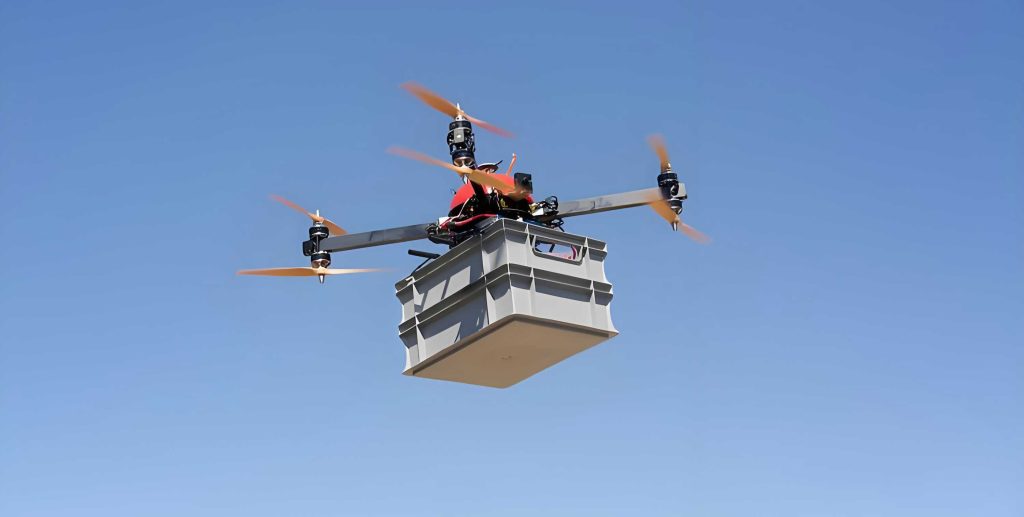
The integration of UAV drones into firefighting is not merely an addition of equipment; it represents a fundamental shift in operational doctrine. From my perspective in the field, the advantages are not theoretical but tangible and immediate.
Operational Advantages of UAV Drones in Firegrounds
The core benefits of deploying UAV drones can be summarized in their unmatched flexibility, sensory reach, and risk mitigation capabilities.
| Parameter | Traditional Ground/Manual Reconnaissance | UAV Drone-Based Reconnaissance |
|---|---|---|
| Response Time to Overhead View | Minutes to Hours (requires positioning, access) | Seconds to Minutes (immediate launch) |
| Field of View & Perspective | Ground-level, obstructed, limited | 360° aerial, unobstructed, synoptic |
| Access to Hazard Zones | High risk to personnel; often impossible | Minimal to no risk; direct access feasible |
| Real-time Data Streaming | Delayed, verbal reports, limited imagery | Live HD video, thermal, multispectral feeds |
| Personnel Safety Impact | Direct exposure to heat, toxins, collapse risk | Personnel operate from a safe distance |
1. Rapid Deployment and Mobility: The compact size and aerial nature of UAV drones render them independent of terrestrial obstacles. In dense urban canyons, remote wilderness, or gridlocked traffic corridors, our UAV drones can be airborne and on-scene in minutes. This agility translates directly into preserved life and property, as every second counts during the initial fire growth phase. The mobility advantage over traditional ground vehicles is not just significant; it is often the difference between containment and catastrophe.
2. Comprehensive Situational Awareness: Equipped with high-resolution visual, thermal, and multispectral sensors, UAV drones provide the command team with a god’s-eye view of the incident. This perspective is transformative. We can track fire fronts in forest blazes, identify structural integrity issues in building fires, and map the entire perimeter of an industrial fire in real-time. The data fusion from these UAV drones allows for a dynamic common operational picture (COP). The effectiveness of a response plan $E_{plan}$ can be conceptually linked to the quality of situational awareness $SA$ and the speed of its acquisition $t_{SA}$:
$$E_{plan} \propto \frac{SA}{t_{SA}}$$
UAV drones optimize this relationship by maximizing $SA$ (through multi-sensor data) and minimizing $t_{SA}$ (through rapid deployment).
3. Safe Incursion into Extreme Hazard Zones: This is, from an operator’s standpoint, the most critical advantage. Fires involving chemicals, radioactive materials, or unstable structures pose unacceptable risks to human scouts. Our UAV drones serve as fearless probes. They can approach vapor clouds, map heat plumes from a safe stand-off distance, and enter collapsed voids to search for voids. The value here is measured in lives saved—both civilian and responder. By deploying UAV drones into these “no-go” zones, we gather essential intelligence without compromising safety, adhering to the fundamental principle of risk-aware decision-making.
4. Persistent Monitoring and Assessment: Modern UAV drones offer extended endurance. This enables continuous orbit over an incident, providing a live feed of fire behavior and progression. We monitor changes in wind direction, spot new flare-ups, and assess the effectiveness of our suppression tactics in real-time. This persistent presence allows for agile adaptation of strategy, ensuring resources are always applied where they are most needed. The logistical benefit is substantial, as it reduces the need for repeated, risky manual assessments.
Concrete Applications Across the Incident Lifecycle
The utility of UAV drones extends across the entire spectrum of emergency management: prevention, response, and recovery.
| Sensor Payload | Primary Function | Specific Application in Fire & Rescue |
|---|---|---|
| Visible Light (RGB) Camera | High-definition real-time video & photography | General scene assessment, damage documentation, search (daylight), public information footage. |
| Thermal Imaging Camera | Detects infrared radiation (heat signatures) | Locating hotspots through smoke, finding hidden fire spread, night operations, victim search (life signs). |
| Multispectral/Gas Sensor | Detects specific chemical compounds or spectral bands | Identifying gas leaks (e.g., methane, CO, H2S), monitoring air quality for toxicants, assessing vegetation health for fire risk. |
| LiDAR (Light Detection and Ranging) | Measures distance with pulsed laser light to create 3D models | Mapping topography for wildfire spread modeling, assessing structural deformation post-fire, creating precise pre-incident plans. |
| Loudspeaker / Communication Relay | Broadcasts audio or acts as a cellular/Wi-Fi repeater | Directing evacuations, communicating with trapped victims, restoring comms in infrastructure-damaged areas. |
1. Fire Prevention, Monitoring, and Early Warning: Proactivity is the best defense. We routinely deploy UAV drones for preventive patrols over critical infrastructure, forests, and large public venues. Equipped with thermal sensors, these UAV drones can detect abnormal heat signatures—a smoldering electrical transformer, an illegal burn, or a nascent wildfire—long before it becomes a visible blaze. Integrated with Geographic Information Systems (GIS) and AI algorithms, data from these UAV drones fuels predictive analytics. For instance, by analyzing vegetation moisture, weather data, and historical fire patterns, risk models can pinpoint high-probability zones, allowing for pre-positioning of resources.
2. Tactical Fire Scene Reconnaissance and Intelligence: Upon arrival at a working incident, the first UAV drone is launched to become our “eyes in the sky.” This phase is critical for operational planning. The live video feed gives immediate size-up. Thermal imaging cuts through smoke to reveal the true seat of the fire, a capability that has revolutionized interior attack strategies. We use the following heuristic to prioritize sensor data: thermal for location, visual for context, and gas sensors for hazard identification. LiDAR-equipped UAV drones can perform rapid scans to generate 3D models of a compromised structure. Analyzing these models helps predict collapse zones and identify possible points of entry for rescue, governed by structural stability metrics.
3. Active Fire Suppression Support: While large-scale extinguishment is still the domain of ground crews and aerial tankers, UAV drones play crucial supportive roles. Heavy-lift UAV drones can deliver targeted extinguishing agents (e.g., dry chemical pellets for electrical fires, retardant gel for wildland interface) to precise, hard-to-reach locations, such as the roof of a high-rise or a remote spot fire. More commonly, UAV drones guide ground-based master stream appliances. By providing a top-down view, the operator of an aerial ladder or monitor nozzle can precisely adjust the stream’s trajectory for maximum effect, conserving water and increasing knockdown efficiency. The effective payload $W_{eff}$ a UAV drone can deliver is a function of its lift capacity $L$, the weight of the delivery system $S$, and the required flight time $t_f$ to the target:
$$W_{eff} = L – S – \beta \cdot t_f$$
where $\beta$ is a factor accounting for battery consumption during laden flight.
4. Search, Rescue, and Command & Control: In dense smoke or at night, thermal cameras on UAV drones become lifesaving tools for locating missing persons. The efficiency $\eta_{search}$ of a UAV drone-aided search in a given area $A$ compared to a ground team can be modeled as:
$$\eta_{search} = \frac{v_{UAV} \cdot \phi_{sensor}}{v_{ground} \cdot w_{team}}$$
where $v$ is velocity, $\phi_{sensor}$ is the sensor’s effective sweep width, and $w_{team}$ is the ground team’s sweep width. Furthermore, UAV drones can act as agile communication relays, creating a temporary mesh network to restore command links between isolated teams and the incident command post, ensuring seamless coordination.
5. Post-Incident Investigation and Damage Assessment: After the fire is out, UAV drones provide a safe and efficient platform for forensic documentation and loss estimation. High-resolution photogrammetry flights create detailed orthomosaics and 3D models of the scene. These models allow investigators to virtually navigate the site, measure burn patterns, and determine the point of origin with high accuracy. For insurance and reconstruction purposes, the data from these UAV drones provides an indisputable factual record of the damage extent.
Future Trajectories: Towards an Autonomous and Integrated Ecosystem
The future of UAV drones in firefighting is one of deepening integration, enhanced intelligence, and greater autonomy. Several key technological vectors will drive this evolution.
1. Core Technological Innovations:
Propulsion and Endurance: The current limitation of battery life is a primary focus. Next-generation power sources like solid-state batteries promise higher energy density and safety. The theoretical energy density $E_{ssb}$ can be compared to current Li-ion $E_{li}$ as a target ratio:
$$\frac{E_{ssb}}{E_{li}} \gg 1$$
Hydrogen fuel cells offer another pathway for long-endurance missions, with their performance often analyzed via Ragone plots comparing specific power to specific energy. Hybrid systems may become the norm for different mission profiles.
Communication and Data Link Resilience: The advent of 5G and mesh networking technologies will enable robust, high-bandwidth data pipelines for UAV drones. This allows for the real-time streaming of ultra-high-definition video, multispectral data, and dense 3D point clouds without latency. The data rate $C$ achievable under a given bandwidth $B$ and signal-to-noise ratio (SNR) is given by Shannon’s theorem:
$$C = B \log_2(1 + \text{SNR})$$
Future networks will maximize $C$ for UAV drone fleets, enabling true real-time collaborative sensing.
Artificial Intelligence and Autonomy: AI is moving from a post-processing tool to an onboard, real-time co-pilot. Future UAV drones will feature advanced computer vision for automatic threat detection (e.g., spotting flashover conditions, identifying victims). They will be capable of autonomous swarming, where a fleet of UAV drones collaboratively maps a large wildfire, optimizing their flight paths using algorithms that minimize total mission time while maximizing area coverage. Decision-support algorithms will analyze fused sensor data to recommend optimal attack strategies to incident commanders.
2. Professionalization and Training: As UAV drones become more complex and integral to operations, specialized training programs are essential. Future firefighters will require certifications not just in piloting, but in data interpretation, sensor management, and airspace coordination. Simulation-based training for complex UAV drone operations in virtual fire environments will become standard.
3. System-of-Systems Integration and Collaborative Response: The ultimate vision is a fully integrated “smart fireground.” UAV drones will not operate in isolation but as key nodes in a network that includes ground robots, connected firefighter gear (PPE sensors), advanced fire apparatus, and satellite data. For example, a UAV drone identifies a hotspot; it automatically tasks a ground robot to apply coolant; meanwhile, it updates the location of all firefighters on the scene via their wearable displays. This level of interoperability, enabled by common data standards and communication protocols, will create a cohesive and immensely powerful force multiplier for firefighting and rescue operations.
In conclusion, from my vantage point within the fire service, UAV drones have ceased to be novel gadgets and have become indispensable force multipliers. Their ability to enhance safety, accelerate decision-making, and deliver precise actionable intelligence is reshaping the very fabric of firefighting and technical rescue. The ongoing journey of innovation in UAV drone technology—spanning energy, connectivity, and artificial intelligence—promises to further unlock their potential. As we continue to integrate and adapt these tools, we are building a future where emergency responses are faster, smarter, and safer than ever before, ultimately saving more lives and protecting our communities with unprecedented efficiency.