
Traditional audiovisual archival collection methods face significant limitations in capturing urban landscapes comprehensively. Conventional ground-level photography restricts perspectives to available building heights, resulting in fragmented documentation of urban development. Manned aerial photography remains impractical for routine archival work due to regulatory complexities and prohibitive costs. However, the maturation of camera drone technology has revolutionized this field, offering unprecedented flexibility and accessibility. This article examines the classification, operational advantages, and implementation considerations of camera UAVs in audiovisual preservation.
Strategic Significance of Camera UAV Deployment
Camera drones fundamentally transform archival methodology through three-dimensional spatial documentation. The elevated vantage point enables holistic urban visualization unattainable through terrestrial methods, mathematically represented by the expanded coverage area:
$$A = \pi \cdot r^2 \cdot \csc(\theta)$$
Where \(A\) = effective coverage area, \(r\) = operational radius, and \(\theta\) = camera depression angle. This expanded perspective captures urban morphology dynamics critical for historical documentation. Unlike periodic manned missions, camera UAVs facilitate continuous urban change monitoring with operational costs reduced by approximately 78% according to comparative analyses:
| Parameter | Manned Aircraft | Camera UAV | Reduction |
|---|---|---|---|
| Preparation Time | 48-72 hours | 15-30 minutes | 96.5% |
| Cost per km² | $1,200-$2,500 | $80-$150 | 78.3% |
| Minimum Altitude | 500m | 5m | 99% |
The economic and operational advantages establish camera drones as indispensable tools for contemporary archival practice.
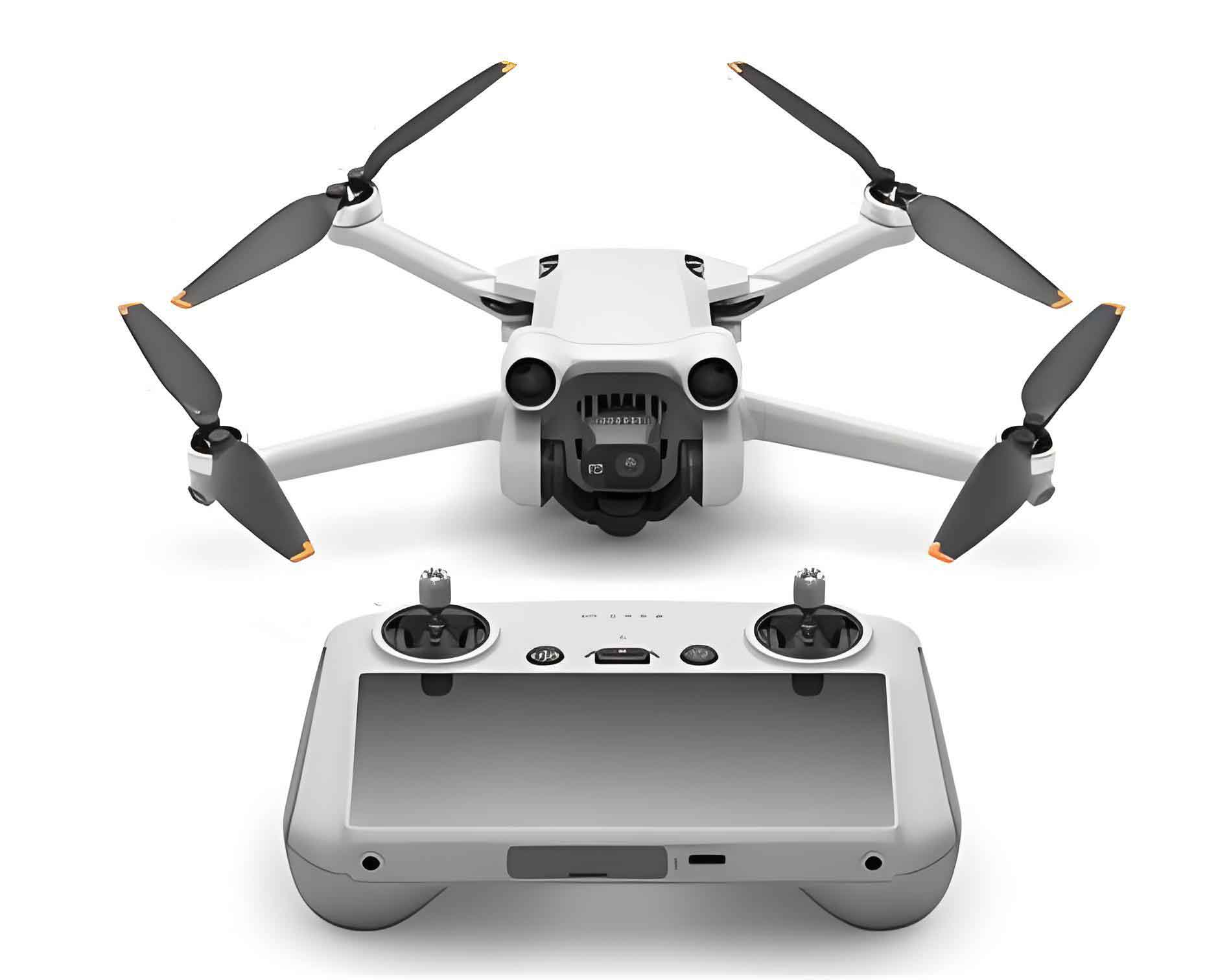
Taxonomy of Camera UAV Platforms
Modern camera drone systems comprise four principal configurations with distinct operational profiles:
| Platform Type | Endurance | Payload Capacity | Operational Complexity | Archival Applicability |
|---|---|---|---|---|
| Fixed-Wing UAV | 120-180 min | 1.2-3.5 kg | High (5/5) | Large-scale mapping |
| Rotary-Wing (Helicopter) | 45-90 min | 5-15 kg | Very High (4.8/5) | Cinematic documentation |
| Multi-Rotor Drone | 25-40 min | 0.5-2.5 kg | Low (1.5/5) | Routine archival |
| Aerostatic Platform | 300+ min | 8-20 kg | Moderate (3/5) | Static observation |
Multi-rotor camera drones dominate archival applications due to vertical takeoff/landing capabilities and positional stability governed by:
$$T = \frac{W}{n \cdot \eta \cdot \sqrt{\frac{\rho \cdot A}{2}}}$$
Where \(T\) = thrust per motor, \(W\) = total weight, \(n\) = number of rotors, \(\eta\) = propeller efficiency, \(\rho\) = air density, and \(A\) = rotor disk area. This stability enables precise hovering essential for architectural documentation.
Operational Implementation Framework
Safety Management Protocols
Camera UAV operations require rigorous risk mitigation strategies. The probability of operational failure follows:
$$P_f = 1 – \prod_{i=1}^{n}(1 – \lambda_i t)$$
Where \(\lambda_i\) = failure rate of component \(i\), \(t\) = flight duration. Essential safeguards include:
- Automated Return-to-Home at critical battery thresholds (typically 25%)
- Triple-redundant IMU systems with Kalman filtering
- Geofencing compliance with NOTAM restrictions
Professional Competency Development
Effective camera drone operation requires specialized training progressing through three competency tiers:
$$C = \int_{0}^{T} k \cdot e^{-\alpha t} \cdot S(t) \,dt$$
Where \(C\) = cumulative competency, \(k\) = training intensity, \(\alpha\) = skill decay coefficient, \(S(t)\) = flight frequency function. Certification programs should exceed 40 flight hours covering:
- Meteorological assessment (max wind tolerance: \(V_{max} = 0.2 \times \sqrt{T/W}\))
- Electromagnetic interference detection
- Emergency procedures simulation
Regulatory Compliance Architecture
Camera UAV operations must navigate complex regulatory frameworks. Critical compliance parameters include:
| Maximum Altitude | 120m AGL (standard) | 400ft FAA |
| Visual Line of Sight | ≤500m horizontal | FCC Part 107 |
| Airspace Authorization | LAANC automated approval | UASFM updates |
Operators must implement automated airspace monitoring systems with real-time TFR updates.
Transformative Applications in Archival Practice
Camera UAVs enable unprecedented documentation methodologies:
- Temporal Urban Analysis: 4D city modeling through periodic overflights with positional accuracy \(\sigma_p = 0.3m + 1ppm \times D\)
- Infrastructure Documentation: Bridge inspection with defect detection resolution \(\delta = \frac{h \cdot s}{f}\) where \(h\) = altitude, \(s\) = sensor size, \(f\) = focal length
- Cultural Heritage Preservation: Photogrammetric reconstruction with point cloud density >500 points/m²
The information yield from camera drone operations follows logarithmic growth:
$$I = k \cdot \ln\left(1 + \frac{A \cdot R}{GSD^2}\right)$$
Where \(I\) = information content (bits), \(A\) = coverage area, \(R\) = resolution, \(GSD\) = ground sampling distance. This equation quantifies the archival value enhancement through camera UAV deployment.
Future Development Trajectory
Emerging technologies will further integrate camera drones into archival workflows:
- Swarm intelligence for large-area documentation: \(N_{opt} = \sqrt{\frac{A}{v \cdot t \cdot d^2}}\)
- AI-assisted metadata generation through computer vision
- Blockchain-verified temporal authentication
- Hybrid VTOL platforms merging endurance with flexibility
These advancements will establish camera UAVs as central nodes in distributed archival networks, fundamentally transforming how societies preserve visual heritage. The continuous evolution of camera drone technology promises increasingly sophisticated capabilities for capturing urban narratives across temporal dimensions.