
From my professional vantage point, the evolution of news gathering has been profoundly marked by the integration of drone technology. The imperative for timeliness in political news, which demands comprehensive event capture and rapid dissemination under stringent deadlines, has consistently pushed media institutions to seek more agile tools. Traditional news photography, often hamstrung by environmental constraints, challenging terrain, and equipment limitations—especially during breaking news, complex scenarios, or disaster coverage—has found a powerful ally in unmanned aerial vehicles (UAVs). The advent of drone aerial photography has revolutionized the means of news production. Leveraging their portability, flexibility, cost-effectiveness, and high efficiency, drones have dramatically expanded the visual perspective of journalism, granting reporters unprecedented angles and methodologies. The application of drone aerial photography in news reporting not only enhances the visual expressiveness and artistic impact of news imagery but also enables media outlets to capture first-hand footage from the scene in a remarkably short timeframe, thereby significantly augmenting the authenticity and comprehensiveness of reports. In the specific context of political news, drones, with their unique capacity for panoramic and detailed capture, assist audiences in gaining a deeper understanding of the background and developmental脉络 of news events. However, the widespread application of this technology also introduces multifaceted challenges. Therefore, a thorough analysis of the advantages of drone aerial photography, the challenges it faces in political news reporting, and the exploration of optimization pathways have become critical subjects for the sustainable development of the journalism industry.
Currently, the application of drone aerial photography in political news is becoming increasingly prevalent, with its presence now commonplace in coverage of large-scale events and investigative reports. The emergence of drone technology has diversified the angles and expressive methods available for political news reporting. Previously constrained by singular ground-level perspectives, traditional methods struggled to present the full scope of large events or complex scenes. Drones, with their agile flight capabilities, overcome this limitation. They can deliver both sweeping aerial views and intimate low-altitude details, rendering news reports more three-dimensional and vivid. The primary advantages can be systematically analyzed as follows.
First, drones achieve unparalleled access and perspective. In settings like large assemblies or political rallies, traditional cameras were limited to fixed or ground-based angles. Drones liberate the camera, offering dynamic, multi-angle coverage that provides a comprehensive presentation of the event. This allows the audience to better grasp the context and significance of the news story. For instance, at major international summits or government activities, drones break free from terrestrial constraints, capturing high-altitude panoramas. This “bird’s-eye view” offers audiences a clearer understanding of the event’s macro-background. Conversely, drones excel at low-altitude shooting, capturing real-time details such as facial expressions and crowd reactions. These low-angle shots can highlight emotional nuances and foster a sense of intimacy and authenticity in the reporting.
Second, the operational simplicity and rapid deployment capability of drones are paramount for news时效性. Compared to setting up traditional filming equipment, a drone can be airborne in an extremely short time, requiring minimal preparation. This allows news teams to respond instantly to unfolding events, capturing critical early footage that greatly enhances the timeliness of news reporting. The flexibility to adjust flight paths and camera angles in real-time ensures the richness of the news content. This efficiency and multi-perspective presentation solidify drones as an indispensable tool in modern journalism, with their advantages becoming ever more pronounced in political news coverage. The traditional model, where journalists physically navigate to a scene to present a third-person narrative, often suffers from critical delays and an incomplete visual picture. Drone aerial photography effectively mitigates these shortcomings.
We can summarize the comparative shift brought by drones using the following conceptual model for news timeliness:
$$ T_{news} = \frac{C_{event}}{S_{capture} + P_{process} + D_{disseminate}} $$
Where \( T_{news} \) represents the effective timeliness index of the news, \( C_{event} \) is the completeness of event capture, \( S_{capture} \) is the time required for scene capture, \( P_{process} \) is the processing/editing time, and \( D_{disseminate} \) is the dissemination time. Drone technology directly optimizes \( S_{capture} \) by reducing deployment time and enhances \( C_{event} \) through multi-angle coverage, thereby increasing the overall value of \( T_{news} \).
However, despite these clear advantages, the application of drone aerial photography in political news reporting is fraught with significant challenges. These hurdles range from technical and operational limitations to ethical and legal dilemmas, all of which can impede the technology’s full potential.
Technical Challenges in Deployment
The technical constraints of current drone systems pose a direct limitation on their journalistic utility. The most persistent issue is insufficient flight endurance. While battery technology has improved, the energy demands of prolonged, high-intensity news coverage—such as following a political campaign trail or documenting a day-long summit—often outstrip a single battery’s capacity. This can lead to crucial moments being missed. The challenge is quantified by the relationship between flight time \( t_{flight} \), battery capacity \( B \), and power consumption \( P_{total} \):
$$ t_{flight} = \frac{B}{P_{total}(v, w, c)} $$
Here, total power consumption \( P_{total} \) is a function of flight velocity \( v \), wind resistance \( w \), and camera system load \( c \). In adverse conditions, \( P_{total} \) increases, drastically reducing \( t_{flight} \). Therefore, developing higher-density batteries and rapid charging solutions is an urgent necessity.
Another critical technical challenge is platform stability and weak anti-interference capability. In complex urban environments characterized by unpredictable wind patterns around tall buildings, or in areas with strong electromagnetic interference, drones can become unstable. This instability results in shaky, unusable footage. The lack of robustness in challenging meteorological or radio-frequency conditions remains a significant barrier to reliable newsgathering.
Operational Hurdles and the Imperative for Drone Training
Operational problems are equally concerning and are intrinsically linked to the quality of the operator. The skill level of the pilot is paramount. Many operators enter the field without standardized, professional drone training, leading to uneven competency. In complex environments or during unexpected situations—like a sudden weather change during an outdoor political rally—an inexperienced operator may mishandle the equipment, resulting in damaged hardware or failed missions, ultimately compromising the acquisition of vital news素材. This highlights a core deficiency: the lack of a structured, industry-wide framework for journalistic drone training.
Furthermore, drones exhibit poor environmental adaptability. Performance is severely limited by恶劣天气 such as high winds, heavy rain, or extreme temperatures, which affect flight stability. Complex terrains, especially dense urban landscapes with signal-blocking structures, increase flight difficulty and risk. Safety is the ultimate operational concern. Technical failures, pilot error, or sudden environmental changes can lead to a loss of control or even a crash, posing risks to people and property on the ground. Establishing完善的操作规范, real-time monitoring protocols, and emergency procedures is essential, and these competencies must be rooted in comprehensive drone training.
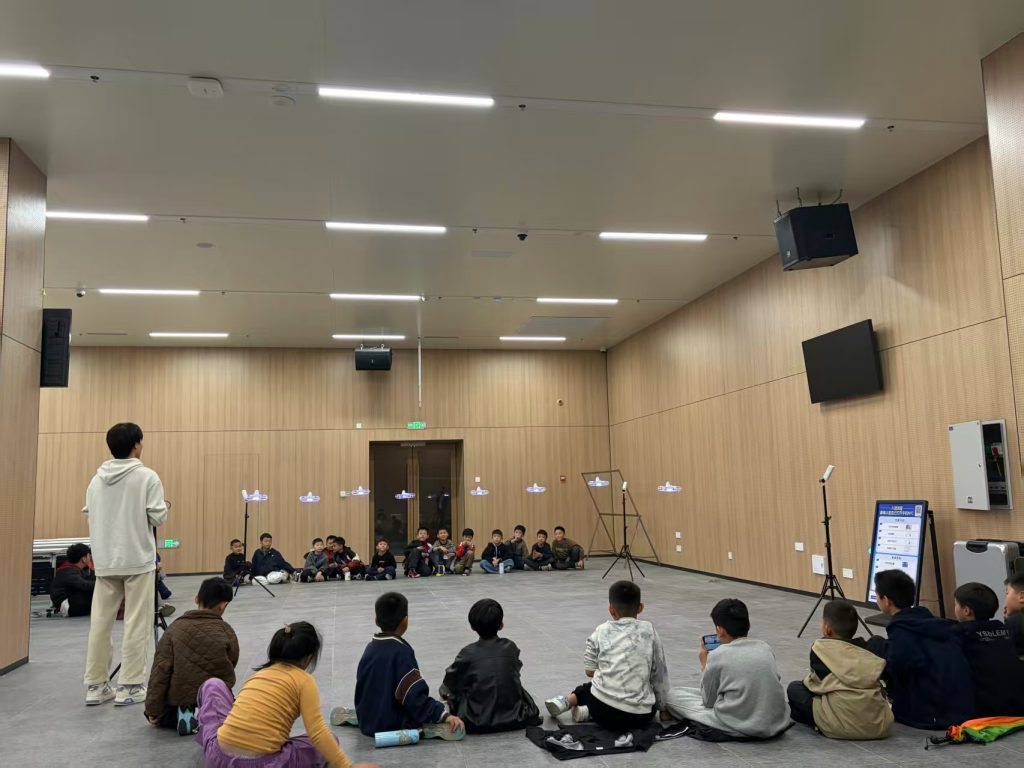
The image above underscores the critical need for professional, hands-on drone training to ensure safe and effective operations in the field.
Ethical and Legal Considerations
The use of drones in political news inevitably raises serious ethical and legal questions concerning privacy and public safety. The ability of a drone to effortlessly capture imagery over private spaces and public areas significantly increases the risk of privacy infringement. When covering sensitive topics involving government activities or social issues, media institutions face the delicate task of balancing the public’s right to know with the individual’s right to privacy. Navigating no-fly zones, adhering to aviation regulations, and making ethical editorial decisions about aerial footage are complex challenges that require clear internal guidelines and a deep understanding of media law.
The following table summarizes the key challenges and their direct impact on political news reporting:
| Challenge Category | Specific Issues | Impact on News Reporting |
|---|---|---|
| Technical | Limited Battery Endurance; Platform Instability; Weak Signal in Urban Canyons | Missed coverage, unusable footage, interrupted live feeds, reduced operational range. |
| Operational | Insufficient Pilot Skill (drone training gap); Poor Environmental Adaptability; Safety Risks | Equipment loss, failed missions, safety incidents, inability to handle complex shots. |
| Ethical/Legal | Privacy Violation Risks; Regulatory Non-Compliance; Sensitive Area Overflight | Legal liability, public backlash, revoked permits, ethical breaches damaging credibility. |
Strategic Pathways for Optimization and Integration
To harness the full potential of drone aerial photography while mitigating its risks, a multi-faceted strategic approach is required. This involves technological advancement, human capital development through rigorous drone training, stringent safety protocols, and synergistic technology fusion.
1. Upgrading Drone Technology and Capabilities
Technological innovation must focus on core limitations. Enhancing endurance requires research into higher energy-density batteries and alternative power systems. Improving stability necessitates advancements in flight controllers, gimbal technology, and airframe design for better wind resistance. Practical upgrades include integrating enhanced transmission modules for clearer live feeds, employing LiDAR for superior environmental sensing, installing anti-icing systems for cold-weather operations, and implementing advanced autonomous obstacle avoidance. Furthermore, optimizing automated flight systems using AI algorithms can allow drones to dynamically adjust flight paths and shooting angles based on real-time environmental data, ensuring consistent, high-quality framing even in chaotic news environments.
2. Elevating Operator Proficiency Through Systematic Drone Training
The operator is the most critical link in the chain. Media organizations must invest in building a科学, 系统的 training curriculum for drone training. This curriculum should extend beyond basic flight controls to encompass:
– Advanced flight operation skills and safety protocols.
– Aerial cinematography principles, shot composition, and visual storytelling.
– Pre-flight planning, logistics, and legal checklists.
– Field shooting techniques for various news scenarios (rallies, disasters, static events).
– Post-production workflows for aerial footage.
– Emergency response and contingency planning.
Practical, hands-on drone training under simulated field conditions is indispensable for translating theoretical knowledge into operational competence. Finally, drone training must foster team collaboration and应急处理能力. For major political events, pilots must coordinate seamlessly with reporters, editors, and producers. A team-trained in multi-drone operations can manage tasks efficiently, preventing single-point failures and ensuring comprehensive coverage. The ability to calmly adjust plans amid unexpected developments is a skill honed through experience and scenario-based drone training.
A model for an effective drone training program can be represented as a function of core competencies:
$$ C_{pilot} = \alpha(T_{theory} + \beta P_{practice}) + \gamma T_{team} + \delta E_{response} $$
Where \( C_{pilot} \) is the overall pilot competency, \( T_{theory} \) is theoretical knowledge, \( P_{practice} \) is practical flight hours weighted by factor \( \beta \), \( T_{team} \) is team协作 training, and \( E_{response} \) is emergency response training, with \( \alpha, \gamma, \delta \) being importance coefficients.
| Training Module | Core Content | Objective |
|---|---|---|
| Regulations & Safety | Airspace law, privacy law, risk assessment, insurance, pre-flight checks. | Ensure legal compliance and safe operation fundamentals. |
| Flight Mastery | Advanced maneuvering, flight in difficult conditions, manual camera control. | Develop precise, reliable piloting skills under pressure. |
| Journalistic Application | News scene assessment, shot planning for narrative, live reporting integration. | Align drone operation with journalistic goals and storytelling. |
| Technical Operations | Maintenance, troubleshooting, data management, multi-drone coordination. | Ensure technical reliability and efficient workflow. |
3. Enhancing Safety and Regulatory Compliance
With expanding use, a robust framework for safety and compliance is non-negotiable. Media outlets must establish internal飞行安全规范 covering takeoff/landing zone selection, flight path planning, and emergency contingency plans. A formalized Standard Operating Procedure (SOP) ensures consistency. Privacy protection must be proactively addressed through operational guidelines that respect no-fly zones over sensitive private areas and mandate consultation with relevant authorities before filming certain locations. Internal management policies must clearly define the technical and ethical standards for drone use in news, ensuring its application is both effective and responsible. A safety risk index \( R_{safe} \) can be conceptualized as:
$$ R_{safe} = \frac{H_{environment} \times V_{failure}}{P_{preparation} \times S_{protocol}} $$
Aiming to minimize \( R_{safe} \) involves reducing environmental hazard \( H_{environment} \) and vehicle failure probability \( V_{failure} \), while increasing thorough preparation \( P_{preparation} \) and adherence to safety protocols \( S_{protocol} \).
4. Fostering Technological Fusion for Next-Generation Reporting
The future of drone journalism lies in convergence with other disruptive technologies. Fusion with 5G networks is transformative. The high bandwidth and low latency of 5G enable the real-time transmission of ultra-high-definition drone footage directly to the newsroom, allowing for immediate editing and broadcast, which is crucial for breaking political news. Integration with big data analytics allows for the processing of vast amounts of aerial imagery to identify patterns, measure crowd sizes, or monitor changes over time, adding a layer of data-driven insight to reports. Perhaps most immersively, coupling drone航拍 with Virtual Reality (VR) technology creates powerful new narratives. Drones equipped with 360-degree VR cameras can capture complete spherical views of an event. Audiences using VR headsets can then experience the news scene from within, fostering a profound sense of presence and understanding. This fusion significantly enhances engagement and the experiential quality of news.
| Fusion Technology | Synergy with Drone Aerial Photography | Benefit for Political News |
|---|---|---|
| 5G Communication | Enables real-time HD/4K直播 from drone to studio. | Maximizes时效性, enables live aerial commentary and instant analysis. |
| Big Data / AI | AI analyzes aerial footage for object detection, crowd counting, change comparison. | Provides quantitative backing, reveals hidden trends, automates certain production tasks. |
| Virtual Reality (VR) | Drones capture 360° spherical video for immersive VR experiences. | Creates empathy and deep understanding by placing the viewer “on the scene.” |
The optimized news production workflow incorporating these elements can be described as:
$$ N_{final} = \int (D_{capture}(t) \otimes 5G_{transmit}) \, dt + AI_{process} + VR_{package} $$
Where the final news product \( N_{final} \) is the integral over time of the drone capture function \( D_{capture} \) convolved with 5G transmission, subsequently processed by AI and packaged for potential VR distribution.
Conclusion and Future Outlook
The integration of drone aerial photography into political news reporting represents a paradigm shift, offering powerful tools for宏观 and微观 storytelling that brings audiences closer to the truth of events. However, its effective and responsible application is contingent upon overcoming significant technical, operational, and ethical hurdles. The path forward requires a committed focus on technological advancement to improve drone durability and intelligence. It critically depends on institutional investment in comprehensive, standardized drone training programs to build a cadre of skilled, safety-conscious, and ethically-minded pilot-journalists. Simultaneously, the establishment of robust internal safety and compliance frameworks is essential to ensure operations are sustainable and legally sound. Looking ahead, the convergence of drone technology with 5G, AI, and VR promises to further redefine the news landscape, offering even more immersive, timely, and insightful coverage. By strategically addressing the challenges and harnessing these synergies, news media can fully unlock the potential of drone aerial photography, significantly enhancing the depth, impact, and credibility of political news reporting for a modern audience. Continuous innovation in both technology and drone training will be the cornerstone of this evolution.