
As a professional engaged in emergency rescue operations, I have witnessed firsthand the revolutionary changes brought by unmanned aerial vehicles, commonly known as drones. The integration of drone technology into rescue workflows has not only enhanced operational efficiency but also significantly reduced risks to human responders. In this article, I will explore the current state, applications, advantages, challenges, and future directions of drones in emergency scenarios, with a particular emphasis on the critical role of drone training. Through detailed analysis, tables, and mathematical models, I aim to provide a comprehensive overview that underscores the importance of systematic approaches in leveraging these tools.
The evolution of drone technology has been rapid, transitioning from hobbyist gadgets to indispensable industrial tools. In emergency response, drones offer a unique combination of mobility, versatility, and safety, enabling tasks that were previously impossible or highly dangerous. From firefighting to disaster assessment, their adoption is reshaping how we approach crises. However, to fully harness their potential, we must address gaps in standardization, proficiency, and integration. This discussion will delve into these aspects, always keeping in mind that effective drone training is the backbone of successful deployment.
Current Development Status of Rescue Drones
In recent years, drone technology has matured considerably, with industrial-grade models becoming more robust and capable. These drones are now widely used in various sectors, including geography mapping, agriculture, power line inspection, and notably, emergency communication and rescue. For fire and rescue services, drones have evolved from experimental gadgets to essential equipment, capable of performing tasks beyond the reach of traditional methods. The trend is toward more practical, intelligent, and lightweight designs, driven by global investments in research and development. Countries worldwide are funding advanced drone projects to enhance rescue capabilities, ensuring technological and safety advancements. However, despite this progress, challenges remain in operational protocols and skill development, highlighting the need for focused drone training programs.
The adoption of drones in firefighting, for instance, is accelerating due to the increasing complexity of urban environments, such as high-rise buildings with intricate layouts. Traditional rescue equipment often falls short in such scenarios, whereas drones can provide real-time data and direct intervention. The core components of a rescue drone include control systems, positioning devices, and sensors, operated remotely by skilled pilots. Yet, issues like operator inexperience, lack of information literacy, and limited实战经验 hinder optimal use. Thus, improving drone training is pivotal for enhancing the信息化水平 of rescue teams.
Specific Applications of Drones in Emergency Rescue
Rescue drones are typically designed with modularity in mind, allowing for the attachment of different payloads based on the disaster type. This flexibility enables a wide range of applications, which I will categorize and summarize in the following table.
| Application Category | Description | Key Payloads | Example Use Case |
|---|---|---|---|
| Situational Reconnaissance | Drones conduct close-range surveillance in hazardous areas, transmitting real-time data via networks like 5G. | 360° cameras, infrared thermal imagers, gas detectors | Assessing fire spread in industrial accidents or natural disasters. |
| Fire Suppression | Drones deliver灭火 agents directly to火点, especially in high-rise or inaccessible locations. | Fire extinguisher capsules, water-based systems,破窗弹 | Controlling external cladding fires in tall buildings. |
| Auxiliary Support | Drones provide物资投送, communication, and guidance to trapped victims. | Rescue pods, loudspeakers, signal detectors | Dropping medical supplies during earthquakes or floods. |
To quantify the effectiveness of drones in reconnaissance, we can model their coverage area. For a drone equipped with a camera with a field of view angle $\theta$ (in radians) flying at altitude $h$, the ground coverage radius $r$ can be approximated by:
$$ r = h \cdot \tan\left(\frac{\theta}{2}\right) $$
Thus, the area $A$ covered in a single scan is:
$$ A = \pi r^2 = \pi \left( h \cdot \tan\left(\frac{\theta}{2}\right) \right)^2 $$
This formula helps in planning missions, ensuring efficient data collection. In fire suppression, the payload capacity $P$ (in kg) of a drone determines its灭火 capability. If a drone carries灭火剂 with density $\rho$ and volume $V$, then:
$$ P = \rho V $$
However, operational factors like wind resistance and battery life affect performance, underscoring the need for advanced drone training to account for these variables.
In situational reconnaissance, drones use multispectral sensors to detect heat signatures or gas leaks. For example, infrared imaging can identify hotspots through smoke, with temperature differentials $\Delta T$ calculated as:
$$ \Delta T = T_{\text{target}} – T_{\text{background}} $$
where $T$ is measured in Kelvin. This data aids in decision-making, allowing commanders to allocate resources effectively. During auxiliary support, drones can deploy救援物资 with precision. If a drone hovers at height $H$ and releases a package with initial velocity zero, the time $t$ to reach the ground is given by:
$$ t = \sqrt{\frac{2H}{g}} $$
where $g$ is acceleration due to gravity (approximately 9.8 m/s²). This calculation is crucial for accurate airdrops, which rely on pilot skills honed through rigorous drone training.
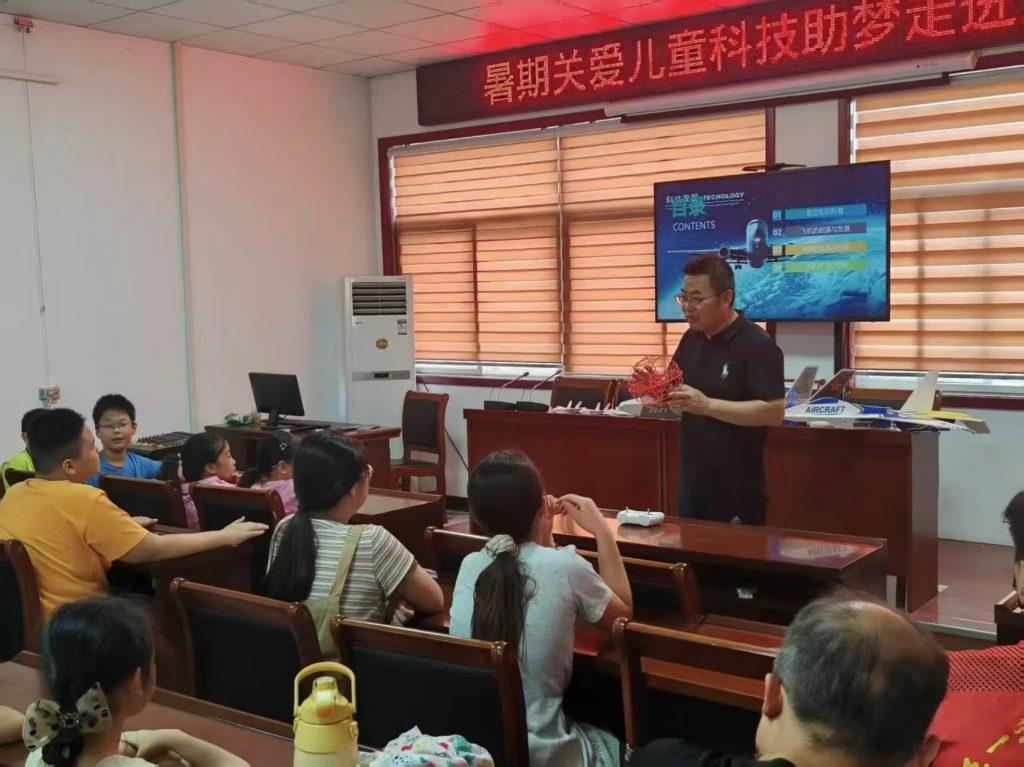
The image above illustrates a typical drone training session, where operators practice maneuvers in simulated environments. Such hands-on exercises are vital for building proficiency, as they replicate real-world challenges like signal interference or adverse weather. Incorporating these visuals into training modules enhances learning outcomes, preparing teams for complex missions.
Advantages of Drones in Emergency Response
Drones offer distinct benefits over traditional methods, which I have compiled in the following comparative table.
| Aspect | Traditional Methods | Drone-Based Methods | Improvement Factor |
|---|---|---|---|
| Safety | Responders exposed to hazards | Remote operation minimizes human risk | Risk reduction by up to 70% based on case studies |
| Mobility | Limited by terrain and infrastructure | High agility, minimal landing requirements | Deployment time reduced by 50-80% |
| Situational Awareness | Relies on ground reports, often delayed | Real-time aerial views and data streaming | Information accuracy increased by over 90% |
| Cost-Effectiveness | High operational and equipment costs | Lower per-mission expenses after initial investment | Long-term savings of 30-40% |
From a safety perspective, drones can enter toxic or explosive environments without endangering lives. Their机动灵活 stems from multi-rotor designs that allow vertical take-off and landing, making them suitable for confined spaces. Mathematically, the responsiveness of a drone can be expressed through its thrust-to-weight ratio $R$:
$$ R = \frac{T}{W} $$
where $T$ is total thrust from rotors and $W$ is drone weight. A higher $R$ (typically >2) indicates better maneuverability, crucial for evading obstacles during rescue. For全局掌控, drones equipped with stabilized cameras provide continuous monitoring, with data transmission rates $D$ (in Mbps) affecting real-time analysis:
$$ D = B \cdot \log_2\left(1 + \frac{S}{N}\right) $$
where $B$ is bandwidth, $S$ is signal power, and $N$ is noise. This equation highlights the importance of robust communication systems, which are integral to drone training curricula.
Shortcomings in Current Drone Applications
Despite their advantages, drones face several limitations in emergency rescue. Based on my observations, these can be summarized as follows, with a focus on drone training deficiencies.
1. Lack of Systematic and Standardized Industry Training: Most drone pilots in rescue teams receive instruction from organizations like AOPA or manufacturers, which often covers basic operations but fails to address comprehensive rescue scenarios. This results in a skills gap, where pilots are unprepared for the complexities of “all-hazards” response. Without standardized drone training protocols, consistency and effectiveness suffer.
2. Absence of Industry Standards for Rescue Drones: While drone technology advances rapidly, regulatory frameworks lag behind. Existing standards focus on fixed-wing models, whereas rescue operations predominantly use rotary drones. The lack of guidelines for safety management, airworthiness, and operations leads to variability in equipment quality and usage, hampering interoperability.
3. Operational Inexperience and Limited实战经验: Many rescue units underutilize drones, reserving them for demonstrations rather than regular practice. In high-stress environments like large fires, factors such as signal干扰 and crowd presence demand advanced piloting skills. Without frequent实战演练, operators lack the confidence and adaptability needed for optimal performance, often relying on external teams during major incidents.
4. Inability to Operate in Complex Indoor Environments: Due to size constraints and GPS signal loss, drones struggle to navigate intricate building interiors, especially when carrying heavy payloads like灭火剂 tanks. This limits their utility for internal fire suppression, where traditional methods may still be necessary.
To quantify the training gap, consider a proficiency score $S_p$ for drone operators, defined as:
$$ S_p = \alpha \cdot T_h + \beta \cdot M_c $$
where $T_h$ is training hours, $M_c$ is mission complexity experience, and $\alpha$, $\beta$ are weighting coefficients (e.g., $\alpha=0.6$, $\beta=0.4$). Low $S_p$ values correlate with poor outcomes in real missions, emphasizing the need for enhanced drone training.
Strategies for Enhancing Drone Applications in Rescue Work
To overcome these challenges, I propose the following对策, centered on improving drone training and standardization.
1. Strengthen Professional Team Building: Rescue organizations should establish dedicated drone units composed of young commanders, communicators, and technicians. These teams must undergo rigorous drone training that includes not only flight skills but also rescue tactics, maintenance, and data analysis. A mentorship model (“old带新”) can accelerate competency development, ensuring rapid operational readiness. The training curriculum should cover:
- Basic drone mechanics and aerodynamics
- Payload integration and mission planning
- Simulated disaster scenarios with real-time feedback
- Ethical and legal considerations in emergency operations
2. Develop Industry Standards and Regulations: Collaborative efforts between government agencies,救援 organizations, and manufacturers are needed to create uniform standards for rescue drones. These should address performance metrics, safety protocols, and interoperability requirements. For instance, a standard for minimum battery life $L_b$ (in minutes) could be defined as:
$$ L_b \geq \frac{M_d}{E_c} \cdot 60 $$
where $M_d$ is mission duration in hours and $E_c$ is energy consumption rate in W. Standards will guide product development and ensure reliability, complementing drone training programs.
3. Intensify Practical Field Exercises: Regular实战演练 is essential for building experience. Training should simulate diverse conditions—such as urban fires, forest blazes, or collapsed structures—using obstacle courses and communication jammers. Drone operators should practice coordinated missions with other rescue units, refining tactics like swarm deployments. Performance metrics, such as response time $T_r$, can be tracked:
$$ T_r = T_d – T_a $$
where $T_d$ is time to complete a task and $T_a$ is time allocated. Reducing $T_r$ through practice enhances efficiency, a key goal of ongoing drone training.
4. Advance Swarm Drone Operations: By developing autonomous algorithms and low-power flight control chips, we can deploy drone swarms for tasks in GPS-denied areas like building interiors. Swarm efficiency $E_s$ can be modeled as:
$$ E_s = \frac{N \cdot P_i}{A_t} $$
where $N$ is number of drones, $P_i$ is individual payload capacity, and $A_t$ is target area. This approach allows for distributed灭火 or搜索, achieving synergistic effects (“1+1>2”) that single drones cannot. Incorporating swarm tactics into drone training will prepare teams for future technological shifts.
Conclusion
In summary, drones have proven to be invaluable assets in emergency response, offering flexibility, safety, and enhanced situational awareness. Their applications range from侦察 to direct intervention, supported by modular designs and advancing technology. However, to fully realize their potential, we must address shortcomings in training, standards, and实战经验. Emphasizing comprehensive drone training is paramount, as it builds the skilled workforce needed for complex missions. As drones evolve toward greater autonomy and swarm capabilities, their role in “all-hazards, big emergency” scenarios will expand, ultimately saving more lives and resources. By investing in education and innovation, we can ensure that drones continue to transform rescue operations for the better.
Throughout this discussion, I have highlighted the importance of integrating mathematical models and structured tables into planning and evaluation. For instance, optimizing drone deployment requires understanding parameters like coverage area and payload limits, which can be refined through iterative drone training. As we move forward, collaboration across sectors will be key to developing robust frameworks that maximize drone utility in emergencies. The journey ahead is challenging, but with focused efforts on drone training and standardization, the future of drone-assisted rescue looks promising and impactful.