
As an agricultural technology enthusiast and observer, I have closely followed the evolution of agricultural UAVs, or unmanned aerial vehicles, in modern farming. These innovative machines, designed for crop protection, have revolutionized how we approach tasks like spraying pesticides, fertilizers, and seeds. From my perspective, the adoption of agricultural UAVs represents a pivotal shift toward precision agriculture, addressing critical challenges such as labor shortages and environmental sustainability. In this article, I will delve into the current state, advantages, bottlenecks, and future prospects of agricultural UAVs, drawing from widespread trends and data to underscore their growing importance. The integration of agricultural UAVs into farming systems is not just a trend but a necessity for enhancing productivity and safety.
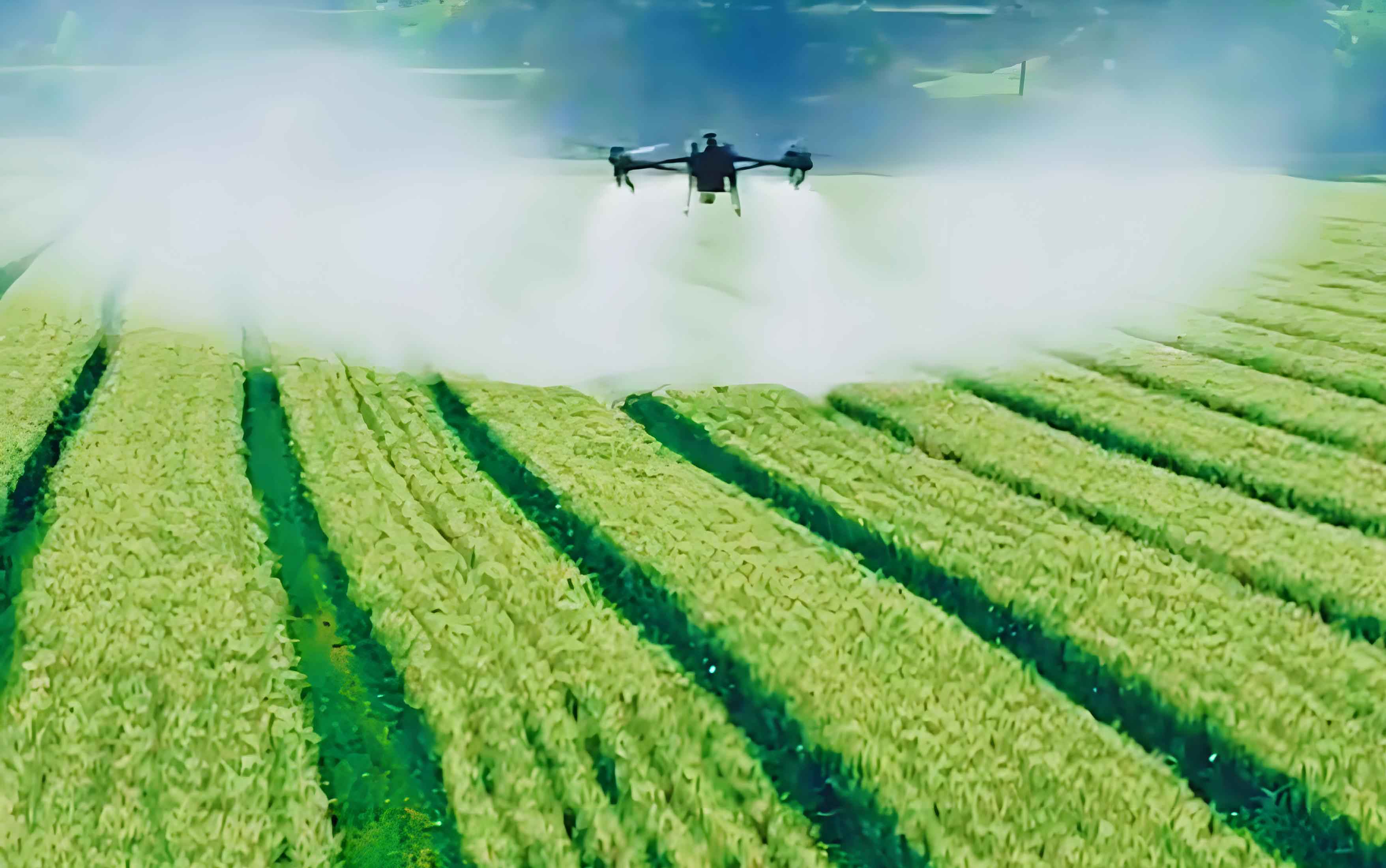
In my experience, the application of agricultural UAVs has expanded rapidly across various regions, driven by supportive policies and market demand. For instance, in many agricultural zones with flat terrain and fertile soil, crops like grains, fruits, and vegetables are cultivated over extensive areas. The proliferation of agricultural UAVs is often facilitated by government subsidies and collaborative efforts among cooperatives. To illustrate, I have compiled data on the growth of agricultural UAV adoption in a typical agricultural region, as shown in Table 1. This table highlights the increasing number of agricultural UAVs, the area they cover, and the rise in service organizations over recent years. Such growth underscores the pivotal role of agricultural UAVs in modernizing farming practices.
| Year | Number of Agricultural UAVs Deployed | Total Area Covered (Hectares) | Number of Service Organizations | Primary Crop Types Serviced |
|---|---|---|---|---|
| 2018 | 50 | 20,000 | 5 | Grains, Fruits |
| 2020 | 90 | 35,000 | 7 | Grains, Vegetables, Fruits |
| 2022 | 150 | 60,000 | 12 | Grains, Fruits, Vegetables, Legumes |
| 2024 (Projected) | 220 | 85,000 | 18 | All Major Crops |
The data reveals a consistent upward trajectory, with agricultural UAVs becoming more prevalent due to their efficiency and adaptability. Most of these agricultural UAVs are electric multi-rotor models, which offer excellent maneuverability for diverse field conditions. From my observations, the operational scope of agricultural UAVs extends beyond mere spraying; they are increasingly used for monitoring crop health and mapping fields, thereby integrating with digital farming platforms. This holistic approach enhances the value proposition of agricultural UAVs, making them indispensable tools for farmers seeking to optimize inputs and yields.
When assessing the advantages of agricultural UAVs, I find that they outperform traditional methods in multiple dimensions. First and foremost, safety is significantly improved because agricultural UAVs allow for remote operation, minimizing human exposure to harmful chemicals. This aligns with a broader trend toward reducing occupational hazards in agriculture. Secondly, the efficiency of agricultural UAVs is remarkable; they can cover large areas quickly, which is crucial during critical growth stages. To quantify this, consider the作业效率 (operation efficiency) metric, which can be expressed as:
$$E = \frac{A}{t}$$
where \(E\) is efficiency in hectares per hour, \(A\) is the area covered in hectares, and \(t\) is the time in hours. For typical agricultural UAVs, \(E\) ranges from 2.7 to 4 hectares per hour (equivalent to 40–60 mu per hour), depending on model and conditions. This efficiency far surpasses manual spraying, which often averages only 0.2–0.5 hectares per hour. Moreover, agricultural UAVs excel in resource conservation, using less water and chemicals. The savings can be modeled with the following formula for chemical usage per hectare:
$$C_{uav} = k \times C_{manual}$$
where \(C_{uav}\) is the chemical usage with agricultural UAVs, \(C_{manual}\) is the usage with manual methods, and \(k\) is a reduction factor typically between 0.5 and 0.67. This demonstrates how agricultural UAVs contribute to sustainable farming by minimizing environmental impact. Table 2 provides a comprehensive comparison between agricultural UAVs and conventional spraying techniques, highlighting key benefits such as reduced water consumption, enhanced safety, and better adaptability to varied terrains.
| Parameter | Agricultural UAV | Manual or Ground-Based Spraying | Improvement Factor with Agricultural UAV |
|---|---|---|---|
| Water Usage (Liters/Hectare) | 15–20 | 600–750 | 30–40 times less |
| Chemical Usage (Relative to Manual) | 50–67% | 100% | 33–50% reduction |
| Operational Safety | High (remote control) | Low (direct exposure) | Significantly enhanced |
| 作业效率 (Hectares/Hour) | 2.7–4.0 | 0.2–0.5 | 5–20 times faster |
| Terrain Adaptability | Excellent (flies over obstacles) | Limited (requires flat ground) | Broadened applicability |
| Spray Penetration | High (due to downward airflow) | Moderate | Improved efficacy |
Another notable advantage of agricultural UAVs is their ability to achieve precise喷洒 (spraying), thanks to technologies like GPS and sensors. This precision reduces drift and ensures even coverage, which I have seen lead to better pest control and higher crop yields. In my view, the cumulative benefits of agricultural UAVs make them a cornerstone of modern integrated pest management strategies, fostering more resilient agricultural systems.
However, despite these strengths, I have identified several bottlenecks that hinder the widespread adoption of agricultural UAVs. One major technical limitation is the payload capacity and battery life of current models. Most agricultural UAVs have a payload of around 10–20 kg, requiring frequent refills, and battery life is often limited to 10–20 minutes per charge, with charging times exceeding an hour. This can be analyzed using a time-efficiency model:
$$T_{total} = \frac{A}{E} + \left( \frac{A}{A_{flight}} \times T_{charge} \right)$$
where \(T_{total}\) is the total time to cover area \(A\), \(E\) is the efficiency during flight, \(A_{flight}\) is the area covered per battery cycle, and \(T_{charge}\) is the charging time. For instance, if an agricultural UAV covers 2 hectares per flight with a 15-minute battery and 1-hour charge, the total time for 10 hectares would be:
$$T_{total} = \frac{10}{3} + \left( \frac{10}{2} \times 1 \right) \approx 3.33 + 5 = 8.33 \text{ hours}$$
This inefficiency underscores the need for advancements in battery technology and lightweight materials. Additionally, there is a lack of standardized作业判别标准 (operation criteria) for different crops, which complicates optimal application. From my discussions with farmers, I learned that factors like crop height, growth stage, and weather conditions require tailored approaches, but universal guidelines for agricultural UAVs are still evolving. Furthermore, the supporting ecosystem for agricultural UAVs—including training, maintenance, insurance, and infrastructure—remains underdeveloped. Table 3 summarizes these bottlenecks and their implications, highlighting how they slow down the integration of agricultural UAVs into everyday farming.
| Bottleneck Category | Specific Challenges | Impact on Agricultural UAV Utilization | Potential Solutions |
|---|---|---|---|
| Technical Limitations | Limited payload (10–20 kg), short battery life (10–20 min), long charging times | Reduces operational continuity and increases downtime | Research into higher-capacity batteries, hybrid power systems |
| Standardization Gaps | Absence of unified protocols for different crops and environments | Leads to inconsistent results and potential over- or under-application | Develop industry-wide guidelines via collaborative research |
| Service Ecosystem Deficiencies | Inadequate training programs, scarce repair services, limited insurance options | Increases operational risks and costs for users | Establish certified training centers and service networks |
| Infrastructure Constraints | Poorly planned field layouts, presence of obstacles like windbreaks and power lines | Limits flight paths and reduces efficiency | Integrate UAV-friendly designs into agricultural planning |
From my perspective, addressing these bottlenecks is crucial for unlocking the full potential of agricultural UAVs. For example, innovations in battery chemistry, such as lithium-sulfur or solid-state batteries, could extend flight times, while lightweight composite materials might increase payloads. Similarly, the development of digital twins and simulation tools could help standardize operations for various crops, ensuring that agricultural UAVs deliver consistent results. I believe that collaborative efforts among manufacturers, agronomists, and policymakers will be key to overcoming these hurdles.
Looking ahead, I am optimistic about the future prospects of agricultural UAVs. The trend toward large-scale and mechanized farming is accelerating, driven by urbanization and labor migration, which increases the demand for automated solutions like agricultural UAVs. To quantify the economic potential, consider a scenario where agricultural UAV adoption reaches 60% in a region with 50,000 hectares of cropland. Assuming each crop requires an average of 3 spraying sessions per season at a service fee of $10–15 per hectare, the annual revenue from agricultural UAV services can be estimated as:
$$R = A \times r \times n \times f$$
where \(R\) is the total revenue in USD, \(A\) is the total area (50,000 hectares), \(r\) is the adoption rate (0.6), \(n\) is the number of sprays per season (3), and \(f\) is the fee per hectare per spray ($10–15). Plugging in the values:
$$R = 50,000 \times 0.6 \times 3 \times (10 \text{ to } 15) = 900,000 \text{ to } 1,350,000 \text{ USD}$$
This substantial revenue stream highlights the commercial viability of agricultural UAV services. Moreover, as precision agriculture advances, agricultural UAVs will integrate with technologies like IoT sensors and AI algorithms, enabling variable-rate application based on real-time data. The formula for variable-rate spraying can be expressed as:
$$Q(x,y) = \alpha \times S(x,y) + \beta$$
where \(Q(x,y)\) is the chemical quantity at coordinates \((x,y)\), \(S(x,y)\) is the sensor-detected stress level (e.g., from pests or nutrients), and \(\alpha\) and \(\beta\) are calibration coefficients. Such smart applications will enhance the efficiency and sustainability of agricultural UAVs. Additionally, policy support and investment in rural digital infrastructure will further propel the adoption of agricultural UAVs, making them accessible even to smallholder farmers. In my view, the convergence of these factors will drive agricultural UAVs into a new era of智慧化 (intelligent) farming, where they serve as central tools for data collection and intervention.
To elaborate on the technological evolution, I foresee agricultural UAVs becoming more autonomous and interconnected. For instance, swarm robotics could allow multiple agricultural UAVs to collaborate on large fields, optimizing coverage and time. The efficiency of a swarm can be modeled using parallel processing theory:
$$E_{swarm} = \sum_{i=1}^{N} E_i \times \eta$$
where \(E_{swarm}\) is the total efficiency of \(N\) agricultural UAVs, \(E_i\) is the efficiency of each unit, and \(\eta\) is a coordination factor (0 < \(\eta\) \leq 1). As \(\eta\) approaches 1, the system achieves near-linear scalability, demonstrating how agricultural UAVs can transform large-scale operations. Furthermore, the integration of renewable energy sources, such as solar-powered charging stations, could mitigate battery limitations, making agricultural UAVs more sustainable. These advancements will not only boost productivity but also reduce the carbon footprint of farming, aligning with global sustainability goals.
In conclusion, based on my extensive observations and analysis, agricultural UAVs are poised to revolutionize crop protection and broader agricultural practices. They offer unparalleled advantages in safety, efficiency, and resource conservation, though challenges like technical limitations and standardization gaps need to be addressed. The future is bright for agricultural UAVs, with growing market potential and technological innovations driving their adoption. I am confident that as we overcome current bottlenecks, agricultural UAVs will become ubiquitous in farming, leading us toward a more productive, sustainable, and high-tech agricultural era. The journey of agricultural UAVs is just beginning, and their impact will only deepen as they evolve alongside digital farming ecosystems.
To further contextualize this discussion, I have included additional data on the performance metrics of agricultural UAVs across different crop types, as shown in Table 4. This table illustrates how agricultural UAVs adapt to various agricultural contexts, reinforcing their versatility and value. From cereals to orchards, the application of agricultural UAVs demonstrates consistent benefits, paving the way for their expanded use in global agriculture.
| Crop Type | Typical Area per Flight (Hectares) | Optimal Spray Height (Meters) | Water Savings Compared to Traditional (%) | Common Challenges Addressed by Agricultural UAVs |
|---|---|---|---|---|
| Grains (e.g., Wheat, Rice) | 2–3 | 1–2 | 70–80 | Uniform coverage, reduced trampling |
| Fruit Trees (e.g., Apples, Citrus) | 1–2 | 2–5 | 60–70 | Access to canopy, minimal drift |
| Vegetables (e.g., Tomatoes, Lettuce) | 1.5–2.5 | 0.5–1 | 75–85 | Precision in dense planting |
| Legumes (e.g., Soybeans, Peas) | 2–3 | 1–1.5 | 65–75 | Efficiency in large fields |
This comprehensive analysis underscores why I believe agricultural UAVs are more than just tools—they are catalysts for a agricultural renaissance. As we continue to innovate and collaborate, the role of agricultural UAVs will expand, ultimately contributing to food security and environmental stewardship on a global scale.