
The convergence of digital technology and the sports industry has given rise to “Smart Sports,” a paradigm that leverages the Internet of Things, big data, and artificial intelligence to innovate and enhance traditional sporting activities and their associated industries. Within this transformative landscape, the rural sports industry emerges as a vital catalyst for comprehensive rural revitalization. This paper explores a specific, technology-driven facet of this industry: the integration of drone-based projects as a mechanism to support and accelerate the development of rural areas. By examining the conceptual framework, strategic significance, practical applications, and implementation pathways, this analysis argues that systematic drone training and deployment offer a potent, multifaceted tool for advancing agricultural modernization, diversifying rural economies, and fostering sustainable growth.
From a conceptual standpoint, rural sports industry is no longer confined to traditional physical activities. It represents an integrated sector that synergizes with cultural tourism, event management, and ecological conservation to create new business formats and economic opportunities. The “Sports +” model, particularly when fused with modern information technology, holds significant promise for optimizing rural industrial structures and stimulating local economies. Drones, or Unmanned Aerial Vehicles (UAVs), epitomize this technological fusion. As highly integrated systems embodying advancements in aeronautics, robotics, sensors, and data transmission, drones transcend their initial recreational or sporting image. Their operational characteristics—efficiency, adaptability, and the ability to perform tasks in hazardous or inaccessible environments—position them as a cornerstone technology for modern rural development. This integration forms the core of a drone training-enabled strategy for rural revitalization.
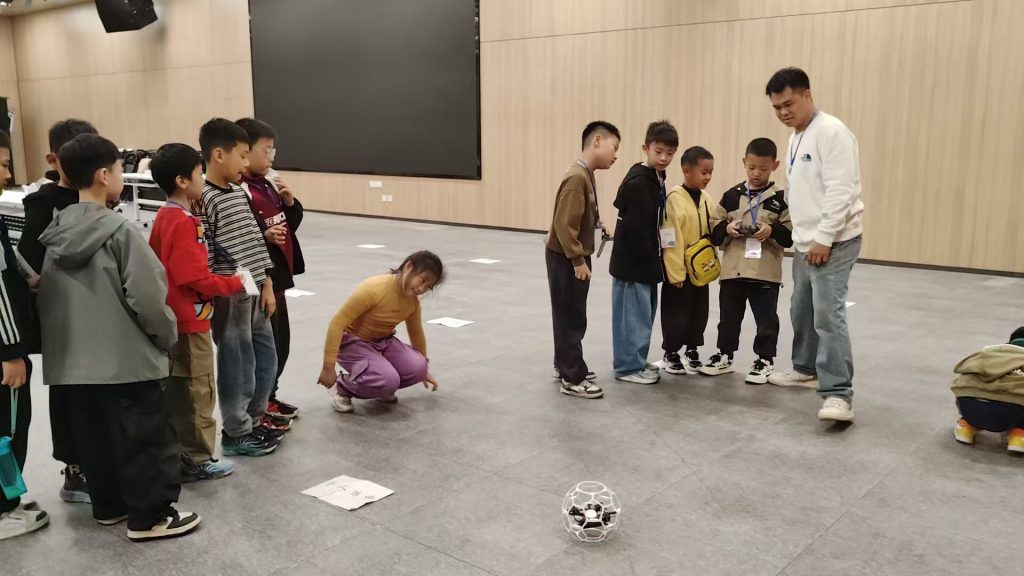
The strategic significance of deploying drones in rural contexts is profound. Firstly, it directly addresses a critical challenge: rural labor shortages. The migration of young, able-bodied individuals to urban centers has left many agricultural communities with an aging workforce, leading to underutilized arable land. Drones offer a force multiplier, enabling precision agriculture (drone training for crop monitoring, spraying, and mapping), infrastructure inspection, and environmental monitoring with minimal human intervention. This technological infusion can make rural livelihoods more efficient and attractive, potentially slowing out-migration. Secondly, it promotes green and sustainable agricultural practices. Precision spraying facilitated by specialized drone training can significantly reduce the volume of pesticides and fertilizers used, minimizing soil and water contamination and supporting the production of high-quality, eco-friendly agricultural products.
The efficacy of UAVs in rural settings can be modeled to quantify their impact. For instance, the efficiency gain in agricultural spraying can be represented as a function of area covered, operational speed, and resource utilization compared to manual labor:
$$ E_{drone} = \frac{A_{covered}}{(t_{flight} \cdot C_{operational}) + R_{input}} $$
where \( E_{drone} \) represents the drone’s efficiency metric, \( A_{covered} \) is the area serviced, \( t_{flight} \) is the total flight time, \( C_{operational} \) is the operational cost per unit time, and \( R_{input} \) is the volume of resources (e.g., water, pesticide) used. This model highlights how targeted drone training that optimizes flight patterns and application rates can maximize \( E_{drone} \). Furthermore, the broader economic and social impact can be framed as a multi-objective optimization problem for rural planners:
$$ \text{Maximize } Z = \alpha \cdot E_{agriculture} + \beta \cdot I_{tourism} + \gamma \cdot S_{employment} – \delta \cdot C_{environment} $$
Subject to constraints of budget, infrastructure, and available skilled labor from drone training programs. Here, \( Z \) is the composite development index, \( E_{agriculture} \) is agricultural productivity, \( I_{tourism} \) is tourism income, \( S_{employment} \) is new skilled employment, \( C_{environment} \) is environmental cost, and \( \alpha, \beta, \gamma, \delta \) are weighting coefficients reflecting local priorities.
The current landscape presents a confluence of opportunities and challenges for leveraging drones in rural revitalization, as summarized below.
| Opportunities | Challenges |
|---|---|
| 1. Strong national policy support for rural revitalization and technological innovation in agriculture. | 1. Acute shortage of personnel skilled in both drone operation and agronomy. |
| 2. The “Smart Sports” trend fosters acceptance of tech-driven solutions in related industries. | 2. Lack of standardized, certified drone training leading to safety incidents and subpar service quality. |
| 3. Growing demand for precision agriculture and efficient rural logistics. | 3. Skepticism among farmers regarding the efficacy of drone-applied inputs compared to traditional methods. |
| 4. Potential for deep industry integration (e.g., agri-tourism, cultural promotion). | 4. Absence of localized maintenance networks and supply chains for drone parts. |
| 5. Availability of vocational education frameworks for skill development. | 5. High initial investment costs and unclear return-on-investment models for smallholders. |
A practical case study illustrates the application’s potential. In a rural community, a project was initiated involving aerial surveying and precision fertilization. A team equipped with agricultural drones conducted high-resolution mapping of village topography, providing invaluable data for land-use planning and resource management. Subsequently, the same drones were deployed to apply foliar fertilizer over a 170-acre kiwifruit plantation. The operation, completed in approximately 10 hours, demonstrated an efficiency gain estimated at 30 times that of manual labor. This not only reduced operational costs and physical strain on workers but also ensured a more uniform application. The success of this pilot hinged on prior, practical drone training for the operators, encompassing flight mechanics, payload management, and mission-specific software use.
The cornerstone of sustainable implementation is a robust ecosystem for human capital development. Vocational institutions play a pivotal role by designing curricula that blend technical drone training with agricultural science and business management. A tripartite “Government-School-Community” cooperative model is essential. This model can be structured as follows:
| Stakeholder | Role | Output for drone training |
|---|---|---|
| Government | Policy formulation, funding, infrastructure support, creating demand through public projects. | Sponsorships, subsidies for certification, procurement of services from trained locals. |
| Vocational School / College | Curriculum design, technical instruction, certification, R&D for local applications. | Structured courses, hands-on drone training, accredited certification, incubation for drone startups. |
| Community / Enterprise | Identifying local needs, providing practicum sites, employing graduates, co-developing solutions. | On-the-job drone training, feedback for curriculum improvement, sustainable livelihood creation. |
Effective drone training programs must be comprehensive. A core training framework should include the following modules, ensuring graduates are not just pilots but solutions providers:
$$ \text{Curriculum} = \{ M_{regulations}, M_{flight}, M_{data}, M_{agriculture}, M_{maintenance}, M_{entrepreneurship} \} $$
where each module \( M \) is critical. For example, \( M_{agriculture} \) covers plant physiology, pest identification, and chemical handling, enabling the operator to make informed decisions during spraying missions. The cost-benefit analysis for a farmer considering adopting this technology can be simplified as:
$$ \text{Net Benefit} = (Y_{inc} \cdot P) + (C_{labour,saved}) – (C_{drone} + C_{inputs} + C_{drone training}) $$
Here, \( Y_{inc} \) is the yield increase from precision farming, \( P \) is the market price, \( C_{labour,saved} \) is the cost of manual labor replaced, and the costs include drone purchase/lease, inputs, and the essential investment in drone training. Positive Net Benefit drives adoption.
Beyond agriculture, the path forward involves diversifying applications to build a resilient rural drone economy. Key developmental pathways include:
- Government-Led, Multi-Stakeholder Resource Integration: Local governments should act as strategic conductors, using policy tools to attract investment (“attracting capital”) and facilitate partnerships with vocational institutions (“attracting intellect”). This creates an ecosystem where drone training programs are aligned with market needs and public development goals.
- Branding High-Quality Agricultural Products via Drone Technology: Drones are not just tools for production but also for marketing. Drone training can include modules on aerial videography and photography to capture stunning visuals of terraced fields, harvests, and pristine landscapes. This content, shared on digital platforms, can build compelling narratives around “precision-grown,” “eco-friendly” local specialties, enhancing brand value and enabling cross-regional e-commerce.
- Cultivating a New Generation of Skilled Rural Professionals: This is the most critical pathway. Targeted drone training must create new professional identities: the Drone Agronomist, the Aerial Data Analyst, the Rural Infrastructure Inspector, and the Agri-Tourism Experience Designer. Vocational schools can offer定向培养 (directional training) programs in partnership with county authorities, guaranteeing skill relevance and employment pathways. This addresses the core issue of talent retention and revitalization.
In conclusion, the integration of drone technology within the framework of smart sports and rural industry presents a transformative opportunity for holistic rural revitalization. Its success is intrinsically linked to the quality, accessibility, and comprehensiveness of drone training programs. By fostering a synergistic collaboration between government, educational institutions, and rural communities, it is possible to cultivate a new cadre of skilled professionals. These individuals will not only operate drones but will leverage them to enhance agricultural productivity, create new service-based enterprises, promote local culture and tourism, and ultimately contribute to building sustainable, prosperous, and modern rural economies. The future of rural development is intelligent, interconnected, and airborne, powered by knowledge and strategic drone training.