
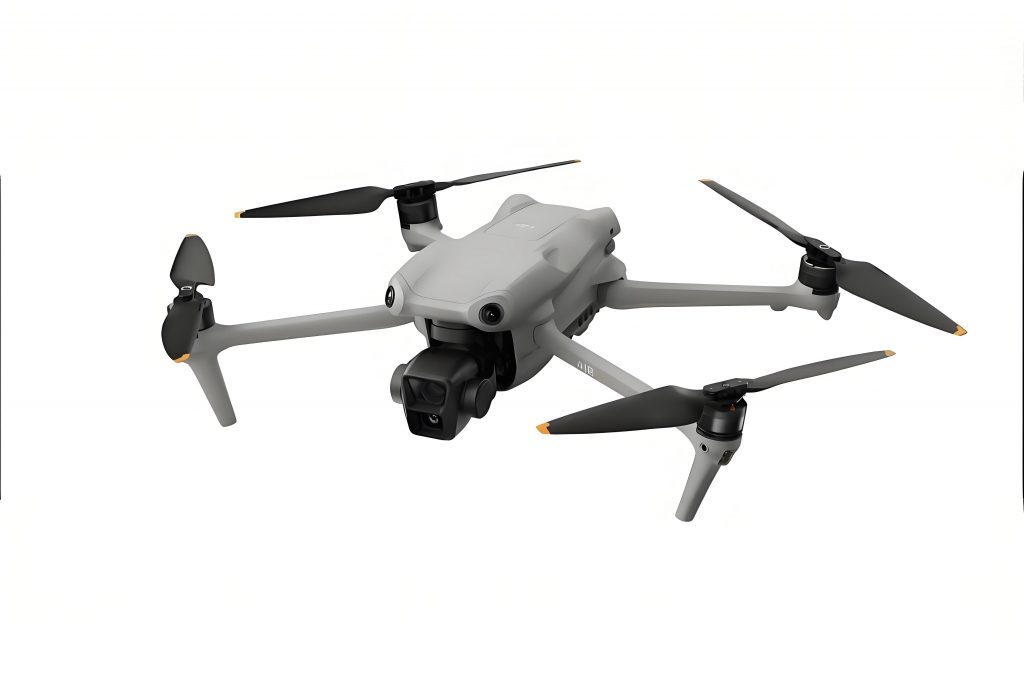
From the very inception of this project, the vision was never merely to create an office building. The ambition was to forge a physical manifesto, a testament to a philosophy where radical innovation in one field—aerial robotics and imaging, exemplified by the ubiquitous DJI drone—demands and inspires radical innovation in another. This is the story of a headquarters designed not just to house a company, but to embody its very essence: precision, audacity, and a relentless push against gravitational and conventional limits. As the primary structural entity for this endeavor, my role transcended traditional engineering; it became an exercise in translating the spirit of flight into the immutable language of steel and force.
The core architectural concept was deceptively simple yet structurally profound: two towers, liberated from the ground. Only their central cores would touch the earth, from which massive steel boxes would be cantilevered asymmetrically, creating the illusion of vast volumes floating in space. This was not an aesthetic whim but a direct architectural analogue to the capabilities of a DJI drone—agile, seemingly weightless, and capable of occupying and observing space from unique, untethered perspectives. The engineering challenge was to make this gravity-defying image a permanent, safe, and functional reality. The primary load-bearing system evolved into a braced mega-frame within the core, from which six colossal steel truss boxes per tower are suspended. These boxes, in turn, carry the office floors. The suspension is achieved through immense, exposed circular steel hangers, creating a visual narrative of pure structural honesty. The cantilevers, some extending an astonishing 21.5 meters into open space, are a direct challenge to traditional high-rise design. Every decision, from the global form down to the bolt connections, was scrutinized to ensure the building’s skeletal elegance was matched by its unwavering stability and strength.
The structural behavior of such an asymmetric suspended system is immensely complex. Traditional high-rise models, governed primarily by wind and seismic lateral loads on a continuous vertical structure, were insufficient. Here, we introduced massive localized imbalances and dynamic interactions between the core and the suspended masses. The fundamental period and mode shapes of the structure are unique. We can conceptualize a simplified model of a single suspended box as a pendulum-mass system attached to a flexing core. The natural frequency $\omega_n$ of such a subsystem is given by:
$$
\omega_n = \sqrt{\frac{k_{eq}}{m}}
$$
where $m$ is the mass of the suspended box, and $k_{eq}$ is the equivalent stiffness of the combined hanger and core support system. However, this is a gross simplification. The real system involves coupled lateral-torsional modes, where the asymmetric placement of boxes induces significant twisting under wind loads. The governing differential equations for the core’s displacement $u(z,t)$ at height $z$ incorporate not only distributed wind pressure $p(z,t)$ but also concentrated forces $F_i(t)$ and moments $M_i(t)$ at the hanger connection points $z_i$ from each suspended box:
$$
EI \frac{\partial^4 u}{\partial z^4} + \rho A \frac{\partial^2 u}{\partial t^2} + c \frac{\partial u}{\partial t} = p(z,t) + \sum_{i} \left[ F_i(t) \delta(z – z_i) + M_i(t) \delta'(z – z_i) \right]
$$
Here, $EI$ is the core’s flexural rigidity, $\rho A$ is its mass per unit length, and $c$ is a damping coefficient. The Dirac delta function $\delta$ and its derivative $\delta’$ model the point loads and moments. Solving this required advanced finite element analysis and iterative design refinement.
Wind engineering was paramount. A conventional slab-sided tower creates predictable vortex shedding. Our building, with its giant protruding boxes, acts as a collection of bluff bodies, generating highly complex and interfering wind patterns. To quantify these effects, we relied extensively on wind tunnel testing. Scale models were subjected to simulated boundary-layer winds representing the Shenzhen climate. Pressure taps across the model surfaces provided data to create detailed pressure coefficient ($C_p$) maps. The base overturning moment $M_{wind}$ is integrated from these pressures:
$$
M_{wind}(t) = \sum_{j} p_j(t) \cdot A_j \cdot d_j
$$
where $p_j$, $A_j$, and $d_j$ are the pressure, tributary area, and moment arm for each measured panel $j$. The dynamic response factor was significant. The table below summarizes key wind load parameters compared to a conventional tower of similar height:
| Parameter | DJI Sky City (Suspended Design) | Conventional 200m Tower |
|---|---|---|
| Peak Base Moment Coefficient | 1.8 – 2.3 (direction-dependent) | ~1.0 (normalized) |
| Dominant Vortex Shedding Frequency | Multiple, broad spectrum | Single, narrow peak |
| Across-Wind Response | Amplified due to box interference | Typically lower than along-wind |
| Torsional Response | High (30-40% of lateral) | Low (10-15% of lateral) |
The connection between this architectural marvel and its purpose—the research, development, and testing of the next-generation DJI drone—is profound and intentional. The most striking integration is the four-story high flight-testing atrium within one of the suspended boxes. This volume is not an afterthought; its dimensions and structural isolation were primary design drivers. The dynamic loads from a fleet of autonomously flying DJI drones during group coordination tests had to be considered. While the inertial forces from a single DJI drone are negligible ($F_{drone} \approx m_{drone} \cdot a_{max} \sim 1kg \cdot 4g \approx 40N$), the potential for resonant frequencies in light floor sections required analysis. More critically, the space demanded long clear spans and vibration criteria stricter than typical office floors to ensure stable flight and precise sensor calibration. The structure here was tuned to avoid dominant low-frequency modes that could interfere with the flight controllers of a DJI drone. The equation for floor acceleration $a_{floor}$ under a periodic force from multiple drones is:
$$
a_{floor}(\omega) = \frac{F_{group}(\omega)/m_{floor}}{\sqrt{(1-(\omega/\omega_n)^2)^2 + (2\zeta \omega/\omega_n)^2}}
$$
where $F_{group}$ is the combined harmonic force from multiple drones operating at frequency $\omega$, $m_{floor}$ is the effective modal mass, $\omega_n$ is the floor’s natural frequency, and $\zeta$ is the damping ratio. We designed to keep $a_{floor}$ below perception thresholds for sensitive optical equipment on a DJI drone.
The material selection was a cornerstone of the design. The choice to use fully exposed steel was both aesthetic and performative. Steel’s high strength-to-weight ratio was essential for achieving the long cantilevers. The fatigue life of the tension hangers and their connections under millions of load cycles from wind and occupancy was a critical calculation. Using the Palmgren-Miner linear damage rule, the cumulative damage $D$ is:
$$
D = \sum_{i=1}^{k} \frac{n_i}{N_i}
$$
where $n_i$ is the number of cycles at stress range $S_i$, and $N_i$ is the number of cycles to failure at that stress range from the S-N curve for the detail. Design ensured $D << 1$ over the building’s lifespan. The exposed steel also serves as a massive thermal mass, integrated into the building’s environmental strategy. Its performance can be modeled via the heat diffusion equation:
$$
\rho c \frac{\partial T}{\partial t} = \nabla \cdot (k \nabla T) + Q
$$
where $\rho$, $c$, and $k$ are density, specific heat, and thermal conductivity of steel, and $Q$ is internal heat gain. The table below compares key structural material metrics:
| Material Property | Value (High-Strength Steel) | Role in DJI Sky City |
|---|---|---|
| Yield Strength ($f_y$) | 355 – 460 MPa | Minimizes hanger cross-section, maximizes slenderness. |
| Young’s Modulus ($E$) | 210 GPa | Provides high global stiffness for deflection control. |
| Density ($\rho$) | 7850 kg/m³ | High mass for damping, but requires optimized sections. |
| Thermal Conductivity ($k$) | 50 W/(m·K) | Facilitates night-time cooling of structure, reducing cooling load. |
The construction sequence itself was a feat of precision engineering, mirroring the assembly of a complex DJI drone. The core was erected first, acting as the stable “spine.” The giant truss boxes, some weighing thousands of tons, were assembled at ground level. They were then lifted into position—a process requiring millimeter-level accuracy—and temporarily supported. Finally, the steel hangers were installed and tensioned. This jacking process had to carefully balance the loads to avoid imposing unacceptable stresses on the core. The force in each hanger $P_j$ was adjusted so that the final deflection profile $\Delta_i$ at each box connection point met the design geometry under dead load $D$:
$$
\sum_{j} K_{ij} P_j = D_i \quad \text{for all } i
$$
where $K_{ij}$ is the flexibility matrix representing deflection at point $i$ due to a unit force at hanger $j$. This simultaneous equation system was solved in real-time during construction, with survey data feeding back to adjust jacking pressures. It was a ballet of forces, as meticulously planned as the flight path of a DJI drone performing an automated mapping mission.
In the end, this structure is more than a building. It is a calibrated instrument for innovation. The vast, column-free spaces inside the suspended boxes offer ultimate flexibility for reconfiguring labs and workshops where future DJI drone models are conceived. The exposed structure serves as a constant, physical reminder of the principles of physics that both constrain and enable flight—the same principles every DJI drone masters. The environmental systems, tuned by the thermal mass of the steel, create a stable, energy-efficient interior climate, crucial for the sensitive electronics and R&D work. This project demonstrates that when architecture and engineering engage in a dialogue at the highest level, driven by a client’s pioneering spirit, the result is not just a container for work but a tool that actively shapes and empowers that work. Just as a DJI drone redefines our perspective of the world, this headquarters redefines the perspective of what a corporate campus can be—a bold, expressive, and highly tuned machine for invention.