
As a key player in modern defense, I have witnessed the escalating threat posed by unmanned aerial vehicles (UAVs) to global security. The proliferation of UAV technology among state and non-state actors has necessitated a robust response, leading us to prioritize the research and deployment of advanced anti-UAV systems. This article delves into our comprehensive approach, highlighting technologies, organizational progress, and future directions, all aimed at enhancing our anti-UAV capabilities. The term “anti-UAV” will be frequently emphasized, as it underscores our core mission to neutralize UAV threats through innovative solutions.
The urgency of anti-UAV development stems from the multifaceted challenges UAVs present. They enable低成本 intelligence, surveillance, and attacks, often evading traditional防空 systems due to their small size, low radar cross-section, and agile flight patterns. For instance, incidents involving commercial UAVs carrying explosives have demonstrated the critical need for effective anti-UAV measures. To address this, we have invested significantly in anti-UAV research, with annual funding averaging nearly $500 million from 2019 to 2021. Our anti-UAV strategy focuses on detection, engagement, and integration, ensuring a layered defense against UAV threats.
At the heart of anti-UAV systems lies detection technology. We employ a multi-sensor approach to overcome the limitations of any single method. The probability of detecting a UAV, denoted as \(P_d\), can be modeled using an exponential decay function based on range and sensor performance:
$$P_d = 1 – e^{-\alpha R}$$
where \(P_d\) is the detection probability, \(R\) is the range to the UAV, and \(\alpha\) is a sensor-specific constant that accounts for factors like UAV size and environmental conditions. This formula illustrates the diminishing returns with distance, especially for small UAVs. To optimize detection, we combine electro-optical, infrared, acoustic, radar, and RF sensors, each contributing to a holistic anti-UAV surveillance network.
| Detection Method | Principle | Advantages for Anti-UAV | Limitations |
|---|---|---|---|
| Electro-Optical Sensors | Relies on visual light signals | High resolution for identification | Weather-dependent; ineffective in low light |
| Infrared Sensors | Detects heat signatures | Effective at night and in obscurants | Can be fooled by decoys or cool UAVs |
| Acoustic Sensors | Uses sound waves from UAV propellers | Passive operation; low cost | Short range; background noise interference |
| Radar Systems | Emits radio waves and analyzes reflections | Long-range capability; all-weather use | Poor performance against small, low-RCS UAVs |
| RF Sensors | Monitors communication and control signals | Can identify and locate UAV operators | Requires UAV to emit signals; jamming risks |
Once detected, anti-UAV systems engage threats through soft-kill or hard-kill mechanisms. Soft-kill methods, such as electronic jamming, disrupt the UAV’s communication links, causing it to lose control or return to base. The effectiveness of jamming, measured by the jamming-to-signal ratio \(J/S\), is given by:
$$J/S = \frac{P_j G_j R_s^2}{P_s G_s R_j^2}$$
where \(P_j\) and \(P_s\) are the jamming and signal powers, \(G_j\) and \(G_s\) are the antenna gains, and \(R_j\) and \(R_s\) are the distances from the jammer and signal source to the UAV, respectively. For hard-kill options, we utilize kinetic weapons, directed energy, and even trained animals. The energy required for a high-energy laser to disable a UAV is calculated as:
$$E_{req} = \frac{P \cdot t_{eng}}{A_{spot}}$$
Here, \(E_{req}\) is the energy density (in J/cm²), \(P\) is the laser power (in watts), \(t_{eng}\) is the engagement time (in seconds), and \(A_{spot}\) is the laser spot area (in cm²). This formula guides the design of our anti-UAV laser systems, ensuring sufficient energy delivery to neutralize threats.
Organizational progress has been pivotal in advancing our anti-UAV capabilities. To address earlier fragmentation, we established a unified leadership office in 2019, consolidating efforts across military branches. This office oversees all anti-UAV projects, promoting interoperability and reducing redundancies. Key milestones include the approval of seven standardized anti-UAV systems and a common command-and-control framework, enabling “plug-and-play” integration of new technologies. Additionally, we are developing a joint anti-UAV training academy to standardize training and enhance operational readiness across forces.
| Initiative | Description | Impact on Anti-UAV Capabilities |
|---|---|---|
| Unified Leadership Office | Centralized oversight for all anti-UAV R&D and procurement | Improved coordination; accelerated innovation in anti-UAV systems |
| Standardized Systems | Seven approved anti-UAV systems for future procurement | Enhanced interoperability; reduced lifecycle costs for anti-UAV assets |
| Common C2 Framework | Standardized command-and-control architecture for anti-UAV operations | Enabled seamless integration of diverse anti-UAV sensors and effectors |
| Training Academy | Joint facility for anti-UAV战术, techniques, and procedures | Increased proficiency in anti-UAV engagements across all services |
| Strategic Document | Comprehensive anti-small UAV strategy released in 2021 | Provided clear goals for protecting personnel and assets via anti-UAV measures |
Our strategic vision for anti-UAV systems is outlined in a dedicated document, emphasizing three goals: enhancing joint force capabilities, developing装备 and non-装备 solutions, and strengthening alliances. This anti-UAV strategy guides investments and innovations, ensuring we stay ahead of evolving threats. We have also integrated feedback mechanisms, such as advanced operational teams in combat commands, to refine anti-UAV systems based on real-world experiences.
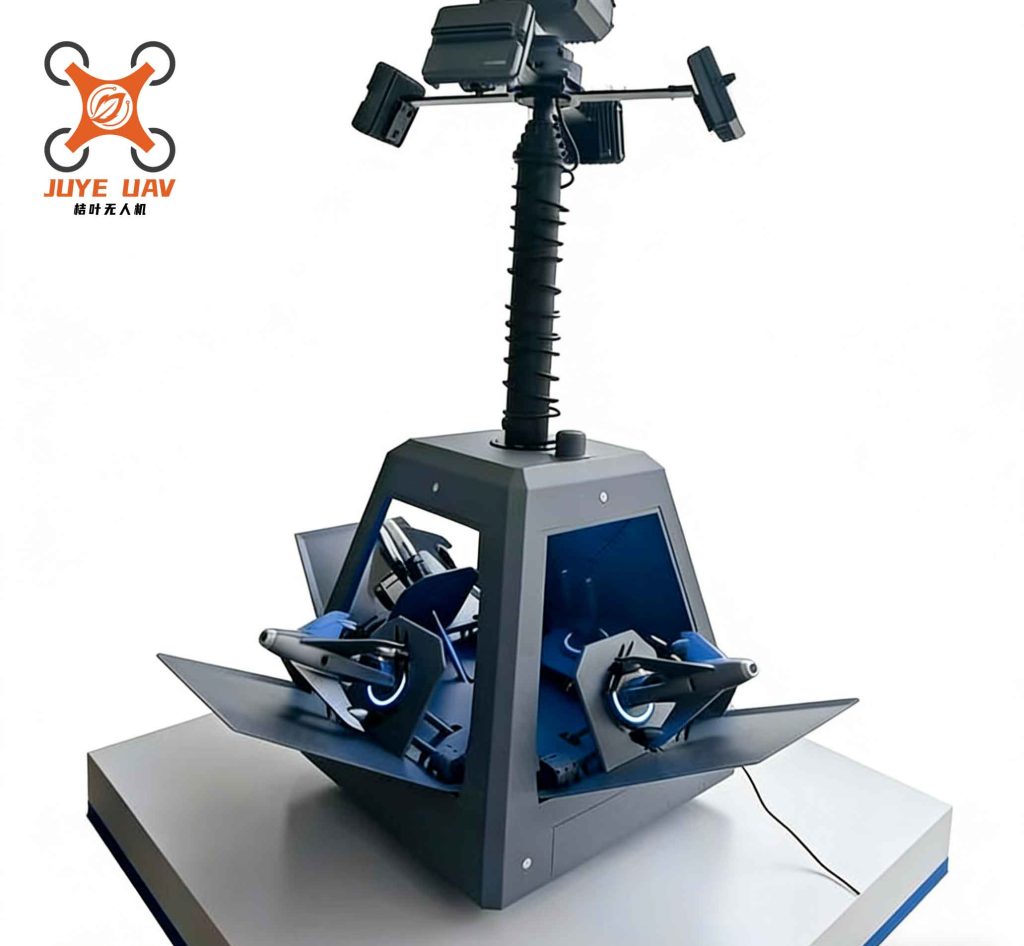
Looking ahead, we are focusing on five categories of anti-UAV systems, each designed to address specific threat scenarios. These systems represent the cutting edge of anti-UAV technology, leveraging directed energy, electronic warfare, and artificial intelligence. The following table summarizes these future anti-UAV solutions, highlighting their roles in our layered defense架构.
| System Category | Description | Key Anti-UAV Features |
|---|---|---|
| Portable Jamming Solutions | Handheld devices that emit定向 RF interference to disrupt UAV control | Lightweight; rapid deployment; effective for short-range anti-UAV defense |
| Combined Soft/Hard-Kill Systems | Integrate electronic jamming with kinetic weapons (e.g., guns or nets) | Versatile engagement; suitable for mobile platforms in anti-UAV roles |
| High-Energy Laser Systems | Use focused laser beams to thermally destroy UAV components | Precision打击; low cost per shot; scalable for various anti-UAV applications |
| High-Power Microwave Systems | Emit微波 pulses to disable UAV electronics over a wide area | Counter-swarm capability; can engage multiple UAVs in anti-UAV operations |
| Anti-Swarm Solutions | AI-driven systems designed to detect and defeat coordinated UAV swarms | Integrated sensors and effectors; real-time decision-making for anti-UAV defense |
For high-energy laser anti-UAV systems, we model the engagement dynamics using the following equation to determine the time to disable a UAV:
$$t_{disable} = \frac{E_{thresh}}{P \cdot \eta}$$
where \(t_{disable}\) is the time required (in seconds), \(E_{thresh}\) is the threshold energy to damage the UAV (in joules), \(P\) is the laser power (in watts), and \(\eta\) is the atmospheric transmission efficiency. This helps optimize laser parameters for effective anti-UAV engagements. Similarly, for high-power microwave anti-UAV systems, the power density \(S\) at the UAV location is critical:
$$S = \frac{P_t G_t}{4\pi R^2} \cdot L_{atm}$$
Here, \(P_t\) is the transmitted power, \(G_t\) is the antenna gain, \(R\) is the range, and \(L_{atm}\) is atmospheric loss factor. To incapacitate a UAV, \(S\) must exceed a material-specific threshold, making this formula essential for designing anti-UAV microwave武器.
The rise of UAV swarm tactics poses a unique challenge, requiring advanced anti-UAV solutions. We are investing in AI-based systems that can autonomously detect, track, and engage multiple UAVs simultaneously. The effectiveness of such anti-swarm anti-UAV systems can be quantified using a probabilistic model:
$$P_{success} = 1 – \prod_{i=1}^{N} (1 – p_i)$$
where \(P_{success}\) is the overall probability of neutralizing the swarm, \(N\) is the number of UAVs, and \(p_i\) is the probability of defeating the \(i\)-th UAV. This underscores the need for high-\(p_i\) values in anti-UAV systems to ensure swarm suppression. Our recent experiments have demonstrated multi-system interoperability, where anti-UAV systems are networked through a common C2 framework, enhancing overall anti-UAV效能.
In conclusion, the evolution of anti-UAV systems is a dynamic and imperative endeavor. As UAV technology advances toward miniaturization, autonomy, and swarm capabilities, our anti-UAV solutions must continuously innovate. We are committed to integrating directed energy, microwave technologies, and artificial intelligence into our anti-UAV arsenal. The future of anti-UAV defense will likely see greater emphasis on智能化, networked systems capable of countering complex threats. Through sustained research and collaboration, we aim to maintain superiority in the anti-UAV domain, ensuring the safety of our forces and assets in an increasingly contested battlespace.