
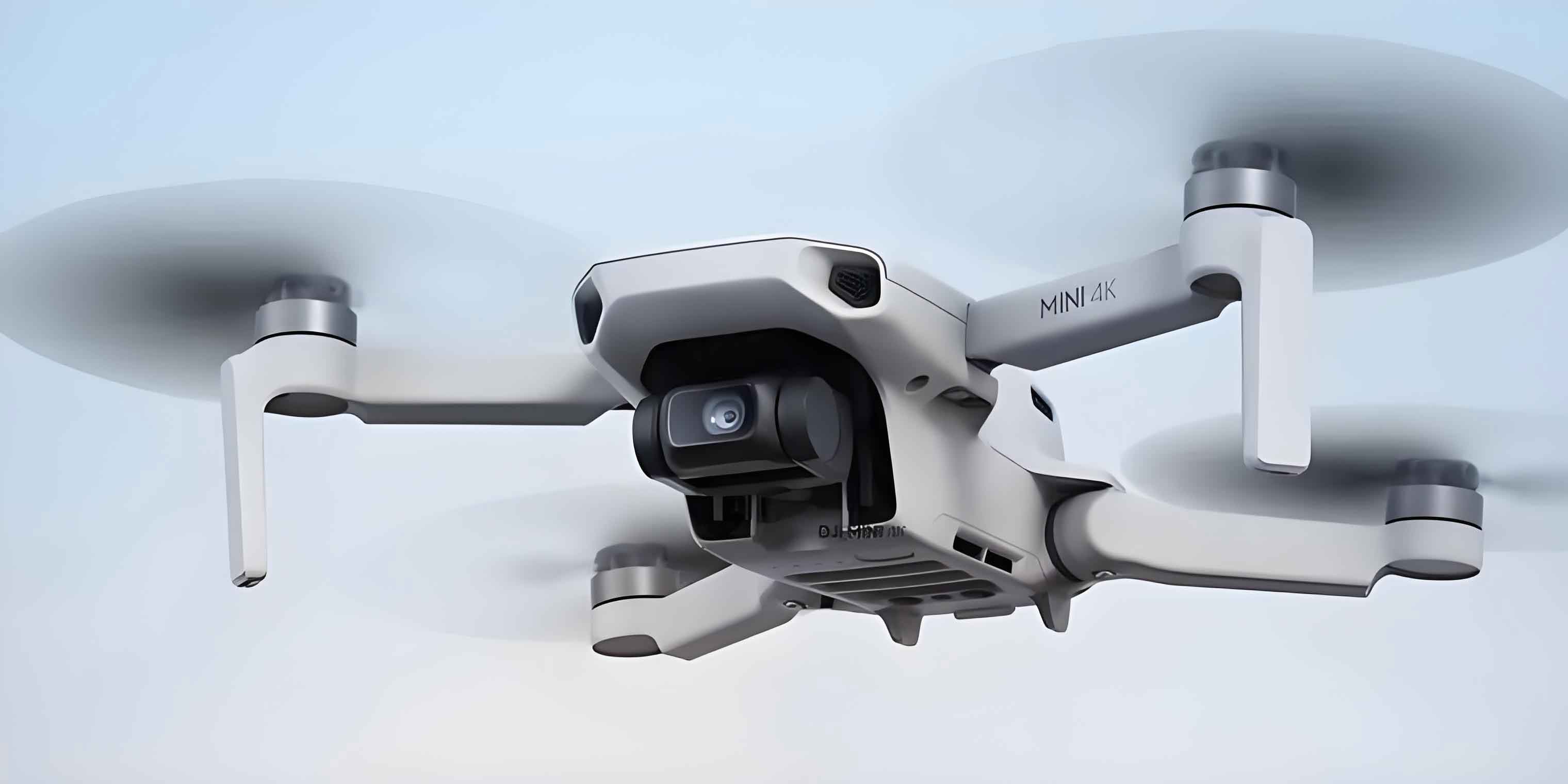
The ascent of the low-altitude economy marks a pivotal chapter in technological and societal evolution. Within this transformative landscape, the role of UAV drones has transcended its military origins, permeating civilian sectors with profound implications for public safety and law enforcement. As a scholar observing this integration, I see the convergence of application standards, operational scope, and tactical models coalescing into a sophisticated system: low-altitude drone investigation. This system, operating within airspace typically below 3,000 meters, represents a paradigm shift in how evidence is collected, cases are elucidated, and suspects are apprehended. Its core promise lies in leveraging the unique vantage point of the sky to de-risk operations and optimize scarce investigative resources, fundamentally altering the traditional calculus of law enforcement.
The developmental trajectory of UAV drones in investigative work can be mapped along three critical vectors: their evolving application logic, the relentless march of technological innovation, and their expanding functional role within the justice system.
I. The Evolutionary Trajectory of Low-Altitude Drone Investigation
1. Application Logic: From Risk Mitigation to Strategic Triangulation
The foundational logic of UAV drones has remained remarkably consistent since their inception: to mitigate human risk and conserve resources. In investigative contexts, this translates into a powerful triad of strategic positioning. First, Mobility Positioning allows drones to overcome terrestrial obstacles—complex terrain, dense crowds, or traffic gridlocks—ensuring rapid deployment and persistent surveillance. Second, Covert Positioning capitalizes on their small size and agile maneuverability to conduct discreet monitoring, significantly complicating a subject’s counter-surveillance efforts and enabling new avenues for covert evidence gathering. Third, and perhaps most transformative, is Panoramic Positioning. This capability provides a holistic, three-dimensional visualization of a crime scene, moving beyond flat images to immersive reconstructions that capture both macro-context and micro-detail. The mechanistic interplay of these positions in mitigating specific investigative risks is systematized below:
| Investigative Risk Scenario | UAV Intervention Mechanism | Operational Rationale | Primary Positioning Leveraged |
|---|---|---|---|
| Potentially hostile crime scene (e.g., arson, explosives). | Remote pre-assessment and scene evaluation. | Reduces personnel exposure, enables safe pre-operation planning. | Mobility, Covert, Panoramic |
| Active perpetrator presence at a scene. | Persistent aerial surveillance and tracking. | Conserves manpower for prolonged stalks; minimizes detection risk. | Mobility, Covert |
| Hazardous or inaccessible environment (e.g., chemical spill, cliffside). | Remote sensing and 3D modeling via specialized payloads. | Eliminates physical danger to investigators; captures otherwise unattainable evidence. | Mobility, Panoramic |
| Presence of toxic or volatile substances. | Remote detection and condition monitoring. | Prevents exposure and potential secondary catastrophes during initial response. | Mobility, Panoramic |
2. Technological Evolution: From Aerial Cameras to Data Fusion Engines
The efficacy of UAV drones is intrinsically linked to technological progression. Enhancements follow two parallel tracks: core platform optimization and payload/network integration. For evidence collection, drones are now platforms for hyperspectral scanners, LiDAR, and advanced sniffers, capable of detecting chemical residues or mapping subterranean disturbances. In crime scene reconstruction, tilt-photogrammetry and real-time POS (Position and Orientation System) data processing have revolutionized the process. This technology allows for the rapid generation of millimeter-accurate 3D models from overlapping aerial imagery, providing an immutable digital twin of the scene. The quest for precision in suspect tracking has driven the integration of AI. Modern algorithms like YOLO (You Only Look Once) enable real-time object detection from drone feeds. The core detection function can be conceptually represented as the optimization of a probability score:
$$ P(Class_i, Bbox | Image) = f_{YOLO}(Image; \theta) $$
where $f_{YOLO}$ is the neural network parameterized by $\theta$, assigning a class probability $Class_i$ and bounding box coordinates $Bbox$ for objects within the captured $Image$. This shift marks the transition from a tool for passive documentation to an active node in a data-driven investigative ecosystem, where real-time analytics and predictive modeling become possible.
3. Functional Expansion: From Reactive Investigation to Proactive Governance
Traditionally, investigation was a reactive function—unraveling past events. The advent of low-altitude drone systems, saturated with data-centric capabilities, is expanding this mandate towards proactive crime prevention, aligning with broader public security governance goals. This represents a deepening of the classic investigative functions of “exposure,” “prevention,” and “safeguarding.” While UAV drones undoubtedly enhance “exposure” through superior evidence gathering, their greater impact lies in fortifying “prevention” and “safeguarding.” By enabling persistent, wide-area monitoring and leveraging AI for behavioral anomaly detection, these systems facilitate early warning. For instance, algorithms analyzing drone footage can flag unusual gatherings or specific vehicular patterns associated with illicit activities. This predictive capacity allows interventions to occur in the preparatory stages of a crime, safeguarding potential victims and upholding societal security. Thus, the functional vector points toward a system that not only solves crimes but also actively contributes to a state of normalized security and pre-empts emergent threats.
II. A Critical Functional Appraisal: Challenges in Three Dimensions
Despite its promising trajectory, the integrated low-altitude drone investigation system faces significant constraints across three dimensions of maturity: breadth, depth, and height.
1. The “Breadth” Challenge: Unregulated Expansion of the Application Domain
The “breadth” refers to the maximum scope of application across industries, scenarios, and geographies. While use cases proliferate—from community policing to environmental protection (e.g., monitoring illegal dumping, deforestation) and critical infrastructure patrol—this expansion remains largely disordered. The absence of unified national standards creates a fragmented landscape. There is a lack of consistent technical standards for UAV drones and their payloads in law enforcement roles, leading to interoperability issues and potential reliability gaps. Equally critical is the absence of standardized personnel certification. Operator training, competency assessment, and legal accountability frameworks vary, posing risks to operational safety, evidential integrity, and professional credibility. This unchecked horizontal growth threatens to undermine systemic coherence and public trust.
2. The “Depth” Challenge: Constraints on Practical Efficacy Enhancement
“Depth” signifies the peak efficiency and effectiveness achievable in fulfilling investigative tasks. While drones offer temporal and spatial advantages, their practical utility is capped by persistent technological shortcomings in platform performance. The operational demands on police UAV drones are extreme, exposing key limitations.
| Performance Dimension | Current Limitation | Impact on Investigative Efficacy |
|---|---|---|
| Platform Stability | Vulnerability in extreme weather (high winds, heavy precipitation, temperature extremes). | Restricts operational availability and reliability in critical, time-sensitive scenarios. |
| Functional Flexibility | Often limited to single-purpose payloads; slow reconfiguration. | Reduces adaptability in dynamic operations, requiring multiple specialized drones. |
| System Security | Cybersecurity vulnerabilities in data links and potential for platform compromise. | Risks data interception/breach, loss of control, and infiltration of secure networks. |
| Endurance & Range | Limited flight time and communication range constrains large-area or prolonged missions. | Necessitates complex logistics of multiple launches or limits coverage area. |
These limitations in stability, versatility, security, and endurance act as a ceiling, preventing the full realization of the strategic potential of UAV drones in complex, extended investigations.
3. The “Height” Challenge: The Rights-Security Dilemma in Prevention Mechanisms
The “height” denotes the upper limit of comprehensive efficacy in risk-controlled, preventative governance. Here, the very strengths of low-altitude drone investigation—its panoramic scope, covert nature, and mobility—create a profound tension with individual civil liberties, especially when leveraged for predictive policing. The core risk lies in the transition from investigating past crimes to assessing future risks based on data correlations. This preventative logic, powered by drones, amplifies privacy concerns exponentially. The panoramic view exponentially increases the volume of incidentally collected personal data (e.g., movements, associations) from public and semi-public spaces. The covert capability means this surveillance can occur without the individual’s knowledge or the traditional oversight triggers of physical intrusion. The mobility allows for dynamic, easily adjustable surveillance perimeters, potentially leading to indiscriminate or unnecessarily broad data collection that violates the principle of proportionality. The aggregate effect is a significant imbalance between the state’s investigative power and the citizen’s right to privacy and data protection, threatening the normative “height” such a system can legitimately achieve.
III. The Path to Digital-Intelligent Transformation: A Three-Dimensional Framework
To navigate these challenges and mature the low-altitude drone investigation ecosystem, a synergistic framework spanning organizational, strategic, and procedural dimensions is essential.
1. Organizational Dimension: Architecting Unified Industry Standards
Horizontal and vertical standardization is the bedrock for safe and effective scaling. Horizontally, interoperable data-sharing protocols must be established across the multidisciplinary ecosystem involved in drone operations (e.g., aviation authorities, telecom providers, other emergency services). Vertically, two standards are critical: Technical Standardization mandates uniform specifications for police-configured UAV drones, including communication protocols, data security layers, and mechanical interfaces for payloads. Personnel Standardization requires a national framework for operator licensing, encompassing training curricula, proficiency evaluations, and legal accountability pathways. This creates a professionalized workforce capable of handling complex evidentiary and operational chains.
2. Strategic Dimension: Fostering Public-Private Innovation Synergy
Overcoming the “depth” challenge demands a collaborative innovation model. The state (government and police agencies) and private sector (technology firms, developers) must engage in a synergistic partnership. The government’s role is “capacity activation” through strategic investment in low-altitude infrastructure (e.g., dedicated corridors, 5G/ISAC networks) and regulatory sandboxes to encourage pilot programs. Law enforcement’s role is “application pull,” deeply embedding UAV drones into smart-city crime prevention platforms and providing continuous, real-world feedback to guide R&D. The private sector’s role is “technology push,” focusing on core R&D to overcome limitations in endurance, AI-processing-at-the-edge, and cybersecurity. This tripartite model accelerates the conversion of technological potential into grounded, reliable investigative utility.
3. Procedural Dimension: Co-Constructing a Legitimacy-Centered Legal Framework
Mitigating the “height” dilemma requires robust legal proceduralism. Regulations must address the unique risks in the three spaces drones occupy. In the Physical Space, clear laws must define authorized low-altitude investigative corridors and jurisdictional boundaries for aerial operations, preventing airspace anarchy. In the Social Space, privacy safeguards must be codified. A “minimally necessary” data collection doctrine should apply, with strict guidelines on resolution, retention periods, and analysis of footage capturing identifiable individuals. Specific prohibitions against surveillance targeting private interiors without a warrant are paramount. In the Informational Space, data classification and governance rules are needed. Investigative data collected by UAV drones should be categorized by sensitivity, with corresponding access controls and audit trails. Technologies like blockchain could be mandated for immutable logging of data lifecycle events (collection, access, deletion). The legal framework’s equation must balance necessity and proportionality:
$$ \text{Legitimate Use} \propto \frac{\text{Demonstrated Investigative Necessity}}{\text{Scope of Privacy Intrusion}} $$
where the scope of intrusion must be minimized and always justified by a specific, credible necessity.
In conclusion, the journey of low-altitude drone investigation from a novel tool to an integrated pillar of digital-era law enforcement is underway. Its path is marked by extraordinary potential to enhance efficiency and proactive security. Yet, this path is also fraught with pitfalls of disorder, technical limitation, and ethical overreach. Navigating this future successfully hinges on a deliberate, balanced approach—one that fosters innovation through collaboration, ensures reliability through standardization, and, most critically, safeguards liberty through principled and transparent legal governance. The silent observer in our skies must ultimately serve justice, not merely surveillance, and its integration must be as thoughtful as the technology is powerful.