
In the realm of precision agriculture, the acquisition of accurate and timely farmland information is paramount. As a researcher deeply involved in this field, I have observed that traditional methods such as satellite remote sensing and aerial photography from large aircraft often fall short due to poor timeliness and susceptibility to weather conditions like cloud cover. This has spurred the development of low-altitude unmanned aerial vehicles (UAVs), particularly quadrotor drones, which offer a promising platform for real-time, rapid monitoring of agricultural parameters. In this article, I will delve into the application of quadrotor drones in farmland information acquisition, analyzing their functionality, current research status, key technologies, and future trends. Throughout this discussion, the term quadrotor drone will be emphasized repeatedly to underscore its centrality in this technological evolution.
The precision agriculture system comprises three core components: information acquisition systems, information processing systems, and intelligent agricultural machinery. Among these, the farmland information acquisition system is the foundational element. Quadrotor drones, with their ability to vertically take off, land, and hover, provide a versatile and efficient means of gathering detailed agricultural data. Compared to fixed-wing UAVs, quadrotor drones eliminate the need for runways and can maintain stable positions, making them ideal for capturing high-resolution images and sensor data from specific areas of interest. This capability is crucial for monitoring crop health, soil conditions, pest infestations, and other agronomic variables in a cost-effective manner.
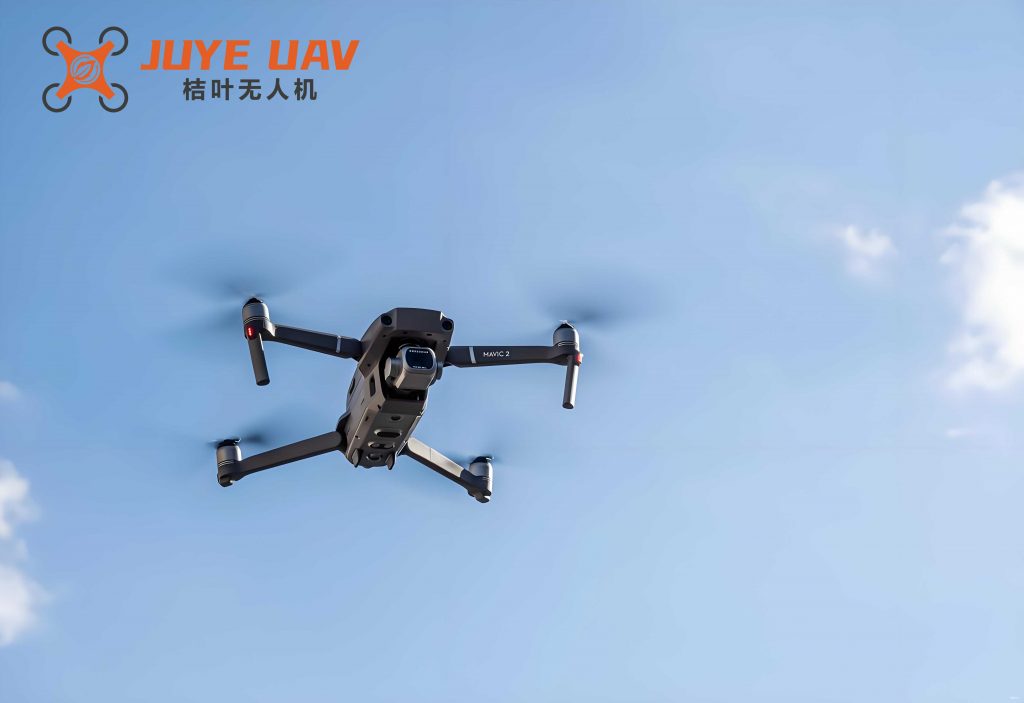
To understand the current landscape, it is essential to review the research progress on quadrotor drones globally. Internationally, studies have predominantly focused on aerodynamics, power system design, miniaturization, flight attitude control, and swarm coordination, with applications spanning military and commercial sectors. However, agricultural applications have gained traction only recently. For instance, early models like the “UFR-II” from Japan demonstrated remote control via Bluetooth but suffered from limited flight endurance. Subsequent advancements, such as the OS4Ⅱ quadrotor drone developed in Switzerland, incorporated improved vibration reduction and autonomous flight algorithms, enabling longer indoor operations. In the United States, research at institutions like MIT explored multi-quadrotor drone systems for ground target tracking, utilizing inertial measurement units (IMUs) and laser scanning for environmental perception. Similarly, the AR.DRONE from France integrated Wi-Fi for real-time video transmission, showcasing the potential for consumer and professional use. Domestically, research on quadrotor drones is still in its nascent stages, with efforts centered on mechanical design, autonomous hovering control, and flight planning. Early prototypes from universities like Shanghai Jiao Tong University and National University of Defense Technology highlighted innovations in motor control and robust flight algorithms, though agricultural applications remained underexplored. More recent work from Wuhan University of Technology has focused on intelligent navigation systems, combining GPS and wireless communication for autonomous巡航.
To summarize these developments, I have compiled a table that outlines key milestones in quadrotor drone research, emphasizing their relevance to farmland information acquisition. This table highlights the evolution of technologies, from basic control mechanisms to advanced autonomous systems.
| Year | Development | Key Features | Application Context |
|---|---|---|---|
| 2004 | UFR-II quadrotor drone | Bluetooth control, short-range video transmission | Commercial demonstration |
| 2006 | OS4Ⅱ quadrotor drone | Vibration reduction, 30-minute autonomous flight | Research on control algorithms |
| 2007 | MIT multi-quadrotor system | FM wireless transmission, IMU-based姿态控制 | Ground target tracking |
| 2008 | Stanford carbon fiber quadrotor drone | Wi-Fi transmission, enhanced control algorithms | Experimental platforms |
| 2010 | AR.DRONE quadrotor drone | Dual cameras, real-time Wi-Fi streaming | Consumer and professional use |
| 2011 | Intelligent navigation systems | GPS, Xbee wireless, autonomous巡航 | Agricultural monitoring prototypes |
The functionality of a quadrotor drone-based farmland information acquisition system can be modeled as follows: a ground station plans flight paths based on field data, onboard sensors collect information, and the data is either stored locally or transmitted wirelessly to nodes or terminals. The core components include the quadrotor drone载体, agricultural sensors, data processing units, and wireless modules. To optimize this system, several关键技术 must be addressed, each involving complex engineering challenges.
First, flight control technology for quadrotor drones is critical due to their nonlinear, multivariable, highly coupled, and underactuated nature. The dynamics of a quadrotor drone can be described using Newton-Euler equations. Let the position in an inertial frame be denoted by $\mathbf{p} = [x, y, z]^T$ and the attitude by Euler angles $\mathbf{\Theta} = [\phi, \theta, \psi]^T$, where $\phi$ is roll, $\theta$ is pitch, and $\psi$ is yaw. The control inputs are the thrusts from four rotors, $F_1, F_2, F_3, F_4$. The total thrust $T$ and torque vector $\mathbf{\tau}$ are given by:
$$ T = \sum_{i=1}^{4} F_i, \quad \mathbf{\tau} = \begin{bmatrix} \tau_\phi \\ \tau_\theta \\ \tau_\psi \end{bmatrix} = \begin{bmatrix} l(F_2 – F_4) \\ l(F_3 – F_1) \\ \kappa(F_1 – F_2 + F_3 – F_4) \end{bmatrix} $$
where $l$ is the arm length from the center to each rotor, and $\kappa$ is a drag coefficient. The equations of motion can be expressed as:
$$ m\ddot{\mathbf{p}} = \begin{bmatrix} 0 \\ 0 \\ -mg \end{bmatrix} + \mathbf{R} \begin{bmatrix} 0 \\ 0 \\ T \end{bmatrix}, \quad \mathbf{I}\dot{\boldsymbol{\omega}} + \boldsymbol{\omega} \times \mathbf{I}\boldsymbol{\omega} = \mathbf{\tau} $$
where $m$ is the mass, $g$ is gravity, $\mathbf{R}$ is the rotation matrix from body to inertial frame, $\mathbf{I}$ is the inertia tensor, and $\boldsymbol{\omega}$ is the angular velocity. To stabilize flight, control algorithms such as PID, LQ, or robust control are employed. For example, a PID controller for attitude调整 might use:
$$ u(t) = K_p e(t) + K_i \int_0^t e(\tau) d\tau + K_d \frac{de(t)}{dt} $$
where $u(t)$ is the control output, $e(t)$ is the error in attitude, and $K_p, K_i, K_d$ are gains. Advanced methods like sliding-mode control or adaptive algorithms enhance robustness against disturbances like wind gusts, which are common in agricultural environments. Additionally,减振 measures are necessary to minimize vibrations from rotors, ensuring clear image capture during farmland monitoring missions.
Second, flight path planning for quadrotor drones involves designing optimal trajectories to cover entire fields efficiently. This can be pre-planned by ground stations or done autonomously online. For farmland applications, pre-planning is often preferred due to its simplicity. The goal is to minimize flight distance while maximizing coverage, which can be formulated as a combinatorial optimization problem. Let the field be discretized into grid cells, and let $C_{ij}$ represent the cost of flying from cell $i$ to cell $j$. The objective is to find a path that visits all cells with minimal total cost. This can be approximated using algorithms like the Traveling Salesman Problem (TSP) or genetic algorithms. A table summarizing key planning parameters is provided below:
| Parameter | Description | Typical Value for Quadrotor Drones |
|---|---|---|
| Flight Altitude | Height above ground for data acquisition | 10-100 meters |
| Turn Radius | Minimum radius for safe maneuvering | 2-5 meters |
| Flight Speed | Cruising speed during monitoring | 5-15 m/s |
| Coverage Overlap | Overlap between adjacent paths for complete coverage | 20-30% |
Third, enhancing the endurance of quadrotor drones is a major challenge. The primary factor is weight, with power and energy systems constituting a significant portion. Currently, electric motors powered by lithium batteries are common due to their reliability and controllability, but energy density is limited. The endurance $E$ in minutes can be estimated as:
$$ E = \frac{C_b \cdot V_b \cdot \eta}{P_{total}} $$
where $C_b$ is battery capacity in Ah, $V_b$ is voltage, $\eta$ is efficiency, and $P_{total}$ is total power consumption. For a typical quadrotor drone, $P_{total}$ includes power for propulsion $P_{prop}$, sensors $P_{sens}$, and communication $P_{com}$. Improvements in lightweight materials (e.g., carbon fiber) and high-efficiency motors can extend flight times. Emerging technologies like hydrogen fuel cells or solar panels are being explored for future quadrotor drone designs.
Fourth, onboard agricultural sensing technology must be versatile to capture diverse data types such as soil moisture, nutrient levels, pest presence, and crop vigor. This often requires integrating multiple sensors, including multispectral cameras, thermal imagers, and LiDAR. The data fusion from these sensors can be modeled using statistical methods. For instance, let $\mathbf{s} = [s_1, s_2, \dots, s_n]^T$ represent sensor readings, and let $\mathbf{y}$ be the agricultural parameter of interest (e.g., nitrogen content). A linear regression model might be:
$$ \mathbf{y} = \mathbf{A}\mathbf{s} + \mathbf{b} + \epsilon $$
where $\mathbf{A}$ is a coefficient matrix, $\mathbf{b}$ is a bias vector, and $\epsilon$ is noise. Developing compact, low-power sensor suites is crucial for quadrotor drones to maximize payload capacity and mission duration.
Fifth, wireless data transmission technology must handle large volumes of data, such as high-resolution images, in real-time. Key issues include transmission speed,抗干扰, and energy efficiency. The achievable data rate $R$ in Mbps for a wireless link can be expressed using the Shannon-Hartley theorem:
$$ R = B \log_2 \left(1 + \frac{S}{N}\right) $$
where $B$ is bandwidth and $S/N$ is signal-to-noise ratio. For quadrotor drones, technologies like Wi-Fi (802.11n/ac) or cellular networks (4G/5G) are employed, but they must be optimized for low power consumption. Energy-efficient protocols, such as duty cycling, can reduce $P_{com}$ by turning off transmitters during idle periods.
Looking ahead, the development prospects for quadrotor drone-based farmland information acquisition systems are bright. I foresee several trends: miniaturization through advances in MEMS and nanomaterials; energy efficiency via smart power management; and intelligence through AI-driven autonomous decision-making. For example, future quadrotor drones could use machine learning algorithms to analyze sensor data in real-time, identifying problem areas in crops and adjusting flight paths accordingly. This would transform them from mere data collectors to active agricultural tools.
In conclusion, quadrotor drones are poised to become indispensable in precision agriculture. Their ability to provide timely, high-resolution farmland information addresses the limitations of traditional methods. As flight control, navigation, and wireless transmission technologies mature, quadrotor drone systems will increasingly meet the rigorous demands of agricultural monitoring. This will not only boost agricultural productivity but also contribute to sustainable farming practices. Furthermore, the adaptability of quadrotor drones means they can be extended to other fields like forestry, urban planning, and disaster management, underscoring their versatile potential. Throughout this evolution, continuous innovation in quadrotor drone design and application will be key to unlocking their full capabilities.
To further illustrate the technical aspects, I present a comprehensive table summarizing the key technologies and their challenges for quadrotor drones in farmland information acquisition. This table encapsulates the interdisciplinary nature of this field, combining aerospace engineering, electronics, and agronomy.
| Technology Area | Specific Challenges | Current Solutions | Future Directions |
|---|---|---|---|
| Flight Control | Nonlinear dynamics, external disturbances | PID, robust control algorithms | AI-based adaptive control |
| Path Planning | Optimal coverage, real-time adjustments | Pre-planned routes, GPS guidance | Autonomous swarm coordination |
| Endurance | Limited battery life, weight constraints | Lithium batteries, efficient motors | Alternative energy sources (e.g., solar) |
| Sensing | Multi-parameter acquisition, sensor integration | Multispectral cameras, IoT sensors | Hyperspectral imaging, nanotechnology sensors |
| Data Transmission | Bandwidth limitations, interference | Wi-Fi, RF modules | 5G networks, satellite links |
In summary, the integration of quadrotor drones into agricultural practices represents a significant leap forward. By leveraging their unique capabilities, we can achieve a more detailed and responsive approach to farmland management. As research progresses, I am confident that quadrotor drones will become even more efficient, intelligent, and accessible, paving the way for a new era in digital agriculture. The repeated emphasis on quadrotor drone technology throughout this discussion highlights its central role in this transformation, and I encourage continued exploration and investment in this vibrant area of study.