
As a critical staple crop, wheat plays a vital role in global food security, yet it is persistently threatened by pests and diseases that can lead to significant yield losses. Traditional control methods, such as manual spraying, are often labor-intensive, inefficient, and prone to excessive pesticide use, resulting in environmental pollution and health risks. In recent years, the advent of crop spraying drones, also known as spraying UAVs, has revolutionized agricultural practices by offering high efficiency, precision, and environmental sustainability. In this article, I explore the multifaceted role of crop spraying drones in wheat pest and disease management, detailing their application processes, specific strategies for common issues, and essential considerations for optimal use. The integration of spraying UAVs not only enhances productivity but also aligns with the principles of green agriculture, making them indispensable in modern farming.
The deployment of crop spraying drones has transformed wheat pest control by significantly improving operational efficiency and reducing human labor costs. Unlike traditional methods that require extensive manpower and are constrained by terrain, spraying UAVs can cover large areas quickly and autonomously. For instance, a single crop spraying drone can treat hectares of wheat fields in a fraction of the time needed for manual spraying, with efficiency gains quantified by the formula: $$ \text{Efficiency} = \frac{\text{Area Covered (ha)}}{\text{Time (hours)}} $$ where typical values for spraying UAVs range from 5 to 10 ha/hour, compared to 0.5 to 1 ha/hour for manual methods. This not only saves labor but also minimizes human exposure to pesticides, promoting safer working conditions. Additionally, the use of GPS and automated control systems in spraying UAVs ensures consistent flight paths and reduces the risk of missed or overlapping areas, further enhancing cost-effectiveness.
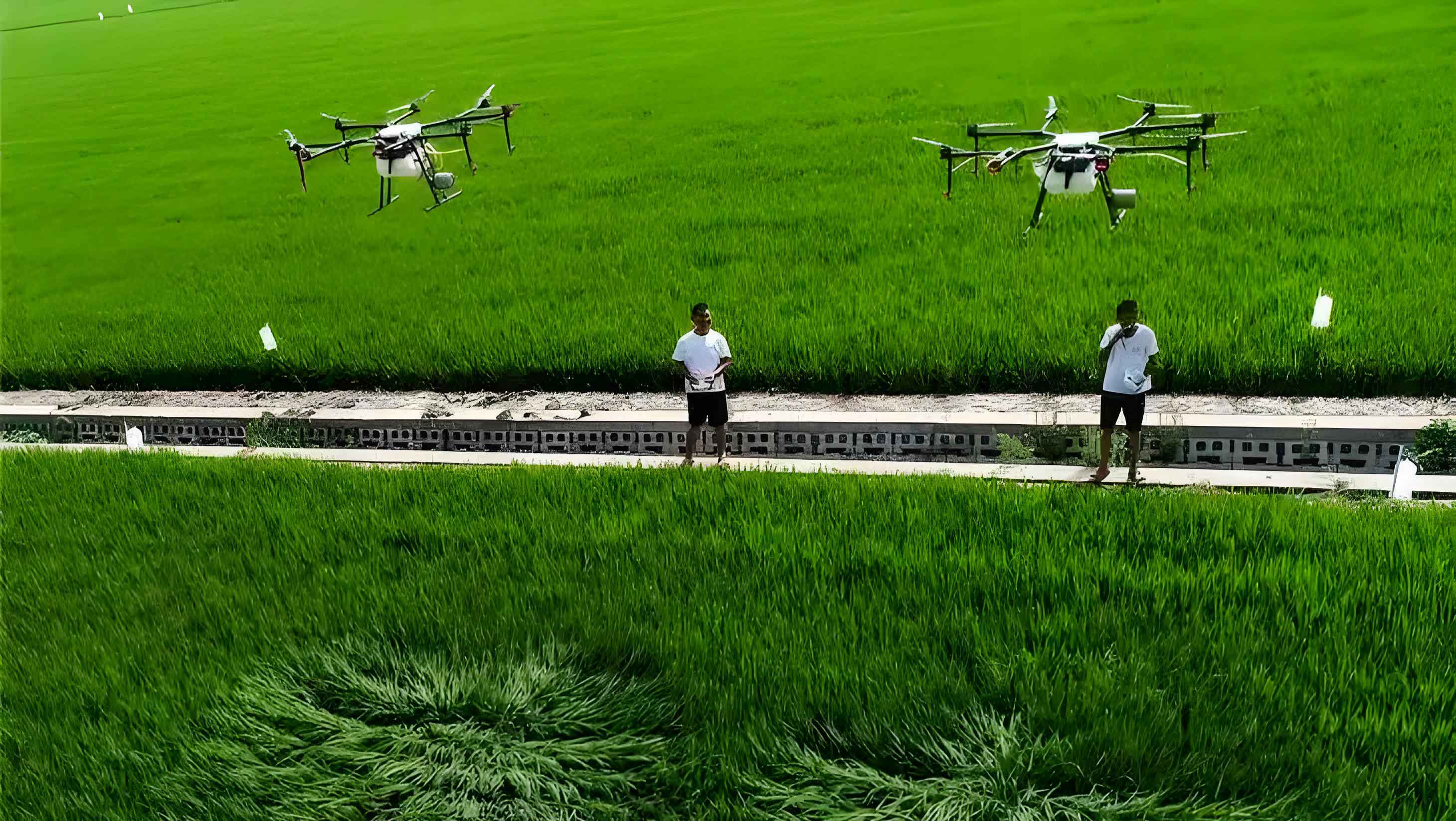
Precision in pesticide application is another cornerstone of crop spraying drone technology, leading to higher pesticide utilization rates and reduced environmental impact. Spraying UAVs are equipped with advanced sensors and nozzles that allow for real-time adjustments based on crop density, pest severity, and environmental conditions. The pesticide utilization rate can be expressed as: $$ \text{Pesticide Utilization Rate} = \frac{\text{Amount Deposited on Target (ml)}}{\text{Amount Sprayed (ml)}} \times 100\% $$ In practice, crop spraying drones achieve rates of 60-80%, significantly higher than the 30-40% typical of conventional methods. This precision minimizes drift and evaporation, ensuring that pesticides reach the intended targets, such as aphid colonies or fungal infection sites, thereby improving efficacy while lowering chemical inputs. Moreover, the ability of spraying UAVs to operate at low altitudes and controlled speeds enhances droplet deposition, which is critical for managing diseases like powdery mildew and rust in wheat.
Beyond efficiency and precision, crop spraying drones contribute to sustainable agriculture by enabling greener pest control practices. By reducing pesticide runoff and soil contamination, spraying UAVs help preserve ecosystem balance and biodiversity. For example, they facilitate the integration of biological control agents, such as predatory insects, by allowing targeted applications that spare beneficial species. The environmental benefits can be summarized in a table comparing traditional and drone-based methods:
| Aspect | Traditional Methods | Crop Spraying Drones |
|---|---|---|
| Pesticide Use | High, with significant waste | Reduced by 20-50% |
| Soil Impact | Often compacted and contaminated | Minimal disturbance |
| Biodiversity | Harm to non-target organisms | Enhanced through precision |
| Carbon Footprint | Higher due to fuel and labor | Lower with electric options |
The application process for crop spraying drones in wheat pest control involves a systematic approach to ensure effectiveness and safety. It begins with thorough preparation, including selecting optimal weather conditions—such as clear skies, wind speeds below 3 m/s, and temperatures under 35°C—to maximize drone performance and pesticide efficacy. Operators must also conduct risk assessments and notify local authorities to prevent accidents. Next, system debugging is crucial; this includes checks on the drone’s structural integrity, battery levels, GPS accuracy, and nozzle functionality. A pre-flight test in an open area helps verify parameters like flight height (e.g., 2-3 m for wheat) and speed (3-5 m/s), which can be adjusted based on crop growth stages. Pest monitoring follows, where spraying UAVs equipped with multispectral cameras detect early signs of infestations, such as aphid clusters or fungal lesions, allowing for timely interventions. During the scientific spraying phase, operators control the drone remotely, ensuring even coverage and minimal drift. Finally, post-application evaluation involves field surveys to assess control efficacy, using metrics like pest population reduction and yield increase, which can be modeled as: $$ \text{Yield Increase} = \frac{\text{Yield with Drone} – \text{Yield without Control}}{\text{Yield without Control}} \times 100\% $$ This holistic process underscores the importance of integrating technology with agronomic knowledge.
When addressing specific wheat pests and diseases, crop spraying drones offer tailored strategies that enhance control precision. For aphids and mole crickets, which thrive in warm, humid conditions during the wheat reviving stage, spraying UAVs can apply insecticides like thiamethoxam at rates of 1500-1800 mL/ha. The optimal application timing is during jointing to booting stages, with flight parameters set to low altitudes for better penetration. Similarly, for Fusarium head blight (scab), a fungal disease prevalent during flowering, drones enable targeted fungicide sprays—e.g., 25% difenoconazole at 375-600 mL/ha—during cool evenings to improve adhesion. Table 2 outlines key strategies for common wheat issues:
| Pest/Disease | Optimal Spraying UAV Parameters | Recommended Pesticides | Application Timing |
|---|---|---|---|
| Aphids | Height: 2-3 m, Speed: 3 m/s | 10% thiamethoxam EC | Jointing stage |
| Mole Crickets | Height: 2 m, Speed: 4 m/s | 50% thiamethoxam WG | Early growth phase |
| Fusarium Head Blight | Height: 3 m, Speed: 3 m/s | 25% difenoconazole SC | Flowering initiation |
| Stripe Rust | Height: 2.5 m, Speed: 4 m/s | 12.5% fenbuconazole EC | Jointing to heading |
In the case of stripe rust, which manifests as yellow streaks on leaves and can reduce yields by up to 30%, crop spraying drones allow for repeated applications of fungicides like propiconazole at 800-1000 mL/ha every 10-15 days. The precision of spraying UAVs ensures that chemicals reach the lower canopy, where rust often starts, thereby curbing spread. Furthermore, the use of drones facilitates resistance management by enabling alternation of chemical groups, which is critical for long-term sustainability.
To maximize the benefits of crop spraying drones, several operational注意事项 must be addressed. Daily maintenance is essential for the longevity and reliability of spraying UAVs; this includes inspecting propellers, batteries, and nozzles before each use, as well as cleaning residues to prevent corrosion. A maintenance checklist can be represented as: $$ \text{Maintenance Score} = \sum_{i=1}^{n} \text{Component Integrity}_i $$ where components include motors, sensors, and spray systems. Technical training for operators is equally important, covering aspects from drone piloting to pest identification. Regular workshops and certifications ensure that personnel can handle emergencies, such as motor failures or pesticide leaks. Moreover, pesticide use must be standardized by selecting low-toxicity, biodegradable options and adhering to dosage guidelines. The environmental impact of pesticides can be minimized through proper disposal of containers, which spraying UAVs help by reducing overall usage. Safety management involves securing flight zones away from populated areas and power lines, with protocols for incident response. For instance, the risk of drift can be calculated using: $$ \text{Drift Risk} = k \times \text{Wind Speed} \times \text{Droplet Size} $$ where k is a constant, and measures are taken to mitigate it through optimal nozzle selection.
In conclusion, crop spraying drones represent a transformative tool in wheat pest and disease control, offering unparalleled efficiency, precision, and environmental benefits. As spraying UAV technology evolves, its integration with integrated pest management (IPM) approaches—such as resistant varieties and biological controls—will further enhance sustainable agriculture. I believe that continued investment in research, training, and infrastructure will unlock the full potential of crop spraying drones, paving the way for higher yields and greener farming practices worldwide. The future of wheat production lies in harnessing such innovations to address global food security challenges.