
As I delve into the realm of modern warfare, I am struck by the transformative role of military drones. These unmanned aerial vehicles (UAVs) have evolved from simple targets to sophisticated platforms that redefine battlefield dynamics. In this analysis, I will explore the current state, developmental trajectories, and future combat potential of military drones, drawing on technological insights and strategic considerations. The integration of military drones into armed forces worldwide signifies a paradigm shift toward automated, risk-averse operations.
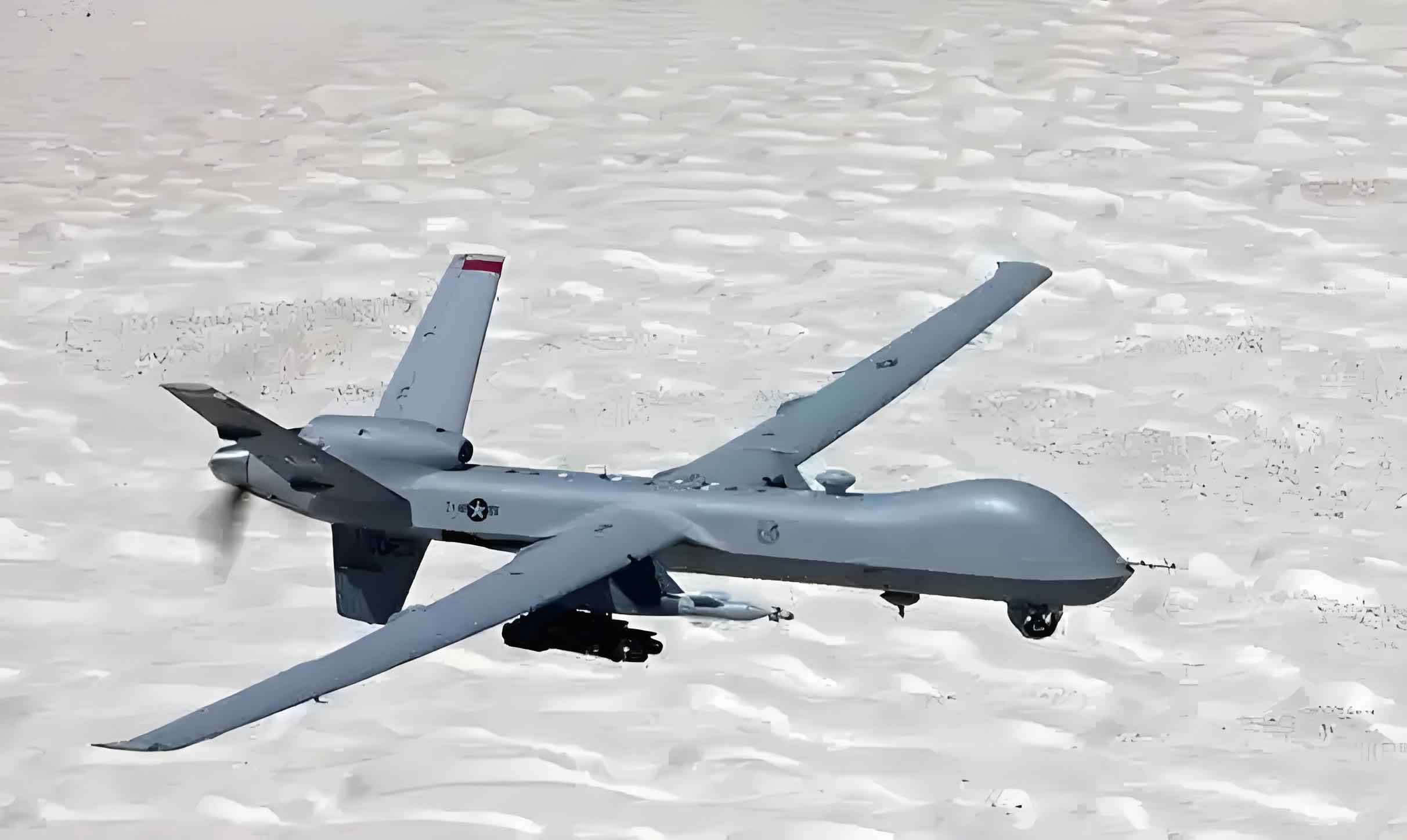
The journey of military drones began over a century ago, with early prototypes emerging in the 1910s. Initially deployed as target drones, they gradually morphed into reconnaissance and electronic warfare assets. Today, military drones are ubiquitous, with over 400 models in service or development across more than 30 nations. From my perspective, the proliferation of military drones underscores their versatility and cost-effectiveness in diverse missions, from surveillance to strike operations. The keyword “military drone” encapsulates this evolution, representing a fusion of aviation, robotics, and information technology.
In assessing the current landscape, I note that military drones exhibit distinct characteristics compared to manned aircraft. These attributes enhance their survivability and mission adaptability. Below, I summarize key features in a comparative table.
| Aspect | Military Drone | Manned Aircraft |
|---|---|---|
| Structural Design | Simplified, often with twin-tail booms; carbon-composite materials to reduce radar cross-section. | Complex cockpit and life-support systems; metal alloys dominant. |
| Flight Performance | Altitude: sea level to 20+ km; Speed: 50 km/h to Mach 10+; Endurance: up to 50+ hours; Overload: up to 20g. | Limited by human physiology: altitude ~18 km, speed ~Mach 2.5, endurance ~10 hours, overload ~9g. |
| Control Mechanisms | Combination of programmed autonomy and remote control; flexible takeoff/landing (e.g., catapult, parachute). | Primarily pilot-driven; requires runways for most operations. |
| Mission Profiles | High-risk tasks: reconnaissance in contested airspace, electronic jamming, decoy roles, and direct attacks. | Focused on air superiority, bombing, and transport; pilot safety limits risk exposure. |
From this table, I infer that military drones excel in endurance and risk tolerance. For instance, the endurance of a military drone can be modeled by the formula for loiter time: $$T = \frac{E \cdot \eta}{P}$$ where \(T\) is the endurance in hours, \(E\) is the energy capacity in watt-hours, \(\eta\) is the propulsion efficiency, and \(P\) is the power consumption in watts. Solar-powered military drones extend this further, with \(T\) potentially reaching days, as energy harvesting from sunlight reduces dependency on fuels.
The performance metrics of military drones often involve aerodynamic efficiency. The lift-to-drag ratio, critical for long-endurance flights, is given by: $$L/D = \frac{C_L}{C_D}$$ where \(C_L\) is the lift coefficient and \(C_D\) is the drag coefficient. Advanced military drones optimize \(C_L\) through wing design, while minimizing \(C_D\) with stealth shaping. This underscores how military drones leverage engineering principles to achieve superior flight characteristics.
Looking ahead, I perceive several trends shaping the future of military drones. These include advancements in speed, stealth, and autonomy. The following table outlines emerging directions.
| Trend | Description | Example Models |
|---|---|---|
| High-Altitude, Long-Endurance (HALE) | Drones operating above 18 km with endurance exceeding 40 hours; enabled by efficient engines and lightweight materials. | Global Hawk, Heron |
| Stealth and Low Observability | Incorporation of radar-absorbent materials and faceted designs to reduce radar cross-section (RCS). RCS is approximated by: $$\sigma = \frac{4\pi A^2}{\lambda^2}$$ where \(A\) is the target area and \(\lambda\) is the radar wavelength. | Dark Star, classified UCAVs |
| Attack and Combat Capabilities | Armed drones capable of carrying missiles or bombs; evolving into unmanned combat aerial vehicles (UCAVs). | Predator (with Hellfire), X-45, X-47 |
| Miniaturization and Micro-Drones | Drones smaller than 50 cm, used for covert surveillance; nanotechnology enables insect-sized platforms. | Black Hornet, experimental micro-drones |
| Cost Reduction | Mass production and modular designs lowering unit cost, making military drones accessible for widespread deployment. | Various commercial-derived drones |
In my view, the trend toward attack-oriented military drones is particularly significant. The payload capacity of a combat military drone can be expressed as: $$W_p = k \cdot M_{TOW}$$ where \(W_p\) is the weapon payload, \(M_{TOW}\) is the maximum takeoff weight, and \(k\) is a proportionality constant typically ranging from 0.2 to 0.3 for advanced models. This allows military drones to deliver precision strikes while maintaining operational flexibility.
Furthermore, the integration of artificial intelligence (AI) in military drones enhances autonomous decision-making. I consider the probability of successful target engagement by an AI-driven military drone: $$P_s = P_d \cdot P_a \cdot P_k$$ where \(P_d\) is the detection probability, \(P_a\) is the acquisition probability, and \(P_k\) is the kill probability. Improvements in sensor fusion and machine learning boost \(P_s\), making military drones more lethal and reliable.
Beyond current applications, I envision expansive combat roles for military drones. These include electronic warfare, counter-cruise missile defense, space confrontation, and even drone-on-drone engagements. Each domain presents unique challenges and opportunities for military drones.
For electronic warfare, military drones could perform communication anti-radiation attacks. By detecting enemy radio emissions, a military drone can geolocate transmitters and deploy jammers or kinetic weapons. The effective jamming range \(R_j\) depends on power and frequency: $$R_j = \sqrt{\frac{P_j G_j \lambda^2}{(4\pi)^2 S}}$$ where \(P_j\) is the jamming power, \(G_j\) is the antenna gain, \(\lambda\) is the wavelength, and \(S\) is the target receiver sensitivity. Military drones equipped with such capabilities could dominate the electromagnetic spectrum.
In counter-cruise missile defense, military drones offer persistent aerial surveillance. I hypothesize a deployment strategy where military drones form a sensor network to detect low-flying threats. The probability of intercept \(P_i\) by a drone-launched interceptor is: $$P_i = 1 – e^{-\lambda A t}$$ where \(\lambda\) is the threat arrival rate, \(A\) is the coverage area per military drone, and \(t\) is the engagement time. This showcases how military drones enhance layered defense architectures.
Space confrontation represents a frontier for military drones. High-altitude military drones, operating near the stratosphere, could target low-Earth orbit satellites. The energy required for such an engagement involves orbital mechanics, but drones offer a reusable, cheaper alternative to missiles. The velocity increment \(\Delta v\) needed can be approximated by rocket equations, yet military drones provide loitering advantages.
Lastly, drone-on-drone combat may become prevalent. As military drones proliferate, air-to-air engagements between unmanned platforms will necessitate advanced autonomy and weaponry. The maneuverability of a military drone in a dogfight can be modeled by the turn rate: $$\omega = \frac{g \sqrt{n^2 – 1}}{V}$$ where \(\omega\) is the turn rate in radians per second, \(g\) is gravitational acceleration, \(n\) is the load factor, and \(V\) is the velocity. Military drones with high \(n\) (due to no human limits) will outmaneuver adversaries.
To quantify the impact of military drones, I present a table summarizing potential mission efficiencies. This highlights how military drones optimize resource use in modern warfare.
| Mission Type | Efficiency Metric | Formula | Typical Value for Military Drones |
|---|---|---|---|
| Surveillance | Area Coverage Rate (km²/h) | $$A_c = V \cdot H \cdot \theta$$ where \(V\) is speed, \(H\) is altitude, and \(\theta\) is sensor field of view. | 500-5000 km²/h |
| Strike Operations | Cost per Kill (USD) | $$C_k = \frac{C_d + C_w}{P_k}$$ where \(C_d\) is drone cost, \(C_w\) is weapon cost, and \(P_k\) is kill probability. | Lower than manned aircraft due to reduced loss risk. |
| Electronic Attack | Jamming Effectiveness Index | $$J_e = \frac{B_j \cdot P_j}{R_j^2}$$ where \(B_j\) is bandwidth, \(P_j\) is power, and \(R_j\) is range. | High, due to proximity and adaptability. |
In conclusion, I am convinced that military drones will continue to revolutionize warfare. Their adaptability, coupled with advancements in AI and materials science, positions them as cornerstone assets for future conflicts. The keyword “military drone” resonates throughout this analysis, embodying a trajectory toward greater autonomy and integration. As I reflect on the prospects, I emphasize the need for robust research and development to harness the full potential of military drones, ensuring they contribute to strategic superiority while minimizing human risk. The era of the military drone is not just imminent—it is already here, reshaping the battlespace in profound ways.
From a technical standpoint, the scalability of military drone networks can be described by Metcalfe’s law adapted for UAV swarms: $$U = c \cdot n^2$$ where \(U\) is the utility of the network, \(c\) is a constant, and \(n\) is the number of interconnected military drones. This exponential growth in capability underscores why investments in military drone technologies are accelerating globally.
Ultimately, the evolution of military drones mirrors broader trends in automation and digitization. As I have explored, from their structural nuances to their futuristic combat roles, military drones represent a synergy of innovation and tactical necessity. The continuous refinement of these platforms will undoubtedly yield new paradigms, solidifying the military drone as an indispensable tool in 21st-century defense.