
As I observe the evolution of modern warfare, I am struck by the transformative impact of military drones. These unmanned aerial vehicles have emerged as a pivotal force, reshaping strategies and redefining the battlefield. In this discussion, I will delve into the intricacies of military drones, exploring their history, capabilities, and future prospects, all from my perspective as an analyst of defense technologies.
The term “military drone” refers to an unmanned aircraft that operates via remote control or autonomous pre-programmed navigation. Since their inception in the early 20th century, shortly after the advent of manned aircraft, military drones have evolved from simple support tools to sophisticated combat assets. Today, they stand as a distinct and crucial category within military aviation, increasingly tasked with high-intensity operations. The proliferation of military drones is a testament to their versatility and cost-effectiveness, driving nations worldwide to prioritize their development.
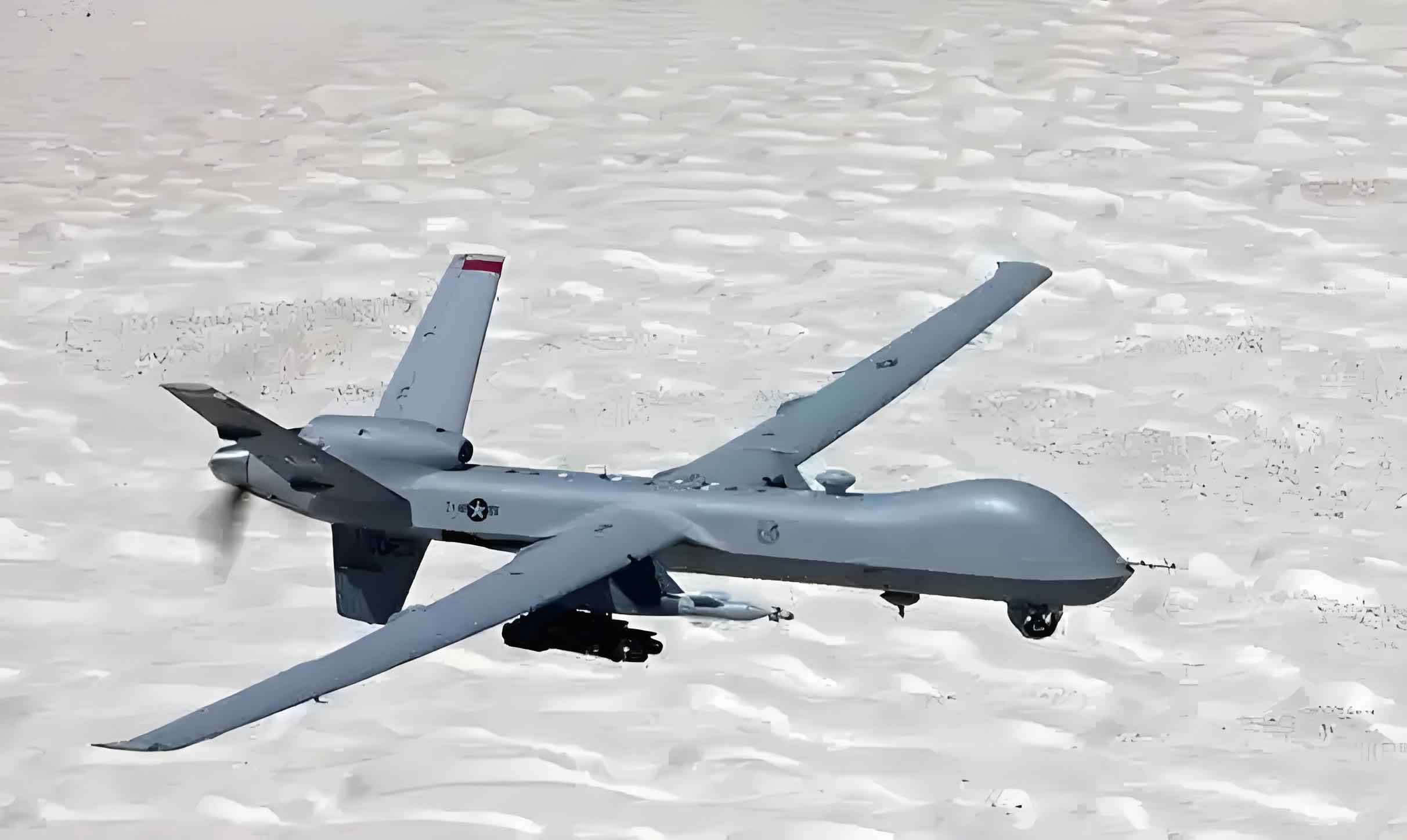
From my analysis, the fundamental appeal of military drones lies in their lack of an onboard pilot. This absence eliminates the need for life-support systems, allowing for reduced size, weight, and complexity. The result is enhanced mobility, lower energy consumption, and decreased costs, yielding a high cost-benefit ratio. Mathematically, this can be expressed as a measure of operational efficiency: $$ \text{Cost-Benefit Ratio (CBR)} = \frac{\sum \text{Operational Capabilities}}{\text{Total System Cost}} $$ where capabilities include surveillance range, payload capacity, and mission duration. A higher CBR signifies a more efficient military drone. Furthermore, advancements in avionics and composite materials enable the integration of sensors, navigation systems, and data processors into compact frames, expanding functionality while reducing vulnerability to air defenses. In scenarios like deep strikes or operations in hazardous nuclear, biological, or chemical environments, military drones can perform perilous missions, minimizing both material losses and the risk to human life.
Reflecting on their roles, I note that military drones can undertake a diverse array of missions. These include battlefield reconnaissance and surveillance, target designation, electronic warfare, command and control, naval escort, serving as radio relays or decoys, and acting as weapon platforms. They are also employed as target drones for training and weapons testing. Increasingly, unmanned combat aerial vehicles (UCAVs) are designed for air-to-air combat and ground attacks. The system encompassing a military drone is holistic, comprising the aircraft itself, ground control stations, launch and recovery equipment, and communication links. Launch methods vary from runways and ship decks to catapults and rocket boosters, while recovery can involve wheeled landings, net captures, or parachute descents.
To categorize military drones, I find it helpful to consider multiple dimensions. The following table summarizes a common classification framework based on control methods,用途, size, and range:
| Classification Basis | Categories | Key Characteristics |
|---|---|---|
| Control Method | Pre-programmed, Remote-controlled, Hybrid | Pre-programmed relies on onboard computers; remote-controlled uses ground stations; hybrid combines both. |
| Primary Role | Reconnaissance, Target, Electronic Warfare, Attack, Communications, Early Warning | Each role tailors payload and flight parameters; for instance, attack military drones carry munitions. |
| Size/Weight | Large, Medium, Small, Micro | Micro military drones are under 15cm in size, emphasizing portability and covert operations. |
| Range | Long-range, Medium-range, Short-range | Range affects endurance and mission scope; long-range military drones can operate over thousands of kilometers. |
Technological progress since the late 20th century has been instrumental in advancing military drones. Innovations in computing, sensors, and materials have fostered designs that are modular, lightweight, and stealthy. Engine technology has shifted toward rotor-based systems that offer durability and fuel efficiency. The miniaturization of electronic components has led to smarter, more integrated systems with improved reliability. Sensor development focuses on all-weather, real-time, high-resolution capabilities, while data links emphasize anti-jamming robustness. Flight control systems have achieved greater automation, enhancing navigation precision. These advancements collectively bolster the performance of military drones in areas like stealth, precise positioning, and real-time data transmission.
One significant trend I observe is the move toward miniaturization and multi-role functionality. Beyond traditional reconnaissance and target roles, military drones now include electronic warfare and early warning variants. For example, early warning drones carry radar systems to provide aerial surveillance, complementing manned aircraft and satellites. Electronic warfare drones can jam or destroy enemy radars. In reconnaissance, the emergence of micro military drones is particularly noteworthy. These tiny systems, often carried by infantry, can be hand-launched to scout ahead, transmitting video via secure links. Their performance parameters can be modeled: $$ \text{Operational Radius } R = v \times t $$ where \( v \) is the cruising speed and \( t \) is the endurance. For a micro military drone with \( v = 50 \, \text{km/h} \) and \( t = 1 \, \text{hour} \), \( R \approx 50 \, \text{km} \). They represent a paradigm shift in tactical intelligence.
Another critical area is endurance. Historically, military drones had limited flight times, but the demand for persistent surveillance has spurred long-endurance designs. Solar-powered military drones, for instance, aim for extended loitering periods. The energy dynamics can be expressed as: $$ E_{\text{total}} = E_{\text{solar}} – E_{\text{consumption}} $$ where \( E_{\text{solar}} \) is the energy harvested from sunlight and \( E_{\text{consumption}} \) includes propulsion and payload power needs. Achieving positive \( E_{\text{total}} \) over diurnal cycles enables flights lasting months. Such long-endurance military drones are envisioned for roles like communications relay or continuous monitoring, reducing the need for satellite or manned aircraft support.
When it comes to combat, unmanned combat aerial vehicles (UCAVs) represent the cutting edge of military drone development. These systems range from reusable attack platforms to anti-radiation drones that home in on enemy radar emissions. The advantages are clear: they lower costs and prevent pilot casualties. From my perspective, the evolution toward autonomous UCAVs is inevitable. Future military drones will leverage artificial intelligence to make real-time tactical decisions, selecting targets and weapons independently. The decision-making process can be framed as an optimization problem: $$ \max_{a \in A} U(a, s) $$ where \( a \) is an action (e.g., engage target, evade threat), \( s \) is the state (e.g., enemy position, fuel level), and \( U \) is a utility function encoding mission objectives. Advanced AI will enable military drones to execute complex maneuvers and collaborate in swarms.
Looking ahead, I foresee several key directions for military drones. First, autonomous systems will become more prevalent, with enhanced AI allowing for fully independent missions. Second, modular designs will enable rapid reconfiguration for different roles, making a single military drone platform adaptable to reconnaissance, strike, or electronic warfare. Third, swarm technology will allow coordinated operations, where multiple military drones act as a cohesive unit, overwhelming defenses through sheer numbers and synergy. The effectiveness of a swarm can be quantified as: $$ \text{Swarm Effectiveness} = N \times C \times S $$ where \( N \) is the number of drones, \( C \) is individual capability, and \( S \) is a synergy factor ( \( S > 1 \) for effective coordination). Fourth, stealth and survivability will improve through advanced materials and adaptive flight paths. Finally, the integration of military drones with other domains—land, sea, and cyber—will create multi-domain robotic systems, blurring the lines between traditional force types.
In conclusion, the ascent of military drones is a defining feature of contemporary and future conflict. From my vantage point, their ability to perform diverse missions with minimal risk ensures their enduring relevance. As technology advances, these systems will grow more capable, autonomous, and integral to military operations. The ongoing innovation in sensors, propulsion, and AI promises a future where military drones operate seamlessly alongside manned assets, or even independently, shaping the outcomes of engagements. The journey of the military drone from a simple remote-controlled craft to a sophisticated combatant mirrors the broader trajectory of warfare—toward greater automation, precision, and strategic depth. As I reflect on this evolution, I am convinced that military drones will continue to revolutionize the battlefield, offering both challenges and opportunities for defense planners worldwide.