
As I observe the rapid transformation of our airspace, the term “low-altitude economy” has shifted from a niche concept to a palpable force driving innovation and creating entirely new career landscapes. From my vantage point within the aviation training sector, the most significant and immediate manifestation of this trend is the explosive demand for professional drone pilots, universally referred to as “drone pilots” or “operators.” This burgeoning sector is not just about technology; it’s about people. It’s about the thousands of individuals, particularly from the younger generation, who are flocking to drone training centers, seeing in unmanned aerial vehicles (UAVs) a key to future-proof careers and exciting new possibilities. The synergy between policy support, technological maturation, and diverse commercial applications has ignited a drone training boom that shows no signs of abating.
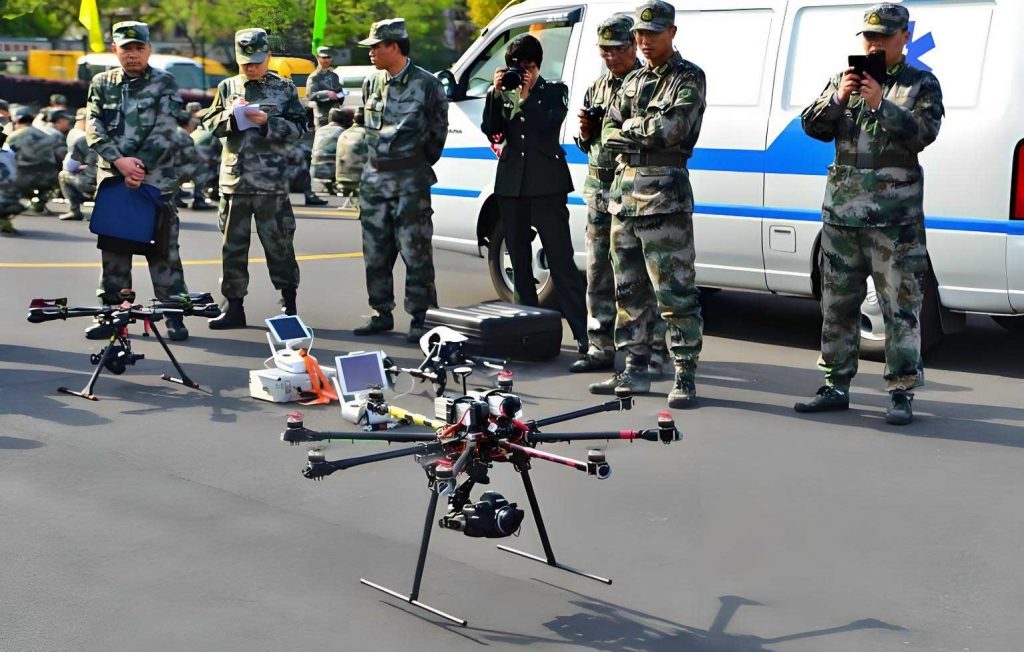
What exactly is modern drone training? It is a structured educational process designed to equip individuals with the theoretical knowledge, practical flight skills, and regulatory understanding necessary to operate drones safely, efficiently, and legally for commercial purposes. It’s the bridge between purchasing a sophisticated piece of hardware and becoming a certified professional capable of generating value across industries. The core objective of any reputable drone training program is twofold: to ensure airspace safety through rigorous adherence to regulations and to develop operational proficiency that meets specific industry standards.
The drivers behind this boom in drone training are multifaceted and powerful. The primary catalyst is a global wave of regulatory modernization. Governments worldwide are enacting and refining frameworks to safely integrate drones into national airspace systems. These regulations typically mandate certification for commercial operations, transforming a hobbyist activity into a credentialed profession overnight. This legal requirement creates a non-negotiable demand for formal drone training. Secondly, the technology itself has become incredibly accessible. Advanced flight controllers, high-resolution cameras, and sophisticated sensors are now packaged in reliable, user-friendly platforms at continually decreasing costs. This technological democratization lowers the barrier to entry, making the hardware attainable, while the drone training provides the essential software—the human skill and knowledge.
| Driver Category | Specific Factors | Impact on Training Demand |
|---|---|---|
| Regulatory & Policy | New aviation laws, Remote ID requirements, UAS Traffic Management (UTM) systems, commercial licensing mandates. | Creates a compulsory need for certified training to achieve legal compliance for professional work. |
| Technological & Economic | Lower drone costs, improved battery life and payloads, advancement in AI and automation software. | Makes drone operations commercially viable for more sectors, increasing the total addressable market for trained pilots. |
| Market Application & Demand | Expansion into surveying, precision agriculture, infrastructure inspection, logistics, emergency response, and media. | Generates specialized job roles requiring targeted skill sets beyond basic flight, fueling advanced and niche training courses. |
| Workforce Dynamics | Desire for tech-savvy careers, need for upskilling in traditional fields (e.g., construction, farming), gig economy opportunities. | Attracts diverse demographics (students, career-changers) to training as a pathway to new or enhanced employment. |
The demographic shift among trainees is particularly striking. While early adopters were often aviation enthusiasts or professionals from related fields, the current wave is dominated by digital natives. A significant majority—well over 70% in many training cohorts I’ve analyzed—are from the “Generation Z” or “00s” demographic. Their motivations are pragmatic and forward-looking. For them, a drone license is not just a certificate; it’s a versatile “career multiplier” or a “key to opportunity.” In a competitive job market, holding a commercial drone license demonstrates technical aptitude, a understanding of regulations, and familiarity with a cutting-edge toolset. It opens doors in industries they might not have previously considered, from environmental science and archaeology to real estate and filmmaking.
Conversely, I also see a growing number of older learners, including professionals seeking to integrate drones into their existing workflows (e.g., surveyors, farmers, inspectors) and retirees pursuing new hobbies like aerial photography. This broad demographic appeal underscores the dual nature of drone training: it is both a vocational necessity and a gateway to personal enrichment. The typical drone training curriculum is meticulously designed to cater to this range of goals, balancing comprehensive theory with hands-on practice.
Deconstructing the Core of Drone Training: Theory and Practice
The foundation of any professional drone training program is its theoretical component. This is far more than memorizing rules; it’s about building a robust mental model of the aviation ecosystem. Trainees delve into subjects like aerodynamics, understanding the fundamental forces that allow multi-rotors and fixed-wing drones to fly. Basic principles are often explained through foundational physics. For instance, the lift ($L$) generated by a fixed-wing airfoil can be related to key factors by a simplified form of the lift equation:
$$L = \frac{1}{2} \rho v^2 S C_L$$
where $\rho$ is air density, $v$ is airspeed, $S$ is wing area, and $C_L$ is the coefficient of lift. While a multi-rotor pilot may not calculate this directly, understanding the relationship between these variables informs decisions about payload, battery life, and performance in different weather conditions.
Meteorology is another critical module, teaching pilots to interpret weather data, understand the implications of wind shear, turbulence, and temperature inversions, and make safe go/no-go decisions. Furthermore, a substantial portion of theory is dedicated to airspace classification, navigation, radio communication procedures, and, most importantly, the dense body of national and local aviation regulations. This legal knowledge is what separates a recreational user from a professional operator.
However, theory alone is insufficient. The heart of drone training lies in practical flight instruction. This is where muscle memory, situational awareness, and problem-solving under pressure are developed. Training progresses from basic maneuvers on small, beginner-friendly drones in wide-open fields to complex operations on commercial-grade platforms. Core competency exercises include:
- Pre-flight Planning and Checklist Execution: Emphasizing systematic procedures for safety.
- Basic Maneuvers: Precise takeoff, hovering, figure-8 patterns, and landing.
- Emergency Procedures: Practicing “Return-to-Home” (RTH) triggers, handling control link failures, and managing motor-out scenarios on multi-rotor craft. The ability to control a drone in “Attitude Mode” (without GPS stabilization) is a crucial and challenging skill often tested in advanced license exams.
- Mission-Specific Skills: Flying automated grid patterns for mapping, performing close visual inspections of structures, or executing precise spraying patterns for agricultural applications.
The pinnacle of practical drone training for many is mastering flight without direct visual observation, known as Beyond Visual Line of Sight (BVLOS) operations, which is a requirement for the higher-tier “Unmanned Aircraft System Commander” or “Over-the-Horizon Operator” license in many jurisdictions.
| License Tier (Common Names) | Typical Scope of Operations | Key Practical Skill Highlights | Relative Training Complexity |
|---|---|---|---|
| Visual Line of Sight (VLOS) Pilot / Operator | Commercial operations within direct, unaided visual sight of the pilot. (e.g., basic photography, localized inspections). | Basic flight maneuvers, emergency procedures, maintaining VLOS. | Low to Moderate |
| Beyond Visual Line of Sight (BVLOS) Commander / Chief Operator | Operations where the drone is flown using instrumentation and procedures without direct visual contact. (e.g., long-range linear inspections, large-area mapping). | Advanced navigation, use of detect-and-avoid systems, managing operational risks, complex mission planning. | High |
| Instructor / Examiner | Certified to train and examine aspiring pilots for lower-tier licenses. | Exceptional flying precision (e.g., inverted figure-8s), instructional methodology, evaluation standards. | Very High |
The financial investment in drone training varies significantly, reflecting the different license tiers and specializations. A basic commercial VLOS license course can start from a few thousand dollars, covering theory classes, practical flight lessons, simulator time, and the examination fees. Progression to a BVLOS license involves more complex theory, advanced simulation, and longer, more intensive flight training, often pushing costs into a higher bracket. Specialized add-on courses for specific applications like thermography, LiDAR operation, or precision agricultural spraying represent additional investments but are increasingly seen as necessary for career differentiation.
From an economic perspective, we can model the potential return on investment (ROI) from drone training. The ROI period depends on initial training cost ($C_t$), equipment investment ($C_e$), average revenue per job ($R_j$), and operational frequency ($N_j$, jobs per month). A simplified first-year net benefit ($B$) can be expressed as:
$$B = \sum_{i=1}^{12} (N_{j,i} \cdot R_{j,i}) – (C_t + C_e + \sum_{i=1}^{12} O_{i})$$
where $O_i$ represents monthly operational costs (insurance, maintenance, transportation). For a new pilot entering a high-demand field like utility inspection or surveying, the initial investment can often be recouped within the first 6-12 months of consistent work, making drone training one of the more compelling career development investments available today.
The Employment Landscape and Future Trajectory of Drone Training
Upon successful completion of drone training and certification, a wide array of career paths unfold. The job market for skilled pilots is diversifying rapidly. Traditional strongholds like aerial cinematography and photography remain vibrant, but the growth is now led by industrial and enterprise applications. Energy companies hire pilots for inspecting miles of power lines and vast solar farms; construction firms use drones for topographic surveying, progress monitoring, and volumetric analysis of stockpiles; agricultural consultants employ drone operators to collect multispectral data for assessing crop health, a practice known as precision agriculture.
Emerging fields like drone delivery and urban air mobility (UAM) are still in nascent stages but represent the next frontier, requiring even more specialized and safety-critical drone training. The compensation reflects this demand and specialization. Entry-level commercial pilot positions often offer salaries that are competitive with other technical trades, while experienced pilots with niche skills (e.g., offshore infrastructure inspection, forensic mapping) or those who manage large drone fleets can command significantly higher remuneration.
Looking ahead, the very nature of drone training is poised for evolution. As drone technology incorporates higher levels of automation, artificial intelligence, and collision avoidance systems, the pilot’s role will shift from manual stick-and-rudder control to more of a mission manager, data specialist, and systems overseer. Future drone training curricula will need to place greater emphasis on data analytics, AI-assisted flight planning software, air traffic management integration, and cybersecurity for drone systems.
Furthermore, the standardization of training and licensing across borders will become increasingly important as commercial drone operations become more international. The challenge for the drone training industry will be to maintain the rigorous safety standards of traditional aviation while adapting with agility to the blistering pace of technological change in the UAV sector. Continuous learning and recurrent training will become the norm, ensuring that the global community of drone pilots remains proficient, safe, and ready to harness the full potential of the low-altitude economy.
In conclusion, the current surge in drone training is a direct and logical response to the unlocking of our lower skies. It represents a critical human infrastructure project for the 21st century. By transforming enthusiastic individuals into certified, skilled, and safety-conscious professionals, comprehensive drone training programs are not just creating jobs; they are building the foundational workforce that will enable countless industries to soar to new levels of efficiency, safety, and innovation. The journey from novice to licensed pilot is one of acquiring technical skill, regulatory knowledge, and operational wisdom—a journey that is now at the very center of the global economic conversation.