
As someone deeply immersed in the study of technological trends, I view the advancement of civilian UAVs as a definitive benchmark for a nation’s standing in the global科技 and manufacturing arena. The technical R&D capabilities, production levels, and the breadth and depth of industrial applications of these systems are crucial indicators. From my observation, the progress in civilian UAVs has already yielded significant results, paving the way for a future rich with diverse, reliable, and safe product series that serve national economic and social development needs. This evolution is fostering a comprehensive ecosystem encompassing R&D, manufacturing, sales, services, and integrated applications. To meet the demands of industry进步 and market application, adjustments in policy, technology, and industrial frameworks are inevitable, collectively carving out expansive market opportunities for civilian UAVs.
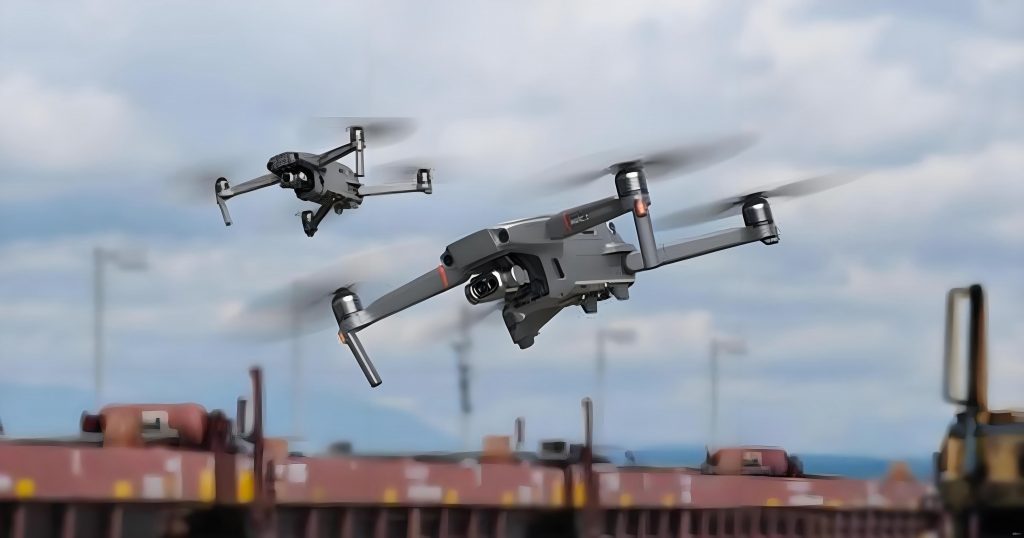
In my analysis, the policy environment forms the bedrock for the healthy development of civilian UAVs. The continuous optimization of supportive policies and regulations provides a solid foundation. I have noted that national-level encouragement is a key driver. Strategic documents explicitly advocate for the growth of the UAV industry, offering guiding principles and specific扶持 measures. Furthermore, regulatory bodies have been actively issuing配套 rules, from manufacturing guidelines and real-name registration systems to integration with next-generation infrastructure like 5G. This regulatory refinement aims to address gaps and ensure the sustainable, healthy growth of the civilian UAV sector. The following table summarizes some pivotal policy directions I’ve tracked:
| Policy Area | Core Objective | Expected Impact on Civilian UAVs |
|---|---|---|
| National Industrial Strategy | To position UAVs as a strategic emerging industry | Drives innovation, investment, and high-end manufacturing capabilities for civilian UAVs. |
| Manufacturing Guidelines | To promote standardized and quality-driven production | Enhances the reliability and safety of civilian UAV products, building market trust. |
| Airspace Management Regulations | To establish a framework for safe and integrated flight operations | Creates a predictable legal environment, enabling wider and safer deployment of civilian UAVs. |
| Spectrum & Infrastructure Integration | To allocate frequency resources and promote融合 with 5G/IoT | Unlocks new capabilities for real-time data transmission, network connectivity, and advanced applications for civilian UAVs. |
From my perspective, the industrial system surrounding civilian UAVs is趋向协同. As applications deepen and the market expands, the industry is evolving beyond mere technical domains into management, services, and保障 fields like leasing and operator training. This forms a new industrial chain. I foresee that robust manufacturing capabilities, coupled with efficient supply chain management, will foster high-trust磨合 between upstream and downstream enterprises. This synergy, driven by market demand, will establish a virtuous cycle, promoting协同化发展. A significant trend I observe is the跨界融合 between military and civilian sectors, as well as between consumer and industrial-grade civilian UAV manufacturers. This collaboration and商业模式 innovation are giving rise to跨产业形态 and integrated manufacturing-service systems. The interplay can be conceptualized by a simple model for industrial synergy:
$$ S_{industry} = \alpha \cdot (T_{mil} \cap T_{civ}) + \beta \cdot (M_{cons} \cap M_{ind}) + \gamma \cdot I_{collab} $$
Where \( S_{industry} \) represents the overall industrial synergy strength for civilian UAVs, \( T_{mil} \) and \( T_{civ} \) denote military and civilian technology sets, \( M_{cons} \) and \( M_{ind} \) represent consumer and industrial market forces, \( I_{collab} \) is the intensity of collaborative innovation, and \( \alpha, \beta, \gamma \) are contribution coefficients. This underscores how convergence amplifies the potential of the civilian UAV ecosystem.
I am particularly excited about the fusion of civilian UAVs with新一代信息技术. Technologies like big data and AI are赋能 the sector,催生出 unprecedented possibilities. Firstly, the integration with big data is transformative. Civilian UAVs provide a unique platform for data collection from a broad视角, contributing to fields like environmental monitoring and traffic management. The data throughput from a UAV fleet can be expressed as:
$$ D_{flow} = \sum_{i=1}^{n} (r_{sensor_i} \cdot t_{flight_i} \cdot f_{sampling_i}) $$
Here, \( D_{flow} \) is the total data flow, \( n \) is the number of civilian UAVs, \( r_{sensor} \) is sensor resolution, \( t_{flight} \) is flight duration, and \( f_{sampling} \) is the sampling frequency. This data deluge feeds back into the system, enabling “smart civilian UAVs” with enhanced autonomy, inter-drone communication for path negotiation, and real-time mission adjustments.
Secondly, the marriage with AI is revolutionizing capabilities. An AI-powered civilian UAV, or a “smart drone,” utilizes vision识别 and radar for superior target确认与定位 compared to GPS-only systems. The improvement in recognition accuracy can be modeled as:
$$ A_{AI} = A_{GPS} + \Delta_{vision} \cdot \eta_{ML} $$
Where \( A_{AI} \) is the AI-driven accuracy, \( A_{GPS} \) is baseline GPS accuracy, \( \Delta_{vision} \) is the vision system’s accuracy delta, and \( \eta_{ML} \) is the machine learning model efficiency factor (0 < \( \eta_{ML} \) ≤ 1). These AI civilian UAVs can predict trajectories based on learned data and autonomously execute complex tasks, offering new tools for监管 and operational efficiency.
In my assessment, the industrial-grade market for civilian UAVs holds vast prospects. While consumer applications popularized the technology, industrial-grade civilian UAVs—defined as高效便捷的辅助手段 for professional work—are becoming indispensable. Their value lies in addressing specific industry needs, creating strong customer黏性 and technical壁垒. The application depth is a function of长期积累:
$$ Depth_{app} = \int_{0}^{T} (I_{tech}(t) \cdot E_{industry}(t)) \, dt $$
\( Depth_{app} \) is application depth, \( I_{tech}(t) \) is technological innovation over time, and \( E_{industry}(t) \) is industry-specific experience. The breadth of applications is immense, spanning numerous sectors. The table below categorizes some key application domains I have studied for industrial-grade civilian UAVs:
| Sector | Specific Application | Key Value Proposition | Technical Demand (e.g., Payload, Endurance) |
|---|---|---|---|
| Agriculture | Crop Monitoring, Precision Spraying | Increased efficiency, reduced chemical usage | Moderate payload for sensors/sprayers, long endurance |
| Energy & Utilities | Power Line Inspection, Pipeline Patrol | Safer, faster, and more detailed inspections | High-resolution cameras, thermal sensors, stable flight in恶劣 weather |
| Public Safety & Security | Police Patrol, Disaster Assessment, Border Surveillance | Rapid deployment, aerial perspective for situational awareness | Real-time video transmission, night vision, rugged design |
| Construction & Surveying | Topographic Mapping, Site Progress Monitoring | High-accuracy data collection, cost-effective compared to传统 methods | Lidar/Photogrammetry payloads, precise positioning (RTK-GPS) |
| Logistics & Transportation | Medical Supply Delivery, Inventory Management | Bypassing ground obstacles, speed for critical deliveries | Payload capacity, range, reliable navigation in complex environments |
| Environmental Monitoring | Air Quality Sampling, Wildlife Tracking, Forest Health | Access to remote or hazardous areas, consistent data sets | Specialized sensors (gas, multispectral), long flight time |
| Media & Entertainment | Cinematography, Live Event Coverage | Dynamic aerial shots, new creative angles | High-quality gimbaled cameras, quiet operation, agile maneuverability |
Currently, I recognize that industrial-grade civilian UAV manufacturing and application are still in示范 stages, facing bottlenecks in endurance (\( T \)), payload (\( W \)), and reliability (\( R \)). The trade-off between endurance and payload is a classic挑战, approximated by:
$$ T \cdot W \approx \frac{E_{battery} \cdot \eta_{system}}{P_{hover}} $$
Where \( E_{battery} \) is battery energy, \( \eta_{system} \) is total system efficiency, and \( P_{hover} \) is power required for hover. This limits某些行业领域的应用. However, as technology advances and商业应用 matures, demands for longer遥控 distance and higher传图 clarity will drive product evolution. The potential market space is significant, and widespread adoption in industrial fields promises substantial商业价值.
The current用途 of civilian UAVs are already diverse and expanding. Based on my跟踪 of implementations, they extend far beyond hobbyist photography. Here is a consolidated summary of practical applications that showcase the versatility of civilian UAVs:
| Application Domain | Description/Example Use Case | Primary Civilian UAV Function |
|---|---|---|
| Aerial Photography & Cinematography | Capturing landscape footage for documentaries, films, and real estate; enabling shots previously requiring helicopters. | Mobile camera platform with stabilization. |
| Infrastructure Inspection | Visual and thermal inspection of power lines, wind turbines, bridges, and cell towers, reducing risks for human inspectors. | Close-proximity data acquisition tool. |
| Precision Agriculture | Multispectral imaging for crop health assessment, targeted pesticide/herbicide application, and yield estimation. | Field scouting and treatment platform. |
| Search & Rescue (SAR) | Locating missing persons in difficult terrain using thermal cameras, providing immediate aerial oversight to SAR teams. | Rapid-deployment aerial search asset. |
| Environmental Science | Monitoring wildlife populations, tracking deforestation, sampling atmospheric conditions, and assessing pollution. | Data collection node for remote sensing. |
| News Gathering & Journalism | Covering breaking news events, natural disasters, or large public gatherings from unique aerial vantage points. | Mobile broadcasting unit. |
| Logistics & Delivery | Transporting small parcels, medical supplies, or retail goods between hubs or to remote locations (last-mile delivery trials). | Autonomous cargo carrier. |
| Public Service & Law Enforcement | Crowd monitoring during large events, traffic accident scene documentation, and supporting firefighting efforts. | Aerial observation and reconnaissance platform. |
Through the combined促进 of policy, industrial systems, and technology, the future of civilian UAVs, in my view, will衍生出更多可能. As the industry不断细分 and深入垂直领域, it will drive可持续性 and创新性变革. The ongoing integration with AI and big data, the maturation of industrial applications, and the evolving regulatory landscape all point towards a trajectory of跨越式发展 for civilian UAVs. I am confident that the continuous iteration of sensor technology, the development of robust remote interaction systems, and the creation of intelligent监管 frameworks will further empower this dynamic sector. The journey of the civilian UAV from a niche gadget to a cornerstone of modern industry is well underway, and its full potential is yet to be unlocked.