
Camera drones have transitioned from exclusive technological marvels to accessible playthings, fundamentally reshaping toy market landscapes. As price-performance ratios optimize, these camera UAVs now integrate seamlessly into daily life, particularly within children’s toy sectors. During peak seasons like the Chinese New Year, packaging innovations and affordability propel camera drones into best-selling gift categories. Sales data reveals sustained e-commerce growth for models including quadcopters, foldable obstacle-avoidance variants, and 8K HD units.
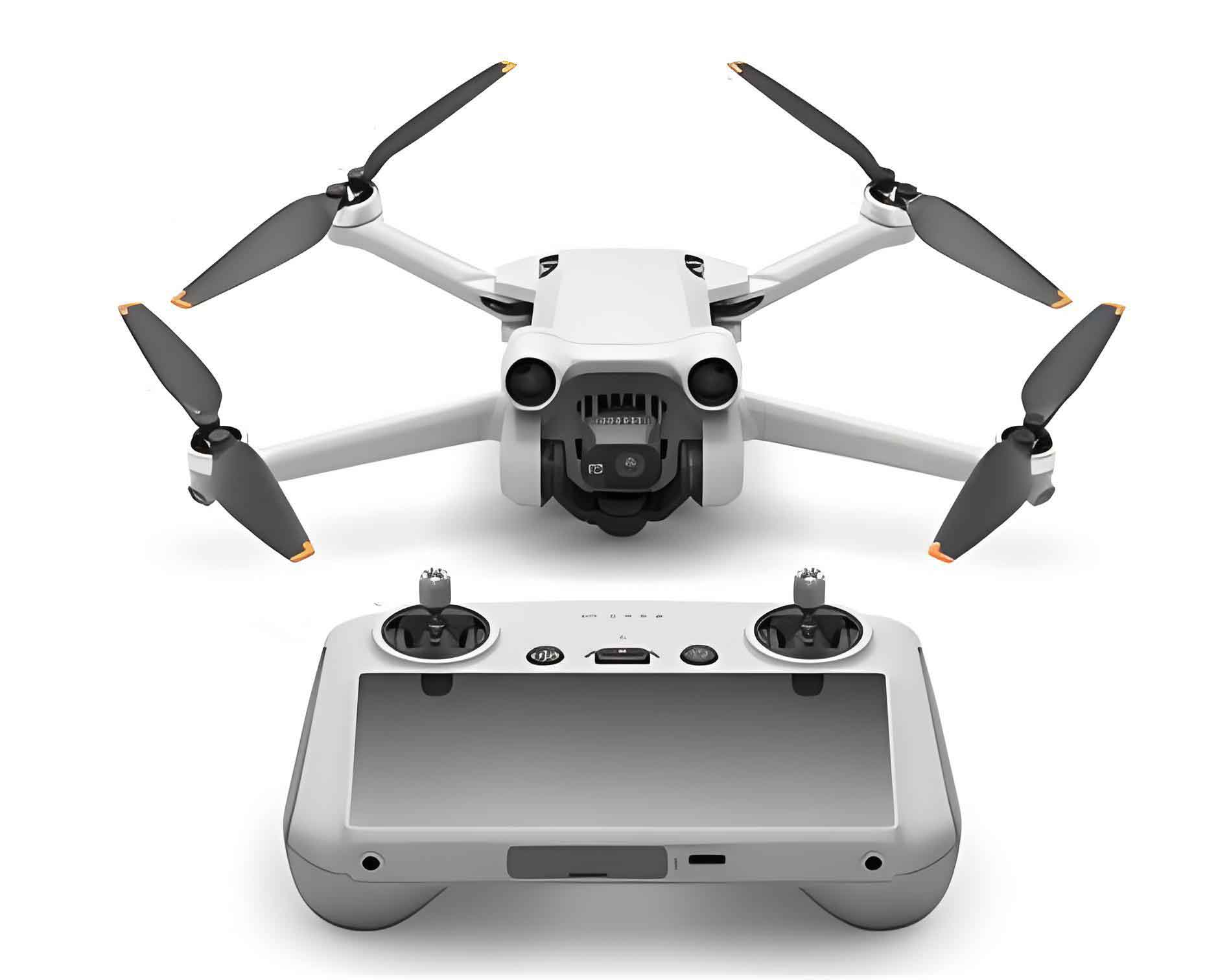
Early children’s camera UAVs faced adoption barriers due to operational complexity, fragility, and premium pricing (often exceeding \$300), creating perceptions of inaccessibility. Manufacturers subsequently engineered solutions by simplifying interfaces while preserving core functionalities. This strategic refinement is quantified by the cost decay model:
$$ C_t = C_0 \cdot e^{-kt} $$
Where \( C_t \) denotes current cost, \( C_0 \) represents initial cost, \( k \) is the annual simplification coefficient, and \( t \) is time in years. This enabled sub-\$100 price points while enhancing durability—directly boosting market penetration.
| Year | Avg. Price (USD) | Key Features | Sales Growth (%) |
|---|---|---|---|
| 2015 | 310 | Basic stabilization | 12 |
| 2018 | 190 | 720p recording | 34 |
| 2021 | 125 | 1080p + single-axis avoidance | 57 |
| 2024 | 95 | 8K HD + 360° avoidance + GPS | 89 |
Modern camera drones exhibit unprecedented functionality-price alignment. Consider the popular 8K HD obstacle-avoidance camera UAV retailing at \$95:
| Feature | Standard Model | Premium Model |
|---|---|---|
| Resolution | 8K HD aerial imaging | 8K dual-camera system |
| Navigation | Barometric altitude hold | GPS positioning + geofencing |
| Automation | One-key return | Waypoint navigation + follow-me |
| Safety | 120° obstacle detection | 360° AI-powered avoidance |
| Control Interface | Physical remote | Mobile app + gesture control |
The operational safety of these camera UAVs is enhanced through intelligent algorithms. Collision risk reduction follows the probability equation:
$$ P_c = 1 – e^{-\lambda \cdot A_{eff} \cdot t} $$
Where \( P_c \) is collision probability, \( \lambda \) denotes obstacle density, \( A_{eff} \) represents the effective avoidance coverage, and \( t \) is flight duration. Advanced models minimize \( P_c \) through sensor fusion expanding \( A_{eff} \).
Beyond entertainment, children’s camera drones serve as pedagogical instruments. Aerial perspectives stimulate spatial cognition and scientific curiosity, while photography fundamentals are learned through hands-on operation. The creative output—unique aerial visuals—readily integrates into social media ecosystems, amplifying user engagement. This educational dimension follows the experiential learning metric:
$$ L_e = \alpha \cdot I_v \cdot \beta \cdot C_m $$
Where \( L_e \) is learning effectiveness, \( I_v \) is visual immersion, \( C_m \) signifies creative manipulation capability, with \( \alpha \) and \( \beta \) as age-adaptation coefficients.
Market analytics indicate camera drone affordability directly correlates with demographic expansion. The accessibility index \( A_d \) is defined as:
$$ A_d = \frac{F_c \cdot D_p}{P_m} $$
Here, \( F_c \) represents core functionality density, \( D_p \) is durability percentage, and \( P_m \) denotes market price. Higher \( A_d \) values (>2.5) correspond to mainstream adoption phases.
Future trajectories will integrate artificial intelligence, enabling features like autonomous flight choreography and adaptive learning systems. Computer vision enhancements will refine obstacle databases using convolutional neural networks:
$$ O_d = \sum_{i=1}^{n} w_i \cdot f(I_i) + b $$
Where \( O_d \) is obstacle identification accuracy, \( w_i \) denotes weighted visual features, \( f(I_i) \) processes input images, and \( b \) is the bias term. Such innovations will unlock new market dimensions while maintaining the essential play-to-learn philosophy that defines modern children’s camera UAVs.