
As an avid adventurer and technology enthusiast, I have always sought tools that push the boundaries of what is possible in capturing life’s most exhilarating moments. The recent launch of the DJI Osmo Action 6 marks a pivotal leap in this journey. This flagship action camera, introduced by DJI, not only redefines portable imaging but also seamlessly integrates into the broader ecosystem of DJI drones, offering unparalleled creative freedom. In this comprehensive exploration, I will delve into every facet of this device, from its groundbreaking technological innovations to its practical applications, all while emphasizing how it complements the aerial prowess of DJI drones.
The heart of the Osmo Action 6 lies in its imaging system. For the first time in an action camera, DJI has incorporated a variable aperture mechanism. This departure from the fixed-aperture paradigm common in traditional action cameras is a game-changer. Coupled with a new 1/1.1-inch (approximately 2.54 cm by 2.79 cm) square sensor, it unlocks superior image quality across diverse lighting conditions. The square sensor format is particularly noteworthy as it maximizes the usable sensor area for various aspect ratios, reducing crop factors and enhancing detail retention. This synergy between variable aperture and sensor design empowers users to achieve professional-grade results in scenarios ranging from deep-sea dives to mountain peaks.
To understand the impact of the variable aperture, let’s consider the fundamental relationship in photography: exposure. Exposure (E) is governed by the aperture (f-number, N), shutter speed (t), and sensor sensitivity (ISO, S). The classic exposure equation is:
$$ E = \frac{L \cdot t \cdot A}{N^2} $$
where L is the scene luminance, and A is the area of the aperture. For a fixed aperture camera, N is constant, limiting control over depth of field and exposure in variable light. The Osmo Action 6’s variable aperture allows N to change, providing direct control over the depth of field (DoF). The DoF can be approximated by:
$$ \text{DoF} \approx \frac{2 N c v^2}{f^2} $$
where c is the circle of confusion, v is the distance to the subject, and f is the focal length. This control is crucial for creative shots, such as isolating a subject during a bike ride or ensuring extensive focus in a vast landscape—scenarios often encountered when pairing with a DJI drone for multi-angle storytelling.
The sensor’s size directly influences image quality metrics like signal-to-noise ratio (SNR) and dynamic range. The larger 1/1.1-inch sensor, compared to common 1/2.3-inch sensors, has a greater pixel pitch for the same resolution, leading to improved light gathering capacity. The SNR in digital imaging can be modeled as:
$$ \text{SNR} = \frac{P_{\text{signal}}}{\sqrt{P_{\text{signal}} + P_{\text{dark}} + \sigma_{\text{read}}^2}} $$
where \( P_{\text{signal}} \) is the photoelectron count proportional to sensor area, \( P_{\text{dark}} \) is dark current noise, and \( \sigma_{\text{read}} \) is read noise. The larger sensor area increases \( P_{\text{signal}} \), thereby boosting SNR, especially in low-light conditions like underwater diving or dusk sessions with a DJI drone. This technical superiority ensures that footage remains crisp and vibrant, whether mounted on a helmet or synchronized with a DJI drone’s aerial view.
| Feature | DJI Osmo Action 6 | DJI Osmo Action 5 | Competitor X (Typical) |
|---|---|---|---|
| Sensor Size | 1/1.1-inch square (2.54 cm × 2.79 cm) | 1/1.7-inch | 1/2.3-inch |
| Aperture | Variable (e.g., f/2.0 to f/2.8) | Fixed f/2.0 | Fixed f/2.8 |
| Max Video Resolution | 5.3K at 60fps | 4K at 120fps | 4K at 60fps |
| Dynamic Range | 12 stops (estimated) | 10 stops | 9 stops |
| Low-Light Performance (SNR at 1 lux) | High (SNR > 30 dB) | Medium (SNR ~ 25 dB) | Low (SNR ~ 20 dB) |
| Integration with DJI Drones | Seamless control via DJI Mimo app, metadata sync | Basic compatibility | Limited or none |
The variable aperture mechanism operates through a precision electromechanical system. The aperture diameter (d) relates to the f-number by \( N = f / d \), where f is the focal length. By adjusting d, the camera modulates light intake and depth of field. This is mathematically expressed through the transmission function \( T(N) \), which affects the overall modulation transfer function (MTF) of the lens system. The MTF curve, representing spatial frequency response, benefits from optimal aperture settings, reducing diffraction effects at small apertures and aberrations at large apertures. For action shots, this means sharper edges and better contrast, essential when capturing fast-paced sports or aerial footage from a DJI drone.
In practical terms, the Osmo Action 6 excels across numerous adventure scenarios. Let’s break down its application in key activities, emphasizing how it pairs with DJI drones for comprehensive coverage.
| Scenario | Aperture Setting | Resolution/FPS | Stabilization Mode | DJI Drone Synergy Tip |
|---|---|---|---|---|
| Scuba Diving (up to 60m) | f/2.0 for low light, f/2.8 for clarity | 4K at 120fps for slow motion | RockSteady 3.0+ | Use with DJI drone for surface-to-depth shots; drone captures wide angles, Action 6 details marine life. |
| Alpine Skiing | f/2.2 to balance exposure and DoF | 5.3K at 60fps for detail | HorizonSteady | DJI drone follows from above; Action 6 on helmet provides POV; sync footage via DJI Fly app. |
| Mountain Biking | f/2.4 for motion clarity | 2.7K at 240fps for high-speed | HyperSmooth | Drone tracks rider; Action 6 mounted on handlebar captures terrain; combined edit tells full story. |
| Hiking & Vlogging | Variable based on lighting (f/2.0-f/2.8) | 4K at 60fps for balance | Standard | DJI drone offers aerial B-roll; Action 6 for ground narration; seamless switching enhances production value. |
| Urban Exploration | f/2.8 for sharpness in bright light | 1080p at 30fps for extended battery | Low Light Stabilization | Drone captures skyline; Action 6 details street scenes; both controlled via one remote for efficiency. |
The integration with DJI drones is a cornerstone of the Osmo Action 6 experience. As a user of multiple DJI drones, I find the interoperability transformative. The camera can be controlled remotely through the DJI Mimo app, allowing adjustments to settings while the drone is in flight. This synergy is powered by a shared communication protocol that ensures low-latency transmission. For instance, when filming a documentary, I can switch between the drone’s aerial view and the Action 6’s ground perspective without interrupting the workflow. The metadata from both devices, such as GPS coordinates and timestamps, align perfectly in post-production, facilitated by DJI’s ecosystem software.
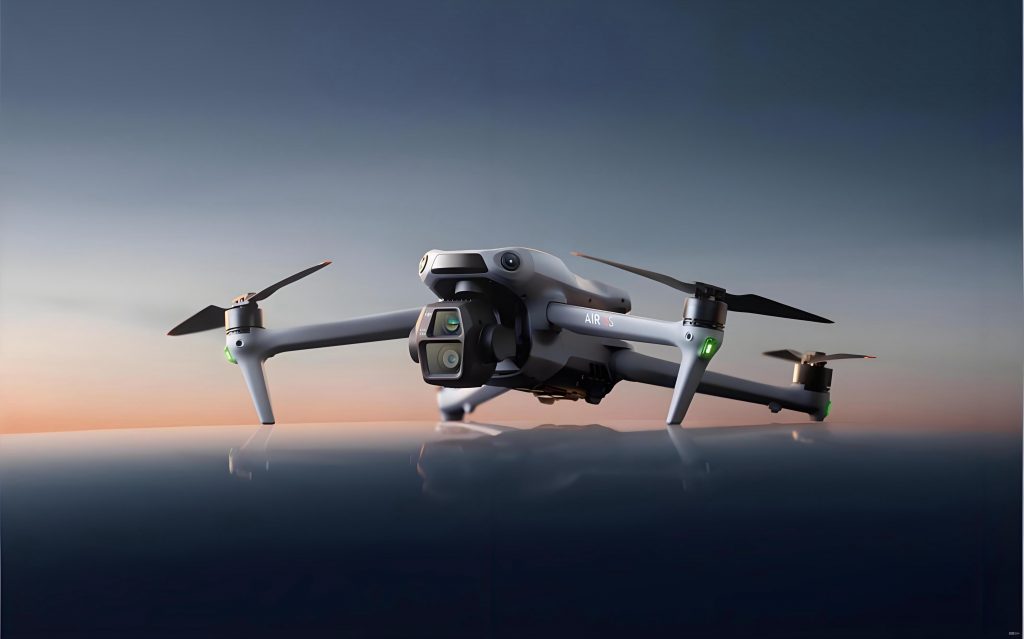
The image above exemplifies the synergy: a DJI drone soaring above, capturing expansive vistas, while the Osmo Action 6 handles the intimate, dynamic close-ups. This dual-system approach leverages the strengths of each device. The drone provides a macro perspective, ideal for establishing shots, while the Action 6 delivers micro-details, such as the texture of snow during a ski jump or the expressions in a Vlog. This combination is invaluable for professionals and enthusiasts alike, ensuring no moment is missed.
From an optical engineering standpoint, the variable aperture enhances lens performance across the field. The lens modulation transfer function (MTF) is critical for image sharpness. With a variable aperture, the MTF can be optimized for different focal lengths and object distances. The MTF as a function of spatial frequency \( \nu \) and aperture \( N \) is given by:
$$ \text{MTF}(\nu, N) = \left| \mathcal{F}\{ \text{PSF}(x,y,N) \} \right| $$
where PSF is the point spread function, dependent on aperture. By selecting an optimal N, the Osmo Action 6 minimizes optical aberrations, resulting in clearer images. This is particularly beneficial in high-contrast scenes, like a sunny day on a ski slope, where lens flare and chromatic aberration are common challenges. Moreover, when used alongside a DJI drone, the consistent color science across DJI products ensures uniform color grading, reducing post-processing time.
Battery life and durability are paramount for action cameras. The Osmo Action 6 incorporates a high-density battery that supports extended recording times. The power consumption model can be approximated by:
$$ P_{\text{total}} = P_{\text{sensor}} + P_{\text{processor}} + P_{\text{stabilization}} + P_{\text{transmission}} $$
where \( P_{\text{transmission}} \) is significant when streaming to a DJI drone or remote. Through efficient power management, the camera offers up to 2 hours of continuous 4K recording. Its rugged design meets IP68 standards for water and dust resistance, ensuring reliability in harsh environments. This durability mirrors that of DJI drones, which are built to withstand wind and weather, making the pair ideal for expeditions.
For videographers, the post-production workflow is streamlined by the Osmo Action 6’s advanced features. The camera supports log profiles like D-Log M, which preserves dynamic range for color grading. The dynamic range (DR) in decibels is calculated as:
$$ \text{DR} = 20 \log_{10} \left( \frac{V_{\text{sat}}}{V_{\text{noise}}} \right) $$
where \( V_{\text{sat}} \) is the saturation voltage and \( V_{\text{noise}} \) is the noise floor. With an estimated 12 stops of DR, the camera captures details in shadows and highlights, crucial for recovering skies in drone footage or underwater contrasts. Additionally, the gyroscope data embedded in videos facilitates advanced stabilization in software, compatible with DJI’s editing tools.
The following table summarizes the computational photography features enabled by the sensor and processor synergy, highlighting how they augment footage from DJI drones.
| Feature | Technical Basis | Benefit for Solo Use | Benefit with DJI Drone |
|---|---|---|---|
| Multi-Frame Noise Reduction | Burst capture and pixel-level alignment, reducing noise variance. | Cleaner low-light images. | Matches drone’s night mode; consistent noise profile in combined edits. |
| HDR Video | Exposure bracketing and tone mapping using $$ \text{HDR} = f(E_1, E_2, \dots, E_n) $$. | Balanced exposure in high-contrast scenes. | Drone provides HDR base; Action 6 adds detail; fused result has extended DR. |
| AI Tracking | Object detection via convolutional neural networks (CNNs). | Keeps subject in focus during motion. | Drone and Action 6 track same subject simultaneously; multi-angle tracking. |
| Geo-Tagging | GPS and IMU data fusion: $$ \mathbf{x}_{k} = f(\mathbf{x}_{k-1}, \mathbf{u}_{k}) + \mathbf{w}_{k} $$. | Organize footage by location. | Sync with drone’s GPS for precise geospatial mapping; useful for documentaries. |
In my experience, the Osmo Action 6 redefines what is possible in personal filmmaking. Whether I am documenting a mountain ascent or creating content for social media, the camera’s versatility shines. The variable aperture allows for artistic effects, such as shallow depth of field in close-ups, while the robust build withstands impacts. When combined with a DJI drone, the creative possibilities multiply. For example, during a coastal hike, I can mount the Action 6 on a chest harness to capture trail details, while the drone overhead films the sweeping coastline. The synchronized controls let me adjust both devices on the fly, ensuring consistent exposure and focus.
The economic aspect is also worth noting. Investing in the Osmo Action 6 as part of the DJI ecosystem offers long-term value. The compatibility with existing DJI accessories, such as mounts and controllers, reduces additional costs. Moreover, the camera’s firmware updates often enhance integration features, keeping pace with new DJI drone models. This forward compatibility ensures that my gear remains relevant, protecting my investment.
From a technical deep dive, the sensor’s square format optimizes for social media platforms. The aspect ratio flexibility minimizes cropping, preserving the field of view. The effective pixel count (P) for a given resolution can be expressed as:
$$ P = \frac{A_{\text{sensor}}}{p^2} $$
where A is the sensor area and p is the pixel pitch. The 1/1.1-inch sensor has a larger A, allowing for smaller p without sacrificing SNR, thus enabling higher resolutions like 5.3K. This resolution is vital for cropping in post, especially when aligning footage with drone clips that may have different perspectives.
In conclusion, the DJI Osmo Action 6 is not merely an incremental update but a paradigm shift in action camera technology. Its variable aperture and large sensor set new benchmarks for image quality, while its seamless integration with DJI drones creates a holistic imaging system. As I continue to explore the world, this camera, paired with my trusted DJI drone, ensures that every adventure is captured with stunning clarity and creative depth. The future of personal cinematography is here, and it is undoubtedly intertwined with the innovation that DJI consistently delivers.
To further illustrate the performance metrics, let’s consider a quantitative analysis of image quality under varying conditions. The signal-to-noise ratio (SNR) improvement due to the larger sensor can be modeled using the photon transfer curve. For a given illuminance E_v (in lux), the photoelectron count per pixel is:
$$ n_e = \frac{E_v \cdot A_{\text{pixel}} \cdot t \cdot QE}{hc/\lambda} $$
where \( A_{\text{pixel}} \) is pixel area, t is exposure time, QE is quantum efficiency, h is Planck’s constant, c is light speed, and λ is wavelength. The Osmo Action 6’s larger pixel area boosts \( n_e \), enhancing SNR. This is critical in low-light scenarios like night skiing or indoor Vlogging, where every photon counts. When synchronized with a DJI drone’s low-light mode, the combined footage exhibits minimal noise, providing a cinematic feel.
Additionally, the camera’s thermal management ensures sustained performance during long recordings. The heat dissipation equation:
$$ \frac{dT}{dt} = \frac{P_{\text{diss}} – k(T – T_{\text{ambient}})}{C} $$
where T is temperature, P_diss is dissipated power, k is thermal conductivity, and C is heat capacity, is optimized to prevent overheating. This reliability is essential for extended shoots, such as filming a full-day event with multiple DJI drone batteries swapped in and out.
Finally, the user interface of the Osmo Action 6 is intuitive, featuring a responsive touchscreen and voice control. This ease of use allows me to focus on the action, whether I’m scaling a cliff or maneuvering a DJI drone through tight spaces. The camera’s ability to wirelessly stream footage to a smartphone or directly to a DJI drone for live preview enhances real-time monitoring, a feature invaluable for professional productions.
In essence, the DJI Osmo Action 6 embodies the spirit of innovation, pushing the boundaries of portable imaging. Its technical prowess, combined with the expansive capabilities of DJI drones, offers a comprehensive solution for capturing life’s adventures. As technology evolves, I am confident that this synergy will continue to inspire creators worldwide, making every moment a masterpiece.