
The proliferation and operational deployment of military drones have become defining features of contemporary security landscapes, particularly in regions of persistent instability. As a researcher examining the evolution of conflict, I observe a critical gap between the often-sensationalized predictions of a drone revolution and the nuanced reality of their application on the ground. The discourse tends to bifurcate into opposing camps: one heralding drones as a panacea for low-cost, low-risk warfare, and the other dismissing them as merely incremental tools with overstated impact. This polarization, I argue, stems from a lack of a systematic framework that accounts for the varied contexts in which military drones are employed. My objective here is to construct and validate such a framework. I posit that the security impact of military drone usage is not monolithic but is instead channeled through specific contextual conditions, leading to a predictable pattern: an increase in the frequency of confrontations but a notable constraint on the escalation of conflict intensity.
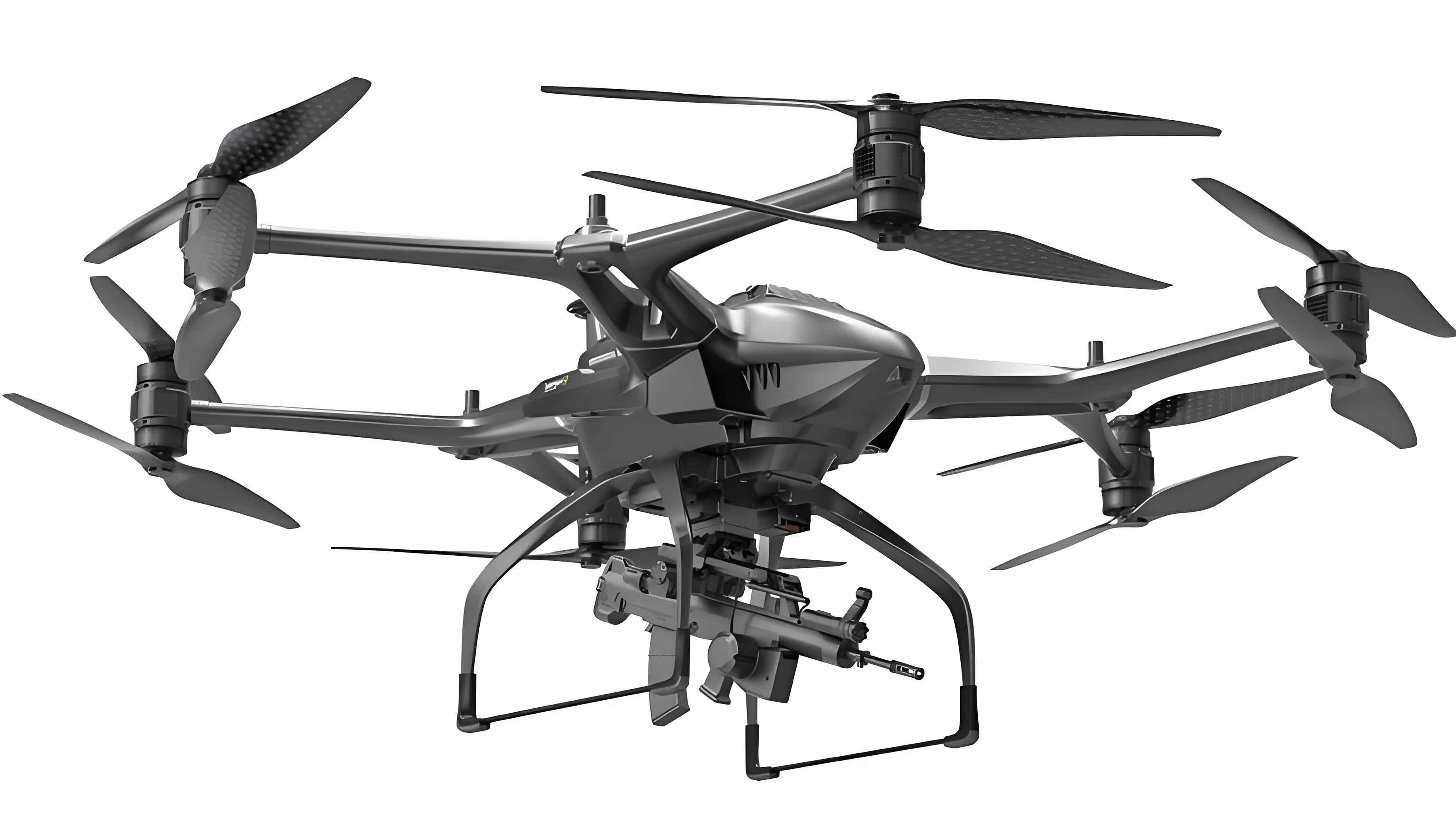
To understand the preferences of actors—both state and non-state—in employing military drones, and the consequent security effects, we must first move beyond a one-dimensional view of the technology. A military drone is not a singular entity but a platform whose utility and vulnerability are dictated by the strategic environment. In developing my analytical model, I identify two fundamental state variables that define the context of any drone engagement: the phase of confrontation and the distribution of air superiority.
The phase of confrontation distinguishes between periods of competition and outright conflict. In the competitive phase, states or actors are in a state of heightened rivalry short of large-scale, sustained kinetic warfare. The primary objectives are deterrence, signaling, and gaining advantage without triggering a major war. In this phase, the use of force is heavily constrained. The conflict phase, conversely, is characterized by active, sustained combat operations where the central aim is to degrade, deny, or defeat the adversary’s military capabilities.
The second variable, air superiority, is a classic but crucial determinant of modern warfare. It can be formalized by considering the composite capability of offensive air power and integrated air defense systems (IADS). We can conceptualize the Air Superiority Index (ASI) for an actor \(i\) as:
$$ ASI_i = \alpha \cdot A_i + \beta \cdot D_i $$
where \(A_i\) represents the offensive air power potential (including fighter aircraft, bombers, and armed drones), \(D_i\) represents the defensive air denial capability (including surface-to-air missiles, anti-aircraft artillery, and electronic warfare assets), and \(\alpha\) and \(\beta\) are weighting coefficients reflecting the operational theater and doctrine. The relative air superiority between a drone user (attacker, \(a\)) and the target (defender, \(d\)) is then given by:
$$ \Delta AS = ASI_a – ASI_d $$
This framework yields three distinct conditions relevant for drone operations: Attacker Air Superiority (\(\Delta AS > \tau\), where \(\tau\) is a positive threshold), Defender Air Superiority (\(\Delta AS < -\tau\)), and Air Parity (\(-\tau \leq \Delta AS \leq \tau\)).
These two state variables—Confrontation Phase (CP) and Relative Air Superiority (RAS)—combine to create a typology of military drone usage environments. However, the state variables alone do not determine actor behavior. Their influence is mediated through two key mechanistic variables that directly shape operational calculus: the threat level to the drone system (\(T\)) and the likelihood of inflicting mass casualties (\(C\)).
The threat level \(T\) to a military drone system is a function of the defender’s ability to detect, track, and engage the platform and its supporting infrastructure (ground control stations, communication links). It is inversely related to the attacker’s air superiority and directly related to the defender’s counter-drone capabilities. We can model it as:
$$ T = f( -RAS, \, C-UAS_{defender}, \, Phase ) $$
where a higher \(T\) signifies a greater probability of drone loss or mission failure.
The variable \(C\), the potential for causing mass casualties (defined here as the death or serious injury of either multiple high-value commanders or more than ten personnel in a single strike), is a function of the drone’s payload, targeting accuracy, and the vulnerability of the target. It is heavily influenced by the confrontation phase and the attacker’s ability to freely employ armed drones:
$$ C = g( Payload, \, ISR \, Fidelity, \, Phase, \, RAS ) $$
A high \(C\) value represents a high probability of a strike resulting in significant human losses.
The interaction of the state variables (CP, RAS) determines the values of the mechanistic variables (T, C), which in turn shape the preferences and resulting security dynamics. This generates four primary types of military drone usage contexts, as summarized in the table below.
| Context Type | State Variables | Mechanistic Variables | Attacker Preference | Defender Preference | Security Impact |
|---|---|---|---|---|---|
| Type 1: Contested Surveillance | Phase: Competition RAS: Ambiguous/Contested |
Threat (T): Low Casualty (C): Low |
Preference for persistent ISR drones for signaling and intelligence gathering. Low direct cost of failure. | May selectively intercept/shoot down drones to demonstrate resolve and capability, calculating low escalation risk. | Increased frequency of aerial incidents/friction. Political signaling dominates. Low propensity for major escalation due to absence of casualties and diplomatic off-ramps. |
| Type 2: Asymmetric Strike | Phase: Conflict RAS: Attacker Superiority |
Threat (T): Low Casualty (C): High |
Strong preference for intensive use of MALE/HALE drones for ISR and kinetic strikes. High efficiency, low attrition risk. | Limited ability to intercept effectively. Lacks capability or will for large-scale symmetrical retaliation due to air inferiority and high potential cost. | High operational tempo for attacker. Conflict may be shortened due to rapid attrition of defender forces. High casualties do not trigger major escalation as defender is incapacitated or deterred. |
| Type 3: Symbolic Harassment | Phase: Conflict RAS: Defender Superiority |
Threat (T): High Casualty (C): Low |
Conditional use of small, cheap drones (often commercial derivatives) for sporadic, symbolic attacks. High attrition accepted for political messaging. | High priority on intercepting/destroying drones. Low incentive for major retaliatory escalation due to minimal damage/casualties and difficulty eradicating threat source. | Intermittent spikes in harassment frequency. Conflict settles into a pattern of “managed” drone attacks. Intensity remains capped as attacks are militarily ineffective and defender opts for point defense over major escalation. |
| Type 4: Contested Expendable | Phase: Conflict RAS: Air Parity |
Threat (T): High Casualty (C): High |
Military drone is one tool among many. Used opportunistically but suffers high attrition rates. No special preference over other artillery/air assets. | Similar view. Drones are targeted assets, but their loss or success does not dictate grand strategy. | May increase the number of tactical engagements. However, drones are consumables in a stalemate. They do not decisively alter conflict intensity or trajectory, which is determined by broader force balances. |
The security impact aggregate across all types reveals a consistent pattern. The relative low cost of initiating a military drone action (in political risk for Type 1, in platform cost for Types 2 & 3) incentivizes more frequent use, raising the frequency of clashes or incidents. However, in all four types, there are powerful brakes on intensity escalation. In Types 1 and 3, the lack of mass casualties (\(C\) is low) removes a primary escalatory trigger. In Type 2, the defender’s incapacity prevents escalation. In Type 4, the high attrition and parity negate any decisive escalatory advantage. Thus, the overarching thesis is: Military drone usage catalyzes more frequent interactions in a rivalry or conflict but contains inherent or contextual features that inhibit a significant ratcheting up of the conflict’s overall intensity or scope.
This framework finds robust validation in the recent security dynamics of the Middle East, a region that has become the world’s foremost laboratory for military drone warfare. The cases below align precisely with the proposed typology.
Type 1: Contested Surveillance – The US-Iranian Standoff in the Persian Gulf (2019). Following the US withdrawal from the JCPOA and the “maximum pressure” campaign, the two states were in a tense competition short of war. The US employed high-altitude, long-endurance (HALE) military drones like the RQ-4 Global Hawk for persistent surveillance, valuing their endurance and zero risk to pilots (\(T\) low, \(C\) low). Iran’s calculated shoot-down of a Global Hawk in June 2019 was a demonstrative act of defiance, precisely because targeting an unmanned system carried lower escalation risk than attacking a manned aircraft. The US response, while rhetorically sharp, involved no kinetic retaliation, instead doubling down on drone deployments. The incident increased friction but did not cross the threshold into war, illustrating the frequency-without-escalation dynamic.
Type 2: Asymmetric Strike – The 2020 Nagorno-Karabakh War & Turkish “Spring Shield”. In both conflicts, one side established clear air superiority. In Nagorno-Karabakh, Azerbaijan, with Turkish and Israeli support, used Bayraktar TB2 and Harop loitering munitions to devastating effect against Armenian air defenses and armor under a permissive air environment (\(T\) low). This enabled precise strikes causing significant casualties (\(C\) high). Armenia, lacking air superiority or effective countermeasures, could not retaliate in kind, leading to a rapid battlefield defeat rather than a prolonged, escalating war. Similarly, Turkey’s “Spring Shield” operation in Idlib saw the effective use of military drones against Syrian Arab Army concentrations, exploiting a local air advantage to inflict heavy losses and achieve tactical objectives without triggering a wider war with Russia.
Type 3: Symbolic Harassment – The Houthi Drone Campaign against Saudi Arabia. In the ongoing conflict, Saudi Arabia holds overwhelming air superiority (high \(ASI_d\)). The Houthis, as a non-state actor, resort to employing modified commercial drones or simple loitering munitions for attacks on Saudi infrastructure (\(T\) high for the Houthi drone system). While the September 2019 attack on Abqaiq caused significant economic disruption, most such attacks cause little damage and minimal casualties (\(C\) generally low). Saudi Arabia’s response has focused on improving point-defense interception (e.g., with lasers and electronic warfare) rather than launching a massive, escalatory ground invasion of Yemen aimed at eradicating the drone threat—a difficult and costly proposition. The dynamic is one of recurrent harassment met with defensive hardening, not uncontrolled escalation.
Type 4: Contested Expendable – The Libyan Civil War (2019-2020). The conflict between the Libyan National Army (LNA) and the Government of National Accord (GNA) featured a rough air parity, with both sides receiving advanced military drones (Wing Loong II, Bayraktar TB2) from their foreign patrons. In this environment, drones were potent but vulnerable. Both sides claimed successes in striking enemy concentrations and shooting down each other’s drones. The threat level \(T\) was high for both sides’ drone assets, and the casualty potential \(C\) was also high. However, drones functioned as attritional assets in a stalemated conflict. Their use contributed to the back-and-forth of the war but did not single-handedly break the stalemate or trigger a dramatic escalation; the conflict’s intensity and eventual ceasefire were dictated by broader geopolitical negotiations and the flow of conventional arms.
This analysis yields important theoretical and policy implications. Theoretically, it moves the debate beyond the simplistic “revolution vs. evolution” dichotomy. The military drone is a consequential but context-dependent tool. Its primary strategic effect may be to lower the threshold for the use of aerial force in competitive phases and non-permissive environments, thereby increasing the cadence of interstate and intrastate friction. It does not, in its current technological iteration, lower the threshold for major war between conventionally powered states.
For policymakers, the framework offers a predictive lens. States facing peer competitors should anticipate more frequent drone-based probing and surveillance (Type 1), necessitating clear rules of engagement and diplomatic channels to manage incidents. States engaged in asymmetric conflicts against weaker non-state actors may find military drones highly effective for force protection and attrition (Type 2), but must guard against strategic myopia that neglects political solutions. Conversely, states targeted by drone harassment campaigns (Type 3) must invest in layered, cost-effective counter-drone defenses rather than assuming kinetic escalation is the only response. Finally, in conflicts of parity (Type 4), militaries should integrate drones into combined arms operations without over-relying on them, expecting high attrition rates.
Looking forward, the trajectory of military drone technology—towards greater autonomy, swarming capability, and stealth—could alter the parameters of this framework. For instance, drone swarms might challenge traditional air superiority calculations, and AI-enabled targeting could affect the casualty variable \(C\). Furthermore, the proliferation of military drone technology to a wider array of state and non-state actors ensures that the “high-frequency, low-escalation” dynamic observed in the Middle East will likely become a more common feature of global security. Continuous analysis grounded in a structured framework, rather than technological determinism, remains essential for understanding and navigating this evolving landscape.