
As a researcher and practitioner in the field of remote sensing, I have closely followed the accelerating evolution of artificial intelligence (AI) and its profound impact on unmanned aerial vehicles (UAVs), commonly known as drones. The fusion of UAV drones low-altitude remote sensing technology with AI is not merely an incremental improvement; it represents a paradigm shift towards intelligent, autonomous systems capable of transforming data acquisition and analysis across numerous sectors. In my work, I have seen how this convergence addresses critical challenges, such as processing the vast amounts of data generated by UAV drones and enabling real-time, adaptive decision-making in complex environments. This article delves into the technical pathways, practical applications, and future directions of this fusion, emphasizing the role of AI in enhancing the capabilities of UAV drones.
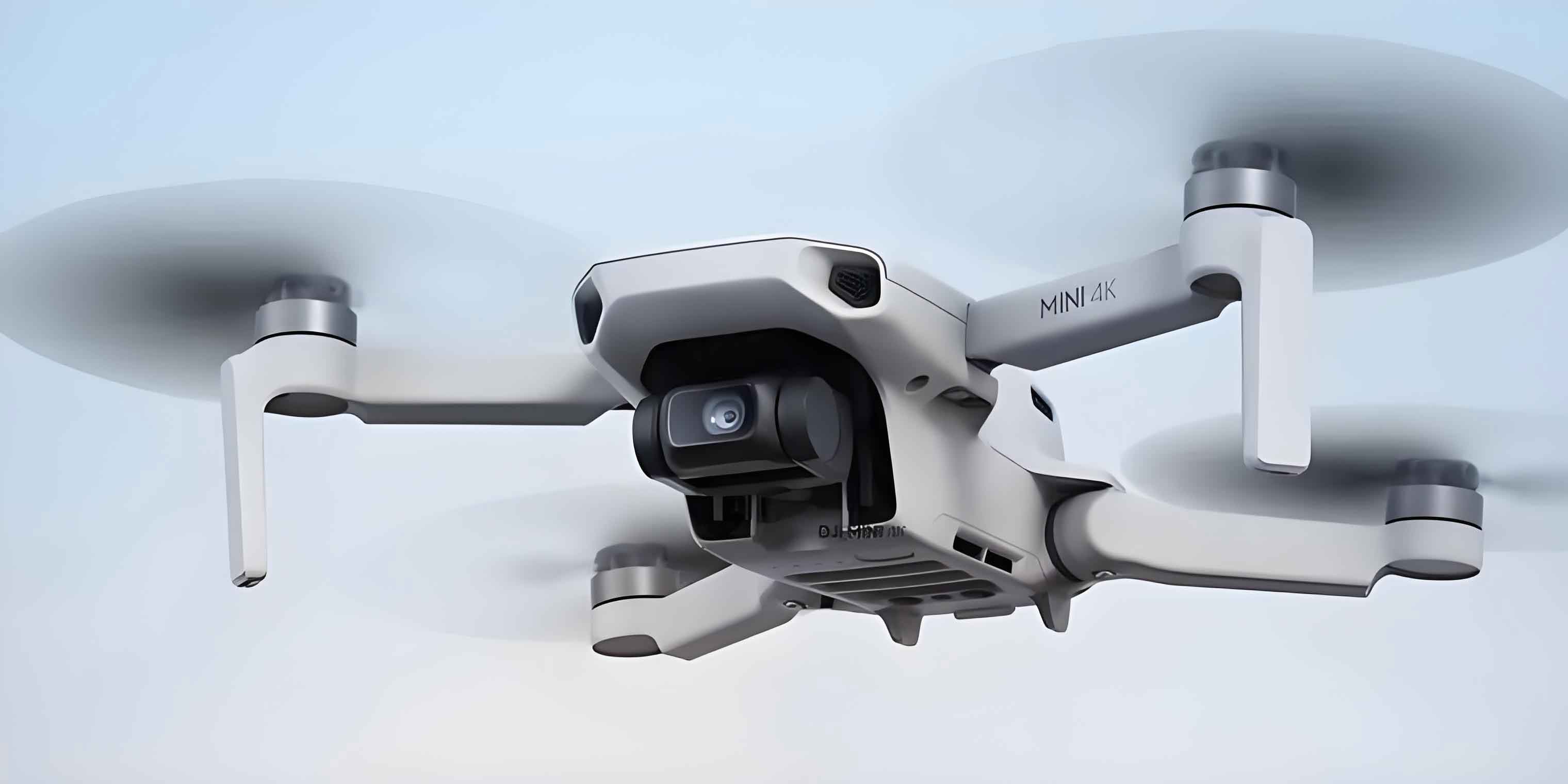
The core of this transformation lies in empowering UAV drones with AI-driven intelligence, which I categorize into three primary pathways: single-UAV intelligent flight, multi-UAV intelligent collaboration, and intelligent task execution. Each pathway leverages specific AI techniques to overcome traditional limitations, making UAV drones more efficient, reliable, and versatile. For instance, in single-UAV intelligent flight, AI algorithms enable autonomous navigation and environmental interaction, while multi-UAV collaboration harnesses swarm intelligence for large-scale operations. Intelligent task execution, on the other hand, focuses on end-to-end automation of mission-specific processes. Throughout this discussion, I will incorporate technical details, formulas, and tables to elucidate these concepts, always keeping the focus on the transformative potential of UAV drones.
Pathways of AI Empowerment for UAV Drones
In my analysis, the integration of AI into UAV drones follows structured pathways that enhance their operational autonomy and effectiveness. These pathways build upon each other, starting from individual drone intelligence and scaling up to coordinated fleets and smart mission management.
Single UAV Intelligent Flight
Single UAV intelligent flight refers to the capability of a UAV drone to operate autonomously without constant human intervention, relying on onboard AI algorithms and sensors. This is foundational for advanced applications, as it allows UAV drones to adapt to dynamic and uncertain environments. I have identified several key components that constitute this intelligence.
Environmental Perception and Obstacle Avoidance
Environmental perception and obstacle avoidance are prerequisites for safe autonomous flight of UAV drones. UAV drones equipped with multi-modal sensors—such as cameras, LiDAR, and radar—continuously capture high-frequency spatial data. AI, particularly deep neural networks, processes this data in real-time to identify obstacles. For example, convolutional neural networks (CNNs) are used for image recognition, with the output guiding path adjustments. The process often integrates simultaneous localization and mapping (SLAM), allowing UAV drones to map unknown environments and locate themselves precisely. A common formula for obstacle detection involves the probability of an obstacle given sensor data $S$:
$$P(\text{Obstacle} | S) = \frac{P(S | \text{Obstacle}) P(\text{Obstacle})}{P(S)}$$
This Bayesian approach helps UAV drones assess risks dynamically. Moreover, advanced UAV drones employ long short-term memory (LSTM) networks to predict obstacle trajectories and preemptively avoid collisions. The table below summarizes key sensor-AI combinations used in UAV drones for perception.
| Sensor Type | AI Algorithm | Primary Use in UAV Drones | Advantages |
|---|---|---|---|
| Visual Camera | CNN (YOLO, SSD) | Object detection in visible spectrum | High accuracy in good lighting |
| LiDAR | Point Cloud Processing (PointNet) | 3D mapping and obstacle avoidance | Works in low-light conditions |
| Infrared Sensor | Thermal Image Analysis | Heat source detection | Effective day and night |
| Ultrasonic | Rule-based AI | Close-range obstacle avoidance | Low cost and real-time response |
Autonomous Path Planning
Autonomous path planning enables UAV drones to generate optimal or near-optimal routes from a start point to a goal, considering task constraints and environmental risks. Traditional algorithms like A* and Rapidly-exploring Random Trees (RRT) are enhanced with AI. The A* algorithm uses a cost function:
$$f(n) = g(n) + h(n)$$
where $g(n)$ is the cost from the start to node $n$, and $h(n)$ is a heuristic estimate to the goal. For UAV drones, this is adapted with AI to handle dynamic obstacles. Deep reinforcement learning (DRL) allows UAV drones to learn path-planning policies through trial and error, optimizing for factors like energy consumption and time. When multiple waypoints are involved, UAV drones use combinatorial optimization, such as the Traveling Salesman Problem formulation:
$$\min \sum_{i=1}^{n} \sum_{j=1}^{n} c_{ij} x_{ij}$$
subject to constraints ensuring each point is visited once. AI-based replanning capabilities allow UAV drones to quickly compute alternative paths in response to sudden changes, ensuring mission continuity.
Robust Flight Control and Fault Tolerance
Flight control systems are the core of UAV drones, and their robustness is critical. Traditional proportional-integral-derivative (PID) controllers often falter under disturbances like strong winds or GPS signal loss. AI-enhanced robust control methods, such as H∞ control and fuzzy logic, improve stability. The H∞ control aims to minimize the worst-case effect of disturbances, formulated as:
$$\min_{K} \| T_{zw}(K) \|_\infty$$
where $T_{zw}$ is the transfer function from disturbances $w$ to outputs $z$, and $K$ is the controller. For fault tolerance, UAV drones employ redundant sensors and backup systems, with AI algorithms like Kalman filters for sensor fusion. This ensures that UAV drones can maintain flight even if some components fail.
Semantic Interaction Capability
Semantic interaction allows UAV drones to understand natural language commands and respond intelligently, reducing the need for specialized programming. This relies on natural language processing (NLP) and multimodal fusion. For instance, if an operator says, “Scan the southeast corner for high-temperature anomalies,” the UAV drone must parse the command into actionable elements. Transformer-based models, such as BERT, are used for semantic analysis:
$$\text{Attention}(Q, K, V) = \text{softmax}\left(\frac{QK^T}{\sqrt{d_k}}\right)V$$
where $Q$, $K$, and $V$ are query, key, and value matrices. This enables UAV drones to convert vague instructions into precise tasks, enhancing usability in fields like emergency response.
Cross-Medium Navigation Design
Cross-medium navigation extends the operational scope of UAV drones to environments like air, water, and underwater. This design involves structural and propulsion adaptations. For example, a UAV drone might use propellers in air and thrusters in water. The transition between media requires AI for mode recognition and control switching. Navigation in GPS-denied underwater environments relies on AI-driven techniques like visual-inertial odometry or acoustic positioning. The dynamics can be modeled with equations of motion:
$$m \dot{v} = F_{\text{thrust}} – F_{\text{drag}} + F_{\text{buoyancy}}$$
where $m$ is mass, $v$ is velocity, and $F$ terms represent forces. AI optimizes these parameters in real-time, allowing UAV drones to perform complex missions such as coastal surveillance.
Multi-UAV Intelligent Collaboration
Multi-UAV intelligent collaboration mimics collective behaviors found in nature, such as bird flocks, to enable coordinated operations. This pathway leverages dynamic networking and swarm algorithms, allowing UAV drones to work together efficiently.
Dynamic Ad-hoc Network Communication
Dynamic ad-hoc networks enable UAV drones to form communication links without fixed infrastructure. Each UAV drone acts as a node and a relay, using protocols like Ad-hoc On-Demand Distance Vector (AODV). The network topology updates as UAV drones move, ensuring connectivity. AI optimizes routing paths to minimize latency and packet loss. For example, reinforcement learning can be used to select routes based on signal strength and congestion.
Swarm Algorithms
Swarm algorithms distribute tasks among UAV drones to achieve collective goals. In area coverage, algorithms like Voronoi tessellation partition the region, with each UAV drone assigned a cell. The optimization problem can be expressed as:
$$\min \sum_{i=1}^{N} E_i(\text{task}_i)$$
where $E_i$ is the energy consumption of UAV drone $i$ for its task. AI dynamically reallocates tasks based on real-time data, ensuring efficient resource use. The table below compares common swarm algorithms for UAV drones.
| Algorithm | Primary Function | Advantages for UAV Drones | Typical Application |
|---|---|---|---|
| Voronoi Partitioning | Area division | Balanced workload distribution | Large-scale surveillance |
| Particle Swarm Optimization | Global optimization | Handles nonlinear objectives | Search and rescue |
| Ant Colony Optimization | Path planning | Finds shortest paths in networks | Data collection in sensor networks |
| Consensus Algorithms | Decision synchronization | Ensures coordinated movements | Formation flying |
Collaborative Situation Awareness
Collaborative situation awareness involves sharing sensor data among UAV drones to build a unified environmental model. Each UAV drone contributes local observations, which are fused using AI techniques like Kalman filtering or graph optimization. The fusion process for multiple UAV drones can be represented as:
$$\hat{x} = \left( \sum_{i=1}^{M} H_i^T R_i^{-1} H_i \right)^{-1} \sum_{i=1}^{M} H_i^T R_i^{-1} z_i$$
where $\hat{x}$ is the estimated state, $H_i$ is the observation matrix, $R_i$ is the noise covariance, and $z_i$ is the measurement from UAV drone $i$. This allows the swarm to maintain accurate situational awareness, crucial for tasks like target tracking.
Intelligent Task Execution
Intelligent task execution focuses on end-to-end automation of missions, from data acquisition to decision-making. This pathway integrates various AI modules to handle complex, unstructured tasks.
Target Recognition and Image Analysis
Target recognition and image analysis are fundamental for UAV drones in remote sensing. Deep learning models, such as CNNs, process high-resolution imagery from UAV drones to identify objects. The convolution operation is given by:
$$ (f * g)(t) = \int_{-\infty}^{\infty} f(\tau) g(t – \tau) d\tau $$
In discrete form for images, this enables feature extraction. For multispectral data from UAV drones, AI can compute vegetation indices like NDVI:
$$\text{NDVI} = \frac{\text{NIR} – \text{Red}}{\text{NIR} + \text{Red}}$$
AI models are trained to detect anomalies, such as crop diseases or infrastructure defects, with high accuracy.
Speech and Text Pattern Learning and Classification
Speech and text pattern learning allow UAV drones to interpret human instructions and contextual information. Using NLP models, UAV drones convert voice or text commands into structured tasks. For example, a command like “Inspect the transmission line for corrosion” is parsed into keywords. The classification can be based on probabilistic models:
$$P(\text{task} | \text{words}) \propto P(\text{words} | \text{task}) P(\text{task})$$
This enables UAV drones to adapt to different domains, such as agriculture or security.
Integrated Expert Systems
Integrated expert systems embed domain knowledge into UAV drones, enabling expert-level decision-making. These systems use rule-based AI, where knowledge is represented as IF-THEN rules. For instance, in power inspection, a rule might be: IF insulator damage > 5% THEN label as critical. The inference engine uses forward or backward chaining to apply rules. This enhances the autonomy of UAV drones in specialized tasks.
Practical Applications of UAV Drones and AI Fusion
In my experience, the fusion of UAV drones and AI has yielded significant benefits in practical fields. Here, I discuss two key applications: agriculture and power inspection.
Agriculture
In agriculture, UAV drones equipped with multispectral sensors capture detailed crop imagery. AI algorithms analyze this data to monitor plant health, soil conditions, and pest infestations. For example, UAV drones can identify nitrogen deficiency using AI models that correlate spectral bands with nutrient levels. The optimization of pesticide use can be formulated as:
$$\min \sum_{i=1}^{n} C_i x_i \quad \text{subject to} \quad \sum_{i=1}^{n} E_i x_i \geq T$$
where $C_i$ is cost, $E_i$ is effectiveness, $x_i$ is the amount applied, and $T$ is the target pest control threshold. UAV drones enable precise, variable-rate applications, reducing waste and environmental impact. The table below summarizes AI applications in agriculture using UAV drones.
| Application | Data Source from UAV Drones | AI Technique | Outcome |
|---|---|---|---|
| Crop Health Monitoring | Multispectral images | CNN for NDVI analysis | Early detection of stress |
| Yield Prediction | Historical and real-time imagery | Regression models (e.g., Random Forest) | Accurate harvest forecasts |
| Irrigation Management | Thermal and soil moisture data | Clustering algorithms (e.g., K-means) | Optimized water usage |
| Pest Detection | High-resolution visible images | Object detection (YOLO) | Targeted pesticide application |
Power Inspection
For power inspection, UAV drones automate the monitoring of transmission lines and substations. AI processes imagery to detect faults like corrosion, broken insulators, or vegetation encroachment. The defect detection rate can be modeled as:
$$\text{Precision} = \frac{TP}{TP + FP}, \quad \text{Recall} = \frac{TP}{TP + FN}$$
where $TP$ is true positives, $FP$ is false positives, and $FN$ is false negatives. AI reduces false alarms by learning from contextual data. Edge computing on UAV drones allows real-time analysis, speeding up inspection cycles and improving grid reliability.
Conclusion and Future Perspectives
Reflecting on the advancements, I believe the fusion of UAV drones and AI is poised to redefine low-altitude remote sensing. The pathways discussed—single-UAV intelligence, multi-UAV collaboration, and intelligent task execution—demonstrate how AI unlocks new capabilities for UAV drones. In agriculture, UAV drones enable precision farming, while in power inspection, they enhance safety and efficiency. Looking ahead, I anticipate further integration with emerging technologies like 5G and edge AI, which will allow UAV drones to operate with even greater autonomy and responsiveness. The continuous improvement of AI algorithms will also address current limitations, such as handling extreme weather conditions or improving energy efficiency. Ultimately, the synergy between UAV drones and AI will foster smarter, more sustainable solutions across industries, from urban planning to disaster management. As we move forward, the focus should be on developing robust, ethical frameworks to guide the deployment of these intelligent UAV drones, ensuring they benefit society as a whole.