
The relentless pace of economic globalization has catalyzed the explosive growth of the service economy, with the logistics industry standing at the forefront of this transformation. In China, the logistics sector has mirrored the nation’s rapid economic ascent. A pivotal moment arrived with the issuance of the “Action Plan for Effectively Reducing Overall Social Logistics Costs” in late 2024, setting an ambitious target to reduce the ratio of total social logistics costs to GDP to approximately 13.5% by 2027. This policy explicitly encourages the development of new logistics models integrated with platform economies, the low-altitude economy, and unmanned systems. Against this backdrop, a novel paradigm emerges: the convergence of China’s world-class high-speed rail (HSR) network with cutting-edge unmanned aerial vehicle (UAV) technology. This integration promises to redefine freight logistics, tackling the perennial “last-mile” challenge while propelling the development of new quality productive forces. The low-altitude economy, characterized by its long industrial chain and diverse application scenarios, finds a powerful terrestrial partner in the HSR network, creating a composite transportation system of unparalleled efficiency and coverage.
1. Conceptual Framework and Economic Imperative
The proposed model operates on a hub-and-spoke principle, where the HSR network functions as the ultra-fast, high-capacity backbone for inter-city transport, and UAVs act as the agile, automated spokes for intra-city distribution. The economic and operational logic can be summarized by a fundamental efficiency equation. The total door-to-door delivery time \( T_{total} \) for a shipment between two urban centers can be modeled as:
$$
T_{total} = T_{collection} + T_{pre-haul} + T_{HR} + T_{transfer} + T_{UAV} + T_{delivery}
$$
Where:
- \( T_{collection} \): Time for initial pickup and consolidation.
- \( T_{pre-haul} \): Time for road transport to the origin HSR station’s UAV驿站 (UAV驿站).
- \( T_{HR} \): High-speed rail transit time, governed by \( T_{HR} = \frac{D_{HR}}{V_{HR}} \), with \( D_{HR} \) being rail distance and \( V_{HR} \) the average operational speed (often 250-350 km/h).
- \( T_{transfer} \): Time for unloading and transferring goods from the HSR cargo module to the UAV dispatch system at the destination 驿站.
- \( T_{UAV} \): UAV flight time for the last mile, \( T_{UAV} = \frac{D_{UAV}}{V_{UAV}} \), where \( D_{UAV} \) is the aerial distance (typically 5-20 km) and \( V_{UAV} \) is the cruise speed (e.g., 60 km/h).
- \( T_{delivery} \): Final handover time at the consignee’s location.
The synergistic advantage lies in minimizing the most variable and congested segments (\( T_{pre-haul} \) and the traditional \( T_{last-mile} \)) by leveraging the predictable, high-speed \( T_{HR} \) and the point-to-point, congestion-free \( T_{UAV} \). This model directly addresses the goals of the national logistics action plan by optimizing freight structure and cultivating a modern, intelligent logistics enterprise ecosystem.
| Model | Speed (City-to-City) | Last-Mile Flexibility | Cost Structure | Carbon Footprint | Reliability |
|---|---|---|---|---|---|
| Traditional Road Freight | Low-Moderate | High | Moderate, fuel-sensitive | High | Variable (traffic-dependent) |
| Air Cargo | Very High | Low (Airport congestion) | Very High | Very High | High (weather-sensitive) |
| Standalone HSR Express | Very High | Very Low (Relies on 3rd party) | High (Rail) + Variable (Road) | Low (Electric) | Very High (Rail) |
| HSR-UAV Integrated System | Very High | Very High (Direct aerial) | High (Rail) + Moderate (UAV) | Very Low | Potentially Very High |
2. The High-Speed Rail Express Backbone: Strengths and Inherent Limitations
China’s HSR network, the most extensive and advanced globally, provides a formidable foundation. The “Eight Vertical and Eight Horizontal” grid connects major economic zones with remarkable efficiency.
2.1 Core Advantages for Freight
| Advantage | Description | Quantitative/Qualitative Impact |
|---|---|---|
| Extreme Speed | Operational speeds of 250-350 km/h. | Reduces inter-city transit time by 50-70% compared to road. |
| Exceptional Punctuality | Network-wide on-time performance exceeding 95%. | Enables precise, time-definite logistics, critical for high-value goods. |
| Superior Safety & Security | Advanced signaling, dedicated tracks, and secure cargo compartments (e.g., on Fuxing trains). | Minimizes loss, damage, and pilferage, enhancing trust. |
| Environmental Sustainability | Electric-powered, producing zero direct emissions. | Aligns with green logistics goals; energy efficiency per ton-km is superior. |
| High Frequency & Network Density | Frequent departures connecting over 95% of major cities. | Provides flexible, near-on-demand bulk cargo capacity between hubs. |
2.2 The Critical Limitation: The “Last-Mile” Bottleneck
Despite its strengths, HSR express faces a systemic constraint. Its efficiency collapses at the terminal point. The model is predominantly station-to-station. Final delivery relies on secondary road networks, which are plagued by urban congestion, unpredictable delays, and high labor costs. This bottleneck negates much of the time advantage gained from high-speed rail transit and severely limits market penetration for time-sensitive e-commerce, pharmaceuticals, and emergency logistics. The equation \( T_{total} \) becomes dominated by \( T_{last-mile} \), a variable HSR operators cannot control. This is where the integration with China UAV drone technology presents a revolutionary solution.
3. The Rise of China UAV Drone Delivery: A Perfect Complement
The development of the low-altitude economy in China has been meteoric, with the China UAV drone sector achieving global leadership in both technology and scale. Beyond military and recreational uses, commercial applications in logistics are rapidly maturing, supported by progressive policies like Jiangsu Province’s implementation opinions to accelerate high-quality low-altitude economic development.
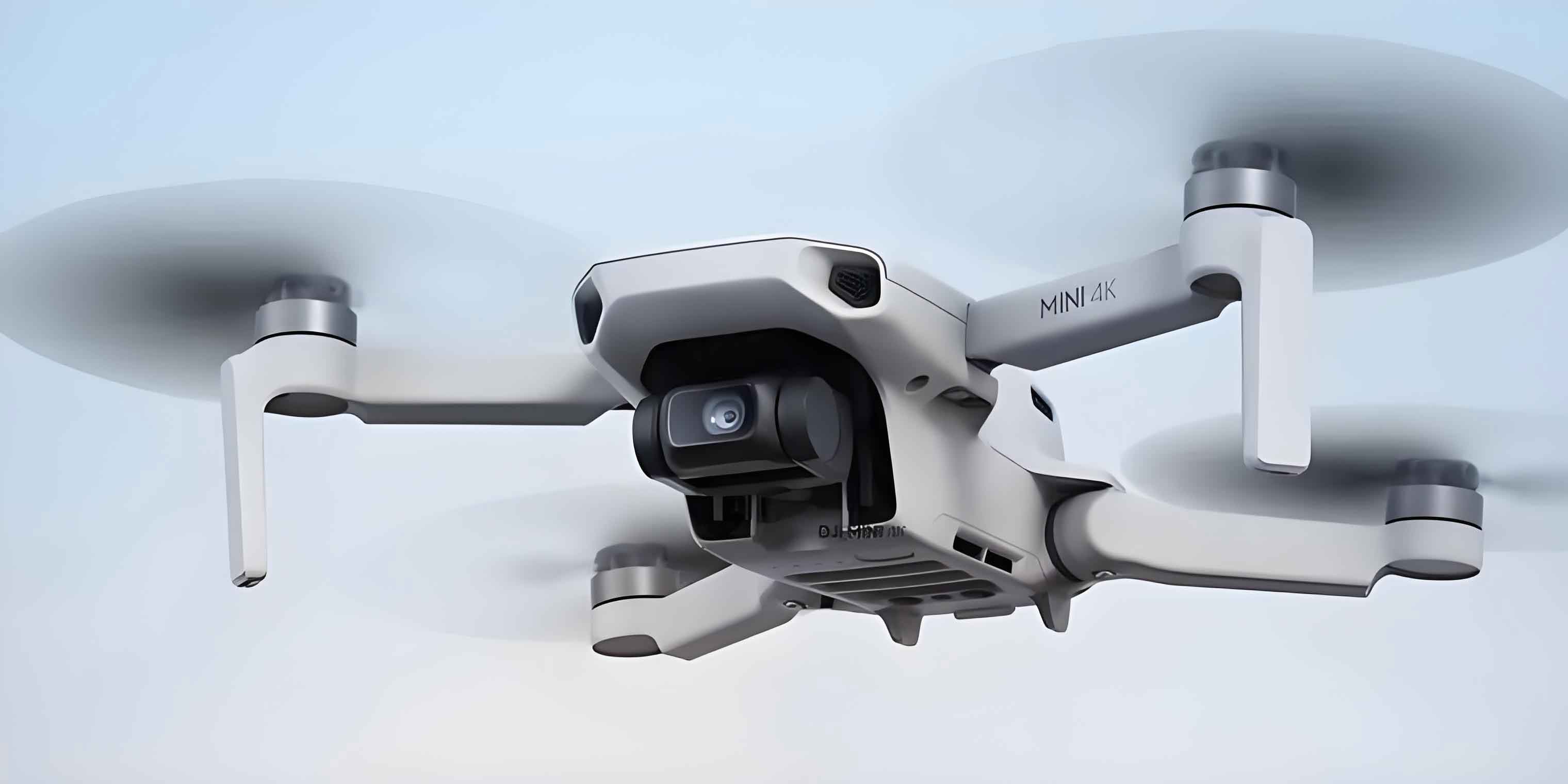
3.1 Inherent Advantages for Last-Mile Logistics
| Advantage | Description | Synergy with HSR |
|---|---|---|
| Congestion Immunity | Direct point-to-point aerial routes bypass ground traffic entirely. | Preserves the time advantage earned by HSR transit; makes \( T_{UAV} \) highly predictable. |
| Operational Efficiency & Cost | Electric, low maintenance, and potential for full automation reduce cost per delivery over time. | Mitigates the high cost of manual last-mile delivery, improving the overall cost-effectiveness of the HSR-UAV chain. |
| Accessibility | Can serve difficult-to-access areas (islands, remote villages, dense urban cores) effectively. | Extends the reach of HSR express beyond standard road-served areas, unlocking new markets. |
| Enhanced Safety & Urban Management | Reduces the number of delivery vehicles on roads, lowering accident risks and traffic management pressure. | Creates a cleaner, safer urban logistics interface for HSR-originated freight. |
| Scalability | Swarm technology allows simultaneous dispatch of multiple drones from a single hub. | Aligns with the batch arrival of consolidated parcels from an HSR train, enabling rapid sortie generation. |
The application of China UAV drone technology in scenarios like “drone-to-campus,” “agricultural product dispatch,” and “island delivery” demonstrates its readiness. Integrating this capability with the HSR network transforms the last mile from a liability into a strategic asset.
4. The Synergistic HSR-UAV Integration Model: Operational Blueprint
The envisioned operational flow creates a seamless, automated logistics corridor. The process can be formalized as follows:
Step 1: Pre-Haul and HSR Loading. Goods are consolidated at a city logistics center and transported to the origin city’s HSR-UAV Integrated Terminal (UAV驿站). They are loaded into standardized, secure containers compatible with both HSR cargo racks and automated handling systems.
Step 2: High-Speed Rail Transit. The containers travel on dedicated cargo compartments of passenger HSR trains or dedicated freight HSR trains, traversing the inter-city distance at speed \( V_{HR} \).
Step 3: Terminal Transfer at Destination UAV驿站. Upon arrival, containers are automatically unloaded and routed via conveyor systems to the UAV dispatch hall. Here, an automated system unpacks the consolidated containers and loads individual parcels onto awaiting China UAV drones. This transfer time \( T_{transfer} \) is designed to be minimal (e.g., under 30 minutes).
Step 4: UAV Last-Mile Delivery. Drones are dispatched following pre-programmed or dynamically optimized flight paths. The delivery time for drone \( i \) is \( T_{UAV, i} = \frac{D_{UAV, i}}{V_{UAV}} \). A swarm of \( n \) drones can deliver \( n \) parcels in nearly parallel timeframes.
Step 5: Final Delivery. Drones lower packages to designated secure drop points (lockers, rooftops, yards) or perform precise aerial release, completing the process.
The total system cost \( C_{system} \) for a shipment can be modeled to show the trade-off:
$$
C_{system} = C_{HR}(D_{HR}, W) + C_{transfer} + C_{UAV}(D_{UAV}, W) + C_{fixed}
$$
Where \( C_{HR} \) and \( C_{UAV} \) are distance \( D \) and weight \( W \) dependent costs for rail and drone segments, \( C_{transfer} \) is the fixed handling cost at the 驿站, and \( C_{fixed} \) includes overhead. The model becomes competitive where \( C_{UAV}(D_{UAV}) < C_{road}(D_{road}, T_{road}) \), especially as \( T_{road} \) (road congestion delay) increases.
5. Critical Challenges and Strategic Solutions
The path to integration is fraught with technical, regulatory, and operational hurdles.
| Challenge Category | Specific Issues | Potential Solutions & Strategies |
|---|---|---|
| Regulatory & Airspace | 1. HSR Safety Buffer Zones (500m no-fly). 2. Lack of unified low-altitude traffic management. 3. Complex airspace approval for BVLOS (Beyond Visual Line of Sight) operations. |
1. Site UAV驿站 outside the 500m exclusion zone but within a short ground transfer distance (e.g., 2-3km). 2. Leverage national low-altitude reform pilots; implement UTM (Unmanned Traffic Management) systems. 3. Work with CAAC to establish dedicated, pre-approved urban logistics corridors below 150m, as per existing flight rules for non-congested areas. |
| Technical & Operational | 1. UAV payload and range limitations. 2. Battery life and rapid charging/swapping. 3. All-weather operation (wind, rain). 4. Secure and automated handover at 驿站. |
1. Focus on parcels under 5kg initially; R&D into next-generation heavy-lift logistics China UAV drones. 2. Design 驿站 with automated battery swap stations to minimize ground time. 3. Develop and certify drones with higher wind resistance; have ground fleet backup for extreme conditions. 4. Invest in standardized parcel containers and robotic sorting/loading arms within the 驿站. |
| Infrastructure & Investment | 1. High cost of building dedicated UAV驿站 near HSR stations. 2. Need for redundant communication and navigation networks (5G, BeiDou). |
1. Public-Private Partnerships (PPP). Leverage existing HSR station ancillary land; integrate with urban logistics parks. 2. Government to include 驿站 and corridor comms infrastructure as part of “new infrastructure” investment. |
| Security & Public Acceptance | 1. Risk of mid-air collisions or system failures. 2. Noise and privacy concerns. 3. Cybersecurity of control systems. |
1. Implement geofencing, ADS-B like transponders, and robust sense-and-avoid technology on all China UAV drones. 2. Optimize flight paths over non-residential areas where possible; engage in public education. 3. Employ end-to-end encrypted communications and blockchain for shipment tracking. |
6. Conclusion and Future Trajectory
The integration of high-speed rail express and China UAV drone delivery is not merely an incremental improvement but a fundamental re-architecting of mid-to-short-haul logistics. It represents a quintessential manifestation of new quality productive forces, combining physical infrastructure excellence with digital, intelligent technology. This synergistic model directly addresses national strategic goals of reducing social logistics costs, optimizing transportation structure, and fostering innovation in the low-altitude economy.
The formula for success hinges on solving the multi-variable equation of technology readiness, regulatory modernization, and sustainable business models. As battery energy density improves, artificial intelligence for air traffic management matures, and supportive policies solidify, the cost-performance metric \( \frac{C_{system}}{T_{total}} \) for the HSR-UAV system will become increasingly attractive. The vision of standardized containers gliding silently on magnetic levitation tracks, then being swiftly launched into urban skies by fleets of autonomous China UAV drones, is moving from conceptual blueprint to imminent reality. This convergence will ultimately create a safer, more efficient, and environmentally harmonious national logistics network, setting a global benchmark for the future of freight.