
The pervasive and evolving threat posed by unmanned aerial systems (UAS), from commercially available quadcopters to sophisticated military platforms, represents one of the most significant and immediate challenges to modern ground forces. For the first time in decades, our forces face a credible and persistent aerial threat from adversaries at both the state and non-state level. The lessons from recent conflicts are stark: our current air defense architectures, optimized for high-end threats, are often ill-suited to detect, track, and engage the low, slow, and small (LSS) drones that are proliferating globally. This vulnerability necessitates the urgent development and implementation of a comprehensive, multi-faceted anti-drone strategy. Such a strategy cannot rely on a single technological silver bullet but must be an integrated framework linking tailored training, rapid equipment acquisition, and innovative software solutions to create a resilient, layered defense.
The diffusion of drone technology has democratized aerial surveillance and strike capabilities. Over 90 state and non-state actors now possess some form of UAS. This proliferation is driven by rapid advancements in commercial electronics, open-source software, and global supply chains. The distinction between commercial off-the-shelf (COTS) drones and military-specific systems is blurring, enabling even resource-limited groups to field capabilities that can contest local airspace and disrupt operations. The core of our anti-drone challenge lies in this asymmetry: the cost-exchange ratio is profoundly unfavorable when engaging a $1,000 quadcopter with a multimillion-dollar interceptor missile.
| UAS Category | Typical Cost & Accessibility | Primary Capabilities | Key Anti-Drone Engagement Challenges |
|---|---|---|---|
| Group 1: Small COTS/Amateur (e.g., DJI Mavic) | $500 – $10,000; Ubiquitous | ISR, tracking, light payload delivery | Low radar cross-section (RCS), low infrared signature, high maneuverability, large numbers. |
| Group 2: Tactical Military & Commercial | $10k – $250k; Available to many militaries | Extended ISR, precision strike (e.g., loitering munitions) | Low-altitude flight, potential for electronic countermeasures (ECM), coordinated use. |
| Group 3: Large Military (e.g., MQ-9) | $ millions; State actors only | MALE/HALE endurance, heavy payload, strategic ISR/strike | High altitude, significant stand-off range, defended by integrated air defenses. |
| Group 4: Stealth & Combat UAS / Swarms | $10+ millions / Swarm cost variable; Cutting-edge state actors | Low observability, autonomous ‘swarm’ behaviors, saturation attacks | Minimal RCS, AI-driven adaptive tactics, overwhelming defensive systems through numbers. |
The operational threat is not static. Adversaries are continuously innovating in their use of UAS, reshaping battlefields and operational concepts. We have observed drones being used for real-time artillery correction, direct kinetic attacks on armored vehicles and infantry, logistical resupply, and psychological operations. The emergence of drone ‘swarms’ presents a particularly complex anti-drone problem, as they can saturate and bypass traditional point-defense systems. The probability of successfully defeating a coordinated swarm with sequential kinetic interceptors decreases exponentially. This can be conceptually represented by the following relationship for a layered defense:
$$
P_{kill}^{system} = 1 – \prod_{i=1}^{n} (1 – P_{kill}^{layer_i})
$$
Where \( P_{kill}^{layer_i} \) is the kill probability of the i-th defensive layer (e.g., electronic warfare, kinetic effectors). If a swarm of \( m \) drones attacks and a defensive layer has a capacity \( c \) (where \( c < m \)), the system’s effective anti-drone probability plummets. This underscores the need for non-kinetic, area-effect solutions like directed energy (DE) and high-power microwave (HPM) weapons, which have a near-infinite “magazine” against numerous small targets.
Our current anti-drone posture reveals critical gaps. Years of operating in permissive air environments led to the divestment of short-range air defense (SHORAD) capabilities. While high-altitude air defense systems are essential for layered defense, they are economically and tactically inefficient against Group 1 and 2 UAS. Using a $3 million Patriot missile against a $300 drone is not a sustainable strategy. Recent efforts to refurbish legacy systems like the Avenger and retrain Stinger teams are steps in the right direction but are insufficient alone. They represent a point-solution in a domain that requires a systemic, networked approach.
A holistic anti-drone strategy must be built on three interdependent pillars: Soldier, Equipment, and Software solutions.
Pillar 1: Soldier Solutions – Regaining Competence in a Contested Air Environment
The first and most immediate line of defense is a well-trained soldier who understands drone threats and employs proactive countermeasures. We must reinvigorate a culture of air defense awareness at the small-unit level. This goes beyond operating a counter-UAS (C-UAS) gun; it encompasses a return to fundamental passive air defense measures that have atrophied.
- Training and Doctrine: Just as the IED threat drove the creation of widespread, institutionalized training, so too must the drone threat. Every Soldier must be able to identify drone types, understand their capabilities, and execute standardized drills upon detection. Training must emphasize camouflage, concealment, deception (CCD), dispersion, and hardened positions. Live and virtual training environments must consistently incorporate adversarial drone surveillance and attacks to build muscle memory and tactical patience.
- Reorganized Structures: We need dedicated anti-drone specialists within maneuver battalions and brigades. These teams would be responsible for operating dedicated C-UAS equipment, conducting drone threat analysis, and advising commanders on vulnerability mitigation. This mirrors the evolution of electronic warfare and cyber cells within formations.
- Tactical Employment: Soldiers must be empowered and trained to engage drones with available organic weapons, from small arms to crew-served machine guns, when appropriate and within rules of engagement. This requires updated marksmanship techniques and target acquisition drills for fast-moving, low-altitude targets.
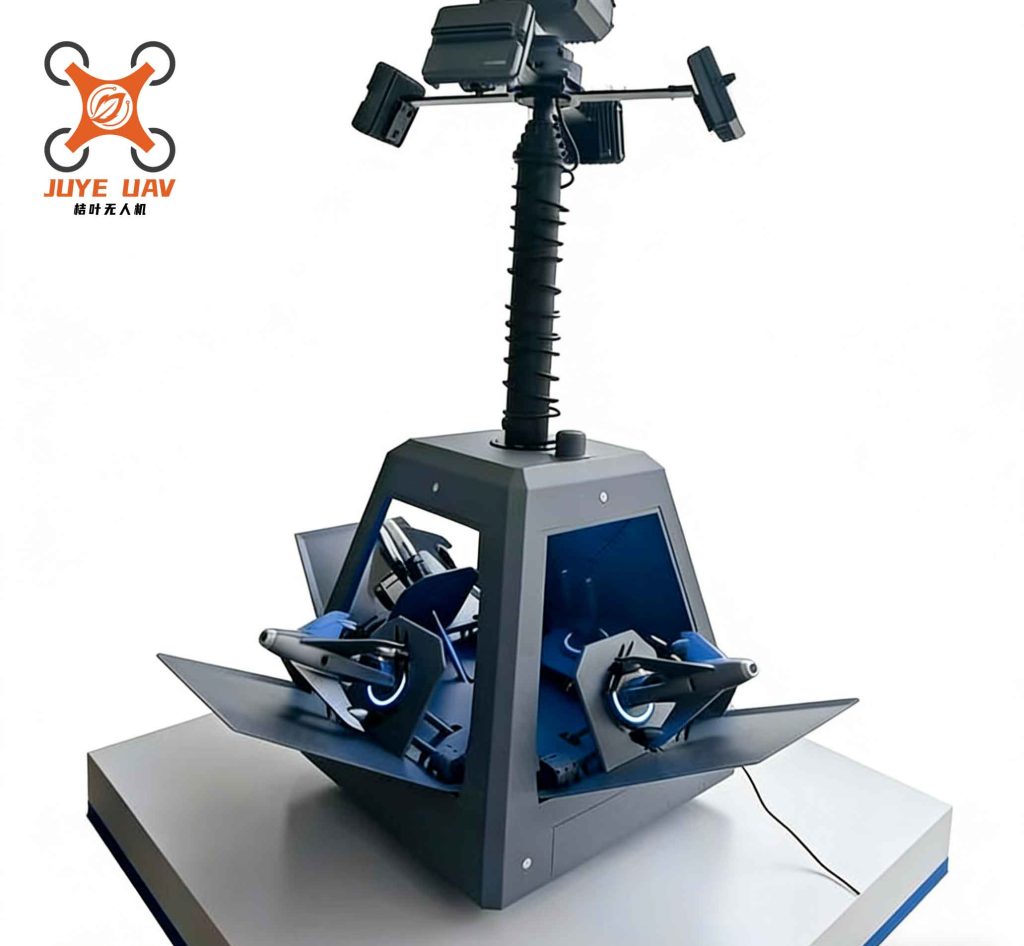
Pillar 2: Equipment Solutions – Accelerating Asymmetric Capabilities
We must accelerate the fielding of a diverse suite of C-UAS technologies through reformed acquisition processes. The goal is to create a cost-imposing dilemma for the adversary. Our anti-drone toolkit must include:
| Technology Type | Mechanism | Advantages | Limitations / Considerations |
|---|---|---|---|
| Kinetic Hard-Kill (e.g., missiles, guns, nets) | Physical destruction of the drone airframe. | Positive kill confirmation, effective against all drone types. | High cost per engagement, collateral damage risk, limited magazine depth. |
| Directed Energy (DE) (Laser) | Concentrated light energy to burn through critical components. | Light-speed engagement, low cost per shot, deep magazine. | Line-of-sight required, atmospheric attenuation (rain, fog), power requirements. |
| High-Power Microwave (HPM) | Broad-area EMP to fry electronic circuits. | Effective against swarms, area defense, minimal collateral. | Short range, potential to affect friendly electronics, size/power. |
| Electronic Attack (EA) (Jamming/Spoofing) | Disrupts command & control (C2) or GPS links. | Non-kinetic, can cause soft kill (drone landing/return), rapid engagement. | Requires knowledge of drone frequencies, may be illegal in some spectrums, adaptive drones can resist. |
| Cyber/Exploitative | Hacks into drone’s control system to take over or crash it. | Covert, can turn adversary asset against them. | Highly specific to drone model/firmware, requires constant intelligence updates. |
The optimal anti-drone solution employs these technologies in a layered, integrated manner. For example, a fixed site might be protected by an outer ring of electronic surveillance and jamming, a middle layer of HPM for swarm defense, and a final point-defense layer of lasers or kinetic effectors. The integration challenge is significant and drives the need for the third pillar: software.
Pillar 3: Software Solutions – The Integration Glue and Cognitive Edge
Soldiers and sensors generate vast amounts of data. Software is the crucial enabler that fuses this data into a common operational picture, enables rapid identification and prioritization of threats, and manages the coordinated response of effectors.
- Sensor Fusion and AI/ML: We must invest in software upgrades for existing radars (e.g., Sentinel, TPQ-53) and electro-optical/infrared (EO/IR) systems to better detect and classify LSS drones. Machine learning algorithms can be trained to distinguish between birds, benign drones, and hostile UAS based on flight patterns, signatures, and other data. The fusion of radar, RF detection, and EO/IR feeds into a single track dramatically improves detection probability \( P_d \) and reduces false alarms.
- Command and Control (C2) Systems: A dedicated anti-drone C2 system is needed to manage the “detect, identify, track, decide, engage, assess” (DITDAE) kill chain at operationally relevant speeds. This system must be able to recommend the most appropriate effector based on threat type, rules of engagement, available resources, and collateral damage estimates.
- Open Architecture and Partnership: The software ecosystem must be based on open standards to allow for rapid integration of new sensors and effectors from both traditional defense contractors and non-traditional commercial partners. Close collaboration with industry, especially COTS drone manufacturers, is vital to understand emerging capabilities and develop preemptive countermeasures.
The path forward requires institutional commitment. Organizations like the Army Futures Command must be empowered to prototype, experiment, and field solutions at a pace that matches the commercial technology cycle. We must conduct frequent, large-scale exercises and experiments focused on the drone threat, testing our tactics and technologies against realistic, adaptive red teams using current commercial and proxy systems.
In conclusion, the drone threat is a present and growing danger that exploits a gap in our traditional force structure. A reactive, piecemeal approach will leave us vulnerable. We must adopt a proactive, integrated anti-drone strategy rooted in the triad of trained Soldiers, a diverse and affordable suite of technologies, and intelligent, unifying software. This is not merely a matter of acquiring new equipment; it is about transforming our mindset, our training, and our operational concepts to fight and win in an air domain that is no longer permissive. The cost of inaction is measured in vulnerabilities that potential adversaries are actively studying and preparing to exploit. The time to build a comprehensive, layered anti-drone defense is now.