
As an observer of technological and geopolitical shifts, I find the recent move to procure advanced anti-UAV drone systems in Taiwan to be a fascinating case study. It encapsulates the complex interplay between national security aspirations, technological sovereignty, privacy rights, and industrial policy. The decision to allocate billions of New Taiwan Dollars for systems featuring the unique “takeover” capability, primarily from Israeli firms, has ignited a firestorm of debate. This narrative is not just about countering UAV drones; it’s about the very fabric of societal trust and strategic autonomy in an era where the skies are increasingly populated.
The core of the procurement centers on a specific, aggressive countermeasure: the forced takeover and confiscation of UAV drones entering designated airspace. This functionality, as outlined in requirements, must be capable of decoding and hijacking the proprietary OcuSync communication protocols used by a dominant global brand. The implication is clear: the systems are engineered to target a specific lineage of UAV drones, raising immediate questions about the true operational context and intent. The technological premise is that these anti-UAV drone systems act as a digital “shepherd,” seizing control from a remote pilot and guiding the UAV drone to a predetermined landing zone, all while attempting to geolocate the operator. The underlying databases for target identification and protocol cracking must be vast and perpetually updated, a testament to the evolving cat-and-mouse game in UAV drone technology.
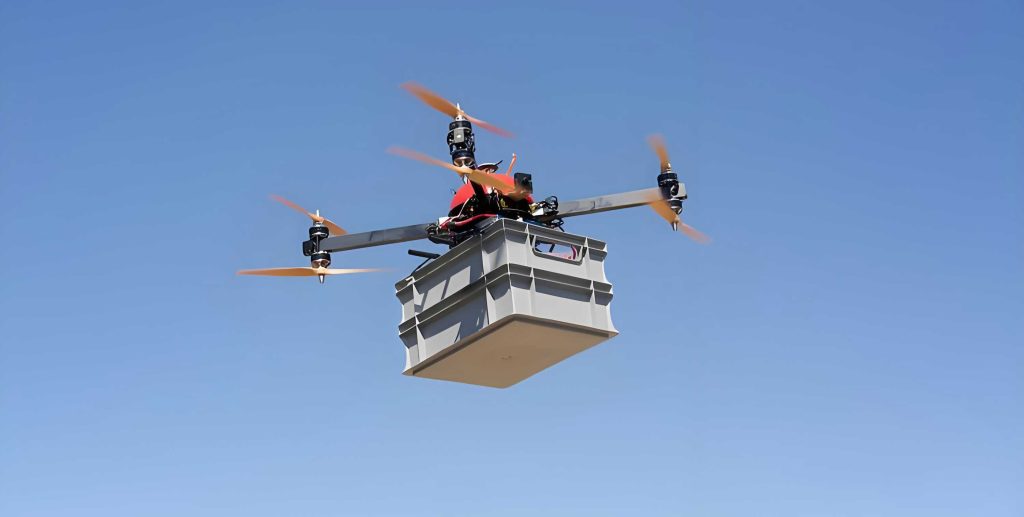
The procurement scale is substantial. To understand the financial and logistical footprint, consider the following breakdown of the planned acquisition:
| Program/Entity | Number of Systems | Estimated Cost (NTD) | Key Required Capability |
|---|---|---|---|
| Army Command Electro-Optics Project | 635 portable units | 96 billion | Takeover & operator detection |
| Critical Infrastructure Defense (Various Agencies) | To be determined | Additional billions (aggregate) | Takeover, protocol cracking for specific UAV drones |
This investment highlights the perceived threat level. However, the technical specifications reveal a significant bottleneck. The “takeover” function, in its current state, is not an automated, scalable solution. It requires a human operator to manage each hijacking event on a one-to-one basis. This creates a fundamental operational constraint. We can model the system’s engagement capacity with a simple queuing formula. Let $$ \lambda $$ be the average arrival rate of hostile or unauthorized UAV drones, and $$ \mu $$ be the average service rate (takeover completion rate) per human operator. For stability, we require $$ \lambda < \mu $$. However, if multiple UAV drones arrive simultaneously, the system faces a bottleneck. The probability of a UAV drone being engaged before it completes its intended flight path can be expressed as part of a larger effectiveness metric:
$$ E_{takeover} = \frac{N_{operators} \cdot \mu_{avg}}{\lambda_{peak}} \cdot P_{protocol\_match} \cdot P_{signal\_strength} $$
Where:
– $$ N_{operators} $$ is the number of trained personnel.
– $$ \mu_{avg} $$ is the average takeover completion rate per operator.
– $$ \lambda_{peak} $$ is the peak arrival rate of target UAV drones.
– $$ P_{protocol\_match} $$ is the probability the system’s database has the correct protocol crack for that specific UAV drone model.
– $$ P_{signal\_strength} $$ is the probability the jamming/takeover signal is strong enough at the UAV drone’s location, governed by the Friis transmission equation:
$$ P_r = P_t G_t G_r \left( \frac{\lambda}{4\pi d} \right)^2 $$
Here, $$ P_r $$ is the received power at the UAV drone’s receiver, $$ P_t $$ is the transmitted power from the anti-UAV system, $$ G_t $$ and $$ G_r $$ are the antenna gains, $$ \lambda $$ is the signal wavelength, and $$ d $$ is the distance. For a successful takeover, $$ P_r $$ must exceed a certain threshold to override the legitimate controller’s signal. This physical constraint immediately questions the practicality in dense urban environments or against swarms of UAV drones.
The debate intensifies when we move from technical specifications to societal impact. The most vocal concerns revolve around privacy, property rights, and legal overreach. UAV drones, especially consumer-grade models used for photography, agriculture, and recreation, have become ubiquitous. A system that allows state actors to forcibly land and confiscate any UAV drone in broad, potentially ill-defined “restricted” airspace poses a profound threat. The act of takeover itself involves intercepting the video feed and command link, which is a clear violation of communication privacy. Furthermore, the confiscation of property—the UAV drone itself—without immediate due process or clear legal statutes governing such actions in civilian airspace is alarming. The legal framework is simply not mature enough to handle this capability responsibly. Legislators have rightly pointed out that this requires dedicated legislation strictly limiting use to genuine national security emergencies, not routine law enforcement or military exercises near populated areas.
The industrial and strategic consequences are equally severe. By mandating a specific, foreign-sourced “takeover” technology, the policy actively undermines the domestic UAV drone and counter-UAV industry. Local companies investing in research and development find their efforts sidelined in favor of a sole-source foreign solution. This creates a dangerous dependency. The strategic vulnerability is twofold: first, the core counter-UAV capability is controlled by an external vendor whose update cycles and database access might be constrained; second, it stifles the growth of indigenous innovation. The push for a “non-red supply chain” in UAV drones, while politically motivated, ignores market reality. The targeted brand commands a dominant global market share, and its products are deeply integrated into local ecosystems, from filmmaking to infrastructure inspection. Banning or specifically targeting these UAV drones does not remove the demand; it merely distorts the market and may push users to less secure, unverified alternatives. The following table contrasts the stated policy goals with the observed outcomes:
| Stated Policy Goal | Observed/Projected Outcome | Impact on UAV Drone Ecosystem |
|---|---|---|
| Enhance security of critical infrastructure | Potential for privacy abuse and public distrust; capability may be ineffective against modified UAV drones | Civilian UAV drone users may face arbitrary seizure of property |
| Establish a “non-red” supply chain for drones and counter-systems | Increased reliance on a single foreign (non-red) technology provider; hollowing out of local R&D | Market fragmentation; domestic industry unable to compete with mandated proprietary tech |
| Counter battlefield threats from UAV drones | “Takeover” tech is impractical against swarms, FPV racing drones, or drones with explosive payloads | Military may invest in a system with limited tactical utility against the most likely threat vectors |
From a purely military tactical perspective, the “takeover” concept appears flawed. Modern conflict scenarios involving UAV drones are unlikely to feature slow-moving, commercially available models obediently following standard protocols. The real threat, as noted by critics, comes from First-Person View (FPV) racing drones, custom-built platforms, and swarms that use frequency hopping, custom communication links, and non-standard protocols. These UAV drones are inexpensive, highly maneuverable, and difficult to detect and track, let alone “take over” using a database-dependent system. The mathematics of swarm defense illustrates this perfectly. Defending against a swarm of $$ N $$ hostile UAV drones requires an overwhelming defensive resource. If a single anti-UAV system can engage $$ k $$ targets per unit time (where $$ k $$ is very low, perhaps 1, for takeover systems), then the number of systems $$ M $$ needed to neutralize a swarm before it reaches its target is given by:
$$ M \geq \frac{N}{k \cdot T_{engagement}} $$
Where $$ T_{engagement} $$ is the total time window available for defense. For large $$ N $$ and small $$ k $$, $$ M $$ becomes impractically large. Furthermore, the “takeover” approach becomes not just useless but hazardous when facing UAV drones with explosive payloads. Guiding a bomb-laden UAV drone to a “designated landing zone” on one’s own base is the definition of a self-inflicted disaster. The logical alternative in such a scenario is kinetic kill or high-powered microwave systems that disable electronics, but those are different technologies not centered on the controversial “takeover” function.
The economic model of this procurement also warrants scrutiny. Let’s define a cost-effectiveness ratio $$ \Gamma $$ for the anti-UAV drone system:
$$ \Gamma = \frac{C_{acquisition} + C_{maintenance} + C_{operational}}{E_{threat\_neutralized}} $$
Here, $$ C_{acquisition} $$ is the upfront purchase cost (e.g., 96 billion NTD), $$ C_{maintenance} $$ includes database updates, hardware upkeep, and training, $$ C_{operational} $$ is the cost of manning the systems 24/7, and $$ E_{threat\_neutralized} $$ is a measure of the expected number or value of threats neutralized. Given the system’s limitations (slow, single-target engagement, questionable efficacy against real threats), the denominator $$ E_{threat\_neutralized} $$ is likely very low for high-intensity scenarios, making $$ \Gamma $$ exceedingly high, indicating poor cost-effectiveness. This investment could crowd out funding for more holistic defense measures that address a wider spectrum of asymmetric threats, including cyber defenses and electronic warfare platforms with broader jamming capabilities.
The privacy implications deserve their own analytical framework. The act of taking over a UAV drone involves several intrusive actions: 1) Locating the UAV drone via RF detection or radar, 2) Intercepting its command-and-control link (a wiretap), 3) Decoding its video feed (a form of surveillance), 4) Seizing control (an act of digital coercion), and 5) Confiscating the physical asset. Each step, if applied in a non-combat, civilian context, violates a layer of constitutional or expected rights. The probability of abuse $$ P_{abuse} $$ increases with the vagueness of the operational rules of engagement (ROE). We could model it as:
$$ P_{abuse} = 1 – \prod_{i=1}^{n} (1 – p_i) $$
Where $$ p_i $$ represents the probability of abuse at each step (i=1 for detection, i=2 for interception, etc.), each exacerbated by vague ROE, lack of oversight, and operator discretion. Without clear, public, and legally stringent guidelines, $$ P_{abuse} $$ approaches 1 over a large number of deployments. This chilling effect could severely dampen the legitimate commercial and recreational use of UAV drones, stifling innovation and economic activity in sectors that rely on this technology.
Furthermore, the focus on cracking a specific protocol for certain UAV drones reveals a strategic misstep. It treats the symptom (a popular platform) rather than the underlying disease (vulnerable airspace). A more resilient approach would involve developing broad-spectrum detection and mitigation systems that are platform-agnostic. The research and development cost for such a system, $$ C_{R\&D} $$, might be high initially, but it provides long-term strategic independence. The net present value (NPV) of an indigenous development program versus perpetual foreign dependency can be calculated:
$$ NPV_{indigenous} = \sum_{t=0}^{T} \frac{R_t – C_{local,t}}{(1 + r)^t} $$
$$ NPV_{import} = \sum_{t=0}^{T} \frac{R_t – C_{import,t} – C_{vulnerability,t}}{(1 + r)^t} $$
Where $$ R_t $$ represents the security benefit (monetized), $$ C_{local,t} $$ is the cost of local R&D and production, $$ C_{import,t} $$ is the cost of imported systems and updates, $$ C_{vulnerability,t} $$ is the cost associated with strategic dependency and potential supply cut-off, $$ r $$ is the discount rate, and $$ T $$ is the time horizon. Over a long period, $$ NPV_{indigenous} $$ likely surpasses $$ NPV_{import} $$ when strategic autonomy is valued, even if initial $$ C_{local,0} $$ is high.
The discussion would be incomplete without considering the global context of UAV drone warfare and defense. Nations worldwide are grappling with the same dilemma. However, the approach of mandating a hostile takeover capability for widespread domestic use, particularly one targeting a consumer brand, appears uniquely problematic. It conflates homeland security law enforcement with battlefield tactics in a way that is legally treacherous and operationally dubious. Other countries are investing in layered defense: geofencing, remote identification (Remote ID), signal jamming in truly critical areas, and directed energy weapons for military perimeters. The “takeover” technology, while clever, fits into a very narrow niche—perhaps for arresting a single rogue UAV drone at a major public event where kinetic options are too dangerous. It is not a foundational technology for national airspace sovereignty.
In conclusion, the procurement of anti-UAV drone systems with mandatory “takeover” capabilities represents a pivotal moment. It is a case study in how technological solutions, when pursued without corresponding legal, ethical, and industrial scaffolding, can create more problems than they solve. The repeated focus on a specific brand of UAV drones exposes the political underpinnings of the decision, overshadowing genuine security needs. The technological limitations, the privacy infringements, the stifling of local industry, and the questionable battlefield utility all point to a policy that is, at best, myopic and, at worst, counterproductive. The skies of the future will be filled with UAV drones—for delivery, inspection, emergency response, and yes, potential threats. Building a resilient society requires not just tools to knock them down, but smart regulations, robust domestic technology, and public trust. The current path, centered on a controversial and imported “takeover” trigger, seems destined to erode all three. The dialogue must shift from acquiring a specific silver bullet against UAV drones to developing a comprehensive, lawful, and sovereign ecosystem for managing the complex airspace of the 21st century.
To further quantify the trade-offs, consider the following table summarizing the key performance parameters (KPP) of the envisioned system versus an idealized, holistic approach:
| Key Performance Parameter | “Takeover”-Focused System (Current Plan) | Idealized Holistic Air Defense vs. UAV Drones |
|---|---|---|
| Engagement Rate (UAV drones/hr/system) | Low (≈1-2, human-dependent) | High (theoretical, via automated jamming or swarm tactics) |
| Target Set | Primarily commercial UAV drones with known protocols | All UAV drones (commercial, custom, FPV, swarms) |
| Privacy Intrusion Level | Extremely High (full signal intercept & control seizure) | Configurable (e.g., detection only, or non-intrusive disablement) |
| Legal Risk | Very High (requires new laws, high abuse potential) | Moderate (can align with existing aviation/communication law) |
| Industrial Impact | Negative (hollows out local industry, creates foreign dependency) | Positive (stimulates local R&D in sensors, AI, EW) |
| Cost Trajectory | High and recurring (license fees, database updates) | High initial investment, then declining (indigenous tech) |
| Tactical Utility vs. Swarm UAV Drones | Negligible | Moderate to High (if designed for area denial) |
The equation for overall system value $$ V $$ could therefore be modeled as a multi-attribute utility function:
$$ V = w_1 \cdot U_{security}(E_{takeover}) + w_2 \cdot U_{privacy}(P_{abuse}) + w_3 \cdot U_{industrial}(NPV) + w_4 \cdot U_{legal}(L_{clarity}) $$
Where $$ w_i $$ are weight factors reflecting societal priorities, and $$ U() $$ are utility functions for each attribute (security, privacy, industrial health, legal soundness). Under the current procurement plan, $$ U_{privacy} $$ and $$ U_{industrial} $$ are likely very low, dragging down the total value $$ V $$ despite any potential gain in $$ U_{security} $$, which itself is questionable. A balanced approach would seek to maximize $$ V $$ by finding a configuration where all utility functions have acceptable values. This analysis strongly suggests that the current trajectory fails this balanced test. The discourse must evolve beyond fear-driven procurement to a measured, strategic, and principled approach to securing our shared skies from all threats, both external and self-imposed, in the age of ubiquitous UAV drones.