
The proliferation and employment of military drones have become a defining feature of the contemporary Middle Eastern security landscape, particularly in the period following the Arab upheavals. The trajectory of this proliferation can be mapped across distinct phases, driven by a confluence of strategic necessities, technological accessibility, and evolving conflict dynamics. This analysis examines the historical spread, strategic drivers, operational applications, and profound security implications of military drones in the region, concluding with considerations for future governance.
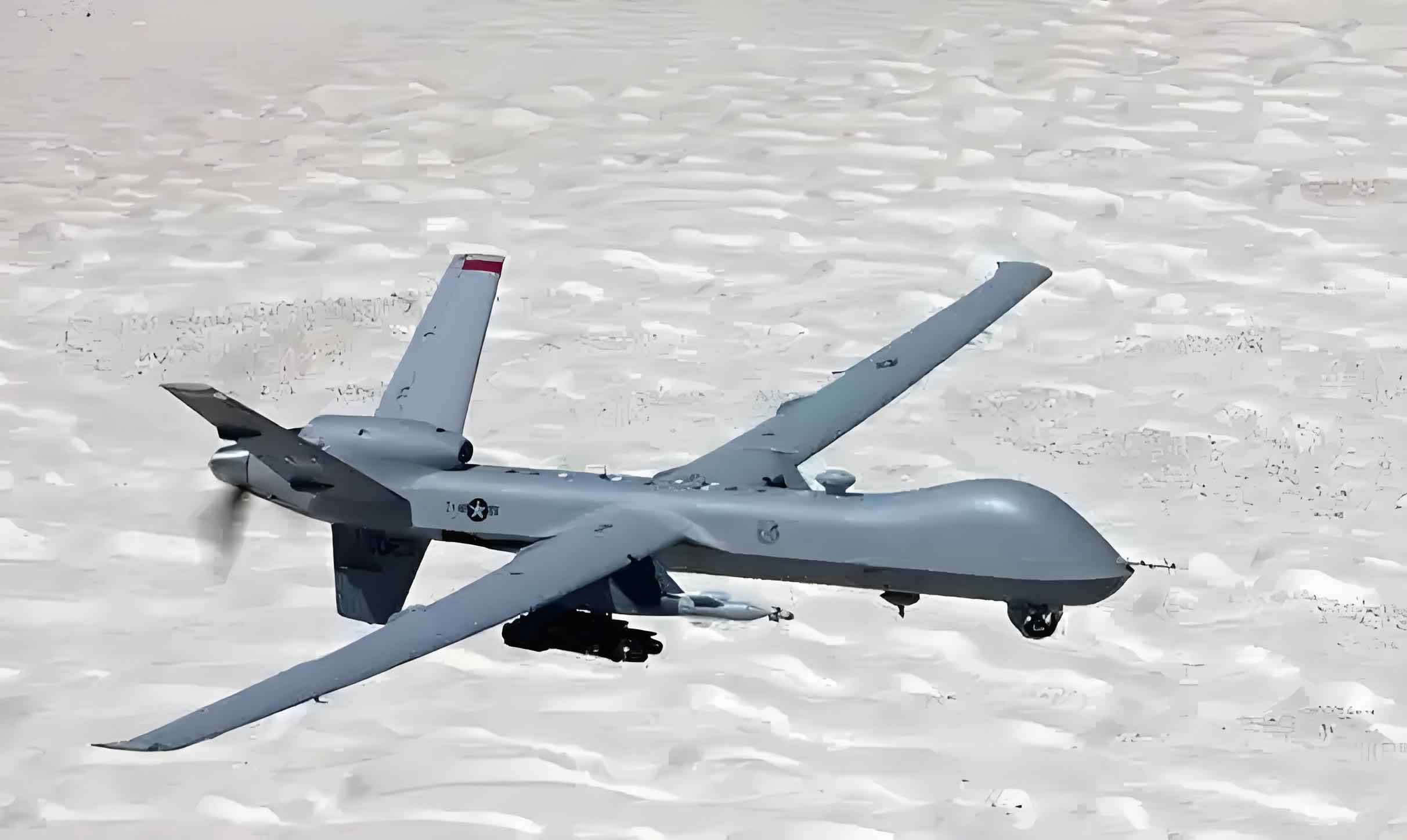
Historical Phases of Military Drone Proliferation
The diffusion of military drone capabilities in the Middle East has progressed through three discernible stages, marked by shifts in the number of actors involved and the technological sophistication of the systems.
| Phase | Time Period | Key Characteristics | Primary Actors & Systems |
|---|---|---|---|
| Initial Diffusion | 1971 – 2004 | State monopoly; Non-kinetic ISR roles. | Israel (Scout), Iran (Mohajer-1), Egypt (Scarab, imported), Turkey (Gnat 750, imported). |
| Slow Proliferation | 2004 – 2014 | Kinetic strike capability introduced; First non-state actor use. | Israel (first strike, 2004); Lebanon’s Hezbollah (first non-state use, 2004); Turkey (Heron import). |
| Rapid Proliferation | 2014 – Present | Widespread horizontal and vertical diffusion; Proliferation to numerous states and non-state actors. | Saudi Arabia, UAE, Iraq (imports); Turkey, Iran, UAE (indigenous production); Houthis, Hamas, ISIS (modified/assembled systems). |
This evolution demonstrates a clear trend: from exclusive state-held tools for surveillance to ubiquitous, multi-role systems employed by a vast array of state and non-state actors. The capability progression can be summarized by a simple function of time, $$ C(t) = \alpha \cdot e^{\beta t} $$, where \( C(t) \) represents composite capability (spanning reach, payload, autonomy), \( t \) is time, and \( \alpha \) and \( \beta \) are positive constants signifying the accelerated growth post-2014.
Drivers of Rapid Military Drone Diffusion
The accelerated spread of military drone technology since 2014 is not incidental. It is the product of acute security demand meeting increased supply, facilitated by technological and geopolitical shifts.
1. Demand-Side Drivers: The Security Imperative
The region’s deteriorating security environment post-2011 created a powerful demand for cost-effective, low-risk force multipliers. The utility of a military drone can be modeled as a function of its operational advantages over traditional airpower:
$$ U_{drone} = f(Cost_{low}, Risk_{pilot}, Loiter_{time}, Precision_{high}, Access_{easy}) $$
Where these variables significantly outperform those of manned aircraft (\( U_{manned} \)). This calculus made military drones uniquely attractive for:
- Counter-insurgency & Counter-terrorism: Against asymmetric threats like ISIS, offering persistent surveillance and precise strike.
- Power Projection & Proxy Warfare: Enabling regional powers (Turkey, Iran, UAE) to support allies and shape conflicts in Syria, Libya, and Yemen with reduced political and military risk.
- Asymmetric Deterrence: Allowing non-state actors (Hezbollah, Houthis) to develop a credible aerial threat against conventionally superior state adversaries.
2. Supply-Side Enablers: Breaking the Monopoly
Demand was met by a collapsing barrier to entry:
- Technological Democratization: Advances in composites, computing, and automation (Fourth Industrial Revolution) enabled indigenous production (Turkey’s Bayraktar TB2, Iran’s Shahed) and easy modification of commercial platforms.
- Competitive Global Market: The entry of exporters like China provided advanced military drone systems (e.g., Wing Loong, CH series) to states otherwise restricted from Western markets.
- Alliance Networks: Regional blocs facilitated technology transfer, direct provision, and training (e.g., Iran to proxies, Turkey to Libya’s GNA, UAE to Libya’s LNA).
The proliferation decision for an actor \( i \) can be framed as:
$$ P_i = \left[ \frac{Perceived\ Threat_i}{Cost_i(acquisition, operation)} \times Availability_i \right] > Threshold_i $$
Where \( P_i \) is the probability of proliferation, driven by threat perception, moderated by cost, and enabled by availability in the market or through alliances.
Strategic Employment of Military Drones: A Typology of Coercion
Military drones are not merely tactical tools but instruments of strategy. Their employment in the Middle East aligns with three distinct coercive logics, each with different target sets and intended political effects.
| Employment Type | Coercive Logic | Primary Targets | Examples |
|---|---|---|---|
| Tactical Support (ISR) | Enhance battlefield awareness and effectiveness of combined arms. Reduce operational risk and “fog of war.” | Enemy troop movements, positions, equipment. | Israeli pre-strike surveillance in Gaza; real-time targeting in Nagorno-Karabakh (2020). |
| Punishment Strategy | Inflict pain on civilian infrastructure/population to erode political will and force concessions. | Civilian infrastructure, economic assets, population centers. | Houthi drone attacks on Saudi Aramco facilities (2019); attacks on UAE civilian sites (2022). |
| Denial Strategy | Degrade enemy military capacity directly, convincing them their objectives are unattainable. | Military personnel, command nodes, weapons depots, air defense systems. | Turkish drone strikes against Syrian armor & air defenses in Idlib (2020); Israeli targeted killings of Iranian commanders. |
The strategic effectiveness \( E \) of a military drone campaign is not solely a function of the platform’s technical specifications \( TechSpec \), but more critically of its integration into a broader operational concept \( OpsConcept \) and the target’s vulnerability \( Vuln_{target} \):
$$ E_{campaign} = TechSpec \times OpsConcept \times \frac{1}{Vuln_{target}} $$
Where \( OpsConcept \) includes C4ISR integration, electronic warfare support, and combined arms tactics. This explains why advanced military drones used by Turkey have achieved significant denial effects, while improvised military drones used by ISIS had only local, tactical impact.
Security Implications: Recalibrating Risk and Challenge
The widespread use of military drones has fundamentally altered the regional security calculus, with complex and often destabilizing effects.
1. Reallocation of Risk and Shift in Offense-Defense Balance
Military drones dissociate physical risk from offensive action, transferring it almost entirely to the adversary. This creates a temporary offensive advantage, challenging traditional air defense paradigms. The risk transfer function can be expressed as:
$$ Risk_{transfer} = Risk_{pilot(manned)} – Risk_{pilot(drone)} \approx Risk_{pilot(manned)} $$
Simultaneously, the low cost and accessibility of military drone technology, especially at the tactical level, provide non-state actors with an unprecedented “access to air power,” compressing the aerial capability gap. However, this compression is asymmetric. While weaker actors gain a capacity for “random disruption,” powerful states are developing military drones for “creative destruction,” leading to a layered threat environment.
2. Impact on Deterrence, Escalation, and Conflict Duration
The perceived low cost and risk of employing military drones lower the threshold for using kinetic force, potentially encouraging militarized behavior. This can be modeled as a lowering of the decision threshold \( D_{threshold} \) in the classic conflict escalation model. However, this very characteristic of low-cost, low-credibility threat can also lead to “persistent deterrence failure” and conflict protraction. An adversary facing drone harassment may not feel compelled to escalate decisively (due to low perceived cost of the attacks) but also will not concede, leading to stalemate. The dynamic in conflicts like Yemen exemplifies this, where Houthi drone attacks have not forced Saudi strategic reversal but have made the conflict more costly and prolonged.
3. Challenges to Security Governance and Norms
The proliferation and use of military drones pose severe challenges to established international norms and legal frameworks:
- Sovereignty and Non-Interference: Routine cross-border strikes by state and non-state actors violate territorial integrity.
- Accountability and IHL Compliance: The “undeclared” or deniable nature of many drone strikes, combined with challenges in attribution, weakens adherence to principles of distinction, proportionality, and accountability for civilian harm.
- Regulatory Gaps: Existing export control regimes like the MTCR are inadequate as they focus on range/payload thresholds that exclude most tactical military drones proliferating in the region.
The governance deficit \( G_{deficit} \) expands with the rate of proliferation \( r_p \) and the opacity of use \( O_u \):
$$ G_{deficit} = k \cdot (r_p \times O_u) $$
where \( k \) is a constant representing the inadequacy of current regulatory frameworks.
Conclusion: Toward a Framework for Responsible Use
The Middle East has become the world’s primary laboratory for military drone warfare. The technology has diffused widely, employed in diverse strategic ways, and has recalibrated regional security dynamics—often by lowering the threshold for violence, protracting conflicts, and challenging governance norms. The future trajectory points towards continued proliferation and technological advancement, with states pursuing higher-end, autonomous systems and non-state actors refining low-cost, swarm tactics.
Addressing the security challenges posed by military drones requires moving beyond an arms-race mentality. Effective governance must be anchored in two pillars:
- Respect for Legitimate Security Interests: A sustainable security architecture must acknowledge the interconnected and equal security of all regional states, rejecting the notion that one state’s security can be built upon another’s insecurity. This principle is foundational for any dialogue on regulating tools like the military drone.
- Strengthened Normative and Regulatory Frameworks: There is an urgent need to develop explicit international norms and, where possible, rules for the responsible use of military drones. These should emphasize:
- Affirmation that International Humanitarian Law (IHL) and the principles of sovereignty fully apply.
- A commitment to transparency, accountability, and redress for civilian harm.
- Enhanced export controls and dialogue to curb the most destabilizing transfers of military drone technology, particularly to non-state actors.
- Clear boundaries against fully autonomous lethal engagement.
Without such concerted efforts, the proliferation and use of the military drone will continue to be a source of instability, transforming the skies of the Middle East into an ungoverned domain of persistent, low-level conflict with a high human cost.