
As we delve into the evolving landscape of modern warfare, I find it imperative to explore the transformative role of military drones. These unmanned aerial systems have reshaped strategic and tactical paradigms, offering unparalleled advantages in surveillance, reconnaissance, and combat operations. In this article, I will dissect the key trends driving the development of military drones, emphasizing technological innovations and future projections. The term “military drone” will be frequently referenced to underscore its centrality in contemporary defense ecosystems. The integration of advanced materials, artificial intelligence, and network-centric architectures is propelling military drones toward new frontiers, and I aim to provide a detailed examination through formulas, tables, and in-depth discussion.
The proliferation of military drones across global conflicts highlights their significance. From high-altitude long-endurance platforms to stealthy micro-drones, these systems are becoming indispensable assets. I will analyze trends such as enhanced altitude and endurance, stealth and miniaturization, system integration, and intelligent autonomy, all while incorporating mathematical models to quantify their capabilities. The evolution of military drones is not merely incremental; it represents a paradigm shift in aerial warfare, and I believe that understanding these trends is crucial for anticipating future battlefields.
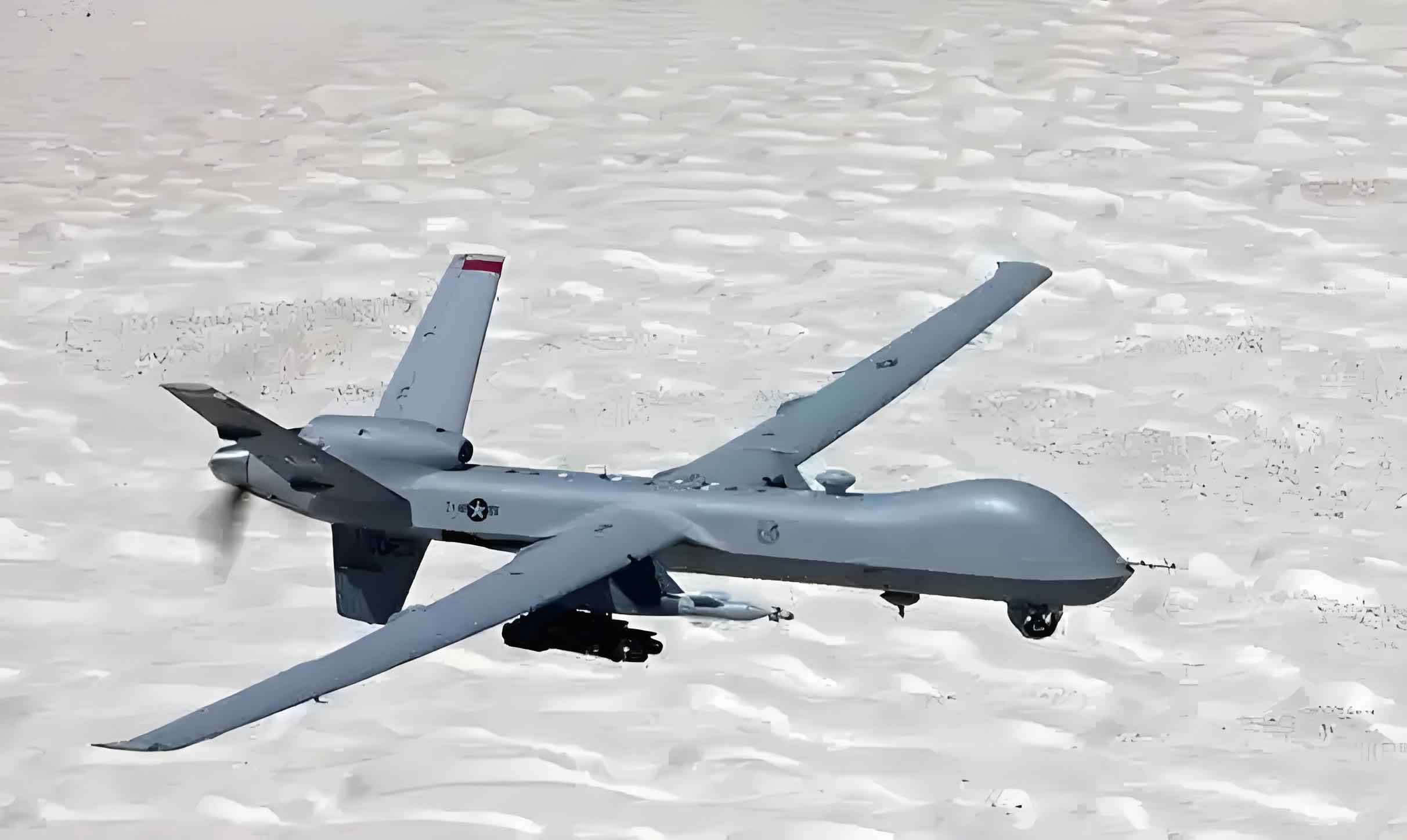
In the following sections, I will explore each trend in detail, using formulas to elucidate performance metrics and tables to compare key parameters. The military drone, as a versatile platform, continues to evolve, and its development is intertwined with advancements in aerospace engineering, computer science, and materials science. I will maintain a first-person perspective throughout, sharing insights and analyses based on current research and practical applications. Let us begin by examining the push toward higher altitudes and longer endurance in military drones.
Trend 1: High-Altitude, High-Speed, and Long-Endurance Military Drones
I observe that one of the most prominent trends in military drone development is the pursuit of elevated operational altitudes, increased speeds, and extended flight durations. High-altitude long-endurance (HALE) military drones offer strategic advantages by providing persistent surveillance and communication relay capabilities. From my analysis, these platforms can operate above 20,000 meters, where they are less susceptible to conventional air defenses and adverse weather conditions. The endurance of a military drone is critical for missions requiring continuous coverage, and it can be modeled using energy consumption formulas.
For instance, the flight time \( T \) of a military drone can be approximated by the formula:
$$ T = \frac{E_{\text{total}}}{P_{\text{avg}}} $$
where \( E_{\text{total}} \) represents the total energy available (e.g., from fuel or batteries) and \( P_{\text{avg}} \) is the average power consumption during flight. In practice, factors such as aerodynamic efficiency, propulsion system performance, and payload weight influence these variables. I have compiled a table comparing several HALE military drones to illustrate their capabilities:
| Military Drone Model | Wingspan (m) | Maximum Altitude (km) | Endurance (hours) | Speed (Mach) |
|---|---|---|---|---|
| Global Hawk | 35.4 | 19.5 | 40+ | 0.6 |
| Predator B | 20.1 | 15.2 | 27 | 0.5 |
| Solar Eagle | 40.0 | 25.0 | 100+ | 0.3 |
| Hypersonic Prototype | 10.0 | 30.0 | 2 | 10.0 |
As shown, the military drone landscape includes diverse designs, from solar-powered variants to hypersonic concepts. The speed of a military drone is another critical factor, especially for evading interception. The kinetic energy \( KE \) of a military drone moving at velocity \( v \) is given by:
$$ KE = \frac{1}{2} m v^2 $$
where \( m \) is the mass. Higher speeds necessitate robust materials and thermal management systems, which I will discuss later. The trend toward faster military drones is driven by the need to penetrate advanced air defenses, and research into scramjet and rocket-based propulsion is ongoing. I believe that future military drones will achieve hypersonic speeds, reducing mission times and enhancing survivability.
Moreover, the operational benefits of high-altitude military drones are substantial. They can cover vast areas, provide real-time intelligence, and serve as communication nodes. The line-of-sight range \( R \) for a military drone at altitude \( h \) is approximated by:
$$ R = \sqrt{2k h} $$
where \( k \) is a constant accounting for Earth’s curvature and atmospheric refraction. For a military drone at 20 km altitude, \( R \) exceeds 500 km, enabling wide-area surveillance. This capability makes military drones invaluable for border security and maritime patrol. I anticipate that advancements in lightweight composites and efficient propulsion will further extend the endurance and altitude of military drones, solidifying their role in persistent operations.
Trend 2: Stealth, Miniaturization, and Micro-Military Drones
In my assessment, stealth technology is paramount for enhancing the survivability of military drones. Reducing radar cross-section (RCS) and infrared signatures allows military drones to operate covertly in contested airspace. The RCS \( \sigma \) of a military drone can be modeled using the formula:
$$ \sigma = \frac{4\pi A^2}{\lambda^2} $$
where \( A \) is the effective reflecting area and \( \lambda \) is the radar wavelength. Stealth military drones employ shape optimization, radar-absorbent materials (RAM), and surface treatments to minimize \( \sigma \). For example, the use of epoxy-graphite composites can reduce RCS by up to 90% compared to traditional metals. I have created a table summarizing stealth techniques applied to military drones:
| Stealth Technology | Principle | Application in Military Drone | Effectiveness |
|---|---|---|---|
| Shape Design | Reduces radar reflections through smooth surfaces and angled edges | Blended wing-body configurations | RCS reduction by 80-90% |
| RAM Coatings | Absorbs radar waves using magnetic or dielectric materials | Graphite-based coatings on fuselage | RCS reduction by 40-50% |
| Infrared Suppression | Cools exhaust and uses low-emissivity paints | Shielded engine nozzles | IR signature reduction by 70% |
| Active Cancellation | Generates opposing radar signals to cancel reflections | Experimental phase for military drones | Potential for near-zero RCS |
Additionally, miniaturization and micro-military drones represent a growing trend. These small-scale military drones, often less than 15 cm in size, offer discrete surveillance and tactical advantages. The Reynolds number \( Re \) for a micro-military drone is critical for aerodynamic design:
$$ Re = \frac{\rho v L}{\mu} $$
where \( \rho \) is air density, \( v \) is velocity, \( L \) is characteristic length, and \( \mu \) is dynamic viscosity. Low \( Re \) regimes pose challenges for lift generation, but advances in micro-electromechanical systems (MEMS) have enabled stable flight. I believe that micro-military drones will revolutionize urban warfare and intelligence gathering, as they can access confined spaces without detection.
The development of nano-materials and 3D printing is accelerating the production of micro-military drones. For instance, carbon nanotube composites provide high strength-to-weight ratios, essential for miniaturized platforms. The power density \( P_d \) of a micro-military drone’s battery is a limiting factor, given by:
$$ P_d = \frac{E}{m} $$
where \( E \) is energy capacity and \( m \) is mass. Improving \( P_d \) through solid-state batteries or fuel cells will extend mission durations. I foresee that swarm capabilities, where multiple micro-military drones operate collaboratively, will emerge from this trend, leveraging group intelligence for complex tasks.
Trend 3: System Integration, Sensor Fusion, and Modular Payloads in Military Drones
From my perspective, the integration of military drones into broader network-centric warfare systems is a defining trend. Modern military drones are not standalone entities; they are nodes in a interconnected grid that includes satellites, ground stations, and other aircraft. This system integration enhances situational awareness and operational coordination. The concept of “system of systems” for military drones can be expressed through information flow models, such as the network throughput \( C \):
$$ C = B \log_2 \left(1 + \frac{S}{N}\right) $$
where \( B \) is bandwidth and \( \frac{S}{N} \) is the signal-to-noise ratio. High-bandwidth data links enable real-time transmission of sensor data from military drones to command centers.
Sensor fusion is another critical aspect, where data from multiple sensors are combined to improve accuracy. A military drone may carry synthetic aperture radar (SAR), electro-optical cameras, and infrared sensors. The fused output \( F \) can be modeled as a weighted sum:
$$ F = \sum_{i=1}^{n} w_i S_i $$
where \( S_i \) are sensor readings and \( w_i \) are weights based on confidence levels. I have compiled a table illustrating common sensor suites on military drones:
| Sensor Type | Function | Typical Military Drone Platform | Data Rate (Mbps) |
|---|---|---|---|
| Synthetic Aperture Radar (SAR) | All-weather ground imaging | Global Hawk | 100-500 |
| Electro-Optical/Infrared (EO/IR) | Day/night surveillance | Predator | 50-200 |
| Signals Intelligence (SIGINT) | Electronic signal detection | RQ-170 Sentinel | 200-1000 |
| Laser Designator | Target marking for precision strikes | MQ-9 Reaper | 10-50 |
Modular payload design allows military drones to be reconfigured for various missions. The payload capacity \( P_{\text{max}} \) of a military drone is constrained by its structural limits:
$$ P_{\text{max}} = m_{\text{total}} – m_{\text{empty}} $$
where \( m_{\text{total}} \) is maximum takeoff weight and \( m_{\text{empty}} \) is empty weight. By standardizing interfaces, military drones can swap payloads quickly, transitioning from reconnaissance to electronic warfare roles. I believe that this modularity will drive cost-effectiveness and operational flexibility, making military drones adaptable to dynamic threats.
Furthermore, the integration of military drones with artificial intelligence (AI) enhances autonomous decision-making. AI algorithms can process sensor data to identify targets or anomalies, reducing the workload on human operators. The trend toward cognitive military drones involves machine learning models for pattern recognition, which I will elaborate on in the next section.
Trend 4: Mission Diversification and Intelligent Control of Military Drones
I contend that the expansion of mission profiles for military drones is a significant trend. Beyond traditional reconnaissance, military drones are now employed for strike missions, electronic attack, and even aerial refueling. This diversification stems from advancements in autonomy and payload technology. The autonomy level \( A \) of a military drone can be quantified using a scale from 0 (fully manual) to 10 (fully autonomous), with current systems typically at level 4-6, where they can perform complex tasks with minimal human intervention.
Intelligent control systems enable military drones to adapt to changing environments. For example, path planning for a military drone can be optimized using algorithms like A* or genetic algorithms, minimizing exposure to threats. The cost function \( J \) for such planning might be:
$$ J = \int_{t_0}^{t_f} \left( w_1 \cdot \text{fuel} + w_2 \cdot \text{risk} \right) dt $$
where \( w_1 \) and \( w_2 \) are weights balancing fuel consumption and risk. Swarm intelligence, inspired by biological systems, allows groups of military drones to collaborate. The collective behavior of a swarm can be modeled using particle swarm optimization (PSO), where each military drone adjusts its position based on personal and global best solutions.
I have created a table outlining diverse missions for military drones:
| Mission Type | Description | Example Military Drone | Key Technologies |
|---|---|---|---|
| Precision Strike | Engaging targets with guided munitions | MQ-9 Reaper | Laser designators, GPS/INS |
| Electronic Warfare | Jamming enemy communications and radar | EA-18G Growler (adapted) | Software-defined radios |
| Search and Rescue | Locating survivors in disaster zones | ScanEagle | Thermal cameras, AI analysis |
| Swarm Attacks | Coordinated saturation attacks by multiple drones | Perdix micro-drones | Mesh networking, autonomy |
The integration of AI into military drones facilitates real-time analytics. For instance, convolutional neural networks (CNNs) can classify objects in video feeds from a military drone, with accuracy \( Acc \) given by:
$$ Acc = \frac{\text{Correct Predictions}}{\text{Total Predictions}} $$
Current systems achieve over 95% accuracy in controlled environments. I believe that as AI matures, military drones will become more proactive, anticipating enemy movements and suggesting countermeasures. This trend toward cognitive military drones will blur the line between unmanned and autonomous systems, raising ethical and strategic questions.
Moreover, the concept of “loyal wingman” military drones, which accompany manned aircraft, is gaining traction. These military drones can perform high-risk tasks, protecting pilots and extending mission reach. The communication latency \( \tau \) between a manned aircraft and its military drone wingman is critical:
$$ \tau = \frac{d}{c} $$
where \( d \) is distance and \( c \) is the speed of light. Low-latency links enable seamless coordination, enhancing overall combat effectiveness. I anticipate that future military drones will exhibit greater interoperability across branches, forming integrated air combat teams.
Mathematical Modeling and Performance Optimization of Military Drones
In this section, I will delve deeper into the mathematical frameworks that underpin military drone performance. Understanding these models is essential for designing next-generation military drones. The overall efficiency \( \eta \) of a military drone can be expressed as a product of subsystems efficiencies:
$$ \eta = \eta_{\text{prop}} \cdot \eta_{\text{aero}} \cdot \eta_{\text{payload}} $$
where \( \eta_{\text{prop}} \) is propulsion efficiency, \( \eta_{\text{aero}} \) is aerodynamic efficiency, and \( \eta_{\text{payload}} \) is payload efficiency. For electric military drones, the overall system efficiency might range from 60-80%, while combustion-powered variants achieve 20-40%.
Aerodynamic performance is crucial for endurance. The lift-to-drag ratio \( L/D \) of a military drone determines its glide capability:
$$ \frac{L}{D} = \frac{C_L}{C_D} $$
where \( C_L \) and \( C_D \) are lift and drag coefficients, respectively. High-altitude military drones often have \( L/D \) ratios exceeding 30, enabling efficient cruising. The drag force \( D \) can be calculated as:
$$ D = \frac{1}{2} \rho v^2 C_D A $$
where \( A \) is reference area. Reducing \( C_D \) through streamlined designs improves range and endurance.
I have formulated a table summarizing key performance parameters for military drones:
| Parameter | Symbol | Typical Range for Military Drones | Impact on Mission |
|---|---|---|---|
| Endurance | \( T \) | 1 to 100+ hours | Determines persistence |
| Range | \( R \) | 100 to 20,000 km | Defines operational radius |
| Payload Weight | \( m_p \) | 1 kg to 2,000 kg | Limits sensor/weapon options |
| Communication Range | \( R_c \) | 50 to 500 km | Affects control and data link |
Optimization algorithms play a vital role in military drone design. Multi-objective optimization might seek to maximize endurance while minimizing radar signature. The Pareto front can be explored using methods like non-dominated sorting genetic algorithm (NSGA-II). For a military drone, the objective functions could be:
$$ \text{Maximize } T = f_1(\mathbf{x}), \quad \text{Minimize } \sigma = f_2(\mathbf{x}) $$
where \( \mathbf{x} \) is a vector of design variables (e.g., wing area, engine type). I believe that computational tools will increasingly automate the design of military drones, leading to highly specialized platforms for specific roles.
Future Projections and Conclusion on Military Drone Evolution
As I reflect on the trends discussed, it is clear that military drones are poised for continued innovation. The convergence of stealth, AI, and networking will yield military drones that are more autonomous, resilient, and versatile. I project that within the next decade, we will see military drones capable of fully autonomous dogfights, integrated into swarms of hundreds of units, and operating in multi-domain environments (air, space, cyber).
The ethical and legal implications of military drones cannot be overlooked. Autonomous decision-making in lethal contexts raises concerns about accountability and international law. However, from a technological standpoint, the advancement of military drones is inevitable. I urge policymakers and engineers to collaborate on frameworks that ensure responsible use.
In conclusion, the military drone has evolved from a simple reconnaissance tool to a cornerstone of modern warfare. The trends toward high-altitude endurance, stealth, system integration, and intelligence are driving rapid progress. By leveraging mathematical models and modular designs, future military drones will offer unprecedented capabilities. I am confident that ongoing research will address current limitations, such as energy storage and communication security, further solidifying the role of military drones in defense strategies worldwide. As we look ahead, the military drone will continue to shape battlefields, demanding adaptive responses from both allies and adversaries.
This analysis, presented from my perspective, underscores the dynamic nature of military drone development. I hope that through formulas, tables, and detailed discussion, I have provided a comprehensive overview that illuminates the path forward for these transformative systems. The military drone, in all its forms, remains a focal point of aerospace innovation, and its evolution will undoubtedly influence global security landscapes for years to come.