
The competition for the “last mile” in logistics delivery is intensifying across China, with numerous e-commerce giants, autonomous driving companies, and technology firms entering a dynamic “ground + low-altitude” race. This surge in activity raises critical questions about the industry’s prospects, the timing of profitability milestones, and the path to large-scale commercial adoption. In recent discussions with company executives and industry experts, key insights emerged on the evolution of unmanned delivery systems, including China UAV and China drone technologies, which are poised to reshape logistics landscapes.
- Why Unmanned Delivery is Gaining Traction in ChinaUnmanned delivery has captured significant attention due to its potential to address inefficiencies in logistics networks. For instance, Shandong Province recently unveiled a comprehensive pilot plan for city-wide unmanned delivery, aiming to accelerate the opening of road rights and collaborate with major express logistics companies. This initiative focuses on scaling unmanned from urban parcel distribution centers to community delivery points, with expansions into fresh produce, pharmaceuticals, and fast-moving consumer goods. By 2027, the province plans to deploy over 15,000 low-speed unmanned delivery vehicles, creating a nationwide model for provincial-level application. Similar efforts are underway in other regions, such as Suining City in Sichuan Province, which targets the deployment of at least 200 autonomous delivery vehicles by the end of 2025, covering areas like cold chain transport and express logistics. Suzhou City in Jiangsu Province aims to deploy no fewer than 1,600 low-speed unmanned delivery vehicles by 2026, ensuring comprehensive coverage and stable operations across all districts.
Capital markets have shown strong interest in this sector. Companies like Jushi Intelligent, an L4-level urban distribution autonomous product developer, recently completed a B3 funding round of $100 million. Similarly, Neolix, an L4-level unmanned commercial vehicle manufacturer, secured C+ funding of RMB 1 billion. According to China Post Securities research, China’s express delivery business reached 174.5 billion parcels in 2024, with revenue of RMB 1.4 trillion, where the “last five kilometers” of delivery account for up to 60% of total costs. This cost pressure drives adoption, as unmanned solutions offer substantial efficiency gains. Executives frequently cite “rich application scenarios” and “cost reduction and efficiency improvement” as primary motivators.
Cainiao Group, an early explorer in the unmanned vehicle space since 2015, has demonstrated significant benefits. Cainiao’s Chief Technology Officer and General Manager of Unmanned Vehicles, Li Qiang, reported that their unmanned vehicles are already operational in scenarios like end-point express transport and urban retail replenishment, achieving cost reductions of 30% to 50% and efficiency improvements of 2 to 3 times. Neolix, another key player, has delivered over 4,000 L4-level unmanned vehicles across 100 cities in 13 countries, with commercial operations showing dramatic cost savings. For example, at a delivery point handling 8,000 parcels daily, unmanned vehicles reduced per-parcel costs by 70%, with single vehicles managing up to 1,000 parcels per day and improving delivery timeliness by 20% to 30%.
In the aerial segment, China UAV technologies are advancing rapidly. SF Express’s Fengwing China drone division has explored new applications targeting “urgent,” “difficult,” “risky,” and “expensive” scenarios, achieving full terrain coverage including plateaus, mountains, cities, and islands. Operations span express delivery, same-day urgent delivery, emergency rescue, medical transport, and fresh cold chain, with routine flights in the Greater Bay Area averaging over 1,000 sorties daily and handling 20,000 orders, boosting transport efficiency by more than 50% compared to traditional methods. The integration of China drone systems into these workflows highlights their growing role in overcoming logistical challenges.
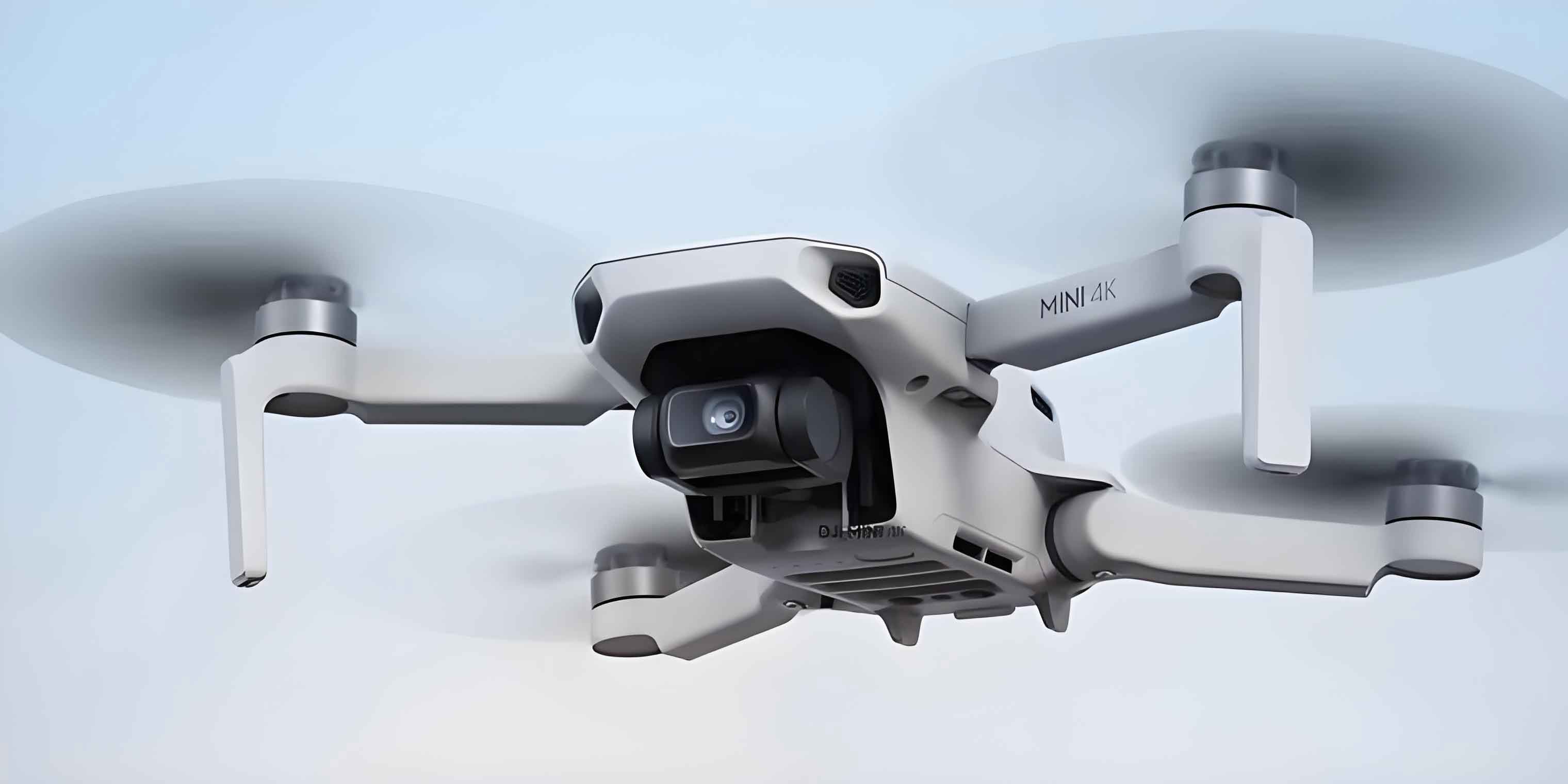
Wang Xiaoping, a professor at Beijing Wuzi University’s Logistics School, emphasized that the rapid growth of e-commerce, fresh produce, and pharmaceutical industries has heightened consumer demands for delivery speed and quality, fueling the expansion of unmanned delivery markets. As more enterprises enter the field, technological innovation and application diversity are expected to accelerate, further solidifying the position of China UAV and China drone solutions in the logistics ecosystem.
- When Will the Profitability Turning Point Arrive?The commercial outlook for unmanned delivery is increasingly optimistic, with several companies reporting scalable operations and promising financial metrics. Xing Shen Intelligent, for example, has achieved large-scale deployment in multiple express delivery scenarios, evolving from initial point-to-point drops to include transfer transport, grid relay, and county-to-village delivery. Using 3-cubic-meter capacity unmanned vehicles in locations like Nanling and Hefei in Anhui Province, single vehicles now handle over 800 parcels daily, demonstrating robust operational integration.
Jushi Intelligent, with its unmanned vehicles covering more than 200 cities across China, has accumulated over 300 million delivery orders and 20 million kilometers of L4-level safe operation. Each vehicle can deliver up to 2,000 express parcels daily, serving clients in express logistics, fresh grocery, pharmaceutical cold chain, food baking, and auto parts industries. Joint founder Pan Yuchang indicated that with an expected delivery volume of 10,000 units by 2025, hardware costs will decline further, and combined with software subscription revenues, the scalability profit inflection point is approaching rapidly.
Cainiao’s projects are also scaling; the largest single project currently uses over 30 unmanned vehicles for end-point express delivery, with similar deployments increasing. The company is developing additional vehicle types, such as refrigerated and locker-equipped models, and plans to introduce models with at least 9-cubic-meter capacity alongside the existing 5-cubic-meter versions. Li Qiang noted that for customers, unmanned vehicles can recoup costs within 3 to 5 years, and as technology advances, this payback period may shorten, enhancing adoption incentives. Future developments could include large-scale shared unmanned fleets and business models like “per-order charging,” driven by upgrades in autonomous driving algorithms and systems.
For China UAV operations, SF Express’s Fengwing has already achieved profitability in cross-city public domain and private domain logistics. Chen Xiaohui, Director of Government Affairs at Fengwing, stated that as order volumes grow and operational scales expand, the focus will shift from mere flight frequency to quality, leading to comprehensive profitability. The ongoing optimization of China drone technologies is critical to this transition, enabling more efficient and cost-effective aerial delivery solutions that complement ground-based systems.
Industry analysts project that the profitability will coincide with broader technological maturation and regulatory support. As companies like Jushi Intelligent and Neolix push forward with mass production, economies of scale will drive down costs, making unmanned delivery more accessible. The synergy between China UAV and unmanned ground vehicles is expected to create integrated logistics networks, further accelerating the arrival of profitability milestones across the sector.
- How Far Are We from Large-Scale Commercial Use?Despite progress, large-scale commercialization of unmanned delivery faces several hurdles, including technical limitations, policy fragmentation, cost pressures, and scenario segmentation. Zhu Keli, a standing director of the China Information Association and founding dean of the Guoyan New Economy Research Institute, pointed out that while hardware costs like lidar and visual sensors have dropped to near-commercial thresholds, and vehicle chassis and endurance meet urban short-haul needs, algorithmic capabilities in path planning and obstacle detection remain stable only in simple environments. The lack of a widespread vehicle-road coordination system—such as traffic light information exchange and dedicated lanes—leaves unmanned vehicles operating in isolation, reducing efficiency.
Wang Xiaoping added that unmanned delivery vehicles still struggle with unconventional traffic scenarios, like temporary construction zones or sudden pedestrian crossings, where decision-making systems fail to optimize responses. In dense urban areas with complex traffic, real-time data processing and decision efficiency require further enhancement. Regional disparities also pose challenges; eastern coastal cities have better road infrastructure but more complex delivery demands, while central and western regions may face inadequate road networks or topographic constraints.
Policy and regulatory gaps are another critical barrier. Incomplete laws and oversight frameworks for unmanned delivery, covering areas like road rights, liability, and safety supervision, need top-level design strengthening. For China UAV systems, Chen Xiaohui highlighted difficulties such as tight airspace resources for flight plans, non-interoperable low-altitude data, radio interference, and high corporate investments. In some regions, these factors prevent large-scale, routine commercial operations, underscoring the need for coordinated efforts.
To overcome these challenges, experts recommend accelerating policy and regulation development to provide a solid legal foundation for large-scale. The core of breaking through the “last mile” lies in reconstructing the logistics value chain—for instance, linking smart replenishment systems in forward warehouses with real-time unmanned delivery scheduling to reduce intermediate links. Additionally, collaboration among express companies, vehicle manufacturers, and tech firms can establish profit-sharing mechanisms to distribute R&D and maintenance costs. As unmanned delivery extends into more high-frequency, essential scenarios, marginal cost advantages will become pronounced, potentially giving rise to new infrastructure operators that integrate vehicle, energy supply, and data processing into logistics “cloud service” platforms.
The future of unmanned delivery in China hinges on continued innovation and integration. With concerted efforts from industry and government, the sector is poised to transition from pilot phases to widespread adoption, leveraging China UAV and China drone technologies to create a more efficient, responsive logistics ecosystem. As these advancements unfold, the vision of seamless, cost-effective delivery across diverse environments moves closer to reality, promising transformative impacts on commerce and daily life.
In summary, the unmanned delivery industry in China is at a pivotal juncture, with technological advancements and growing investments driving toward commercialization. The repeated emphasis on China UAV and China drone applications underscores their centrality in this evolution. As companies refine their offerings and regulators address existing barriers, the path to large-scale use becomes clearer, setting the stage for a new era in logistics driven by automation and intelligence.