
As I analyze the current trends in aerospace and defense, it becomes increasingly clear that two pivotal elements are shaping the future: advanced composite materials and the rapid expansion of the military UAV (unmanned aerial vehicle) sector. My perspective is rooted in observing how innovations like Bell Helicopter’s V-280 tiltrotor and the projected growth of unmanned systems are revolutionizing capabilities. In this discussion, I will delve into the technical advancements, market dynamics, and strategic implications, emphasizing the critical role of military UAVs. I aim to provide a comprehensive overview, supported by data, tables, and formulas, to underscore the transformative potential of these developments.
The integration of composite materials in modern aircraft represents a leap forward in performance and cost-efficiency. Bell Helicopter’s recent achievement with the V-280 “Valor” tiltrotor—successfully mating its composite wings and nacelles to the fuselage—highlights this progress. From my examination, this milestone leverages decades of tiltrotor experience and carbon fiber reinforced polymer (CFRP) expertise. The use of composites in the wings, fuselage, and empennage not only enhances agility, speed, range, and payload but also reduces costs significantly. For instance, the adoption of Large Cell Carbon Core technology in the wing structure, as opposed to traditional skin-stringer designs, is reported to cut costs by over 30% compared to similar components in the V-22 Osprey. This cost reduction is crucial for making next-generation vertical lift platforms more affordable and deployable. In my view, such advancements are not merely incremental; they redefine manufacturing processes, simplify maintenance, and lower sustainment expenses, thereby accelerating the deployment of future military assets. The V-280, powered by engines like the 64-GE-419, exemplifies how composites can drive innovation in military aviation, paving the way for more agile and cost-effective solutions. This focus on composites directly supports the evolution of military UAVs, as similar materials are increasingly used in unmanned systems to enhance durability and performance.
To illustrate the cost and performance benefits of composites in aircraft like the V-280, I have summarized key aspects in the table below. This comparison underscores how composite technologies contribute to overall system efficiency, which is equally vital for military UAV applications.
| Component | Material Technology | Cost Reduction vs. Traditional | Performance Impact |
|---|---|---|---|
| Wing Structure | Large Cell Carbon Core (CFRP) | >30% | Improved agility and weight savings |
| Fuselage | Carbon Fiber Reinforced Polymer | ~25% (estimated) | Enhanced payload capacity and range |
| Empennage | Composite Layup | ~20% (estimated) | Better maneuverability and durability |
Transitioning from manned to unmanned systems, the military UAV market is experiencing unprecedented growth. In my analysis, this expansion is driven by the need for versatile, cost-effective platforms that can perform reconnaissance, surveillance, and combat missions with minimal risk to human personnel. The global demand for military UAVs is projected to surge, reflecting their strategic importance. I believe that understanding this market requires a deep dive into both international and domestic forecasts, as well as the underlying trends shaping procurement and development.
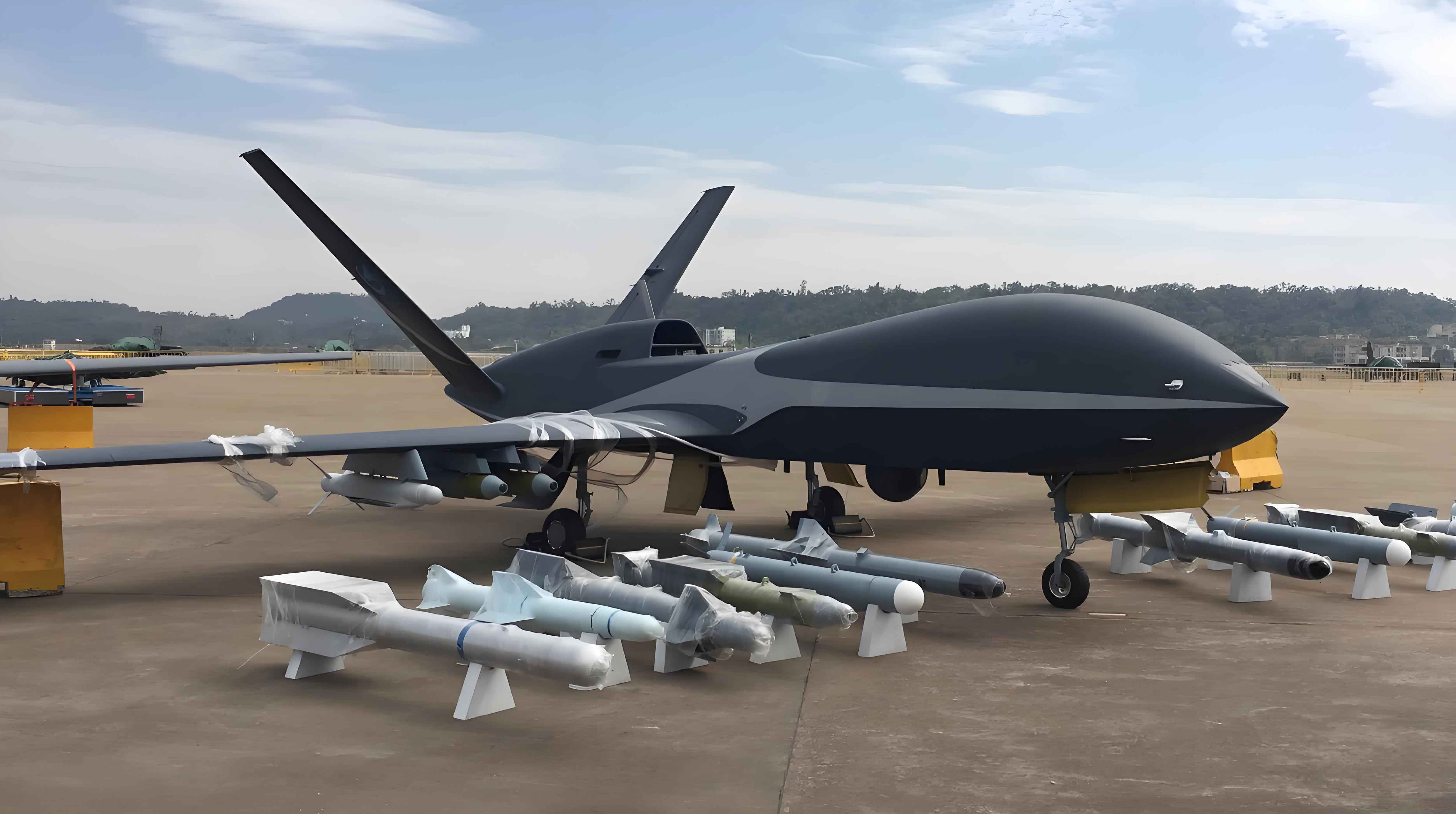
The image above captures the essence of modern military UAV operations, showcasing the diversity and capability of these systems. As I explore the market further, it’s evident that the military UAV sector is not just growing but evolving rapidly, with new technologies and applications emerging continuously.
Looking at global projections, the military UAV market is set to dominate the broader unmanned systems industry. From my calculations, based on industry reports, the total global expenditure on military UAVs is expected to rise from $5.7 billion in 2015 to $9.9 billion by 2024, representing a compound annual growth rate (CAGR) of approximately 6.33%. This growth can be modeled using the CAGR formula:
$$ CAGR = \left( \frac{FV}{PV} \right)^{\frac{1}{n}} – 1 $$
Where \( FV \) is the future value ($9.9 billion), \( PV \) is the present value ($5.7 billion), and \( n \) is the number of years (9). Plugging in the values:
$$ CAGR = \left( \frac{9.9}{5.7} \right)^{\frac{1}{9}} – 1 \approx 0.0633 \text{ or } 6.33\% $$
This steady increase underscores the enduring demand for military UAV capabilities worldwide. In my assessment, the market is still in its early lifecycle stages, with significant potential for expansion as more nations invest in unmanned technologies. The United States remains the largest market, but regions like the Middle East, Asia-Pacific, and Europe are rapidly catching up, driven by geopolitical tensions and the need for advanced surveillance and strike capabilities. I observe that tactical military UAVs are the most sought-after category, followed by strategic and combat drones, each serving distinct roles in modern warfare. The proliferation of military UAVs is also fueled by advancements in payloads, such as sensors and weapons, which enhance their operational utility. As I emphasize repeatedly, the military UAV ecosystem is integral to future defense strategies, with applications ranging from border patrol to high-altitude reconnaissance.
To provide a clearer picture of the global military UAV market, I have compiled a table summarizing key projections from 2015 to 2024. This data highlights the anticipated growth and segment distribution, reinforcing the importance of military UAVs in defense spending.
| Year | Global Military UAV Expenditure (USD Billion) | CAGR (2015-2024) | Notable Trends |
|---|---|---|---|
| 2015 | 5.7 | 6.33% | Rise in tactical UAV demand |
| 2016 | 6.1 | Increased adoption in emerging markets | |
| 2017 | 6.5 | Growth in combat UAV segments | |
| 2018 | 6.9 | Expansion of high-altitude long-endurance (HALE) UAVs | |
| 2019 | 7.4 | Surge in Middle Eastern procurement | |
| 2020 | 7.9 | Integration of AI and autonomous systems | |
| 2021 | 8.4 | Focus on cost-effective solutions | |
| 2022 | 8.9 | Rise in domestic production in Asia | |
| 2023 | 9.4 | Increased use in multi-role missions | |
| 2024 | 9.9 | Dominance of military UAVs in overall UAV market |
Shifting focus to domestic markets, the growth trajectory for military UAVs is even more pronounced. In my analysis of regions like China, the military UAV sector is expected to grow at a faster pace, with a CAGR of around 15% from 2013 to 2022. This can be expressed using a similar formula, where the expenditure rises from $5.7 billion in 2013 to $20 billion in 2022. The calculation for this CAGR is:
$$ CAGR = \left( \frac{20}{5.7} \right)^{\frac{1}{9}} – 1 \approx 0.15 \text{ or } 15\% $$
This rapid growth reflects increased defense spending, technological advancements, and a strategic push to enhance unmanned capabilities. I believe that domestic production and research initiatives, led by academic institutions and state-owned enterprises, are key drivers here. The demand for military UAVs in such markets spans from small tactical drones to large strategic systems, with an estimated need for hundreds of units over the next decade. In my view, this expansion is not just about numbers; it’s about integrating military UAVs into broader defense architectures, enabling seamless coordination with manned platforms like the V-280. The synergy between composites and unmanned systems is evident, as both contribute to lighter, more efficient aircraft that can operate in diverse environments. As I reiterate, the military UAV market is a cornerstone of modern warfare, with projections indicating it will account for over 85% of total UAV spending in the coming years.
To further dissect the market dynamics, I have developed a formula to estimate future military UAV demand based on historical data and growth assumptions. Let \( D_t \) represent the demand in year \( t \), \( D_0 \) the initial demand, and \( g \) the annual growth rate. The demand can be modeled as:
$$ D_t = D_0 \times (1 + g)^t $$
For instance, if we take the global military UAV expenditure in 2015 as \( D_0 = 5.7 \) billion USD and \( g = 0.0633 \), the demand in 2024 (\( t=9 \)) is:
$$ D_{2024} = 5.7 \times (1 + 0.0633)^9 \approx 9.9 \text{ billion USD} $$
This exponential growth pattern highlights the compounding effect of investments in military UAV technologies. In my assessment, such models are essential for policymakers and industry stakeholders to plan for future capacities and resource allocations. The military UAV sector is not only growing in value but also in sophistication, with trends pointing towards greater autonomy, longer endurance, and enhanced stealth capabilities. I emphasize that these advancements are critical for maintaining strategic advantages, especially in contested environments where traditional aircraft may be vulnerable.
Another aspect I consider is the regional distribution of military UAV markets. While the U.S. leads, emerging economies are becoming significant players. For example, in the Middle East, tensions have catalyzed procurement, with market values projected to reach billions over the next decade. Similarly, in Asia, countries like China, India, and South Korea are ramping up indigenous drone programs, reducing reliance on imports. This decentralization is reshaping the global military UAV landscape, fostering competition and innovation. In my opinion, this trend will accelerate as technology becomes more accessible and cost-effective. The use of composites, as seen in the V-280, plays a role here by lowering production costs and enabling faster deployment of unmanned systems. I often stress that the military UAV ecosystem thrives on such cross-pollination of technologies, where materials science and aerodynamics converge to create next-generation platforms.
In conclusion, my analysis underscores the intertwined evolution of composite materials and military UAVs. The success of projects like the V-280 tiltrotor demonstrates how composites can enhance performance and affordability, while the booming military UAV market reflects a paradigm shift towards unmanned warfare. From global projections to domestic growth, the data consistently points to sustained expansion, driven by technological advancements and strategic necessities. As I look ahead, I believe that the integration of composites will further propel military UAV capabilities, making them more resilient, efficient, and integral to defense portfolios. The future of military aviation lies in this synergy, where innovation in materials and unmanned systems coalesce to redefine aerial dominance. The ongoing investments and research in these areas will undoubtedly shape the battlefield of tomorrow, with military UAVs at the forefront of this transformation.