
In the contemporary global landscape, the persistent threat of terrorism and the complex nature of explosive devices present formidable challenges to public safety. Traditional methods for security inspection and Explosive Ordnance Disposal (EOD) often place personnel at significant risk, especially when dealing with sophisticated, remotely-triggered, or unstable devices. The primary objective has always been to maximize the distance between the bomb disposal expert and the threat source while maintaining operational effectiveness. The advent and integration of unmanned aerial systems, specifically police drones, have initiated a paradigm shift in this high-stakes field. As a first-hand observer and practitioner in this technological integration, I have witnessed how these remotely operated platforms are transforming protocols, enhancing safety, and introducing new capabilities that were previously unimaginable.
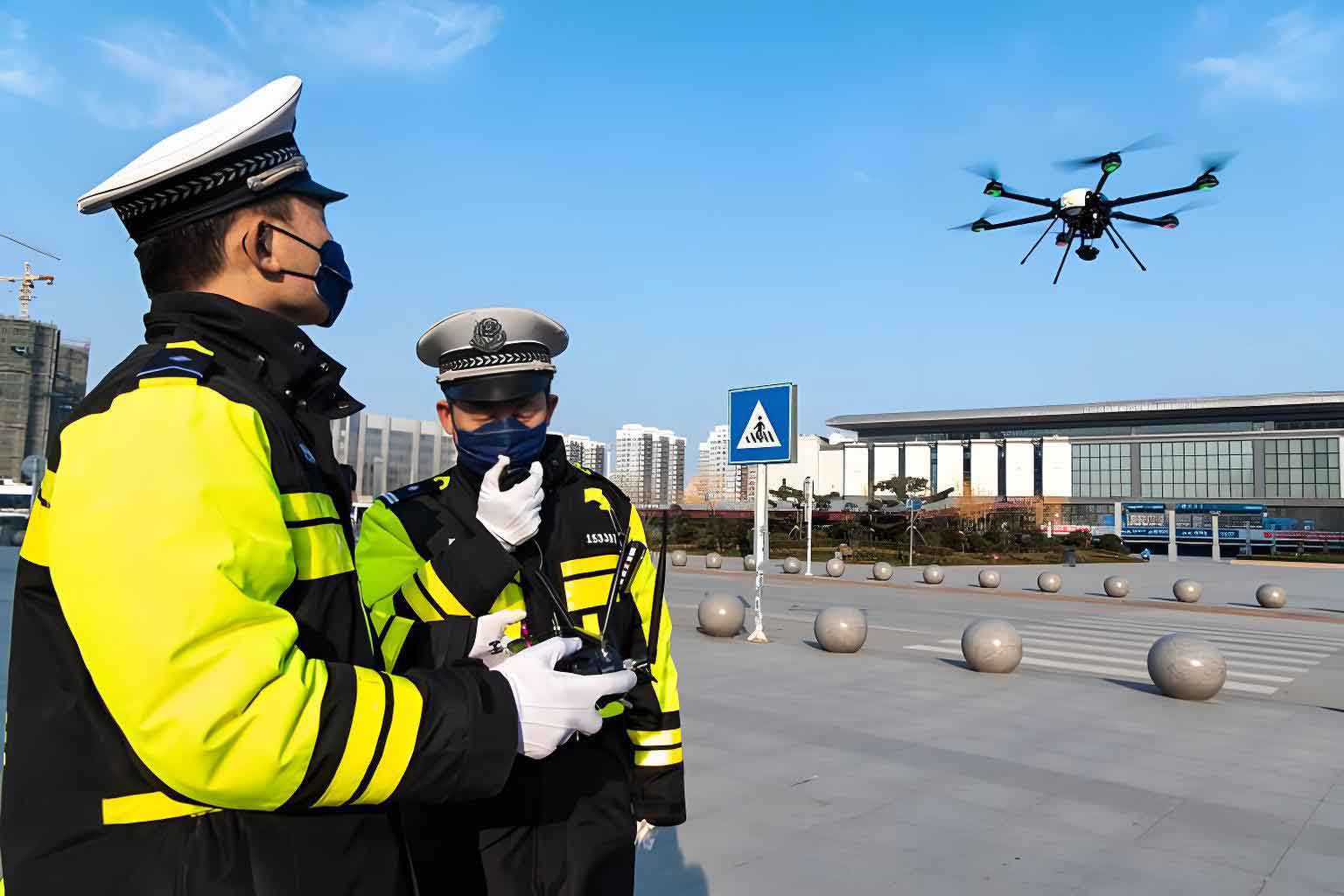
The core advantage of a police drone lies in its fundamental principle: unmanned, remote operation. This characteristic directly addresses the paramount concern of operator safety. By deploying a police drone for initial reconnaissance, diagnostics, and even direct intervention, the human element is kept at a safe standoff distance. The operational workflow transitions from “person-in-the-loop” to “person-on-the-loop,” where the expert supervises and commands from a secure location. This article will delve into the current application landscape, systematically analyze the inherent advantages and persisting challenges, and project the future developmental trajectory of police drone technology within the specialized domains of security inspection and EOD.
Operational Advantages and Current Application Paradigms
The utility of a police drone in EOD and security tasks is not monolithic; it is derived from a confluence of tactical flexibility, enhanced perception, and operational efficiency. These advantages manifest across various stages of an EOD incident, from initial response to final resolution.
1. Multidimensional Reconnaissance and Situational Awareness
Prior to the deployment of police drones, EOD teams relied on limited, ground-level perspectives, often obtained through periscopes or risky direct visual checks. Information was fragmented, making comprehensive threat assessment difficult. A police drone, equipped with a high-definition zoom camera and a stabilized gimbal, provides an immediate aerial overview. It can orbit a suspect vehicle or package, providing top-down, oblique, and lateral views in real-time. This multi-angle observation capability is crucial for identifying secondary devices, understanding trigger mechanisms, and assessing the overall scene geometry for safe approach paths. The sensory data collected can be described as creating a dynamic information sphere around the target:
$$ I_{scene}(t) = \int_{\Omega} [V(\theta, \phi, t) + T(\theta, \phi, t) + S(\theta, \phi, t)] d\Omega $$
Where \( I_{scene}(t) \) is the total scene intelligence at time \( t \), integrated over the solid angle \( \Omega \). \( V \), \( T \), and \( S \) represent visual, thermal, and spectroscopic sensor data as functions of spherical coordinates \( \theta \), \( \phi \), and time. The police drone acts as a mobile platform to sample this sphere efficiently.
2. Precision Tool Delivery and Manipulation
Beyond observation, modern police drones are evolving into manipulation platforms. By integrating robotic arms, disruptors (high-pressure water guns), or specialized tool packages, they can perform delicate or hazardous tasks. For instance, a police drone can be used to place a countercharge, cut a specific wire, or safely open a container from a standoff position. This capability is particularly valuable in environments inaccessible to ground robots, such as rooftops, bridges, or rugged terrain. The force and precision dynamics can be modeled for a gripper-equipped drone:
$$ \tau_{joint} = J^T(\theta) \cdot F_{grip} + D(\dot{\theta}) $$
Here, \( \tau_{joint} \) is the torque required at the manipulator’s joints, \( J^T(\theta) \) is the transpose of the Jacobian matrix defining the kinematic relationship, \( F_{grip} \) is the gripping force vector, and \( D(\dot{\theta}) \) represents dynamic damping terms. Stabilizing this system on an airborne police drone platform is a key engineering challenge.
3. Enhanced Accessibility and Scene Mapping
Traditional ground robots are hindered by stairs, debris, mud, or complex interiors. A police drone possesses vertical mobility, allowing it to access confined spaces like ventilation shafts, large pipeworks, or the upper sections of stadiums. Furthermore, using photogrammetry or LiDAR payloads, a police drone can rapidly generate high-resolution 3D maps or models of an incident site. These models are invaluable for mission planning, briefing teams, and creating permanent records for forensic analysis. The mapping accuracy, especially when using Real-Time Kinematic (RTK) GPS, achieves centimeter-level precision, which is critical for planning robot routes or charge placement.
4. Cost-Effectiveness and Logistic Flexibility
From a procurement and maintenance perspective, police drones offer significant advantages. Compared to large EOD robots costing hundreds of thousands of dollars, a capable multi-rotor police drone with essential payloads represents a fraction of the cost. This lower barrier to entry allows more agencies to deploy this technology. Maintenance is often simpler due to modular designs and standardized commercial components, reducing downtime and lifecycle costs.
| EOD Phase | Primary Task | Police Drone Application | Key Advantage | Typical Payload |
|---|---|---|---|---|
| Initial Response | Scene Assessment & Isolation | Rapid aerial survey, perimeter establishment | Speed, overarching view | HD Zoom Camera, Loudspeaker |
| Diagnostics | Device Identification & Analysis | Close visual inspection, thermal imaging, CBRN sensing | Standoff inspection, multi-spectral data | Thermal Camera, Raman Spectrometer |
| Intervention Planning | Path & Method Determination | 3D scene modeling, robot approach path simulation | Precision mapping, risk reduction | Photogrammetry/LiDAR, RTK GPS |
| Render Safe Procedure (RSP) | Direct Neutralization | Deploying disruptors, moving sub-components, placing charges | Unmanned intervention in complex terrain | Robotic Arm, Disruptor, Tool Package |
| Post-Blast | Forensic Investigation | Documenting scene, collecting aerial evidence | Comprehensive scene recording | High-Resolution Camera |
Persisting Challenges and Technical Limitations
Despite the transformative potential, the integration of police drones into mainstream EOD operations faces several significant hurdles. These challenges span technical performance, regulatory frameworks, and human resource development.
1. Endurance and Payload Capacity
The most pronounced limitation of multi-rotor police drones—the most common type for tactical operations—is flight endurance. Powered predominantly by lithium-polymer batteries, typical flight times range from 20 to 40 minutes, often less when carrying heavy payloads like robotic arms or disruptors. This creates a tight operational window, especially for complex tasks. The fundamental relationship is governed by the power consumption model:
$$ T_{flight} = \frac{C_{bat} \cdot V_{bat} \cdot \eta}{P_{hover}} $$
where \( T_{flight} \) is maximum hover time, \( C_{bat} \) is battery capacity, \( V_{bat} \) is voltage, \( \eta \) is system efficiency, and \( P_{hover} \) is the power required to hover. Increasing \( T_{flight} \) requires breakthroughs in energy density or alternative power systems like hydrogen fuel cells, which are still nascent for small UAVs.
2. Environmental Susceptibility and Signal Integrity
Police drone operations are vulnerable to adverse weather (high winds, rain) and electromagnetic interference. Commercial drones often operate on public bands like 2.4 GHz and 5.8 GHz, which can be congested or intentionally jammed. For critical EOD operations, loss of control or video feed is unacceptable. Developing secure, robust, and redundant communication links (e.g., mesh networks, encrypted frequencies) is essential. The signal-to-noise ratio (SNR) in a contested environment is a critical metric:
$$ SNR = \frac{P_{tx} G_{tx} G_{rx} \lambda^2}{(4\pi R)^2 k T B F N} $$
Where \( P_{tx} \) is transmit power, \( G \) are antenna gains, \( \lambda \) is wavelength, \( R \) is range, \( k \) is Boltzmann’s constant, \( T \) is temperature, \( B \) is bandwidth, \( F \) is noise figure, and \( N \) represents external noise and interference. Maximizing SNR for the police drone command link is a constant battle in urban and complex electromagnetic environments.
3. Regulatory Ambiguity and Operational Governance
The regulatory framework for police drone operations, especially in dense urban airspace or during emergencies, is often complex and inconsistently applied. Issues surrounding airspace authorization, coordination with aviation authorities, and public privacy concerns can delay rapid deployment. Furthermore, a lack of standardized national protocols for evidence collection via drone or for the use of force (e.g., deploying a disruptor) creates legal and procedural uncertainty for agencies.
4. Human Capital Deficit: Training and Expertise
The effective use of a police drone in EOD is not merely about piloting skills. It requires a synthesis of aviation knowledge, sensor operation, EOD tactics, and legal awareness. There is a severe shortage of personnel trained to this standard. Training programs are often basic and fail to bridge the gap between simple flight and advanced tactical deployment. The expertise required \( E \) can be expressed as a multi-dimensional vector:
$$ \vec{E}_{operator} = (P_{flight}, A_{sensor}, T_{EOD}, L_{legal}, M_{maintenance}) $$
Each component—Piloting, Sensor Analysis, EOD Tactics, Legal Knowledge, and Maintenance—requires dedicated training and experience. Currently, very few operators possess high competency in all dimensions.
| Challenge Category | Specific Issue | Impact on EOD Mission | Potential Mitigation Direction |
|---|---|---|---|
| Technical Performance | Short Battery Life | Limits mission duration and complexity; necessitates multiple batteries/swaps. | Hybrid power systems, automated wireless charging pads at scene. |
| Technical Performance | Limited Payload Weight | Restricts the size and power of tools (disruptors, manipulators) that can be carried. | Advanced composite materials, optimized actuator design, larger platform development. |
| Technical Performance | Sensor/Data Overload | Single operator may struggle to process multiple video feeds and sensor data streams in real-time. | AI-assisted target highlighting, data fusion algorithms, multi-operator crews. |
| Operational Environment | GPS Denied/Indoor Navigation | Drone cannot navigate inside buildings, tunnels, or under dense foliage where GPS is unavailable. | SLAM (Simultaneous Localization and Mapping) using visual/ LiDAR odometry, UWB beacons. |
| Operational Governance | Spectrum Congestion & Jamming | Risk of losing control link or video feed, leading to mission failure or crash. | Frequency hopping, encrypted/alternative data links (e.g., cellular 4G/5G), AI-based return-to-home failsafes. |
| Human Factors | High Cognitive Load on Operator | Flying the drone, operating sensors, and making EOD decisions simultaneously leads to errors. | Improved human-machine interfaces, automation of flight routines, decision-support AI. |
Future Trajectories: Integration, Autonomy, and System-of-Systems
The future of police drones in security and EOD lies not in incremental improvements, but in transformative integration with other technologies and the adoption of higher levels of autonomy. The goal is to evolve from a remotely piloted tool to an intelligent, collaborative node in a broader networked system.
1. The Rise of Artificial Intelligence and Machine Learning
AI will be the cornerstone of next-generation police drone capabilities. Machine learning algorithms can be trained to automatically detect and classify threat objects (wires, batteries, unusual packages) in real-time video feeds, reducing the cognitive burden on the operator. Predictive analytics could assess the stability of a scene or suggest optimal render-safe procedures based on historical data. An AI-driven perception system’s confidence level \( C_{det} \) in identifying a threat component can be modeled as:
$$ C_{det} = f_{AI}(S_{data}, M_{trained}, \Theta_{context}) $$
where \( S_{data} \) is the stream of sensor data, \( M_{trained} \) is the trained neural network model, and \( \Theta_{context} \) represents contextual parameters (scene type, prior intelligence).
2. Advanced Swarming and Collaborative Robotics
The concept of a single police drone will give way to coordinated swarms or heterogeneous teams. One drone could provide illumination and communication relay, another perform LiDAR mapping, while a third, larger drone carries out the physical intervention. These systems would operate collaboratively, sharing data and coordinating actions autonomously based on a central mission objective. The control paradigm shifts from direct teleoperation to task-level command:
$$ \text{Operator Command: “Map and clear the suspicious vehicle”} \rightarrow \text{Drone Swarm executes coordinated plan} $$
3. Digital Twin Simulation for Training and Mission Planning
Inspired by advances in smart industrial systems, the police drone ecosystem will leverage Digital Twin technology. A high-fidelity virtual replica of the drone platform, its sensors, and a library of threat scenarios will be created. EOD teams can rehearse complex missions in a risk-free virtual environment, testing different tactics and drone configurations. Furthermore, during a live incident, real-time data from the police drone could feed its Digital Twin, allowing for predictive simulation of different intervention outcomes before execution in the real world.
4. Enhanced Sensor Fusion and Non-Linear Diagnostics
Future police drone payloads will move beyond standard visual and thermal cameras. Integration of hyperspectral imaging, millimeter-wave radar, and advanced chemical sniffers (e.g., GC-MS miniaturized) will allow for non-contact diagnosis of device composition. Sensor fusion algorithms will combine these data streams to create a comprehensive “fingerprint” of the threat. The diagnostic output \( D \) could be a probabilistic vector:
$$ \vec{D} = [P_{explosive}, P_{chemical}, P_{nuclear}, P_{biological}, P_{hoax}] $$
where each probability is derived from fused sensor inputs, greatly enhancing situational understanding.
| Timeframe | Capability Advancement | Key Enabling Technologies | Expected Impact on EOD |
|---|---|---|---|
| Near-Term (1-3 years) | Improved endurance (60+ min), basic AI-assisted detection, standardized secure datalinks. | Higher density batteries, edge computing chips, 5G integration. | Longer on-station time, reduced operator workload, more reliable communications. |
| Mid-Term (3-7 years) | Advanced autonomy (GPS-denied navigation, obstacle avoidance), common interoperable drone-tactics language, lightweight advanced sensors. | Robust SLAM algorithms, standardized API frameworks, MEMS-based sensor tech. | Operation in complex indoor/urban canyons, seamless integration with other police assets, better threat identification. |
| Long-Term (7+ years) | Fully collaborative drone swarms, predictive digital twin integration, direct energy or advanced non-kinetic neutralization tools. | Swarm intelligence algorithms, real-time physics-based simulation, directed energy weapon miniaturization. | Unprecedented situational awareness and intervention options, ability to simulate outcomes, new render-safe methods. |
Strategic Imperatives for Realizing the Potential
To navigate the path from current applications to this envisioned future, a concerted strategic effort is required from multiple stakeholders: law enforcement agencies, technology developers, regulatory bodies, and academic institutions.
First, mission-centric research and development must be prioritized. Funding bodies should establish targeted programs to address the specific high-consequence challenges of EOD, such as secure jamming-resistant control, lightweight disruptors, and AI for complex decision support. Collaboration between agencies and manufacturers is vital to move from commercial-off-the-shelf (COTS) products to purpose-built police drone solutions.
Second, a comprehensive and standardized training ecosystem must be built. This extends beyond basic pilot certification to include coursework in sensor interpretation, EOD tactics for unmanned systems, legal aspects, and maintenance. This training should be integrated into national police academies and offer continuous professional development pathways.
Third, the development of clear operational doctrines and regulatory sandboxes is essential. Agencies need approved, practiced protocols for deploying police drones in various scenarios. Regulators must work with public safety entities to create expedited airspace access procedures for emergencies while ensuring safety and privacy safeguards.
In conclusion, the police drone has already proven its value as a force-multiplier in the dangerous realm of security inspection and explosive ordnance disposal, primarily by extending human senses and capabilities into harm’s way. Its current role, however, is merely the foundation. The convergence of artificial intelligence, robotics, advanced materials, and networked systems promises a future where police drones operate not as simple tools, but as intelligent, collaborative partners. They will provide unparalleled situational awareness, execute complex tasks with precision, and fundamentally redefine the risk calculus for EOD technicians. The journey ahead requires sustained investment, interdisciplinary collaboration, and forward-thinking policy, but the destination—a world where technology bears the greatest risk in confronting explosive threats—is unequivocally worth the endeavor.