
The paradigm of aerial warfare and reconnaissance has been fundamentally reshaped by the advent and proliferation of Unmanned Aerial Vehicles (UAVs), more commonly known as drones. As a first-person analyst observing this technological race, I note that the **military drone** has transitioned from a peripheral support asset to a central pillar of modern defense strategy. This shift is most prominently exemplified by the development paths of the United States and China, two nations whose approaches define the current frontiers of **military drone** capabilities. The United States, with its decades of operational experience and substantial investment, continues to push the boundaries of autonomy, endurance, and multi-role functionality. Meanwhile, China’s rapid and determined advancement in this field showcases a formidable catch-up effort, producing systems that increasingly mirror and, in some aspects, challenge Western designs. This analysis delves into the new developments, performs a detailed performance comparison, and utilizes technical models to frame the existing gaps and future trajectories in **military drone** technology.
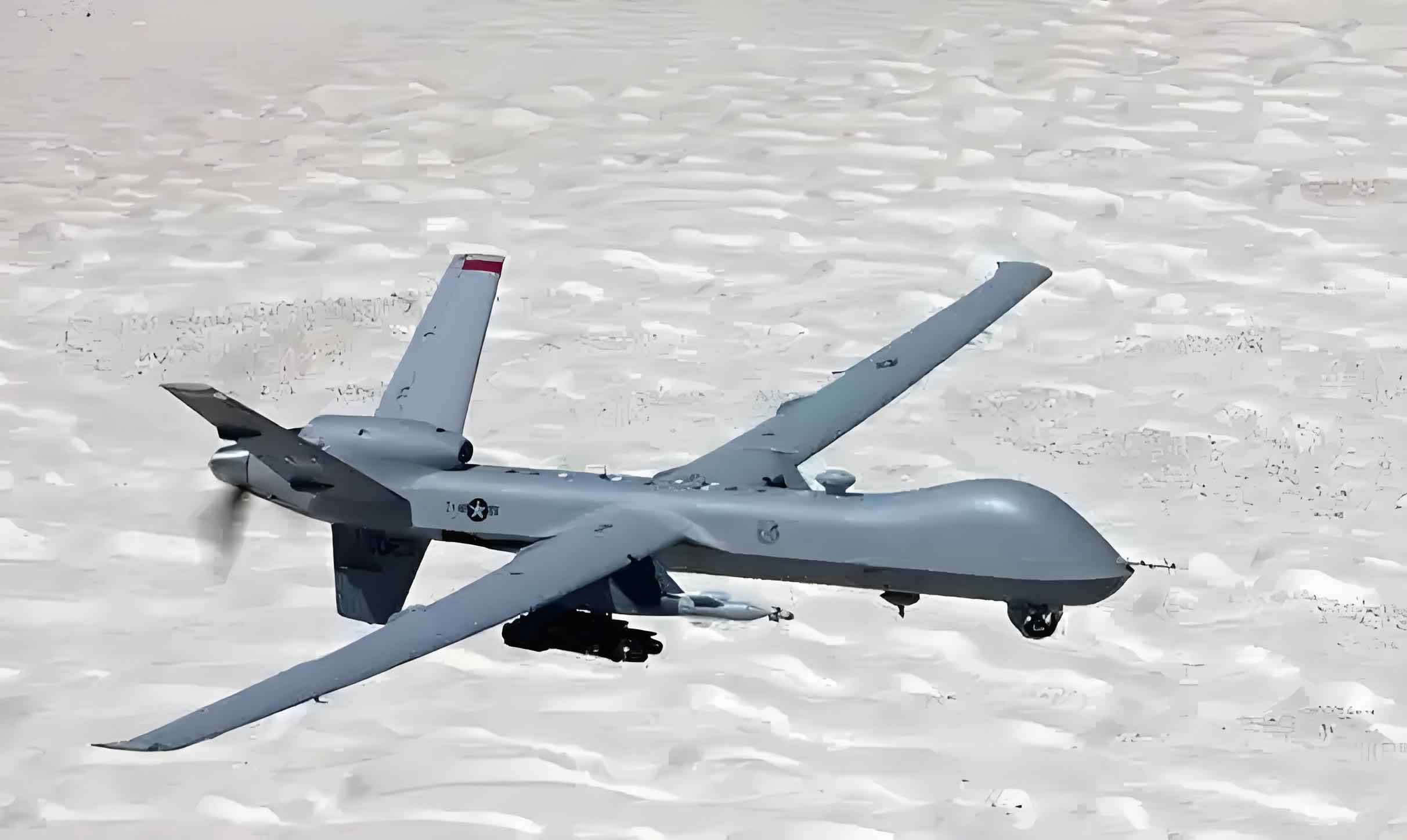
The role of the modern **military drone** is exceptionally diverse. From high-altitude, long-endurance (HALE) surveillance platforms that linger over continents to small, hand-launched systems providing squad-level situational awareness, the **military drone** has become indispensable. Its value proposition lies in its ability to perform dull, dirty, or dangerous missions without risking a pilot, offering persistent intelligence, surveillance, and reconnaissance (ISR) and, increasingly, delivering precise kinetic effects. The operational history of U.S. drones in conflicts from the Balkans to the present day has proven their utility, driving global interest and development. As I assess the technological trends, it is clear that the evolution is towards greater autonomy, stealth, networking, and specialization, making the **military drone** not just a tool, but a transformative element of the battlespace.
Pioneering Frontiers: New Developments in U.S. Military Drone Technology
The United States maintains a formidable lead, not just in fielding systems, but in conceptualizing the next generation of unmanned capabilities. American development is characterized by a push towards extreme performance parameters and the integration of drones into every layer of military operations.
- Micro-Drones and Swarm Technology: The drive towards miniaturization has led to the development of palm-sized or insect-inspired drones. Programs like the “Black Hornet” nano-UAV are already in soldier’s hands, providing immediate, platoon-level reconnaissance. The future lies in swarming algorithms, where hundreds of small, inexpensive drones operate as a coordinated intelligent system, overwhelming defenses or conducting distributed sensing. The collaborative behaviors of such swarms can be modeled as a function of local interaction rules, potentially described by equations inspired by flocking theory:
$$ \vec{v}_i(t+1) = \vec{v}_i(t) + \alpha \sum_{j \in N_i} (\vec{v}_j(t) – \vec{v}_i(t)) + \beta \sum_{j \in N_i} \nabla U(||\vec{r}_j – \vec{r}_i||) $$
Where $\vec{v}_i$ and $\vec{r}_i$ are the velocity and position of drone $i$, $N_i$ is its set of neighbors, and $U$ is a potential function governing attraction/repulsion. - Unmanned Combat Aerial Vehicles (UCAVs) and Loyal Wingmen: The move from reconnaissance-strike platforms like the MQ-9 Reaper to dedicated air combat vehicles is a significant leap. The X-47B demonstrated autonomous carrier operations and aerial refueling. The current focus is on “Loyal Wingman” concepts, where advanced drones like the XQ-58A Valkyrie operate alongside manned fighter jets (e.g., F-35 or F-22), controlled by the pilot to perform high-risk missions, extending the sensor and weapons reach of the formation.
- High-Altitude, Pseudo-Satellite Drones: Bridging the gap between aircraft and satellites, projects like Airbus’s Zephyr (used by the UK and U.S.) are solar-powered, ultra-lightweight drones capable of staying aloft for months in the stratosphere. These systems provide persistent communications relay, surveillance, and environmental monitoring over a vast area, acting as a flexible, lower-cost alternative to satellite constellations.
- Stealth and Penetrating Strike Drones: The RQ-170 Sentinel and the forthcoming RQ-180 emphasize low-observable designs for clandestine intelligence gathering in contested airspace. The development of stealthy, penetrating strike drones is a logical next step, intended to hold high-value, well-defended targets at risk deep within enemy territory from the first hours of a conflict.
The Ascent of a Competitor: Developments in Chinese Military Drone Technology
China’s approach to **military drone** development has been one of accelerated learning, indigenous innovation, and strategic focus. From a position of lagging behind, Chinese aerospace corporations have unveiled a surprising array of systems that cover the full spectrum of unmanned missions.
- Strategic ISR Drones: The Soaring Dragon (Xianglong) is China’s answer to the need for a high-altitude, long-endurance reconnaissance platform. While its published endurance is less than the Global Hawk, its unique joined-wing design suggests a focus on aerodynamic efficiency and structural optimization. The development of such a large, complex **military drone** signifies mastery over systems integration, satellite communications, and high-altitude propulsion.
- Medium-Altitude Long-Endurance (MALE) Attack Drones: The Wing Loong (Pterodactyl) series and the CH-4/CH-5 are the workhorses of China’s export and domestic attack drone inventory. Visually and functionally similar to the American Predator/Reaper lineage, they provide a proven combination of long loiter time and precision strike capability. Their success in international markets demonstrates a competitive alternative to Western systems.
- Stealth and Air Combat Concepts: The most revealing developments are in futuristic combat drones. The Dark Sword (Anjian), showcased as a model, presents a radical, tailless design with a canard, suggesting ambitions for high agility, supersonic speed, and very-low-observable characteristics in an air-to-air or deep-strike role. This indicates that Chinese planners are not merely replicating but are experimenting with next-generation **military drone** concepts intended for high-intensity peer conflicts.
- High-Speed Tactical Drones: Platforms like the WJ-600 represent another niche. Utilizing a jet engine, it offers high-subsonic speed and operates at high altitude, making it suitable for time-sensitive reconnaissance, electronic warfare, or even as a target for air defense training. Its development highlights an understanding of the need for a diversified unmanned fleet.
A Quantitative Face-Off: Performance Parameter Analysis
To move beyond qualitative descriptions, a side-by-side comparison of key performance parameters (KPPs) is essential. The following tables consolidate and expand upon available data for illustrative categories of **military drone**. It is critical to note that many parameters, especially for newer Chinese systems, are estimated or based on model specifications.
High-Altitude Long-Endurance (HALE) ISR Drones
| Parameter | U.S. – RQ-4 Global Hawk (Block 40) | China – Soaring Dragon (Xianglong) | Analytical Implication |
|---|---|---|---|
| Length | 14.5 m | ~14.3 m | Comparable overall size. |
| Wingspan | 39.9 m | ~24.9 m | Global Hawk’s larger wingspan is a key factor for high lift and endurance. |
| Max Takeoff Weight (MTOW) | 14,628 kg | ~7,500 kg (est.) | Global Hawk carries significantly more fuel and payload. |
| Payload Capacity | > 1,360 kg | ~600-800 kg (est.) | Direct limit on sensor suite complexity and versatility. |
| Service Ceiling | 18,300 m | ~20,000 m (claimed) | Both operate in the stratosphere, above most weather and threats. |
| Max Endurance | > 34 hours | ~10 hours (claimed) | The most critical gap. Endurance $T$ relates to fuel mass $m_f$, specific fuel consumption $c$, and lift-to-drag ratio $L/D$: $$ T \propto \frac{1}{c} \cdot \frac{L}{D} \cdot \ln \left( \frac{m_{initial}}{m_{final}} \right) $$ The U.S. leads in efficient turbofan engines (low $c$) and aerodynamic design (high $L/D$). |
| Typical Mission Radius | > 8,000 NM | ~4,000 km (est.) | Global Hawk offers true intercontinental reach. |
| Key Sensors | SAR/MTI Radar, EO/IR Multi-spectral | SAR, EO/IR (inferred) | Capability gap lies in sensor resolution, integration, and data processing chain. |
Medium-Altitude Long-Endurance (MALE) Attack Drones
| Parameter | U.S. – MQ-9B SeaGuardian | China – Wing Loong 10 (Latest Est.) | Analytical Implication |
|---|---|---|---|
| Length | 11.7 m | ~10.5 m (est.) | Similar class dimensions. |
| Wingspan | 24.0 m | ~20.5 m (est.) | MQ-9B’s design optimizes for maritime endurance. |
| MTOW | 5,670 kg | ~3,200 kg (est.) | Significant disparity in capacity. |
| Payload Capacity | 2,155 kg (internal + external) | ~480 kg (est.) | MQ-9B can carry a vastly more diverse and heavier payload (e.g., sonobuoys, heavy missiles). |
| Service Ceiling | 12,500 m | ~9,000 m (est.) | Altitude advantage for surveillance and survivability. |
| Max Endurance | > 35 hours (ISR config.) | ~20 hours (claimed) | Again, a major operational difference in persistence. |
| Weapons Hardpoints | 9 | 6 (est. for WL-10) | Greater flexibility in weapon mix and loadout. |
| Typical Armament | GBU-12, AGM-114, GBU-38 JDAM, Small Diameter Bombs, AAMs (Sidewinder) | BRM1 90mm missiles, YJ-9E ATGMs, FT series bombs | MQ-9B is integrated into a broader, more precise Western munitions ecosystem. |
The performance tables reveal clear patterns. American HALE and MALE drones consistently demonstrate superior endurance, payload capacity, and operational ceiling. These advantages stem from decades of experience in designing highly efficient airframes, integrating advanced turboprop or turbofan engines, and mastering the complex logistics of worldwide satellite command and control (C2) links. Chinese systems, while impressive in their rapid deployment and visual sophistication, still show gaps in these core performance parameters, particularly in endurance and heavy payload capability. This suggests current limitations in propulsion efficiency, structural weight optimization, and perhaps power generation for onboard systems.
Modeling the Key Technological Gaps
The performance disparities can be further illuminated by simple technical models. Let’s formalize two critical areas: sensor performance and survivability.
1. Sensor Range and Resolution: The effective reconnaissance capability of a **military drone** is governed by its sensor suite. For a synthetic aperture radar (SAR), the theoretical ground resolution $\delta_r$ is a function of the radar’s bandwidth $B$ and incidence angle $\theta$:
$$ \delta_r \approx \frac{c}{2B \sin \theta} $$
where $c$ is the speed of light. Achieving finer resolution requires wider bandwidth, which is a challenge in hardware design and signal processing. Similarly, for electro-optical (EO) systems, the diffraction-limited angular resolution is $\theta_{min} \approx 1.22 \lambda / D$, where $\lambda$ is the wavelength and $D$ is the aperture diameter. American drones likely benefit from larger, more stable apertures and more advanced signal processing algorithms, translating to better image quality at longer ranges. The integration of multiple sensor data (SAR, EO, IR, SIGINT) into a single coherent picture is another area where operational experience yields a significant advantage.
2. Survivability and Radar Cross-Section (RCS): For non-stealthy drones, survivability is often a function of altitude. For stealthy designs like the RQ-170 or the conceptual Dark Sword, the focus is on minimizing RCS. The radar cross-section $\sigma$ for a simple shape can be approximated. For a flat plate at normal incidence, $\sigma_{plate} = \frac{4\pi A^2}{\lambda^2}$, where $A$ is the area. Stealth design aims to reduce this by shaping, using radar-absorbent materials (RAM), and managing edges and cavities. The RCS reduction is often expressed in dBsm (decibels relative to a square meter). A reduction of 10 dB means the object appears 10 times smaller in radar cross-sectional area; 20 dB means 100 times smaller. The cumulative effect is described by the radar range equation, where detection range $R_{max}$ is proportional to the fourth root of RCS:
$$ R_{max} \propto \left( \frac{P_t G^2 \lambda^2 \sigma}{(4\pi)^3 S_{min}} \right)^{1/4} $$
where $P_t$ is transmit power, $G$ is antenna gain, $\lambda$ is wavelength, $\sigma$ is target RCS, and $S_{min}$ is the receiver’s minimum detectable signal. Therefore, halving the RCS (a -3 dB change) only reduces the detection range by about 16%. Truly effective stealth requires reductions of 20-30 dB or more, a technology deeply guarded by the U.S. and one which China is actively pursuing, as evidenced by its conceptual models.
Future Trajectories and Strategic Implications
Based on observed trends, the future development of **military drone** technology will revolve around several key themes:
- Autonomy and AI: Moving from remotely piloted to fully autonomous systems. Future drones will use artificial intelligence (AI) for complex tasks like dynamic route planning in contested environments, automatic target recognition (ATR), and collaborative swarm tactics. The ethical and command-and-control challenges of lethal autonomous weapons systems (LAWS) will be a major point of international debate.
- Network-Centric and All-Domain Operations: Drones will act as nodes in a larger “combat cloud,” sharing data seamlessly with manned aircraft, naval vessels, ground troops, and space-based assets. A **military drone** will not just send video to a single ground control station but will feed a fused, real-time common operational picture (COP) across the entire force.
- Counter-Drone Technologies: The proliferation of drones drives the development of counter-UAS (C-UAS) systems. Electronic warfare (jamming, spoofing), directed-energy weapons (lasers, microwaves), and kinetic interceptors will become standard defenses. The effectiveness of a future **military drone** will be measured by its resilience to these countermeasures.
- Cost and Mass: The U.S. is developing high-end, exquisite systems but also exploring attritable (low-cost, semi-expendable) drones like the Valkyrie for high-risk missions. China may leverage its manufacturing scale to produce large quantities of capable, lower-cost systems, potentially pursuing a strategy of mass to complicate an adversary’s targeting and defense calculus.
In conclusion, the analysis of U.S. and Chinese **military drone** programs reveals a dynamic and competitive landscape. The United States possesses a deep-rooted advantage born from operational experience, technological prowess in propulsion and sensors, and a clear vision for integrating autonomy and networking. China has demonstrated an exceptional capacity for rapid engineering development, system replication, and, increasingly, for innovative conceptual designs aimed at future high-end conflict. The performance gaps, particularly in endurance, heavy payload, and the maturity of the integrated “sensor-to-shooter” ecosystem, remain tangible. However, these gaps are narrowing. The strategic implication is clear: the **military drone** will continue to be a critical domain of technological competition, shaping the balance of power and the character of warfare in the 21st century. The nation that most effectively masters the blend of autonomous AI, resilient networking, and scalable production for its **military drone** fleet may well gain a decisive advantage in the conflicts of tomorrow.