
The proliferation of Unmanned Aerial Vehicles (UAVs), ranging from sophisticated military platforms to commercially available, modified drones, represents one of the most disruptive and asymmetric challenges to modern military operations and homeland security. The U.S. Department of Defense (DoD) and its constituent services have recognized this threat vector as both urgent and pervasive, prompting a significant strategic, organizational, and technological response. This analysis examines the current state of U.S. military anti-UAV capabilities, delving into the doctrinal foundations, technological pillars, and operational concepts that define its approach to countering unmanned aerial threats. The focus is on the integrated system-of-systems methodology that combines detection, identification, tracking, and defeat mechanisms across all domains.
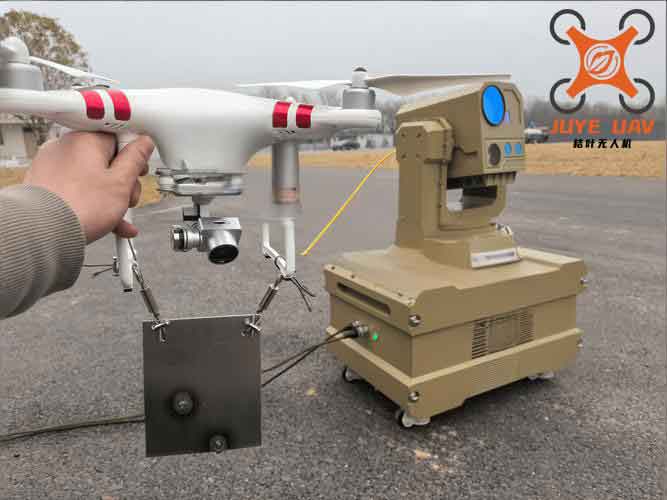
The threat landscape has evolved rapidly. Conflicts in various regions have starkly demonstrated the tactical potency of UAVs and UAV swarms, capable of overwhelming traditional air defenses, conducting precision strikes, and enabling persistent intelligence, surveillance, and reconnaissance (ISR). These systems, often characterized as “low, slow, and small” (LSS), exploit the gaps in conventional high-altitude air defense networks. Their low radar cross-section (RCS), minimal infrared signature, and ability to fly at very low altitudes make detection and engagement exceptionally difficult. Furthermore, the commercial availability of drone technology lowers the entry barrier for state and non-state actors alike, democratizing access to capabilities once reserved for major militaries. This reality has forced a fundamental rethinking of air defense, moving beyond countering traditional fixed-wing aircraft and missiles to creating a layered defense against a ubiquitous and evolving anti-UAV challenge.
Strategic and Doctrinal Foundations of U.S. Anti-UAV Efforts
The U.S. response to the UAV threat is not merely a collection of technological solutions but is underpinned by a growing body of strategy and doctrine. Recognizing the need for a unified approach, the DoD has established frameworks to guide development, acquisition, and employment of anti-UAV systems.
Key among these is the Department of Defense Counter-Small Unmanned Aircraft Systems (C-sUAS) Strategy (2021). This document outlines a holistic approach to defending against small UAVs, emphasizing the need for layered defenses, integrated command and control (C2), and partnerships with industry and allies. It establishes the Joint C-sUAS Office (JCO) as the central authority for orchestrating the department’s efforts, validating systems, and defining common standards. This move away from service-specific solutions towards joint interoperability is a critical step in building a coherent anti-UAV architecture.
Complementing this, service-specific publications provide tactical depth. The U.S. Army’s ATP 3-01.81: Counter-Unmanned Aircraft System Techniques serves as a manual for training and employing anti-UAV Tactics, Techniques, and Procedures (TTPs) at the unit level. Similarly, the U.S. Navy’s Unmanned Campaign Framework and the broader Electromagnetic Spectrum Superiority Strategy highlight the integration of anti-UAV capabilities within naval operations and the electromagnetic warfare (EW) domain, respectively. These documents collectively signal a shift from viewing UAVs as a niche threat to treating them as a primary “fifth threat platform” alongside fixed-wing aircraft, helicopters, cruise missiles, and ballistic missiles.
The budgetary commitment reflects this strategic priority. Year after year, the DoD has requested and received significant funding for anti-UAV research, development, test, and evaluation (RDT&E). Investments flow into next-generation sensors, directed energy weapons, electronic warfare systems, and command and control networks specifically tailored for the counter-UAV mission. This financial sustainment is essential for transitioning promising technologies from laboratories to operational forces.
The Technological Pillars of Anti-UAV Defense: Detect, Identify, Track, and Defeat
An effective anti-UAV system is built upon a kill chain that begins with detection and ends with neutralization. U.S. efforts are advancing across all these links, often seeking to collapse the timeline from sensing to effector through automation and data fusion.
1. Detection, Tracking, and Identification (DTI)
The first and perhaps most challenging step is reliably detecting a small UAV. No single sensor modality is sufficient against all threats in all environments. Therefore, the U.S. approach emphasizes a multi-domain, networked sensor fusion strategy.
- Radar: Remains the primary long-range detection asset. Modern ground-based and mobile radar systems are being optimized for LSS targets. These include systems like the Ku-band Radio Frequency Sensor (KuRFS), which provides precise tracking and fire control quality data. Advancements in active electronically scanned array (AESA) technology and signal processing algorithms are crucial for distinguishing small drone signatures from clutter (birds, weather). The probability of detection $P_d$ for a radar can be modeled as a function of the target’s radar cross-section $\sigma$, range $R$, and the radar’s performance:
$$P_d = f\left(\frac{\sigma}{R^4}, \text{SNR}\right)$$
where SNR is the signal-to-noise ratio. For small UAVs with very low $\sigma$, maximizing SNR through advanced processing is key. - Electro-Optical/Infrared (EO/IR): Provide positive visual identification and tracking, especially in the terminal engagement phase. They are passive and offer high-resolution imagery but are limited by field of view, weather, and range. Their data is often fused with radar tracks to create a composite track.
- Radio Frequency (RF) Sensors: These systems “listen” for the communication links between the UAV and its ground control station (GCS) or for the UAV’s navigation signals (e.g., GPS). They are excellent for detecting and classifying UAVs by their electronic fingerprint, even if they are visually obscured. RF-based detection is a core component of many portable anti-UAV systems.
- Acoustic Sensors: Can detect the distinct acoustic signature of small UAV propellers. While range-limited, they are a useful passive, low-cost component in a layered urban or fixed-site defense network.
The trend is towards integrating these disparate sensors into a Common Operational Picture (COP). Networked systems, such as the Forward Area Air Defense (FAAD) C2 system, fuse data from radars, EO/IR, and RF sensors to provide a single, coherent track, reducing operator workload and speeding up engagement decisions.
| Technology | Principle | Advantages | Challenges | Example U.S. Systems/Programs |
|---|---|---|---|---|
| Radar | Active radio wave reflection | Long range, all-weather, provides range/velocity | Difficulty with very low RCS; clutter; potentially detectable | KuRFS, AN/MPQ-64 Sentinel, Multi-Mission Hemispheric Radar (MHR) |
| EO/IR | Passive light/heat detection | Positive identification, high resolution, passive | Weather-dependent (esp. EO), limited field of view & range | MTS-B pod, Night Vision devices, integrated sights on C-UAS weapons |
| RF Sensing | Passive signal interception | Detects control/nav signals, provides targeting for EW, passive | Requires UAV to emit; crowded spectrum; encryption | Dronebuster, HORNET, Sierra Nevada Corp. ES systems |
| Acoustic | Passive sound wave detection | Passive, low-cost, low-power, works in visual clutter | Very short range, highly environment-dependent | Research prototypes, often used in fixed-site protection arrays |
2. Defeat Mechanisms: Kinetic, Directed Energy, and Electronic Warfare
Once a UAV is detected and identified as hostile, it must be defeated. U.S. anti-UAV defeat mechanisms span the spectrum from kinetic “hard-kill” to non-kinetic “soft-kill” methods.
A. Electronic Warfare (EW) & Cyber “Soft-Kill”
This category aims to disrupt the UAV’s operation without physically destroying it, often considered the first line of defense due to its scalability and lower collateral risk.
- Global Navigation Satellite System (GNSS) Jamming: Overpowers the UAV’s GPS/GNSS receiver with noise, causing it to lose its positional fix. A simple jamming model considers the power at the UAV receiver:
$$P_{j,uav} = \frac{P_j G_j G_{uav} \lambda^2}{(4\pi R_j)^2 L}$$
where $P_j$ is jammer power, $G_j$ and $G_{uav}$ are antenna gains, $\lambda$ is wavelength, $R_j$ is range, and $L$ is loss. Many drones will enter a failsafe mode (e.g., hover, land, or return-to-home) when jammed. - Command Link Jamming/Spoofing: Jams the radio frequency link between the UAV and its operator, breaking control. More advanced systems can spoof the link, injecting malicious commands to seize control of the UAV—a form of cyber-electronic attack. This is particularly relevant for commercial drones using known protocols.
- Protocol Exploitation: A cyber-oriented approach that involves exploiting vulnerabilities in the drone’s communication or control software to take over or crash it. DARPA has historically invested in programs like “High-Frequency” to develop such capabilities.
Portable “drone guns” like the “DroneDefender” or “AUDS” (Anti-UAV Defence System) often employ this EW approach, providing a mobile, tactical-level anti-UAV capability for dismounted troops or point defense.
B. Directed Energy (DE) “Hard-Kill”
Directed energy weapons, primarily High-Power Microwaves (HPM) and High-Energy Lasers (HEL), offer a revolutionary capability for anti-UAV warfare with deep magazines, low cost-per-shot, and speed-of-light engagement.
- High-Energy Lasers (HEL): Focus coherent light energy on a spot on the UAV, heating it to structural failure or damaging critical components. The time-to-effect for a laser is governed by factors including laser power $P_l$, beam quality, atmospheric absorption $\alpha$, and target absorption:
$$\Delta T \propto \frac{\rho c_p \Delta T_{crit} \cdot A_{spot}}{P_l \cdot \eta_{atm} \cdot \alpha_{target}}$$
where $\rho c_p$ is the target’s thermal properties, $\Delta T_{crit}$ is the critical temperature rise, $A_{spot}$ is the laser spot area, and $\eta_{atm}$ is atmospheric transmission. U.S. systems have progressed from tens of kilowatts (e.g., HEL-MD, LaWS) to plans for hundreds of kilowatts. The Marine Corps’ Ground-Based Air Defense (GBAD) program and the Army’s Directed Energy Maneuver-Short Range Air Defense (DE M-SHORAD) are fielding truck-mounted 50+ kW laser systems. - High-Power Microwaves (HPM): Emit a broad or focused burst of microwave energy to fry the electronic circuits inside a UAV or a swarm of UAVs. HPM systems like the “THOR” (Tactical High-power Operational Responder) are designed as area-effect weapons ideal for countering drone swarms. The electric field $E$ induced at the target, which can cause damage, is related to the system’s parameters:
$$E \propto \frac{\sqrt{P_{peak} G}}{R}$$
where $P_{peak}$ is peak power, $G$ is antenna gain, and $R$ is range.
C. Kinetic “Hard-Kill”
Traditional kinetic solutions remain vital, especially for larger, faster UAVs or in environments where EW/DE may be less effective.
- Adapted Air Defense Guns & Missiles: Systems like the C-RAM (Counter-Rocket, Artillery, and Mortar), derived from the Phalanx CIWS, use rapid-firing guns and advanced radar to engage small, low-flying threats. Missile systems like Stinger (MANPADS) or larger systems like IM-SHORAD (which combines missiles, guns, and a laser) provide varying ranges of kinetic kill.
- Net Guns and Interceptor Drones: For very close-range, low-collateral damage scenarios, systems that fire nets to entangle drones or use other drones as physical interceptors are in development and use by some security forces, informing military applications.
| System Name | Service | Defeat Mechanism | Key Characteristics | Status/Notes |
|---|---|---|---|---|
| DE M-SHORAD | Army | High-Energy Laser (50 kW+) | Mounted on Stryker vehicle; part of integrated air defense | Fielding to units |
| GBAD Inc 2 | Marine Corps | High-Energy Laser | Expeditionary, mobile laser system | Advanced development/ testing |
| THOR | Air Force | High-Power Microwave | Counter-swarm capability; area effect | Prototype testing |
| Leonidas (Epirus) | Army (evaluated) | High-Power Microwave | Solid-state, scalable power; focused beam | Under development/evaluation |
| DroneDefender | Multi-Service | Electronic Attack (GNSS/Link Jam) | Man-portable, rifle-like form factor | In use by tactical units |
| FS-LIDS (Fixed Site) | Army (JCO-approved) | Integrated (EO/IR, Radar, RF + Kinetic/EW) | For base defense; combines sensors & effectors | Deployed operationally |
| Coyote Block 2/3 | Multi-Service | Kinetic (Interceptor UAV) | Launchable UAV that kinetically engages threat UAVs | In inventory |
Future Trajectories and Challenges in U.S. Anti-UAV Warfare
The U.S. military’s anti-UAV efforts are not static. They are evolving along several critical vectors to address emerging challenges, particularly the threat of autonomous drone swarms and increasingly sophisticated adversary systems.
1. The Rise of AI and Cognitive EW
Future anti-UAV systems will be deeply infused with artificial intelligence and machine learning (AI/ML). The concept of Cognitive Electronic Warfare (Cognitive EW) is central to this. A cognitive anti-UAV system would not simply follow pre-programmed jamming patterns. Instead, it would use AI to:
- Rapidly characterize and classify novel UAV RF emissions in real-time.
- Learn and predict swarm behavior patterns.
- Adaptively generate and test the most effective countermeasure waveform on-the-fly, creating an optimized response in a fraction of a second.
- Operate effectively in congested and contested electromagnetic spectra.
This closed-loop process can be conceptualized as:
$$ \text{Sense} \rightarrow \text{Learn} \rightarrow \text{Adapt} \rightarrow \text{Act} \rightarrow (\text{Assess}) \rightarrow \text{Sense}… $$
Programs like DARPA’s “Adaptive Radar Countermeasures” (ARC) and “Behavioral Learning for Adaptive Electronic Warfare” (BLADE) have paved the way for these intelligent anti-UAV capabilities.
2. Counter-Swarm Tactics and Technologies
Defeating a single drone is challenging; defeating a cooperative swarm of dozens or hundreds is a problem of a different magnitude. U.S. strategy focuses on several lines of effort:
- Swarm vs. Swarm: Deploying defensive UAV swarms to physically intercept, confuse, or disrupt attacking swarms. This pits autonomy against autonomy.
- High-Power Microwave (HPM) as a Prime Solution: HPM’s ability to deliver wide-area effects makes it theoretically ideal for engaging dense clusters of drones with a single shot, as demonstrated by the THOR system.
- Network Attack: Targeting the communication and coordination network that enables swarm behavior. If the swarm’s “brain” or its communication links can be disrupted, it degrades from a coordinated entity into individual, less threatening units.
- Kinetic “Bullet Hell” and Lasers: Extremely high-rate-of-fire kinetic systems and high-power lasers with rapid retargeting capabilities are being developed to engage multiple targets in quick succession.
3. Integration and Interoperability: The “System-of-Systems” Approach
The ultimate goal is not a single silver-bullet weapon but a fully integrated anti-UAV architecture. This involves:
- Joint All-Domain Command and Control (JADC2): Ensuring that sensor data from a Navy ship, an Air Force radar plane, and an Army ground unit can be fused instantaneously to track a threat and assign the best-placed effector (whether kinetic, laser, or EW) to engage it, regardless of service affiliation.
- Open Architecture Standards: The JCO’s push for system approval and common standards (like the C-sUAS Mobile Integrated Capability – CMIC) is vital to avoid vendor lock-in and ensure new technologies can be rapidly plugged into the existing defense network.
- Multi-Mission Design: Platforms like the DE M-SHORAD Stryker are designed to counter UAVs, rotary-wing, and fixed-wing threats, providing commanders with flexible, multi-role assets.
4. Persistent Challenges
Despite progress, significant hurdles remain:
- Urban & Complex Environments: Differentiating hostile drones from benign ones in crowded airspace (e.g., near airports, in cities) is a major legal and technical challenge. The detection problem is exacerbated by clutter.
- Autonomy and GNSS-Denied Operation: As drones incorporate more onboard AI and alternative navigation (visual, inertial), they become less reliant on GNSS and command links, reducing the effectiveness of jamming-based anti-UAV systems.
- Cost and Scale: Defending vast areas against cheap, proliferated drones is a resource-intensive endeavor. Directed energy and smart missiles offer better cost-exchange ratios than using a $500,000 missile against a $2,000 drone, but scaling these new technologies across the entire force is expensive and time-consuming.
- Legal and Policy Frameworks: Rules of Engagement (ROE) for engaging drones, especially in domestic or permissive environments, and spectrum management for powerful jammers are ongoing policy discussions.
| Focus Area | Technological/Operational Driver | Expected Capability Advancement |
|---|---|---|
| AI/ML & Cognitive EW | Need to counter adaptive, unknown UAV signals and swarm behaviors faster than human reaction times allow. | Autonomous signal classification, adaptive countermeasure generation, predictive threat analysis. |
| Directed Energy Maturation | Requirement for low cost-per-shot, deep magazines, and speed-of-light engagement against swarms. | Fielding of 100-300 kW class lasers; compact, mobile HPM systems; improved beam control and power efficiency. |
| All-Domain Sensor Fusion | JADC2 imperative to create a unified, resilient track from sea, land, air, space, and cyber sensors. | Seamless data sharing across services; AI-powered fusion algorithms; resilient communication links. |
| Counter-Autonomy | Threat evolution towards GNSS-denied, visually navigated, and collaborative autonomous drones. | Development of spoofing for visual navigation; cyber-physical attacks on drone AI; swarm disruption tactics. |
| Miniaturization & Proliferation | Need to provide effective anti-UAV defense at the tactical squad level and for lightweight platforms. | Man-portable HPM/HEL concepts; smaller, cheaper interceptor drones; widespread deployment of networked sensor nodes. |
Conclusion and Strategic Implications
The U.S. military’s approach to anti-UAV warfare has matured from a reactive pursuit of point solutions to a proactive, strategic enterprise encompassing doctrine, organization, and technology. The establishment of the Joint C-sUAS Office and the publication of overarching strategies demonstrate a commitment to treating the unmanned aerial threat with the seriousness it warrants. Technologically, the path is clear: a layered defense integrating advanced multi-spectral sensors, non-kinetic electronic and cyber warfare tools, and next-generation kinetic and directed energy effectors, all woven together by a resilient network and empowered by artificial intelligence.
The core challenge of anti-UAV defense is a microcosm of modern warfare’s dilemmas: achieving scalable defense against cheap, proliferated, and intelligent systems. While high-power lasers and microwaves promise a fundamental shift in the cost-exchange ratio, the race between drone innovation and counter-drone technology is perpetual. The future of U.S. anti-UAV capability will hinge on its ability to foster rapid innovation, enforce interoperability, and seamlessly integrate these systems into a joint all-domain fight. Success will be measured not by the ability to defeat a single drone in a test, but by the resilience of the entire force architecture against a determined, evolving, and ubiquitous aerial threat. The lessons learned and systems developed for the anti-UAV fight will inevitably influence broader air defense, electronic warfare, and autonomous systems strategy for decades to come.