
The continuous evolution of battlefield tactics and reconnaissance demands has placed unprecedented requirements on unmanned aerial systems. One of the most critical challenges in modern military drone design is achieving optimal aerodynamic performance across a wide spectrum of operational envelopes. A single, fixed-wing configuration often represents a compromise, excelling in one flight regime—such as endurance at low speed or dash capability at high speed—while suffering penalties in others. This inherent limitation restricts mission flexibility and overall platform efficiency. To transcend these constraints, innovative airframe morphing technologies, particularly variable-geometry wings, present a compelling pathway forward. This analysis explores the theoretical research and computational design of a variable-sweep, specifically forward-swept wing, configuration for a next-generation military drone, focusing on aerodynamic optimization through advanced modeling and simulation.
The primary objective of this design study is to theoretically investigate a morphing-wing military drone capable of adapting its aerodynamic shape to significantly enhance lift characteristics and overall flight performance. The core hypothesis is that a wing capable of varying its sweep angle, and employing a forward-swept planform in certain regimes, can offer superior lift-to-drag ratios and improved handling qualities compared to conventional fixed-wing counterparts. The forward-swept wing configuration offers distinct aerodynamic advantages: it delays tip stall, maintains attached flow over the ailerons at high angles of attack for better control, and can potentially offer a higher lift coefficient for a given wing area. By making this sweep angle variable, the unmanned platform can assume the optimal geometry for each phase of its mission.
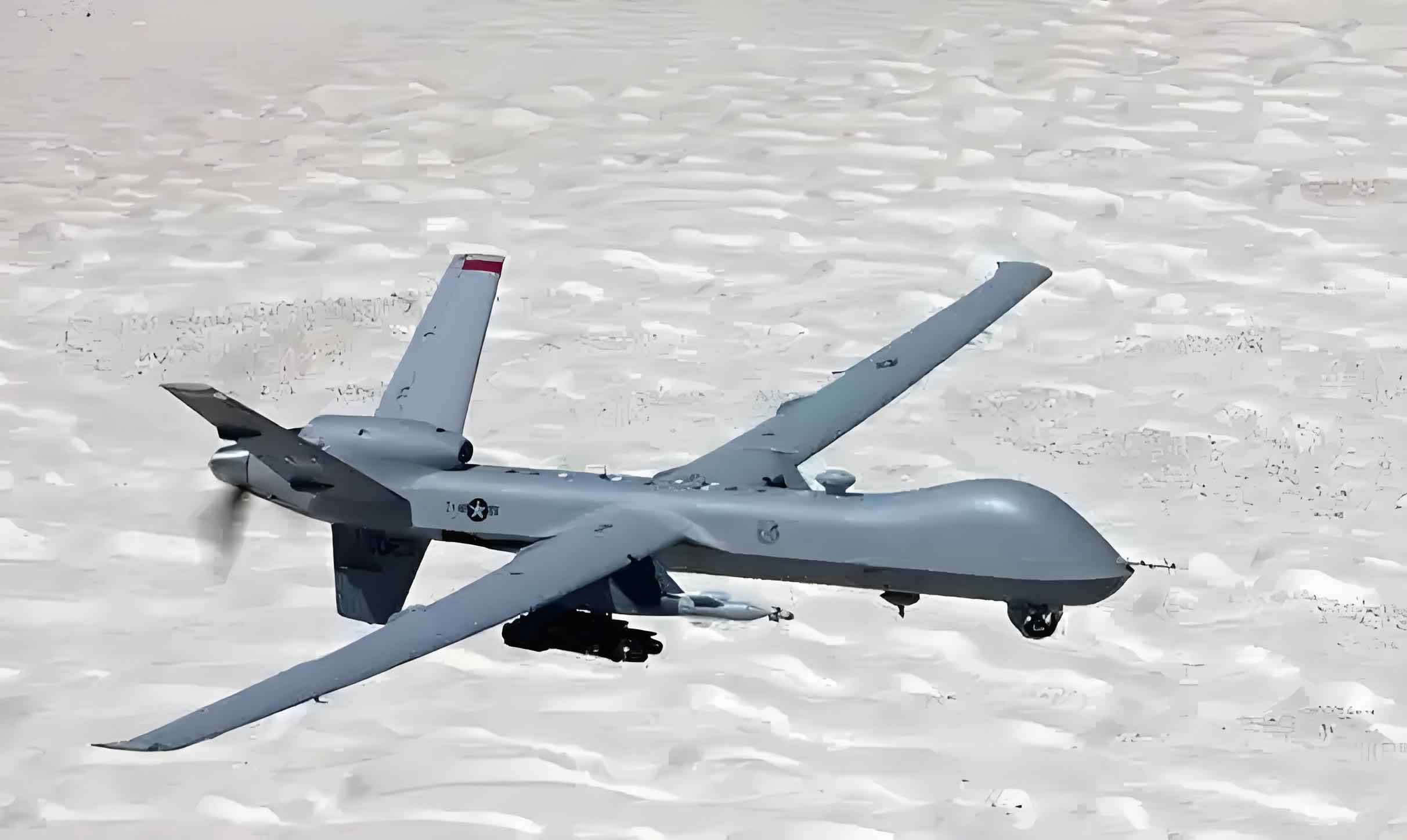
The conceptual military drone in this study is designed with three primary operational modes, each with a corresponding wing configuration to minimize drag and maximize performance:
- Low-Speed Takeoff and Landing: For this regime, requiring high lift at minimal velocity, the wings would be positioned at a moderate forward sweep. This increases the effective wing area and maximizes lift coefficient, allowing for shorter runway requirements or more controlled descent profiles.
- Transonic Cruise: During efficient long-range travel at speeds approaching Mach 1, the wings would sweep to a more neutral or slightly aft position. This reduces wave drag associated with the transonic region, optimizing the platform for endurance and fuel efficiency.
- Supersonic Penetration: For high-speed dash segments, the wings would sweep fully aft into a classic swept or delta-like planform. This minimizes cross-sectional area and aligns the leading edge behind the Mach cone, drastically reducing supersonic wave drag.
The core metric for evaluating aerodynamic efficiency is the lift-to-drag ratio (L/D). This ratio is paramount for a military drone, directly influencing its range, endurance, payload capacity, and survivability. The lift-to-drag ratio is defined as the ratio of the lift force (L) to the drag force (D). Since both forces use the same reference area (typically the wing planform area, S), the ratio simplifies to the ratio of their non-dimensional coefficients:
$$
\frac{L}{D} = \frac{C_L}{C_D}
$$
where \( C_L \) is the coefficient of lift and \( C_D \) is the coefficient of drag. A higher \( C_L/C_D \) value indicates a more aerodynamically efficient vehicle. Our design goal is to maximize this ratio in each flight regime through intelligent wing morphing.
Geometric Modeling and Computational Setup
The foundation of any aerodynamic analysis is a precise geometric model. For this military drone concept, a full three-dimensional digital model was created. Key overall dimensions were defined to establish a realistic platform scale, typical of a tactical or medium-altitude long-endurance (MALE) class unmanned system. The specific fuselage shaping, wing airfoil sections, and integration of control surfaces were all incorporated to produce a model suitable for computational fluid dynamics (CFD) analysis.
| Parameter | Value | Notes |
|---|---|---|
| Wingspan | 3000 mm | Reference span for unswept configuration. |
| Overall Length | 2600 mm | Fuselage length from nose to tail. |
| Overall Height | 400 mm | Approximate height from landing gear to vertical tail. |
| Wing Reference Area (S) | Variable | Changes with sweep angle; a nominal area is used for coefficient calculation. |
Following the geometric modeling phase, the process of mesh generation is critical for accurate CFD results. The computational domain surrounding the military drone must be discretized into a finite number of cells. For this analysis, a structured hexahedral mesh was prioritized where possible, particularly in the boundary layer region around the drone’s surfaces, to accurately capture viscous effects and pressure gradients. To reduce computational cost while maintaining physical symmetry, only one half of the military drone and its flow field was modeled, applying a symmetry plane condition along the vehicle’s centerline. The far-field boundaries of the domain were placed sufficiently far away (approximately 20-30 characteristic lengths) to avoid influencing the simulated flow near the drone. Special attention was paid to mesh refinement in areas of expected high flow gradients: the wing leading and trailing edges, the fuselage nose, and the junction between the wing and fuselage.
Aerodynamic Performance Analysis Across Flight Regimes
The computational fluid dynamics simulations were conducted for the three defined flight conditions. The Reynolds-Averaged Navier-Stokes (RANS) equations were solved using a pressure-based coupled algorithm. Turbulence was modeled using the industry-standard k-ω SST (Shear Stress Transport) model, which provides a good compromise between accuracy and robustness for attached and mildly separated flows over aerodynamic bodies. The simulations were run until key aerodynamic coefficients reached a steady-state convergence.
The results provide a quantitative comparison of the variable-geometry military drone‘s performance. The lift coefficient (\(C_L\)) and drag coefficient (\(C_D\)) were monitored and used to calculate the lift-to-drag ratio (\(C_L/C_D\)). The following table summarizes the key findings for each operational mode at their respective Mach numbers.
| Flight Regime | Freestream Mach Number (Ma) | Approx. Lift Coefficient (CL) | Approx. Drag Coefficient (CD) | Lift-to-Drag Ratio (CL/CD) |
|---|---|---|---|---|
| Low-Speed Takeoff/Landing | 0.2 | 1.200 | 0.035 | 34.286 |
| Transonic Cruise | 0.8 | 0.580 | 0.062 | 9.355 |
| Supersonic Penetration | 2.0 | 0.215 | 0.050 | 4.311 |
Analysis of Results and Design Implications
The data reveals the clear benefit of the morphing wing design. In the low-speed regime, the forward-swept configuration generates an exceptionally high lift coefficient, resulting in a superb lift-to-drag ratio of approximately 34.3. This is a critical performance marker for a military drone during takeoff and landing, as it directly translates to lower stall speeds, shorter ground roll, and safer operation from confined or unprepared areas. The forward sweep helps maintain attached flow from the root to the tip, preventing the tip stall that plagues conventional aft-swept wings at high angles of attack, thus preserving roll control authority.
During transonic cruise, the adjusted sweep angle manages the complex flow phenomena associated with compressibility. While the lift-to-drag ratio naturally decreases from its low-speed peak due to increased drag components (wave drag begins to appear), the value of ~9.36 represents an optimized compromise for efficient subsonic/transonic travel. This efficiency is vital for the mission endurance of a reconnaissance or surveillance military drone.
For the supersonic dash profile, the fully swept configuration minimizes frontal area and aligns the wing with the flow, mitigating the powerful wave drag that dominates at Mach 2.0. The lift coefficient is low, as expected for a slender planform at high speed, but the achieved L/D of ~4.31 is favorable for a vehicle in this regime, enabling rapid penetration or egress from a contested area with manageable energy expenditure.
The fundamental aerodynamic advantage of the forward-swept wing in generating lift can be partially understood by considering its effect on spanwise flow. On a conventional aft-swept wing, boundary layer airflow tends to migrate outward toward the wingtips, promoting early tip stall. On a forward-swept wing, the spanwise flow component is inward, toward the fuselage. This keeps the boundary layer thicker and more stable at the wing root, while the tips, which experience “fresher,” higher-energy air from the freestream, remain unstalled. This allows the entire wing to operate safely at a higher overall angle of attack, generating more lift. Furthermore, the lift distribution is shifted inboard, reducing the bending moment at the wing root and allowing for a lighter structural design—a significant advantage for a military drone where weight is a premium.
Extended Discussion: Integration Challenges and Broader Design Considerations
While the aerodynamic benefits of a variable forward-swept wing for a military drone are compelling from a theoretical fluid dynamics perspective, translating this concept into a practical, airworthy system involves navigating significant multidisciplinary challenges. The foremost among these is the structural and mechanical complexity. A morphing wing requires robust internal mechanisms—likely involving actuators, geared tracks, and load-bearing spars—that can reliably move and lock the wing panels under high aerodynamic loads, including gust encounters and high-g maneuvers. This system adds weight, cost, and potential failure points. The design must ensure that the pivot points and actuator locations do not critically compromise the vehicle’s structural integrity or its internal volume, which is needed for fuel, avionics, and payload. For a military drone intended for rugged operations, reliability and maintainability of this mechanism are non-negotiable.
The control law architecture for such a vehicle would also be highly complex. The flight control system (FCS) must seamlessly integrate with the wing-sweep actuation system. As the wings move, the aircraft’s center of pressure, handling qualities, and control surface effectiveness change dynamically. The FCS must continuously adjust control gains and potentially even control allocation strategies across different wing sweep angles to provide consistent, predictable handling for the operator. This requires sophisticated, multi-mode flight control software that has been thoroughly validated across the entire flight envelope. Stability analysis for each major sweep configuration becomes a prerequisite.
From a stealth perspective, a variable-geometry military drone presents both opportunities and challenges. A fully swept configuration for high-speed ingress minimizes the radar cross-section (RCS) from frontal and side aspects. However, the wing pivot and gaps could become significant radar reflectors if not meticulously designed. These junctions would require careful treatment with radar-absorbent materials (RAM) and serrated edges to manage scattering. The benefit, however, is a single platform that can optimize its signature for different mission phases: low-observable during penetration and, if necessary, a more aerodynamically efficient but potentially higher-RCS shape for extended loitering.
Finally, the mission-level payoff must justify the complexity. The value proposition for this advanced military drone lies in its multi-role adaptability without the performance penalties of a fixed compromise design. A single platform could perform roles currently requiring multiple specialized drones: short-field logistics support (benefiting from high low-speed L/D), long-endurance intelligence, surveillance, and reconnaissance (ISR) patrols, and high-speed strike or suppression of enemy air defenses (SEAD) missions. This reduces logistical footprints, training overhead, and total lifecycle costs for an operational unit. The development path would likely involve incremental steps, perhaps starting with a two-position (loiter/ dash) wing before evolving to a fully variable continuous-sweep system.
In conclusion, the theoretical research and computational analysis of a variable forward-swept wing configuration demonstrates a significant potential aerodynamic advantage for next-generation unmanned systems. By enabling a single military drone platform to morph its geometry, it can approach near-optimal lift-to-drag ratios across diverse flight regimes—from high-lift takeoff to efficient cruise and low-drag supersonic dash. The calculated performance metrics, such as the lift-to-drag ratios derived from CFD simulations (\( \frac{L}{D} = \frac{C_L}{C_D} \)), strongly support the hypothesis that such adaptability can dramatically enhance mission flexibility and overall performance. While formidable engineering challenges in structures, controls, and stealth integration remain to be solved, the pursuit of this and other morphing technologies represents a vital frontier in unlocking the full operational potential of future military drone fleets. The ability to dynamically reshape the aircraft in flight, guided by rigorous aerodynamic modeling and optimization, moves beyond traditional design compromises and points toward a new era of truly adaptive and multi-role unmanned aerial systems.