
The contemporary battlefield has been irrevocably altered by the pervasive threat of low-cost unmanned aerial vehicles (UAVs) and loitering munitions. From personal experience analyzing modern conflicts, the vulnerability of traditional armored formations to these “low, slow, and small” (LSS) targets is no longer theoretical but a stark, daily reality. The need for integrated, mobile, and cost-effective anti-UAV capabilities has become a paramount concern for ground forces worldwide. In this context, German developments, particularly adaptations of the “Boxer” 8×8 armored fighting vehicle, offer a compelling case study in pragmatic, near-term solutions for mechanized infantry units.
The core of the threat lies in asymmetric cost and capability. Commercial and militarized commercial UAVs present a severe challenge:
- Low Cost: Often ranging from a few hundred to several thousand dollars per unit.
- High Availability: Components and whole systems are commercially accessible.
- Effective Payloads: Can carry explosive charges sufficient to disable or destroy vehicles and personnel.
- Complex Targeting: Operate in hunter-killer teams or, potentially, semi-autonomous swarms.
Traditional air defense systems, designed for faster, larger targets, are often ill-suited—both in terms of detection and, critically, in terms of cost-per-engagement. Firing a missile costing tens or hundreds of thousands of dollars to intercept a drone worth a few thousand is unsustainable, especially against swarms.
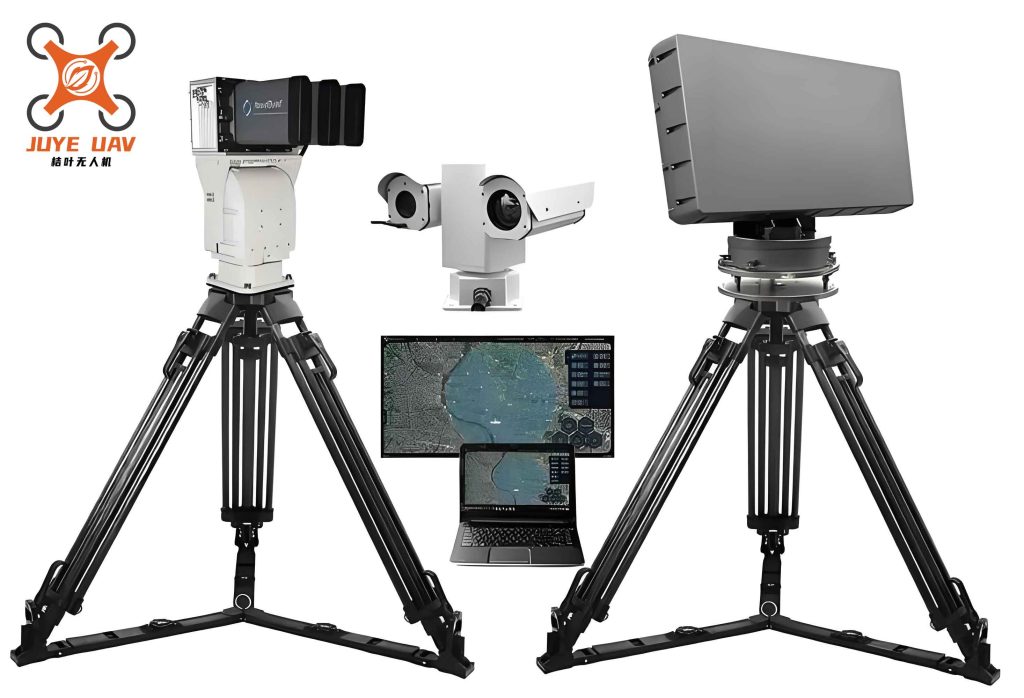
The fundamental question for armored vehicle design is how to retrofit a credible anti-UAV capability without compromising primary ground combat functions. The German approach, as observed in recent developments, centers on a synergistic combination: advanced programmable airburst ammunition fired from a stabilized medium-caliber autocannon, integrated with enhanced sensor suites for detecting LSS targets.
The Physics of Hard-Kill: AHEAD and Similar Ammunition
The technological linchpin for many modern anti-UAV gun systems is programmable, pre-fragmented ammunition. The most renowned example is the AHEAD (Advanced Hit Efficiency And Destruction) system. My analysis of its mechanism reveals a sophisticated yet elegant solution.
AHEAD is a time-fuzed, kinetic energy projectile. Its effectiveness against drones stems from its controlled dispersal into a dense cloud of sub-projectiles. Here is a breakdown of the process:
- In-Bore Sensing: As the shell passes the muzzle, a coil measures its exact velocity ($v_0$).
- Fuze Programming: The fire control computer, using target data (range $R$, velocity $\vec{v}_t$, heading), calculates the optimal time-to-detonation ($t_d$). This data is transmitted to the shell’s receiving coil.
- Airburst: At the computed point in space, the fuze initiates, ejecting a payload of tungsten cylinders forward.
- Projectile Cloud Formation: The cylinders form a lethal, expanding cone intersecting the target’s path.
The lethality of the cloud can be modeled by the areal density of fragments ($\sigma_f$) at the intercept point. For a shell containing $N$ fragments, dispersing with a given forward velocity ($v_f$) and spread angle ($\theta$), the density at a distance $d$ from the burst point is approximated by:
$$
\sigma_f \approx \frac{N}{2\pi d^2 (1 – \cos(\theta/2))}
$$
where a higher $\sigma_f$ increases the probability ($P_k$) of a hit on a vulnerable part of a small drone. A burst of several rounds creates a virtual “wall of steel” nearly impossible for a UAV to evade.
The key advantage for anti-UAV warfare is the favorable cost-exchange ratio. While a single AHEAD round is more expensive than a conventional high-explosive shell, it is orders of magnitude cheaper than most missiles. Furthermore, newer variants pack hundreds of smaller tungsten projectiles, increasing hit probability against miniature drones and FPV (First-Person View) racers. The following table contrasts different interception methods:
| System Type | Typical Engagement Cost | Key Advantage vs. UAVs | Key Limitation vs. UAV Swarms | Platform Integration |
|---|---|---|---|---|
| MANPADS (e.g., Stinger) | > $100,000 | High single-shot kill probability | Very low cost-effectiveness, limited magazine | Dismounted / Light Vehicle |
| Medium-Range SAM | > $500,000 | Long range, large footprint | Extremely low cost-effectiveness, overkill | Dedicated TEL |
| 30-35mm AHEAD/Canned | $1,000 – $5,000 | Good cost-effectiveness, high rate of fire | Limited effective range (~3-4 km) | IFV, Dedicated SPAAG |
| High-Power Microwave | Cost per shot very low | Area effect, multiple target kill | Short range, line-of-sight, immature for vehicles | Dedicated Platform |
| High-Energy Laser (10-100kW) | Cost per shot very low | Deep magazine, precision, low cost per kill | Atmospheric attenuation, size/power for mobile platforms | Developing for vehicles |
The table clearly shows that for integrated, mobile platform defense, the autocannon firing smart ammunition presents the most mature and balanced solution. The German “Skyranger” and related systems are built upon this foundation.
The “Boxer” as a Modular Anti-UAV Platform
The “Boxer” armored vehicle’s design philosophy is centered on modularity. A drive module (the chassis) can accept various mission modules. This makes it an ideal candidate for testing and fielding specialized anti-UAV capabilities. We can observe at least three tiers of this application:
| Configuration | Core Weapon System | Key Sensors | Primary Anti-UAV Mechanism | User / Status |
|---|---|---|---|---|
| Basic IFV (Lance Turret) | 30mm Mauser autocannon (Standard Ammo) | EO/IR Camera, Laser Rangefinder | Limited (kinetic hit with standard rounds) | Standard IFV variant |
| Custom Anti-UAV Version (e.g., Qatar) | RCT-30 Unmanned Turret with MK30-2 30mm gun (AHEAD capable) | Standard EO/IR + Dedicated RF/Drone Detection Sensor (e.g., Dedrone) | Hard-kill with AHEAD, guided by RF detection (~1.5km cueing) | Delivered to a Middle Eastern customer |
| “Skyranger” 30 System | 30mm KCE Revolver Cannon (AHEAD) + Stinger/Starstreak Missile Launcher + Optional HPM/Laser | 4x AESA Search Radars (20km), Tracking Radar, EO/IR | Layered: Radar-cued gun hard-kill, missile extension, future directed energy | Ordered by German Bundeswehr |
The progression is logical. The custom version addresses the immediate need by adding a dedicated radio-frequency (RF) sensor to detect the control and video links of commercial drones, cueing a capable but otherwise standard gun system. The “Skyranger” 30 represents the full-spectrum, integrated air defense solution for the short-range and very-short-range bracket (SHORAD/VSHORAD).
The system’s performance can be described by its engagement sequence probability. Let $P_d$ be the probability of detection by its organic sensors, $P_{tr}$ the probability of track and classification, and $P_k$ the kill probability of its weapon suite. The single-shot probability of a successful anti-UAV engagement ($P_{ss}$) is:
$$
P_{ss} = P_d \times P_{tr} \times P_k
$$
For a gun engagement against a small UAV, $P_k$ for AHEAD is high (estimated >0.8 per burst), but $P_d$ and $P_{tr}$ for low-RCS (Radar Cross-Section), low-flying targets are the critical factors. This is why the multi-sensor fusion—AESA radars for wide-area search, EO/IR for positive identification and tracking, and RF detection for cueing—is essential. Against a swarm of $n$ UAVs, the probability of surviving all $n$ attacks if engaging them sequentially with $m$ bursts each is:
$$
P_{survival} = \prod_{i=1}^{n} (1 – (P_{ss})_i^m)
$$
This equation highlights the necessity for a high $P_{ss}$ and a high rate of fire (allowing for multiple bursts $m$ per target) to maintain unit survivability against multi-axis drone threats.
Integration into Broader Air Defense and Future Pathways
The German efforts are not isolated vehicle upgrades but part of a systemic modernization of tactical air defense, known as the “SysFla” or NNbS (Nächstbereichsschutzsystem) program. In this structure, the anti-UAV “Boxer” variants play specific roles:
- Skyranger 30 (on Boxer): Serves as the gun-based point defense and anti-UAV layer.
- IRIS-T SLM SPAAG (on Boxer): Provides a missile-based layer for longer-range threats and higher-altitude coverage.
- Command Vehicle (on Boxer): Fuses data from all sensors and coordinates the engagement, likely using AI-assisted threat prioritization.
This networked approach is vital. A single vehicle, no matter how well-armed, has limited situational awareness. A network, however, can share target tracks, designate threats, and coordinate fire, creating a much more resilient anti-UAV bubble around maneuvering units.
Looking forward, the evolution of the infantry fighting vehicle’s anti-UAV role is clear. The next steps involve:
- Increased Automation: AI for automatic threat classification, track initiation, and even fire consent recommendation to reduce the operator’s sensor-to-shoot timeline against fast-moving FPV drones.
- Energy Weapons: The integration of a high-energy laser (HEL), as planned for future “Skyranger” blocks, will provide an ultimate “deep magazine” with a near-zero cost per shot, ideal for dealing with large numbers of very small drones.
- Active Protection System (APS) Synergy: Future APS hard-kill systems designed to defeat top-attack missiles could potentially be adapted or networked to also engage diving UAVs in the final moments of attack.
- Standardization of Capability: As seen with the German custom solution, the basic architecture—an unmanned turret with an AHEAD-capable gun and an integrated RF detection package—could become a modular upgrade kit for existing IFV fleets worldwide, not just the Boxer.
Conclusion: An Imperative for Modern Armored Warfare
The lessons from recent conflicts are unambiguous. The overhead battle against inexpensive, ubiquitous UAVs is now a primary survival function for armored formations. Waiting for perfect, futuristic solutions is a luxury ground forces cannot afford. The pragmatic path forward is the integration of effective, available technology into current platforms.
The German developments with the Boxer vehicle demonstrate this principle in action. By leveraging the mature yet highly effective technology of programmable airburst ammunition and coupling it with modern sensors for drone detection, they have created a credible, mobile anti-UAV capability that complements rather than replaces the vehicle’s core infantry support function. This mirrors the historical adaptation of mounting anti-aircraft machine guns on tanks—a simple, necessary measure to counter an evolving aerial threat.
The formula for success in this domain is not solely about raw technical performance but about systemic integration, cost-aware logistics, and tactical adaptability. The probability of a mechanized unit’s mission success ($P_{mission}$) now heavily depends on its ability to negate the UAV threat ($P_{negate}$):
$$
P_{mission} \propto \frac{P_{combat}}{P_{UAV-threat}} \approx P_{combat} \times P_{negate}
$$
where $P_{combat}$ represents its traditional ground combat efficacy. Ignoring $P_{negate}$ renders $P_{mission}$ critically low. Therefore, equipping frontline combat vehicles with organic, networked anti-UAV defenses is no longer an optional enhancement but a fundamental requirement for survival and operational effectiveness on the modern battlefield. The race is not just for technological superiority, but for the rapid and widespread dissemination of these integrated protective capabilities to every armored vehicle in the formation.