
From my perspective, examining the trajectory of the American military drone reveals a complex and fascinating interplay of forces that have shaped it into the pivotal weapon system it is today. My analysis leads me to conclude that this evolution is not a simple story of technological determinism or purely military necessity. Rather, it is the result of a dynamic convergence of visionary foresight, potent internal drivers within the industrial and technological base, and powerful external pressures from the political and societal landscape. This journey has transformed the military drone from a peripheral curiosity into a central pillar of modern warfare and national security strategy. The development of the military drone follows a path that can be modeled, evolving from a state of singular focus to one of sophisticated, systemic integration.
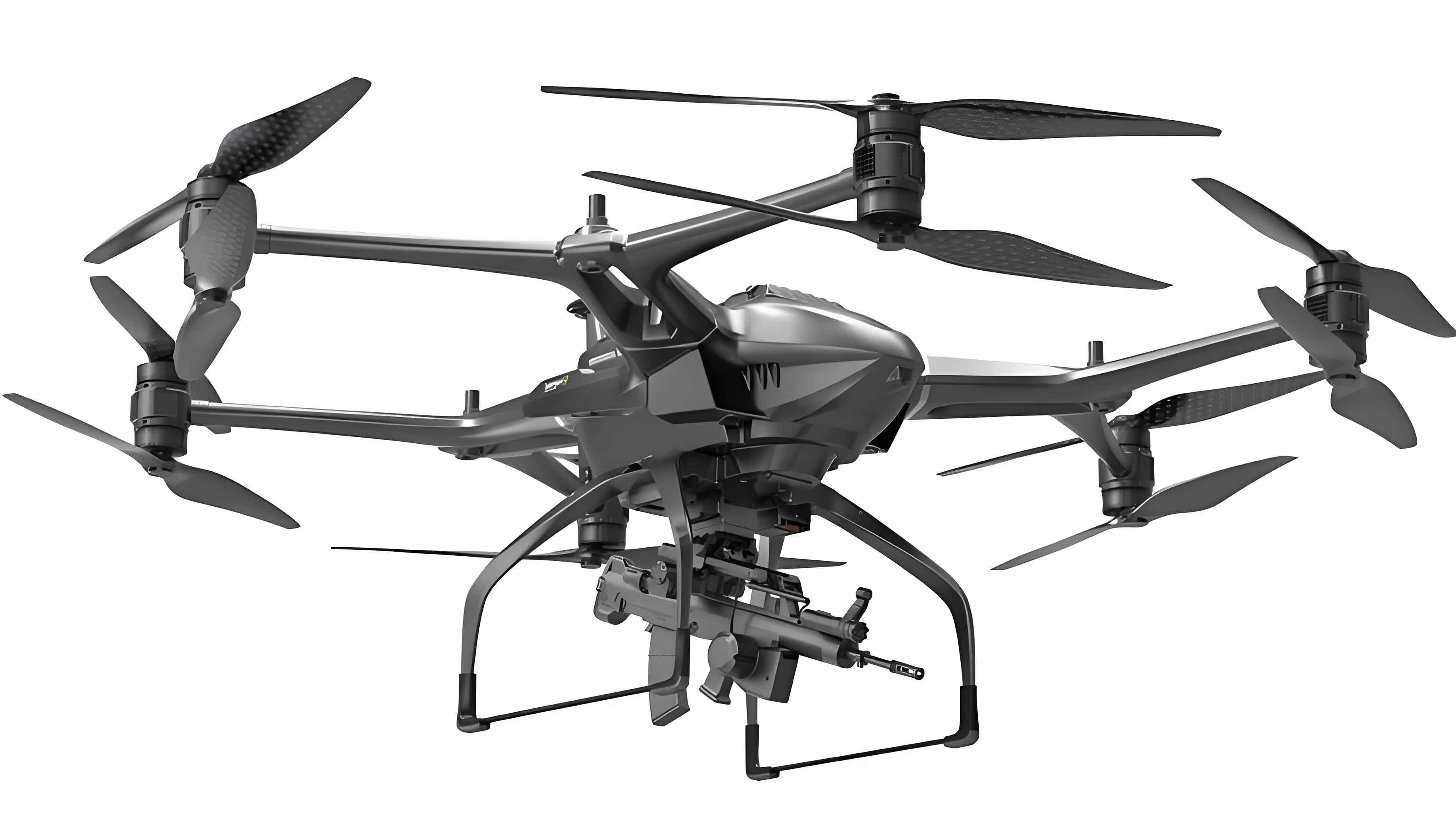
The impetus behind the military drone’s advancement can be conceptualized as a system powered by three core categories of factors: Innovation Foresight, Internal Driving Forces, and External Driving Forces. This framework helps deconstruct the historical progression.
The primary Innovation Foresight has consistently been Military Demand. This demand operates on three distinct but interconnected levels: Strategic, Warfare, and Operational.
- Strategic Demand provides the long-term, top-down vision. It assesses future threats and national security objectives to chart a course for the entire portfolio of military drone capabilities, deciding what roles they should fulfill in the coming decades.
- Warfare Demand is the mid-term catalyst, emerging from immediate conflicts and geopolitical crises. It translates strategic concepts into urgent requirements, directing the specific deployment and adaptation of military drone systems to address real-world battles, thereby validating and pressure-testing technological assumptions.
- Operational Demand is the crucial feedback loop from the frontline. It consists of the granular, practical needs and lessons learned from soldiers and commanders using the systems in the field. This feedback drives iterative improvements, modifications, and the refinement of tactics, directly enhancing the military drone’s battlefield utility.
This tripartite demand structure creates a continuous cycle of anticipation, application, and refinement that relentlessly pulls the technology forward.
Complementing this foresight are the Internal Driving Forces, which constitute the engine of capability. These are the factors residing within the nation’s technological and industrial ecosystem.
- Technological Level is the fundamental enabler. Progress in aerodynamics, propulsion, materials science, sensors, data links, and artificial intelligence directly defines what a military drone can be. Breakthroughs in these domains, often originating from defense contractors, national labs, and universities, create new possibilities that designers and strategists can then exploit.
- Cultural Values within the defense establishment and its industrial partners provide the essential mindset for innovation. A culture that prizes pragmatic problem-solving, tolerates calculated risk, and encourages challenging orthodoxies is vital. Institutions fostering open communication between developers and warfighters, and mechanisms to rapidly solicit novel ideas, have been instrumental in accelerating the military drone’s evolution from concept to combat-ready system.
- Industrial Economy translates technological potential into sustainable reality. A robust economic foundation allows for significant R&D investment. The process of moving a military drone from prototype to a producible, supportable weapon system involves complex manufacturing, supply chains, and lifecycle management. Furthermore, the potential for foreign military sales and the expansion into dual-use markets provide economic incentives that fuel further industrial investment and scaling, creating a virtuous cycle of development and refinement.
Finally, the External Driving Forces set the stage and apply decisive pressure, shaping the context in which the other forces operate.
- Government Decision, manifested through defense policy and budgeting, is the ultimate financial and political arbitrator. The allocation of substantial, sustained funding signals priority and enables long-term projects. Legislative support, tax incentives for R&D, and policies protecting intellectual property create a stable environment conducive to the high-risk, high-reward development characteristic of advanced military drone systems. The shift of the military drone from an experimental line item to a permanent, budgeted procurement program was a critical inflection point driven by government policy.
- Social Environment encompasses both the international security landscape and domestic political sentiments. The emergence of new threats (e.g., global terrorism, asymmetric warfare), the experience of combat losses, and a public aversion to casualties create powerful imperatives for solutions that provide persistent intelligence and stand-off strike capability—a niche perfectly filled by the military drone. Societal values regarding force protection and technological superiority directly influence the urgency and resources devoted to unmanned systems.
The relationship between these six factors can be summarized by the following conceptual formula, representing the systemic output (Drone Development) as a function of their interaction:
$$
\text{Drone Development}(t) = f\Big(I(t), E(t), M(t)\Big)
$$
Where:
$$ I(t) = \text{Internal Forces} = g(\text{Technology}(t), \text{Culture}(t), \text{Industry}(t)) $$
$$ E(t) = \text{External Forces} = h(\text{Government}(t), \text{Society}(t)) $$
$$ M(t) = \text{Military Demand} = j(\text{Strategy}(t), \text{Warfare}(t), \text{Operations}(t)) $$
Historically, the influence of these factors has not been constant. The evolution of the American military drone can be segmented into three distinct phases or models, each characterized by a different dominant configuration of these driving forces.
Phase 1: The Military Demand-Pull Model (Early to Mid-20th Century)
In this initial phase, the development of what would become the military drone was almost exclusively tethered to immediate and narrow military needs. The vision was limited, and the technology was rudimentary. The concept emerged from the desire to create a flying bomb or a realistic target for training. Early experiments, such as those during World War I, were direct responses to a tactical problem: how to attack without risking a pilot. When these early systems proved unreliable, investment ceased. The subsequent development of target drones was a clear case of operational demand—the need for realistic aerial targets for anti-aircraft gunnery practice—pulling a specific, simple technology into existence. During World War II and the Vietnam War, we saw the first significant expansion of this model. Existing target drone airframes were adapted with basic reconnaissance sensors. This was a pragmatic, battlefield-driven innovation: the military drone offered a lower-risk alternative to manned reconnaissance missions over heavily defended areas. However, once the specific conflict (Vietnam) ended, the driving demand subsided, and progress on the military drone plateaued. It remained a niche tool, not a transformative weapon system.
| Aspect | Characteristics | Key Example/Event | Dominant Driving Factor |
|---|---|---|---|
| Primary Role | Target practice; Limited, ad-hoc reconnaissance. | Adaptation of “Firebee” target drones for photo-reconnaissance in Vietnam. | Operational & Warfare Demand |
| Technological Sophistication | Low. Based on existing airframes; remote control or pre-programmed flight; limited sensor payloads. | Basic radio control systems; film cameras requiring physical recovery. | Technology (as a limiting/ enabling factor) |
| System Integration | Minimal. Not integrated into broader C4ISR or battle networks. | Used as a standalone intelligence collection asset, with slow data turnaround. | Military Demand (focused on singular task) |
| Industrial & Policy Support | Intermittent funding; no sustained procurement program; limited industrial specialization. | Project cancellation after WWI experiments; activity spikes during wars only. | Government Decision (reactive, low priority) |
The dynamics of this phase can be modeled as a simple, linear pull from demand:
$$
\text{Drone Development}_{\text{Phase 1}} \propto M_{\text{Operations/Warfare}}
$$
Where other factors (I, E) are relatively weak or dormant.
Phase 2: The Multi-Factor Convergence Model (1970s – 1990s)
This period marked a profound shift. The catalyst was often external experience, such as observing the effective use of military drones by allies like Israel in conflict. This demonstrated new potential and expanded the military’s Innovation Foresight. The performance of drones in the Gulf War (1991) and Balkans conflicts provided undeniable proof of concept for roles like surveillance, battle damage assessment, and electronic warfare. Crucially, this validated Military Demand at the Strategic level, prompting formal recognition of the military drone as a “game-changing” capability worthy of dedicated investment. This is where Government Decision became a powerful, active force. The Department of Defense began earmarking specific budgets for military drone research and procurement, moving them from the realm of science projects to formal acquisition programs. This stable funding activated the Internal Driving Forces. Defense contractors could now invest in dedicated R&D, fostering advancements in endurance, sensors, and data links. The Industrial Economy began to respond, with companies seeking international partnerships and exploring export markets. A culture of innovation within agencies like DARPA helped bridge the gap between wild ideas and fieldable technology. The military drone was no longer just a tool for a single task; it was becoming a multi-role platform, and its expanding utility began to actively influence military doctrine and operational concepts in a feedback loop.
| Aspect | Characteristics | Key Example/Event | Dominant Driving Factors |
|---|---|---|---|
| Primary Role | Expanded ISR (Intelligence, Surveillance, Reconnaissance); Electronic Warfare; Battlefield surveillance. | Use of Pioneer, Pointer, and other drones in Gulf War for real-time surveillance and artillery spotting. | Warfare Demand + Strategic Demand |
| Technological Sophistication | Medium. Purpose-built airframes; improved propulsion; early electro-optical/infrared sensors; nascent satellite data links. | Development of Tier I (e.g., Pioneer) and Tier II (e.g., GNAT-750/ Predator precursor) drones. | Technology (driven by funded R&D) + Industry |
| System Integration | Growing. Integration into command centers; start of near-real-time data transmission. | Predator’s “Reachback” concept, linking drone feeds to continental U.S. command centers. | Military Demand + Government Policy (funding integration) |
| Industrial & Policy Support | Formal acquisition programs; dedicated budget lines; establishment of joint offices (e.g., JPO-UAV). | Congressional funding for Predator and Global Hawk Advanced Concept Technology Demonstrations (ACTDs). | Government Decision (proactive) + Social Environment (post-Cold War focus) |
The model for this phase becomes multiplicative, showing the convergence of forces:
$$
\text{Drone Development}_{\text{Phase 2}} \propto M_{\text{Strategic}} \times G_{\text{Funding}} \times T_{\text{R&D}}
$$
Where G represents Government Decision and T represents Technology as an active investment.
Phase 3: The Complex System Development Model (2000s – Present)
The current era represents the maturation of the military drone into a fully integrated, complex system central to national security. The defining event was the September 11 attacks, which violently reshaped the Social Environment and created an overwhelming Strategic Demand for persistent surveillance and precision strike against non-state actors and in denied areas. This led to a massive and sustained surge in Government Decision and funding. The key technological leap was the integration of precision-guided weapons onto medium-altitude drones like the MQ-1 Predator, creating the first true “hunter-killer” military drone. This fusion of sensor and shooter revolutionized warfare. The Internal Driving Forces accelerated dramatically. Technology advanced on all fronts: stealth (RQ-170), extreme endurance (RQ-4 Global Hawk), heavy payload (MQ-9 Reaper), and miniaturization (hand-launched systems). The Industrial Economy matured, with major defense primes leading consolidated programs and a thriving ecosystem of subsystem suppliers. Culturally, the military drone became normalized within the force structure. Each service developed its own detailed roadmap, and the Pentagon established high-level offices to manage the sprawling enterprise. Today’s development is characterized by the seamless interplay of all factors: strategic vision guides substantial government investment, which fuels industrial and technological innovation, which delivers capabilities that constantly reshape military doctrine and address evolving societal security concerns. The military drone is now a platform for AI experimentation, networked warfare, and multi-domain operations.
| Aspect | Characteristics | Key Example/Event | Dominant Driving Factors |
|---|---|---|---|
| Primary Role | Integrated ISR-Strike (“Find, Fix, Track, Target, Engage, Assess”); Strategic surveillance; Tactical support; Swarming concepts. | Armed Predator strikes from 2001; MQ-9 Reaper; deployment of mini-drones (e.g., Raven) at squad level. | Strategic Demand (Counter-terrorism) + Warfare Demand (Irregular warfare) |
| Technological Sophistication | Very High. Stealth designs; Heavy fuel engines; Multi-spectral targeting systems; Resilient data links; Autonomy & AI integration. | MQ-9 Reaper with Lynx radar and multiple weapon stations; RQ-180 stealth drone; Kratos loyal wingman drones. | Technology (breakthroughs) + Industry (sustained investment) |
| System Integration | Fully networked. Integral node in C5ISR systems; direct links to shooters (manned and unmanned); cloud-based data processing. | Integration with AC-130 gunships for armed overwatch; Datalinks between Global Hawk and fighter jets. | Military Demand (network-centric warfare) + Government Policy (jointness mandate) |
| Industrial & Policy Support | Multi-billion dollar annual budgets; formalized “Family of Systems” approach; high-level DoD oversight (OSE); intense focus on export controls and tech security. | FY2020s DoD budgets allocating ~$7-9B annually for UAVs; creation of the “Replicator” initiative for attritable drones. | Government Decision (sustained, strategic) + Social Environment (persistent threat perception) |
The model for this mature phase is a complex, self-reinforcing system of equations:
$$
\begin{aligned}
\text{Strategic Demand} &= S(\text{Society}(t), \text{Threats}(t)) \\
\text{Budget} &= B(\text{Government}(t), \text{Strategic Demand}) \\
\text{Tech Advance} &= A(\text{Budget}, \text{Industry}(t), \text{Culture}(t)) \\
\text{Drone Capability}(t) &= C(\text{Tech Advance}, \text{Operational Feedback}(t)) \\
\text{Military Doctrine}(t+1) &= D(\text{Drone Capability}(t), \text{Strategic Demand})
\end{aligned}
$$
This shows a closed-loop where capability changes doctrine, which in turn influences future demand and development.
Conclusion
Reflecting on this historical analysis, the path of the American military drone is a testament to the power of sustained, synergistic investment across multiple domains. It began as a tool conceived for a single, risky mission, was nurtured through periods of convergence where technology met validated need, and has now emerged as a complex system-of-systems that sits at the heart of modern military strategy. Its development has been nonlinear, punctuated by conflicts that served as catalysts and technological breakthroughs that opened new doors. The key takeaway is that the preeminence of the American military drone was not pre-ordained. It was built through a deliberate and evolving process where visionary military demand was met with responsive government policy, which in turn unlocked industrial and technological innovation, all within a societal context that valued the capabilities it offered—persistent awareness, precision strike, and reduced risk to personnel. The evolution from a demand-pull model to a complex system development model illustrates a maturation not just of the hardware, but of the entire institutional and industrial apparatus required to conceive, build, and wield such transformative technology. The future trajectory of the military drone will undoubtedly continue to be shaped by this intricate dance of foresight, internal capability, and external necessity.