
As I observe the modern battlespace, the most profound transformation has been the proliferation and increasing autonomy of military drones. These unmanned aerial vehicles (UAVs), or what I prefer to call the “eyes, ears, and fists” of the remote commander, have fundamentally altered the calculus of risk, persistence, and precision in warfare. My analysis focuses on the developmental trajectories and technological parameters of these systems, particularly contrasting the pioneering efforts of the United States with the rapid advances made by China. This journey through their capabilities reveals not just a tale of two powers, but a roadmap to the future of aerial conflict.
The historical genesis of the military drone is deeply rooted in the need for risk mitigation—initially as simple target practice. However, its evolution into a cornerstone of intelligence, surveillance, reconnaissance (ISR), and strike operations represents a paradigm shift. Today, a military drone is no longer merely a remotely piloted camera; it is a sophisticated network node, a long-dwell sentinel, and increasingly, an autonomous combatant. The United States, with its decades of operational experience and massive investment, has set the global standard. Meanwhile, China’s determined and rapid ascent in this field demonstrates a strategic prioritization aimed at closing the technological and doctrinal gap. The performance of a military drone is no longer just about altitude and speed; it is a complex equation of endurance, sensor fusion, connectivity, and lethality.
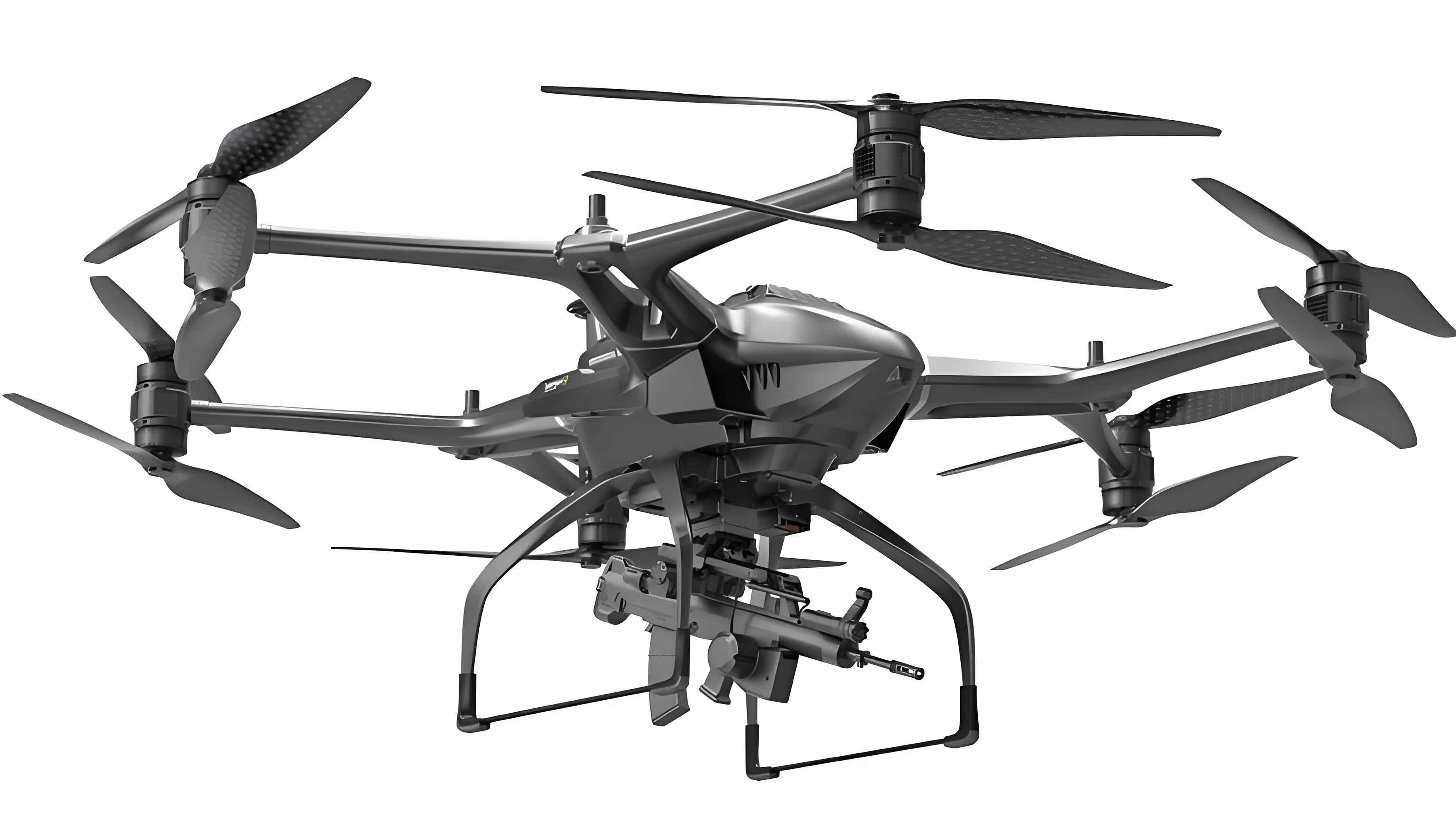
The American approach to military drone development is characterized by a relentless push across the entire spectrum of capability and size, driven by lessons learned from continuous combat operations.
At the strategic tier, systems like the RQ-4 Global Hawk epitomize the high-altitude, long-endurance (HALE) military drone. Its primary function is persistent, wide-area ISR, providing an unparalleled picture of vast theaters of operation. However, American development has surged beyond traditional reconnaissance. The MQ-9 Reaper, evolving from the earlier MQ-1 Predator, marked a critical transition from a “see-and-report” platform to a dedicated “hunt-and-kill” military drone. This shift integrated precision-guided munitions directly into the persistent surveillance loop, creating a formidable tool for counter-insurgency and targeted strikes.
The frontiers of American military drone technology are even more ambitious. The field of Micro Air Vehicles (MAVs) aims to put organic, platoon-level ISR into the hands of every squad. These insect or bird-sized military drones, such as the “Black Hornet,” offer immediate situational awareness for dismounted troops, navigating complex urban environments. In the realm of carrier-based operations, the X-47B demonstrated unprecedented milestones: autonomous aerial refueling and carrier deck landings. This paves the way for a future where a stealthy, unmanned combat air system can operate from aircraft carriers, extending reach and persistence while mitigating risk to pilots.
Perhaps the most significant trend is the drive towards Collaborative Combat Aircraft (CCA) or “loyal wingmen.” These are next-generation military drones designed to operate in concert with manned fighter jets like the F-35. They will perform a variety of roles—from carrying extra missiles and sensors to conducting electronic warfare or serving as sacrificial forward probes. This concept fundamentally reimagines air combat, multiplying the effectiveness of a human-piloted core. Furthermore, projects focused on extreme endurance, such as pseudo-satellites (Zephyr) or solar-powered platforms, seek to provide months of uninterrupted coverage, blurring the lines between aircraft and satellite functionality. The development of stealthy, penetrating strike military drones is also a key priority, ensuring capability against advanced integrated air defense systems.
China’s journey in military drone development, while starting later, has been characterized by a methodical and accelerated pace, moving from imitation and adaptation towards increasingly indigenous innovation.
China initially entered the field through imports (like Israeli systems) and the conversion of target drones. The real momentum began in the late 1990s and early 2000s with the fielding of tactical UAVs for artillery spotting and battlefield reconnaissance. The public unveilings at successive Zhuhai Airshows have chronicled China’s rapid progress. The GJ-1/Wing Loong series, bearing a functional resemblance to the American MQ-1/9 lineage, represents China’s successful mastery of the medium-altitude, long-endurance (MALE) armed military drone. It has been exported to numerous countries and seen operational use, solidifying its role as a workhorse platform.
More ambitious designs signal China’s future intentions. The Xianglong (Soaring Dragon) is a HALE military drone featuring a unique joined-wing design for high aerodynamic efficiency. While its published endurance is less than the Global Hawk, it represents a serious step into the strategic ISR domain. The most provocative reveals have been the “Dark Sword” and other conceptual models, which are clearly explorations of a future high-performance, stealthy, unmanned combat air vehicle (UCAV). These designs, often featuring canards, blended fuselages, and internal weapon bays, indicate that China is not merely catching up in current categories but is actively investing in the next generation of air-dominance military drones. The WZ-8, a rumored high-altitude, high-speed reconnaissance military drone, further underscores the push for capabilities that can penetrate and surveil contested airspace.
The following tables provide a concrete, side-by-side comparison of key performance parameters for representative military drones from the US and China. This data-driven view is essential for moving beyond generalities to a precise understanding of capabilities and gaps.
| Parameter | U.S. RQ-4 Global Hawk (Block 40) | Chinese Xianglong (Soaring Dragon) |
|---|---|---|
| Primary Role | Strategic HALE ISR | Strategic HALE ISR |
| Length | 14.5 m | ~14.3 m |
| Wingspan | 39.9 m | ~24.9 m |
| Max Takeoff Weight (MTOW) | 14,628 kg | ~7,500 kg |
| Payload Capacity | ~1,360 kg | ~600-800 kg (est.) |
| Max Altitude | 18,300 m | ~20,000 m (est.) |
| Max Endurance | > 34 hours | ~10 hours (est.) |
| Max Range | > 22,780 km | ~7,000 km (est.) |
| Typical Sensors | SAR, EO/IR, SIGINT | SAR, EO/IR (est.) |
Analysis: The table reveals a clear gap in persistence and payload. The Global Hawk’s massive wingspan and efficient turbofan engine grant it over three times the endurance, allowing it to cover vast oceanic or continental distances. Its significantly higher payload capacity allows for more powerful, multi-spectral sensor suites and robust communication systems. The Xianglong’s design is aerodynamically innovative, but its performance metrics suggest it is a regional strategic asset rather than a global one. This underscores a gap in propulsion technology and airframe design for extreme endurance in China’s military drone programs.
| Parameter | U.S. MQ-9B SeaGuardian | Chinese GJ-2 Wing Loong II |
|---|---|---|
| Primary Role | Armed MALE ISR/Strike | Armed MALE ISR/Strike |
| Length | 11.7 m | ~11.0 m |
| Wingspan | 24.0 m | ~20.5 m |
| Max Takeoff Weight (MTOW) | 5,670 kg | ~4,200 kg |
| Payload Capacity | 2,155 kg (internal + external) | ~480 kg (external) |
| Max Altitude | 12,500 m | 9,000 m |
| Max Endurance | > 40 hours (ISR config) | ~32 hours |
| Weapon Stations | 8+ hardpoints | 6 hardpoints |
| Typical Armament | Hellfire, Paveway, SeaVue radar, sonobuoys | BA-7 missiles, LS-6 bombs, EO pods |
Analysis: This comparison shows a narrowing but still present gap in the MALE category. The Wing Loong II is a capable and combat-proven military drone, popular on the export market. However, the MQ-9B demonstrates greater payload flexibility and multi-role capability, particularly in the maritime domain (with anti-submarine warfare packages). The higher operational altitude of the MQ-9B provides a wider sensor footprint and potentially greater survivability. The disparity in payload weight is stark, directly translating to the number and variety of weapons or sensors a single military drone can carry on a mission.
To understand these performance differences, we must look at the underlying engineering principles. Key performance metrics for a military drone can be expressed through fundamental aerospace equations. Endurance, for example, is not merely a fuel quantity but a function of aerodynamic and propulsive efficiency. A simplified form of the endurance equation for a propeller-driven aircraft (like most MALE drones) cruising at optimal conditions is given by:
$$ E = \frac{\eta_{prop}}{c} \cdot \frac{L}{D} \cdot \ln \left( \frac{W_{initial}}{W_{final}} \right) $$
Where:
- $E$ = Endurance
- $\eta_{prop}$ = Propeller efficiency
- $c$ = Specific fuel consumption of the engine
- $L/D$ = Lift-to-Drag ratio (aerodynamic efficiency)
- $W_{initial}$ = Initial weight (fuel + aircraft)
- $W_{final}$ = Final weight (aircraft after fuel burn)
This formula illuminates why the Global Hawk outperforms the Xianglong. Its very high aspect-ratio wing maximizes the $L/D$ ratio. Its turbofan engine, while different from a propeller, has a favorable specific fuel consumption ($c$) for high-speed, high-altitude cruise. The Xianglong’s joined wing aims for a high $L/D$, but limitations in propulsion technology ($c$) and potentially structural weight ($W_{initial}$) likely constrain its endurance $E$.
Another critical metric is the payload fraction, a measure of a military drone’s utility:
$$ \text{Payload Fraction} = \frac{m_{payload}}{m_{MTOW}} $$
Comparing the MQ-9B (~0.38) and the Wing Loong II (~0.11) based on the table data shows a dramatic difference in design philosophy and structural efficiency. A higher payload fraction means more capability—more sensors, more weapons, or more fuel for extended range—can be carried per kilogram of total aircraft weight. This gap points to advanced materials (composites), sophisticated structural design, and more powerful yet efficient engines.
Sensor performance, arguably the soul of a reconnaissance military drone, is governed by physics. The theoretical ground resolution $\Delta G$ of an electro-optical sensor from altitude $H$ is approximated by:
$$ \Delta G \approx \frac{H \cdot \lambda}{D} $$
Where $\lambda$ is the wavelength of light and $D$ is the aperture diameter of the sensor. Achieving a 0.3m resolution from 18,000m (like the Global Hawk) requires not just a large, stable platform (to carry a large $D$) but also exquisite optics, gyro-stabilization, and image processing software. While raw sensor specs are closely guarded, the operational track record of American platforms suggests a significant lead in sensor fusion, data processing, and the integration of multi-intelligence (Multi-INT) data from SIGINT and radar sources onto a single military drone platform.
Furthermore, the concept of an operational sortie generation rate for a military drone fleet can be modeled as a function of maintenance cycles and reliability. If the Mean Time Between Failures (MTBF) is low and maintenance man-hours per flight hour (MMH/FH) are high, the number of combat air patrols a fleet can sustain drops dramatically. Decades of operational experience have given the U.S. a deep understanding of these logistical and reliability factors, an intangible but crucial advantage over newer programs.
In conclusion, my analysis reveals a nuanced landscape. China has successfully developed and deployed competent, combat-proven military drones that fill crucial roles in its arsenal and the global export market. The Wing Loong series is a potent MALE platform, and designs like the Xianglong and the conceptual Dark Sword show ambitious future intent. However, when performing a detailed parameter analysis, significant gaps remain relative to the cutting edge of U.S. military drone technology.
The most pronounced disparities are in the areas of extreme endurance and payload capacity for strategic platforms, and in the multi-role sensor fusion and payload flexibility of tactical and operational platforms. These gaps are rooted in deeper technological challenges: high-efficiency, long-life propulsion systems; advanced lightweight composite structures; and the integration of exquisite, multi-spectral sensor suites with real-time processing and dissemination networks. Perhaps the most significant gap is in operational experience and ecosystem maturity. The U.S. military drone fleet is backed by decades of continuous combat use, a robust doctrine for its employment, sophisticated satellite communication relays (like those used by the Global Hawk), and a culture of joint integration.
The trajectory, however, is clear. China is investing heavily to close these gaps, focusing not just on catching up in existing categories but on “leap-ahead” concepts for future air combat. The race is no longer just about building a better individual military drone; it is about creating networked, autonomous swarms, loyal wingmen teams, and seamlessly integrated systems that can dominate the electromagnetic spectrum and the physical battlespace. The next generation of military drone warfare will be defined by artificial intelligence, human-machine teaming, and resilient communications. The performance tables of the future will measure not just altitude and speed, but latency, autonomy levels, and swarm coordination.