
As a researcher focused on naval defense systems, I observe that the maritime battlespace is undergoing a profound transformation. For decades, the principal aerial threats to surface combatants were well-defined: subsonic and supersonic anti-ship missiles, along with manned aircraft. Our defensive architectures, from close-in weapon systems (CIWS) like the Phalanx to layered area-defense missiles, were engineered against these high-value, high-kinetic threats. However, the rapid proliferation and technological maturation of unmanned aerial systems, particularly military drone platforms, are introducing a disruptive and asymmetric challenge. The conflict in Ukraine has provided stark demonstrations, where relatively low-cost unmanned systems have successfully engaged high-value naval assets. This paradigm shift compels a fundamental reassessment of shipborne air defense. The core dilemma is one of cost-exchange: employing a multi-million dollar interceptor missile against a drone costing a few thousand dollars is neither sustainable nor tactically sound. Therefore, the development of low-cost, high-efficiency, and layered counter-unmanned aerial system (C-UAS) capabilities for surface ships is not merely an enhancement—it is an operational imperative.
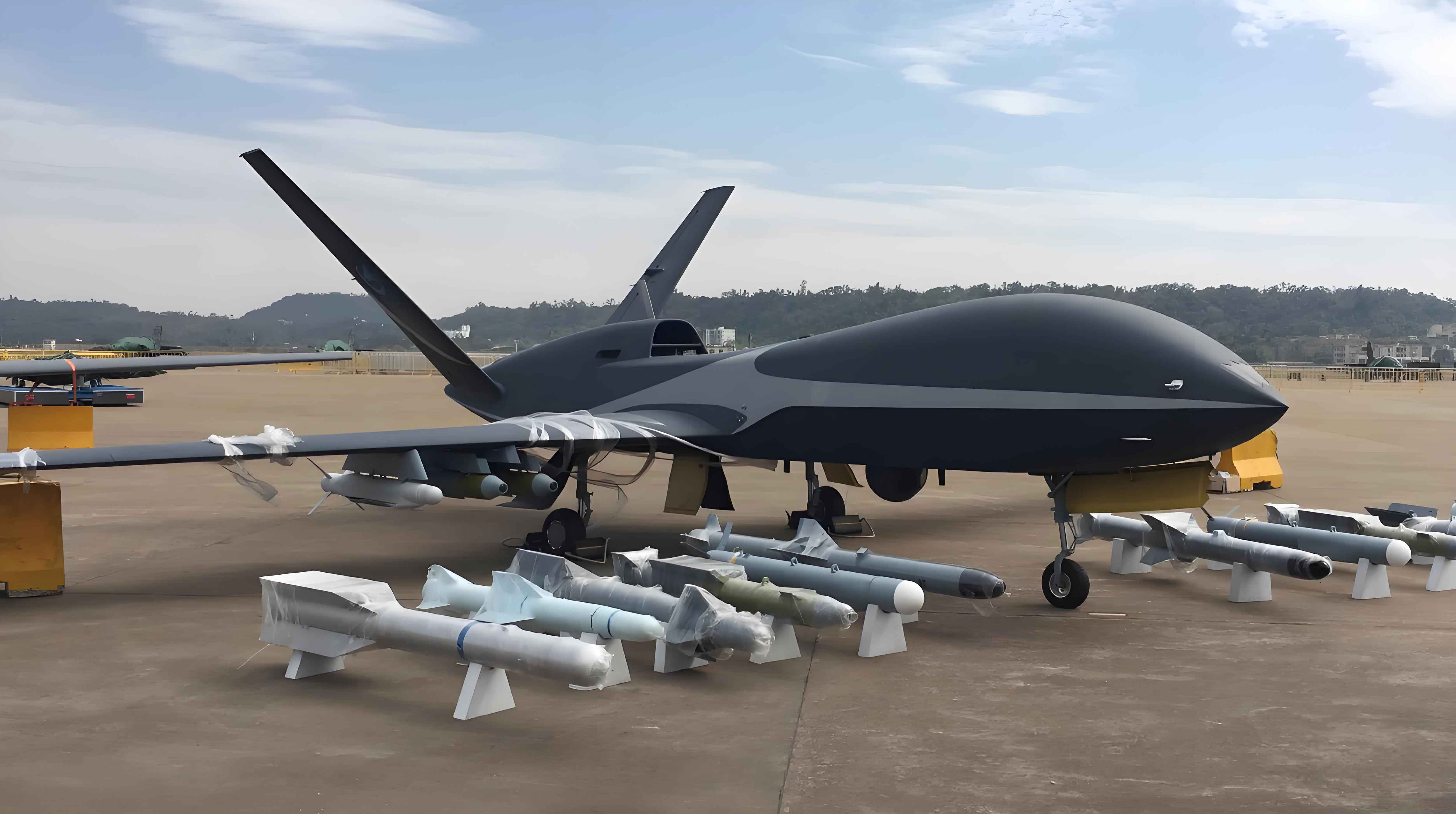
The threat spectrum posed by military drone technology is vast and heterogeneous. To systematically analyze this threat, we must categorize based on capability, which directly informs the required defensive response. A widely referenced framework, such as the U.S. Department of Defense classification, provides a useful baseline, though modern conflicts show adversaries often employ commercial or hybrid systems that blur these lines.
| Category | Size/Weight | Typical Capabilities & Payload | Threat to Surface Ships | Primary Defense Challenge |
|---|---|---|---|---|
| Group 1: Micro | 0-9 kg | Short-range recon; small explosive ordnance (e.g., grenades). | Low. Threat to exposed personnel, sensors, or critical light equipment. | Detection of very low radar cross-section (RCS) targets; high clutter environment. |
| Group 2: Small | 9-25 kg | Tactical recon; can carry lighter precision munitions. | Emerging. Swarm tactics can saturate point defenses; can target specific ship subsystems. | Cost-effective engagement of numerous, small, maneuvering targets. |
| Group 3: Medium | Up to ~600 kg | Endurance recon/attack; can carry multiple guided bombs or anti-tank missiles (e.g., TB-2). | High. Capable of significant kinetic damage; used as launch platforms or direct attackers. | Defeating beyond visual-range attacks; managing coordinated raids with other threats. |
| Group 4/5: Large & HALE | >600 kg | Strategic recon; can carry heavy payloads including anti-ship cruise missiles (ASCMs). | Very High. Function as long-range sensor-shooters or missile trucks. | Similar to manned aircraft/ASCM threats, but with longer loiter times. Traditional interceptors are suitable but costly if used en masse. |
From my analysis, Groups 2 and 3 represent the most pressing and challenging problem set for ship-based C-UAS. They offer a dangerous combination of sufficient payload capacity to inflict damage, low enough cost to enable swarm or saturation attacks, and flight profiles that exploit radar clutter and horizon limitations. The engagement cost-exchange ratio becomes critically unfavorable for the defender when facing these systems with traditional weapons. This necessitates a holistic review of both existing and emerging countermeasures.
Current naval defensive assets have varying degrees of effectiveness against drone threats. Let us evaluate them through the lenses of capability, limitation, and cost-per-engagement.
| System Type | Example | Mechanism | Effectiveness vs. Drones | Key Limitations for C-UAS |
|---|---|---|---|---|
| Gun-Based CIWS | Phalanx, Goalkeeper | High-rate kinetic kill using cannon fire. | Effective at very close range (<2-3 km) against single targets. | High ammunition consumption per kill; limited magazine depth against swarms; short engagement timeline. |
| Surface-to-Air Missiles (Traditional) | ESSM, SeaRAM | Kinetic kill via radar/IR-guided interceptor. | Highly effective against all drone groups if prioritized. | Prohibitively high cost-per-kill for Groups 1-3; magazine depletion issue in swarm scenarios. |
| Electronic Warfare (EW) / Soft-Kill | Various jamming/deception systems | Radio Frequency (RF) jamming, GNSS spoofing, or control link takeover. | Highly effective against commercial/less resilient drones. Low cost-per-engagement. | Reduced efficacy against military-grade encrypted/alternative navigation drones; potential for fratricide; limited range. |
The analysis above highlights the capability gap: we lack a middle layer of defense that is both cost-effective and reliable against the most threatening drone categories. This gap is driving rapid innovation in several key technological directions, which I believe will define the next generation of ship-based C-UAS.
1. Directed Energy Weapons (DEWs): The Game Changer. DEWs, particularly High-Energy Lasers (HEL) and High-Power Microwaves (HPM), offer a compelling solution to the cost-exchange problem. A laser system, once powered, can engage multiple targets at the speed of light with a marginal cost-per-shot (essentially the cost of electricity). Its effectiveness can be modeled by the power required at the target for a given dwell time to achieve mission kill. A simplified formula for the required laser power $P_{req}$ at the source to deliver a lethal fluence $F_{kill}$ (J/cm²) on target at range $R$ is:
$$ P_{req} = \frac{F_{kill} \cdot A_{spot} \cdot \pi R^2}{\tau \cdot T_{atm} \cdot \eta_{sys}} $$
where $A_{spot}$ is the area of the laser spot on target, $\tau$ is the required dwell time, $T_{atm}$ is the atmospheric transmission factor (a critical limitation in poor weather), and $\eta_{sys}$ is the total system efficiency. While atmospheric attenuation is a challenge, solid-state laser technology is progressing rapidly. Systems like the U.S. Navy’s HELIOS are being integrated onto destroyers, marking a shift from experiment to operational capability.
2. Low-Cost, Optimized Kinetic Interceptors. In parallel, there is a push for new missiles that bridge the gap between expensive area-defense missiles and short-range guns. These often leverage existing components or guidance kits to reduce cost. Examples include the U.S. “APKWS” (Advanced Precision Kill Weapon System), a laser-guided 70mm rocket, or adaptations of surface-to-air missiles like the “CAMM” family which use low-cost active radar seekers. The goal is a missile with a unit cost orders of magnitude lower than a standard SAM, making it economically viable for engaging military drone swarms. The engagement success probability $P_{kill}$ for such an interceptor can be expressed as a function of single-shot probability $P_{ss}$ and the number of allocated interceptors $n$ against a specific target:
$$ P_{kill} = 1 – (1 – P_{ss})^n $$
This equation highlights why cost matters: to achieve a high $P_{kill}$ against a maneuvering drone, one might need to allocate more than one interceptor, making the total engagement cost a critical parameter.
3. Integrated, Modular, and Intelligent Systems. Technology is not just about new “bullets.” The architecture of the C-UAS suite is equally vital. I foresee several converging trends:
- Composite and Collaborative Sensing: No single sensor is optimal. The future lies in fusing data from multi-band radars (including specialized low-altitude surveillance radars), electro-optical/infrared (EO/IR) systems, and electronic support measures (ESM). AI-powered fusion algorithms will be crucial for track initiation, classification, and intent recognition of low-RCS military drone targets in heavy clutter. The sensor management problem becomes one of optimizing the search volume and revisit rate across heterogeneous sensors.
- Heterogeneous Weapon Coordination and Fire Control Integration: Modern ships will employ a mix of soft-kill (EW), directed energy (laser, microwave), and kinetic (guns, missiles) effectors. A core challenge is the Weapon-Target Assignment (WTA) problem. This is a complex, dynamic optimization problem to maximize the overall defensive utility. For a set of $m$ incoming drones (targets $T_j$) and $n$ available effectors (weapons $W_i$), with each pairing having an estimated probability of kill $p_{ij}$ and a cost $c_{ij}$, one seeks to maximize total expected damage or minimize total cost, subject to constraints. A simplified integer programming formulation is:
$$
\begin{aligned}
\text{Maximize} & \quad \sum_{i=1}^{n}\sum_{j=1}^{m} p_{ij} \cdot x_{ij} \\
\text{subject to} & \quad \sum_{i=1}^{n} x_{ij} \leq 1 \quad \forall j \quad \text{(one weapon per target)} \\
& \quad \sum_{j=1}^{m} x_{ij} \leq 1 \quad \forall i \quad \text{(one target per weapon)} \\
& \quad x_{ij} \in \{0, 1\}
\end{aligned}
$$
where $x_{ij}=1$ if weapon $W_i$ is assigned to target $T_j$. Real-world systems use more sophisticated algorithms (e.g., auction algorithms, genetic algorithms) to solve this in real-time, considering weapon readiness, engagement timelines, and prioritization rules.
$$ C_{total} = C_{materials} + C_{manufacturing} + C_{guidance/seekers} + C_{integration/testing} $$
The focus for C-UAS missiles is on driving down every term, especially $C_{guidance/seekers}$ through simpler, proven seekers (semi-active laser, passive RF) and $C_{manufacturing}$ through advanced production techniques.
In conclusion, the threat from intelligent, affordable, and proliferated military drone systems is reshaping naval warfare. The traditional paradigm of layered missile defense is insufficient against this asymmetric challenge. The path forward, from my perspective, is a deeply integrated, multi-domain C-UAS architecture. This architecture must be built upon collaborative sensing networks, a balanced mix of soft-kill, directed energy, and low-cost kinetic effectors, all governed by intelligent, adaptive fire control algorithms. Crucially, this entire system must be conceived and engineered with cost-effectiveness as a fundamental requirement, not an afterthought. The navies that successfully field such modular, affordable, and capable ship-based C-UAS systems will gain a decisive advantage in securing the future maritime domain against the ubiquitous drone threat.