
In the realm of aerial technology, unmanned aerial vehicles (UAVs), commonly known as drones, have revolutionized various industries by offering unparalleled perspectives and capabilities. As an enthusiast deeply immersed in the world of drone technology, I have witnessed the rapid evolution from basic remote-controlled models to sophisticated systems like those developed in the China FPV sector. The concept of first person view (FPV) has transformed how we interact with drones, providing an immersive experience that feels like flying. This article delves into the intricacies of drones, with a focus on FPV drones, their differences from traditional UAVs, and their growing significance in fields such as photography, racing, and cinematography. Through detailed analysis, including tables and mathematical models, I aim to shed light on why the China FPV market is gaining traction and how first person view technology is reshaping our aerial endeavors.
The origins of aerial photography can be traced back to hobbyists who modified radio-controlled model aircraft to carry cameras. Initially, these setups were rudimentary, with fixed-wing or single-rotor helicopters lacking stability and precise control. Pilots relied on experience to navigate, making it challenging to achieve repeatable shots or adjust parameters in real-time. The advent of companies like DJI introduced professional-grade drones with features such as GPS stabilization and automated flight paths, which addressed many of these limitations. However, the rise of the FPV drone, particularly in the China FPV community, has introduced a new dimension of speed and agility. For instance, the first person view experience allows operators to feel as if they are in the cockpit, navigating through obstacles at high velocities. This has paved the way for applications beyond photography, including competitive racing and dynamic film sequences.
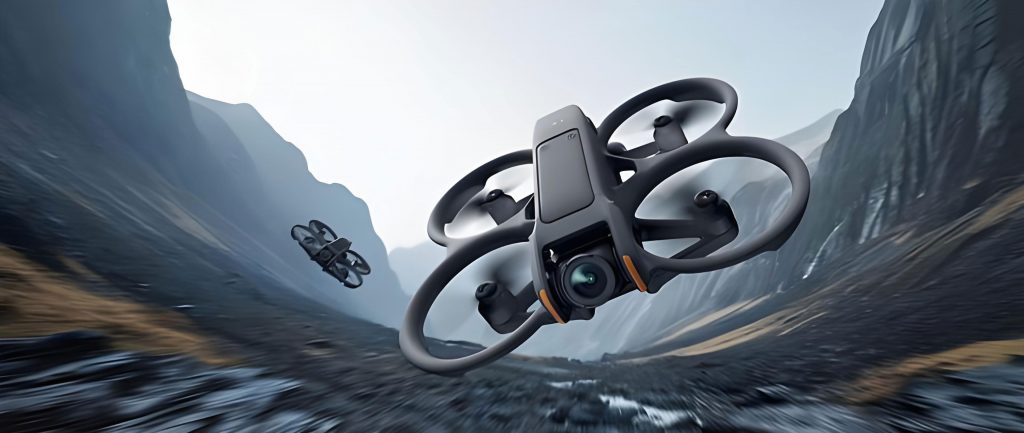
Drones are broadly categorized into three types: fixed-wing, single-rotor, and multi-rotor. Fixed-wing drones excel in endurance and coverage for large areas, while single-rotor models offer stability in harsh conditions. Multi-rotor drones, however, have become the preferred choice due to their simplicity, maneuverability, and ease of use. In recent years, the China FPV industry has pushed the boundaries of multi-rotor designs, emphasizing speed and responsiveness. The FPV drone, in particular, is designed for high-performance tasks, leveraging first person view systems to provide real-time video feedback. This enables operators to execute complex maneuvers, such as sharp turns and dives, which are essential in racing and action cinematography. The mathematical representation of drone dynamics often involves equations of motion. For example, the thrust generated by a multi-rotor drone can be modeled using: $$ T = k \cdot \omega^2 $$ where \( T \) is the thrust, \( k \) is a constant dependent on propeller design, and \( \omega \) is the angular velocity of the motor. Such models help in optimizing the performance of FPV drones for specific applications.
FPV drones, often associated with the China FPV movement, represent a subset of UAVs tailored for high-speed operations and immersive experiences. Unlike conventional drones that prioritize stability and automated flight, FPV drones thrive on manual control and agility. The core components include electronic speed controllers (ESCs), motors, and flight controllers that process data in real-time. The first person view aspect is achieved through a video transmission system that sends live footage from the drone to goggles or a screen, allowing the operator to see from the drone’s perspective. This technology has given rise to drone racing, where participants navigate through courses at speeds exceeding 230 km/h, and acceleration from 1 to 100 km/h can occur in under a second. The thrill of first person view flying has captivated audiences, making events like the China FPV competitions popular worldwide. However, the high-speed nature introduces risks, such as frequent crashes, but the modular design of FPV drones allows for quick repairs, contrasting with the more integrated systems of consumer drones like those from DJI.
To better understand the distinctions between traditional drones and FPV drones, let’s examine their differences in scope, principles, applications, and shooting characteristics. The following table summarizes these aspects, highlighting how the China FPV niche emphasizes speed and customization, while standard drones focus on reliability and ease of use.
| Aspect | Traditional Drone | FPV Drone |
|---|---|---|
| Scope | Radio-controlled or autonomous flight for general purposes | Primarily for racing, sports filming, and first person view experiences |
| Principle | Relies on GPS, gyroscopes, and pre-programmed routes | Depends on manual control, ESCs, and real-time CPU calculations for flight dynamics |
| Application | Aerial photography, agriculture, surveillance, and mapping | Drone racing, action cinematography, and immersive first person view activities |
| Shooting Characteristics | High-resolution imaging, stable footage, and efficient data transmission | Dynamic, high-speed shots with a sense of motion and immersion |
| Control and Stability | Automated systems reduce pilot workload; low crash risk | Manual control requires skill; high crash risk but easy repairs |
In terms of control, flying an FPV drone demands significant practice, often in simulators, to master maneuvers like rolls and dives. The first person view feed is crucial here, as it provides the spatial awareness needed for precise navigation. For photography, traditional drones like those from DJI offer gimbals that stabilize the camera, ensuring smooth footage even during complex moves. In contrast, an FPV drone might tilt its entire body during turns, but the raw, adrenaline-pumping footage can add a unique aesthetic to films. The China FPV community often customizes drones for specific scenarios—for example, using smaller frames for indoor racing or heavier builds for carrying action cameras. This flexibility is a key advantage, as it allows enthusiasts to tailor their FPV drone setups for optimal performance. Mathematically, the field of view (FOV) in first person view systems can be described by: $$ \text{FOV} = 2 \arctan\left(\frac{d}{2f}\right) $$ where \( d \) is the sensor size and \( f \) is the focal length, influencing how much the operator sees during flight.
The advantages of FPV drones are numerous, particularly in creative industries. The first person view capability enables filmmakers to capture sweeping, immersive shots that were previously impossible, as seen in movies like “Need for Speed” and “Wolf Warrior,” where China FPV technology contributed to dynamic chase sequences. Moreover, the modular nature of FPV drones means that components can be swapped easily, reducing downtime compared to integrated systems that require professional repairs. However, there are drawbacks: the steep learning curve deters beginners, and the inherent instability at high speeds can lead to inconsistent footage. In my experience, while a DJI drone might suffice for routine aerial shots, an FPV drone excels in scenarios requiring rapid movement and artistic flair. The China FPV market continues to innovate, with developments in digital video transmission enhancing the first person view experience by reducing latency and improving image quality.
Another critical aspect is the economic and environmental impact of FPV drones. The China FPV industry has fostered a vibrant ecosystem of manufacturers, pilots, and events, contributing to local economies. For instance, drone racing leagues attract sponsors and viewers, similar to traditional sports. From a technical perspective, the power consumption of an FPV drone can be analyzed using: $$ P = V \cdot I $$ where \( P \) is power, \( V \) is voltage, and \( I \) is current, highlighting the importance of efficient battery management for longer flight times. The table below compares the performance metrics of a typical FPV drone versus a standard photography drone, underscoring the trade-offs between speed and stability.
| Metric | FPV Drone | Standard Drone |
|---|---|---|
| Max Speed (km/h) | 230+ | 50-80 |
| Acceleration (0-100 km/h) | <1 second | 3-5 seconds |
| Flight Time (minutes) | 5-10 | 20-30 |
| Crash Resistance | High (modular parts) | Low (integrated design) |
| First Person View Latency | <50 ms | N/A (often not featured) |
Looking ahead, the integration of artificial intelligence and machine learning into FPV drones could further enhance their capabilities. For example, obstacle avoidance algorithms based on: $$ \min \int (x(t) – x_{\text{target}})^2 \, dt $$ could make first person view flying safer and more accessible. The China FPV sector is at the forefront of these innovations, driving advancements that benefit global markets. In conclusion, while traditional drones like those from DJI remain invaluable for structured tasks, the FPV drone offers a thrilling, hands-on approach that expands the boundaries of aerial technology. The first person view experience, championed by the China FPV community, not only fuels competitive sports but also enriches visual storytelling, making it an exciting area for continued exploration and adoption.
In summary, the journey from basic UAVs to advanced FPV drones illustrates a shift towards personalized, high-octane aerial experiences. As I reflect on the developments in the China FPV landscape, it’s clear that the emphasis on first person view technology has unlocked new creative potentials. Whether for racing, filming, or pure enjoyment, the FPV drone represents a fusion of engineering and artistry, promising a dynamic future for enthusiasts and professionals alike. The mathematical models and comparative analyses presented here underscore the technical nuances, but it’s the immersive sensation of flight that truly defines the appeal of first person view systems. As the industry evolves, I anticipate further convergence of stability and speed, making FPV drones more versatile and integral to our aerial endeavors.