
As a professional deeply involved in the media industry, I have witnessed firsthand the transformative power of drone aerial photography. With the rapid advancement of technology, consumer-grade drones have become ubiquitous in civilian applications, revolutionizing fields such as filmmaking, news reporting, documentaries, and short videos. From breathtaking aerial shots in movies to real-time coverage of breaking news, drones have redefined visual storytelling. Productions like “Aerial China,” which relies entirely on drone footage, exemplify how this technology can achieve both high ratings and critical acclaim. In this article, I will explore the current state, challenges, and future prospects of drone aerial photography in news and film production, emphasizing the critical role of comprehensive drone training in shaping this evolving landscape.
The integration of drones into production workflows has brought about significant changes, which I categorize into three main areas: creative enhancement, operational efficiency, and cost reduction. Let’s delve into each of these aspects.
First, drones offer unprecedented creative possibilities. Traditionally, aerial shots required helicopters or cranes, which were limited by logistics and cost. Now, drones provide a “God’s-eye view,” allowing audiences to experience scenes from a bird’s perspective. This shift from two-dimensional to three-dimensional thinking enables creators to implement ideas that were once impractical. For instance, drones can capture seamless, high-speed tracking shots through complex environments, adding dynamism and fluidity to visuals. The freedom to maneuver in airspace unlocks new narrative techniques, making stories more immersive.
Second, drones dramatically improve work efficiency. In news production, where timeliness is paramount, drones can quickly access inaccessible areas such as disaster zones, mountainous regions, or large-scale events. This reduces the time gap in acquiring footage and minimizes risks to personnel. For example, covering a natural disaster with drones eliminates the need for ground crews to enter hazardous areas, ensuring safety while delivering real-time content. The efficiency gain can be quantified using a simple formula: $$ \text{Efficiency Ratio} = \frac{T_t}{T_d} $$ where \( T_t \) is the time required for traditional methods, and \( T_d \) is the time using drones. In many cases, this ratio exceeds 2, indicating a more than doubling of productivity.
Third, drones lower operational costs. They replace heavy equipment like camera cars, cranes, and stabilizers, reducing the need for multiple personnel and devices. Compared to helicopter-based aerial photography, drones are far more affordable and simpler to deploy. I recall my first aerial shoot in 2009 using a helicopter; the process involved lengthy approvals, rentals, and safety measures, incurring substantial costs. Today, a drone can accomplish similar tasks at a fraction of the expense. The cost savings can be summarized in the following table:
| Cost Component | Traditional Helicopter | Drone | Savings (%) |
|---|---|---|---|
| Equipment Rental | $5,000 – $10,000 per day | $500 – $2,000 per day | 80 – 90 |
| Personnel Required | 5 – 10 people | 1 – 2 people | 70 – 80 |
| Approval Time | Weeks to months | Days to weeks | 60 – 80 |
| Safety Expenditure | High (insurance, protocols) | Moderate (standard protocols) | 50 – 70 |
However, the widespread adoption of drones has introduced new challenges. As more individuals enter the field, issues related to skill variability, regulatory gaps, and equipment limitations have emerged. These problems underscore the urgent need for standardized drone training programs to ensure safety and quality.
One major concern is the uneven competency among practitioners. The low entry barrier has attracted many enthusiasts, but without proper drone training, they often lack the skills to handle emergencies or follow safety protocols. This increases the risk of accidents, especially in complex environments. Statistics show that over 30% of drone incidents are due to operator error, highlighting the importance of rigorous education. The probability of an accident can be modeled as: $$ P_a = P_e \times (1 – C_t) $$ where \( P_a \) is the accident probability, \( P_e \) is the environmental risk factor, and \( C_t \) represents the competency level from drone training (ranging from 0 for untrained to 1 for fully trained).
Another issue is the lack of unified industry standards. Various institutions offer certifications, but their curricula and exams differ, leading to confusion and inconsistent skill levels. The absence of a nationally recognized drone training framework makes it difficult for employers to assess qualifications. Moreover, regulations like the “Lightweight UAV Operation Regulations” often impose blanket restrictions, stifling innovation in media production. A comparative analysis of existing training systems reveals disparities:
| Training Provider | Curriculum Focus | Certification Cost | Recognition Level |
|---|---|---|---|
| Private Schools | Basic flight skills | $500 – $1,000 | Low (varies by region) |
| Government Programs | Regulations and safety | $300 – $800 | Medium (national) |
| Industry Associations | Advanced cinematography | $1,000 – $2,000 | High (specialized) |
Drone equipment itself poses limitations. Despite technological improvements, drones are susceptible to weather conditions, electromagnetic interference, and technical failures. For instance, high winds or low temperatures can reduce battery life and stability, affecting shoot quality. The reliability of a drone system can be expressed as: $$ R = R_0 \times e^{-\lambda t} \times \prod_{i=1}^{n} (1 – f_i) $$ where \( R \) is overall reliability, \( R_0 \) is initial reliability, \( \lambda \) is the failure rate over time \( t \), and \( f_i \) represents environmental factors like humidity or interference.
Psychological factors among practitioners also warrant attention. The convenience of drones can lead to overreliance on aerial shots, resulting in poor visual storytelling where scenes lack logical flow. Additionally, some may develop lazy habits, relying on drones to avoid ground work. This mentality undermines the creative process and necessitates a balanced approach fostered through comprehensive drone training that emphasizes artistic principles alongside technical skills.
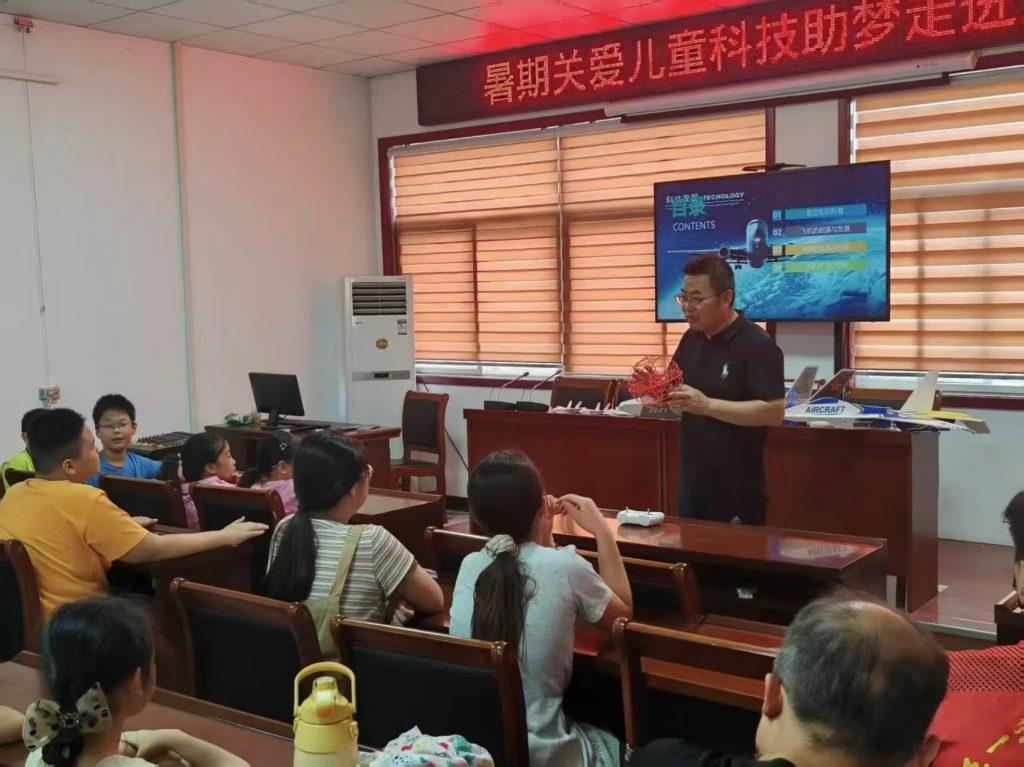
Looking ahead, the future of drone aerial photography in production hinges on addressing these challenges through systemic improvements. First and foremost, establishing uniform drone training pathways is essential. By investing in educational resources, standardizing curricula, and offering affordable certifications, we can elevate the profession. Imagine a scenario where every operator undergoes a certified program covering flight mechanics, legal compliance, and cinematic techniques. Such initiatives would reduce “black flights” (unauthorized operations) and enhance overall safety. The impact of training on accident reduction can be quantified as: $$ \Delta A = A_0 – A_t = k \times N \times (1 – e^{-\alpha T}) $$ where \( \Delta A \) is the decrease in accidents, \( A_0 \) is the initial accident rate, \( A_t \) is the rate after training, \( k \) is a constant, \( N \) is the number of trainees, \( \alpha \) is the training effectiveness coefficient, and \( T \) is the training duration.
Second, refining laws and management systems is crucial. Media organizations have unique needs, such as rapid response in news gathering. Regulations should differentiate between recreational and professional use, simplifying approval processes for accredited entities. For example, fast-track permits for licensed crews covering emergencies would balance safety with operational flexibility. This requires collaboration between industry stakeholders and policymakers to draft tailored guidelines that support innovation while mitigating risks.
Third, developing robust insurance mechanisms is vital. Although drone insurance exists, high premiums and complex claims processes deter uptake. A mandatory insurance scheme, similar to auto insurance, could provide a safety net. The premium could be calculated based on risk assessment: $$ P_i = B \times (1 + R_s) \times (1 – D_c) $$ where \( P_i \) is the insurance premium, \( B \) is a base rate, \( R_s \) is the risk score (derived from operator’s drone training level and flight history), and \( D_c \) is a discount for continuous training. This incentivizes ongoing education and reduces financial burdens.
Finally, practitioners must commit to self-improvement. This involves both theoretical knowledge and hands-on practice. Through structured drone training, individuals can master flight controls, safety protocols, and shooting techniques. For instance, pre-flight planning—such as route mapping and angle selection—becomes second nature with experience. The competency growth curve can be modeled as: $$ C = C_{\text{max}} \left(1 – e^{-\beta t}\right) $$ where \( C \) is competency, \( C_{\text{max}} \) is maximum potential, \( \beta \) is the learning rate from training, and \( t \) is time spent in practice. Regular drone training sessions accelerate this curve, ensuring operators stay adept at capturing stable, meaningful footage even under constraints like limited battery life.
In news production specifically, drones have become indispensable for covering events like protests, sports matches, or environmental changes. The ability to deploy quickly and capture wide-angle views enhances storytelling depth. However, this demands specialized drone training that addresses ethical considerations, such as privacy laws and sensitive content handling. Simulations and scenario-based drills can prepare operators for high-pressure situations, fostering resilience and decision-making skills.
To illustrate the cumulative benefits of these advancements, consider the following table summarizing key metrics before and after implementing comprehensive reforms centered on drone training:
| Metric | Current State (Without Standardized Training) | Future State (With Enhanced Training) | Improvement (%) |
|---|---|---|---|
| Accident Rate | 15 incidents per 1,000 flights | 3 incidents per 1,000 flights | 80 |
| Production Time | 10 hours per project | 6 hours per project | 40 |
| Cost per Shoot | $5,000 | $2,500 | 50 |
| Operator Certification | 40% certified | 90% certified | 125 |
| Content Quality Score | 6.5/10 | 8.5/10 | 30 |
The integration of drones into film and news production is not just a technological shift but a cultural one. It demands a holistic approach where innovation is balanced with responsibility. As I reflect on my experiences, I believe that the cornerstone of this evolution is accessible, high-quality drone training. By fostering a community of skilled professionals, we can unlock the full potential of aerial photography while minimizing its pitfalls. The journey ahead involves continuous learning, adaptation, and collaboration—a path that will ultimately elevate visual media to new heights.
In conclusion, drone aerial photography has irrevocably changed the landscape of production, offering creative freedom, efficiency, and cost savings. Yet, its sustainability depends on addressing human and regulatory factors. Through standardized drone training, improved laws, and proactive insurance, we can harness this technology responsibly. As practitioners, we must embrace education and ethics, ensuring that every flight contributes to compelling, safe, and innovative storytelling. The future is bright, but it requires a collective commitment to excellence—one where drone training is not an option but a fundamental requirement for progress.