
The rapid proliferation of civilian drones, once a niche technology, has fundamentally transformed numerous industries and hobbies. Originally confined to military applications, these unmanned aerial systems (UAS) have become ubiquitous in sectors ranging from aerial cinematography and precision agriculture to infrastructure inspection and emergency response. This democratization of flight, powered by advancements in radio control and autonomous program control technologies, has ushered in an era of unprecedented convenience and capability. However, the very accessibility and versatility that fuel the growth of civilian drones also present significant regulatory and safety challenges. The phenomenon of “black flights”—unauthorized or unregulated operations—has escalated, leading to grave concerns over airspace security, privacy infringements, and public safety. This article explores the current landscape, dissects the multifaceted problems, and delves into the dual-pronged approach of legal regulation and technical countermeasures essential for the safe integration of civilian drones into our national airspace.
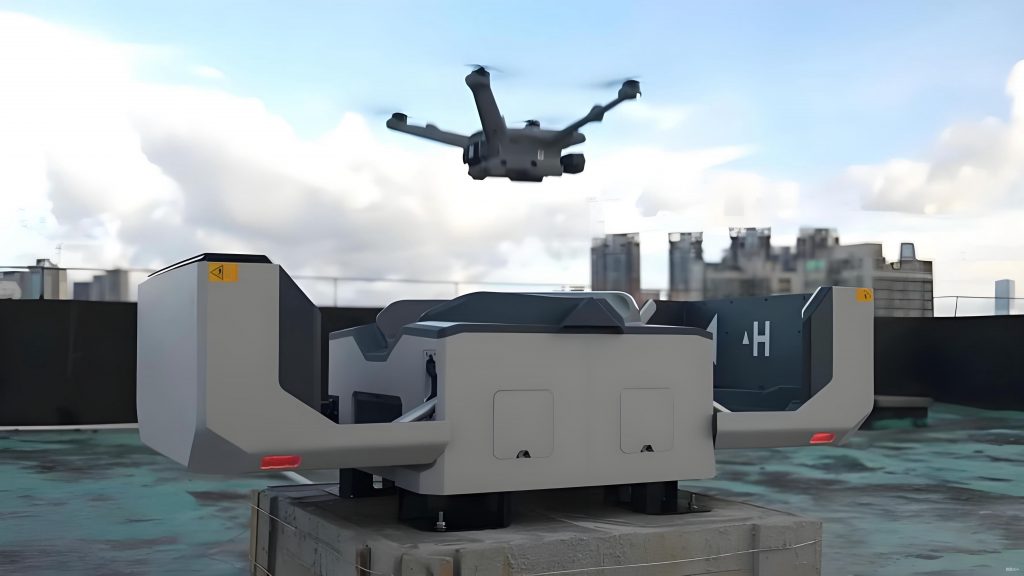
The development status of civilian drones is marked by explosive growth and diversification. The market is saturated with products from established manufacturers like DJI, alongside countless改装 (modified) units and hobbyist-built models. This diversity, while fostering innovation, has led to a critical tripartite of safety and security issues that demand immediate and structured governance. First, the product quality and safety of many commercially available or modified civilian drones are not subject to rigorous oversight. Unlike their manned aviation counterparts, a significant portion of these systems operate without certified airworthiness standards, posing inherent risks to people and property on the ground. Second, and perhaps most alarmingly, is the severe disruption to aviation order. Incidents where civilian drones have strayed into approach paths of major airports, causing delays, diversions, and near-misses, underscore a tangible threat to national aviation safety. The potential for a catastrophic collision is a risk that cannot be understated. Third, the potential for criminal and malicious activities is a growing concern. The same features that make civilian drones useful—stealth, payload capacity, and remote operation—can be exploited for smuggling, espionage, unauthorized surveillance, or even as platforms for harmful acts, posing direct threats to national security and public order.
Addressing these challenges requires a robust, multi-agency framework. The cornerstone of this framework is administrative and legal regulation. In China, the regulatory evolution is culminating in the draft “Interim Regulations on the Flight Management of Unmanned Aircraft,” which proposes a comprehensive system. This system is fundamentally built upon a philosophy of categorical management based on risk. The draft regulations classify civilian drones into five categories—Micro, Light, Small, Medium, and Large—primarily based on weight, which serves as a proxy for potential kinetic energy and operational complexity. The regulatory burden is scaled accordingly.
| Category | Maximum Take-off Weight | Common Examples | Key Regulatory Requirements |
|---|---|---|---|
| Micro | ≤ 250 grams | Ultra-light toy drones | Basic operational rules; No registration/pilot license required for most activities. |
| Light | 250g < Weight ≤ 4kg | DJI Mavic series, Phantom series | Real-name registration; Pilot age ≥14; Training required for beyond visual line of sight (BVLOS) or complex operations. |
| Small | 4kg < Weight ≤ 15kg | DJI Matrice series (commercial) | Registration; Pilot license required; Flight plan approval for controlled airspace. |
| Medium | 15kg < Weight ≤ 116kg | Large agricultural spraying drones | Airworthiness certification; Licensed pilot; Mandatory insurance; Flight plan approval. |
| Large | > 116kg | Heavy-lift cargo or industrial drones | Full airworthiness certification; Strict pilot licensing; Comprehensive operational approval. |
The regulatory matrix extends beyond mere classification. It encompasses a full lifecycle governance model:
- Registration and Identification: Mandating unique digital identification codes and real-name registration for most civilian drones to ensure traceability.
- Pilot Qualification: Implementing a tiered pilot licensing system aligned with the drone categories, specifying minimum age requirements and mandated training curricula covering aviation theory, meteorology, and emergency procedures.
- Airspace Management: Defining clear “No-Fly Zones” (NFZs) around critical infrastructure like airports, government buildings, and military installations, while establishing “Flexible Use Zones” for compliant operations. The concept of a UAS Traffic Management (UTM) system is implicit, requiring pre-flight authorization for operations in certain types of airspace.
- Operational Rules: Enforcing rules on visual line of sight (VLOS), altitude ceilings (e.g., 120 meters above ground level in many jurisdictions), and right-of-way protocols relative to manned aircraft.
However, lawbooks alone cannot physically intercept a rogue drone. This is where technical governance and countermeasures become indispensable, forming the second critical pillar of effective drone management. Radio spectrum management is the bedrock. Civilian drones rely on a suite of radio links: command and control (C2), payload communication (e.g., video downlink), and Global Navigation Satellite System (GNSS) signals. Regulating these frequencies is crucial. For instance, the allocation of specific, dedicated frequency bands (e.g., 840.5-845MHz, 1430-1444MHz) for UAS C2 links helps prevent interference and ensures control link integrity. The ubiquitous use of public bands like 2.4 GHz and 5.8 GHz for Wi-Fi-based video transmission, however, remains a congestion and security challenge.
The technical pipeline for countering malicious or unauthorized civilian drones—often termed “detect, identify, track, and mitigate”—leverages advanced radio frequency (RF) techniques. The first step is Detection and Identification. A drone in flight emits characteristic RF signatures from its C2 and video transmitters. By deploying a network of RF sensors, these emissions can be captured. Signal intelligence (SIGINT) techniques, including analysis of modulation patterns, pulse repetition intervals, and other specific emitter characteristics (SEC), allow for the identification of the drone model and sometimes its link state. This process can be modeled as a signal detection problem. The probability of detection ($P_d$) in a noisy environment is a function of the signal-to-noise ratio (SNR):
$$ P_d = Q\left(\frac{\lambda – \mu_1}{\sigma_1}\right) $$
where $Q$ is the complementary distribution function of the standard normal distribution, $\lambda$ is the detection threshold, and $\mu_1$ and $\sigma_1$ are the mean and standard deviation of the signal-plus-noise distribution, respectively.
Once detected, Localization and Tracking are achieved through Radio Direction Finding (RDF) and Time Difference of Arrival (TDoA) techniques. An RDF system measures the direction of arrival (DoA) of the drone’s RF signal. Using two or more spatially separated sensors, the drone’s position ($x_d, y_d$) can be estimated through triangulation. If the bearing from sensor $i$ is $\theta_i$, its location is ($x_i, y_i$), the estimated drone position can be found by solving the system of equations derived from the line-of-sight vectors:
$$ \tan(\theta_i) = \frac{y_d – y_i}{x_d – x_i} \quad \text{for } i = 1, 2, … $$
More precise geolocation, especially for the often-co-located pilot, uses TDoA. If a signal is received at Sensor 1 and Sensor 2 at times $t_1$ and $t_2$, the range difference $\Delta r$ is:
$$ \Delta r = c \cdot (t_2 – t_1) = \sqrt{(x_d – x_2)^2 + (y_d – y_2)^2} – \sqrt{(x_d – x_1)^2 + (y_d – y_1)^2} $$
where $c$ is the speed of light. Multiple such hyperbolas from several sensor pairs intersect at the drone’s location.
The final step is Neutralization or Mitigation. When interception is necessary, authorized entities may employ Radio Frequency Countermeasures (RFCM). These systems work by transmitting powerful jamming signals on the specific frequencies used by the target civilian drone. The primary targets are the GNSS band (e.g., GPS L1: 1575.42 MHz) and the C2 band (e.g., 2.4 GHz). Jamming the GNSS signal disrupts the drone’s positioning ability, typically triggering a “Return-to-Home” (RTH) failsafe or causing it to hover in place. Jamming the C2 link severs the pilot’s control, also triggering a pre-programmed failsafe. The effective jamming range ($R_j$) can be approximated by the one-way radar equation adapted for jamming:
$$ R_j = \sqrt{\frac{P_j G_j}{P_r G_r} \cdot \frac{G’_r \lambda^2}{(4\pi)^2 L}} $$
where:
$P_j$ = Jammer power,
$G_j$ = Jammer antenna gain towards drone,
$P_r$ = Drone receiver power (threshold),
$G_r$ = Drone receiver antenna gain,
$G’_r$ = Drone receiver antenna gain towards jammer,
$\lambda$ = Wavelength,
$L$ = System loss factor.
More sophisticated techniques include Spoofing, where false but stronger GNSS or C2 signals are broadcast to take over control and command the drone to land safely at a designated location. The technical landscape of counter-drone systems is summarized below:
| Function | Technology | Principle | Key Advantages | Limitations/Challenges |
|---|---|---|---|---|
| Detection & ID | RF Spectrum Analysis | Monitors for known drone communication signatures (C2, Video). | Passive, long-range, can identify model type. | Less effective against pre-programmed drones (no C2 emission). |
| Radar (Primary) | Detects physical object based on radio wave reflection. | All-weather, good range, detects non-emitting drones. | Can struggle with small, low-RCS targets; clutter from birds. | |
| Localization | TDoA / Doppler-based DF | Calculates position from signal arrival time differences at multiple sensors. | High accuracy for both drone and pilot location. | Requires synchronized, dense sensor network. |
| Mitigation | GNSS Jamming | Overloads drone’s GPS receiver with noise. | Triggers drone failsafe (hover/land/RTH). | Collateral damage to nearby GNSS devices; illegal for civilian use. |
| C2 Link Jamming | Blocks control signal between pilot and drone. | Effective for most consumer drones. | Needs to target specific frequency; collateral interference. | |
| GNSS/Signal Spoofing | Broadcasts forged control or navigation commands. | Can facilitate controlled capture; less collateral RF noise. | Technically complex; requires precise protocol knowledge. | |
| Prevention | Geofencing (Software) | Uses GNSS to create virtual barriers; drone refuses to fly into NFZ. | Proactive, built-in safety feature. | Can be hacked or disabled on modified drones. |
Reflecting on the proposed regulatory framework and the arsenal of technical tools, several areas merit further refinement and strategic thought. Firstly, regarding the draft regulations, the all-encompassing title might benefit from specificity. Given that the majority of articulated rules pertain explicitly to civilian drones, with state-owned systems mandated to follow separate protocols, a title such as “Interim Regulations on the Flight Management of Civilian Unmanned Aircraft” would provide clearer scope. Secondly, pilot age regulations should align comprehensively with legal concepts of capacity. While referencing criminal responsibility age is logical for violations, incorporating civil law concepts for operational liability could strengthen the framework. Lastly, the regulations must explicitly address the modification and after-market alteration of civilian drones. This includes not just software hacks to disable geofencing, but also physical modifications that alter aerodynamics, weight, or electromagnetic compatibility (EMC). Any added payload—be it a sensor, delivery mechanism, or other device—must undergo EMC testing to ensure it does not interfere with the drone’s own critical flight control systems, a risk governed by the equation for interference-to-noise ratio:
$$ I/N = \frac{P_{int} G_{int} G_{victim}(\lambda)}{(4\pi R)^2 k T B N} $$
where a high $I/N$ indicates potential for harmful interference from an onboard device ($P_{int}$) to the victim receiver on the drone itself.
From a technical enforcement perspective, the ultimate goal should be a layered, integrated system. Reactive counter-drone measures, while necessary for defense, are a last resort with inherent collateral risks. The proactive approach is vastly superior: building a national, real-time UAS Traffic Management (UTM) ecosystem. This system would require all compliant civilian drones to broadcast a standardized digital identity and telemetry (e.g., using Remote ID protocols) via unmodifiable hardware. A network of ground receivers and possibly cellular links would feed this data into a central platform, providing air traffic controllers and security agencies with a real-time picture of all authorized drone operations. Non-cooperative drones without a valid Remote ID signal would be immediately apparent, triggering targeted investigation and, if necessary, localized kinetic or RF intervention. This shifts the paradigm from widespread monitoring and jamming to precise enforcement based on cooperative awareness.
In conclusion, the governance of civilian drones presents a complex, interdisciplinary challenge sitting at the intersection of law, public policy, aviation safety, and radio engineering. The path forward is not a choice between regulation and technology, but a deliberate fusion of both. A clear, risk-based legal framework establishes the rules of the road—defining who can fly, what they can fly, where, and how. Simultaneously, advanced radio spectrum management, detection networks, and integrated UTM systems provide the technological backbone to monitor compliance, ensure safety, and decisively respond to threats. Only through this synchronized application of administrative law and engineering prowess can we mitigate the risks of “black flights,” harness the tremendous economic and social benefits of civilian drones, and safely guide their evolution into a mature and responsible component of the global transportation ecosystem.