
The proliferation and battlefield success of military drones have fundamentally reshaped modern warfare paradigms, ushering in an era dominated by long-range, intelligent, and information-centric weaponry. As an analyst observing this technological revolution, I see the shift towards unmanned systems as irreversible. Compared to their manned counterparts, military drones offer compelling advantages: reduced physical footprint, lower acquisition and operational costs, operational flexibility, diminished logistical demands, and enhanced survivability in contested environments. These attributes have cemented their status as indispensable assets for militaries worldwide, driving relentless research and development. Based on operational lessons learned and anticipated future requirements, the evolution of military drones is progressing along several distinct, interconnected vectors.
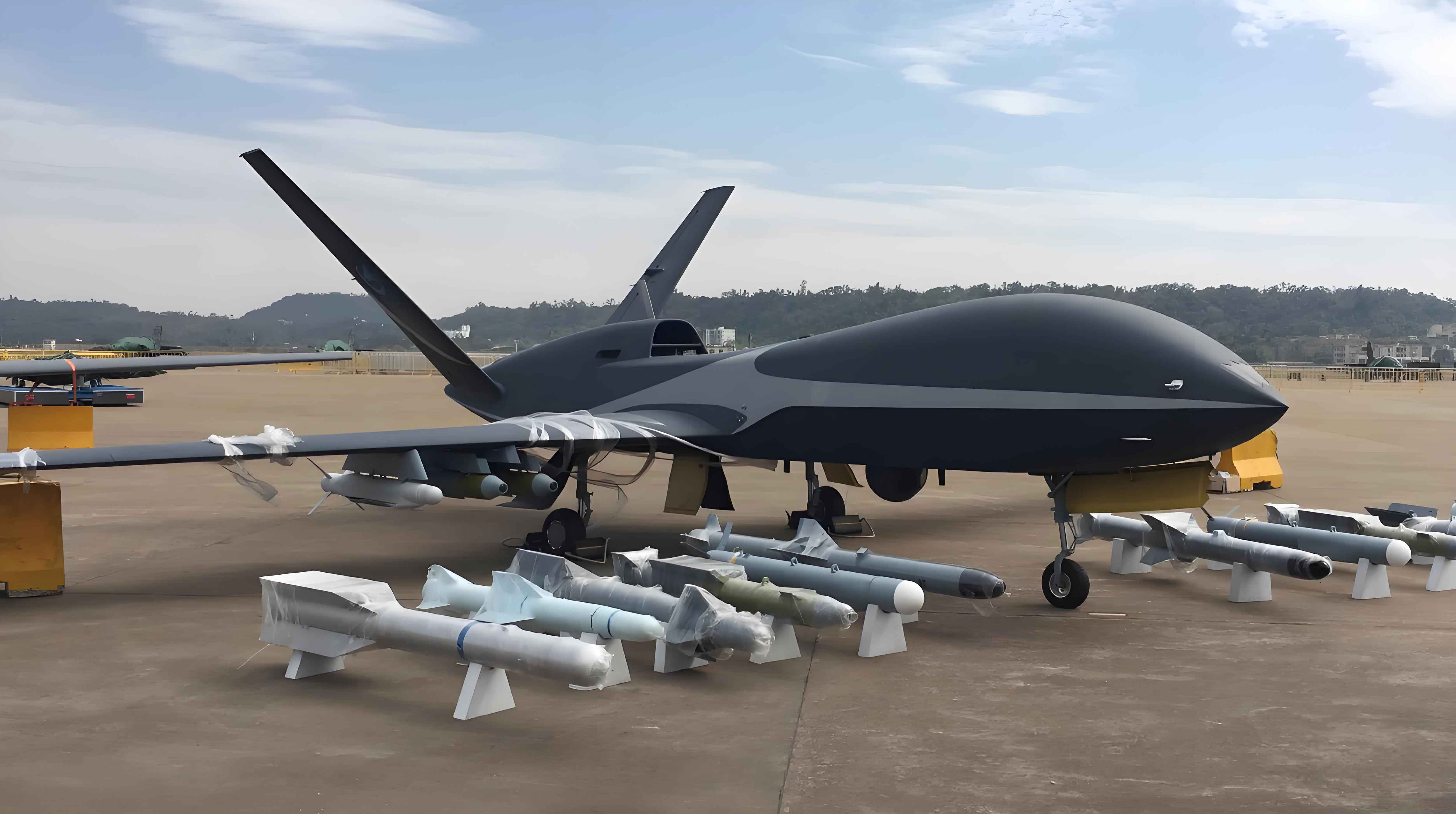
At its core, a military drone is an unmanned aerial system comprising an airframe, propulsion, flight control systems, payload, and launch/recovery mechanisms. Their inherent strengths—simplicity, endurance, low observability, and the ability to perform high-risk missions—have been validated in recent conflicts. Looking ahead, I anticipate the development of military drones to be characterized by the following key trends.
1. Pushing the Boundaries: Endurance, Speed, and Altitude
The strategic value of persistence in the battlespace cannot be overstated. High-Altitude Long-Endurance (HALE) military drones provide unparalleled situational awareness and area coverage. I believe operating above 20,000 meters will become a standard benchmark for strategic reconnaissance platforms, integrating them into a broader layered surveillance network. The pursuit of extended flight times, often measured in days rather than hours, is a primary focus. Concurrently, the emergence of sophisticated counter-drone systems necessitates advancements in speed and agility. A faster military drone significantly reduces its engagement window for ground-based air defenses and interceptors.
This drive leads to a performance equation I often consider for next-generation military drones, balancing endurance (E), speed (V), and payload (P):
$$ \text{Figure of Merit (FoM)} = k \cdot \frac{E \cdot V}{P} $$
where \( k \) represents a platform-specific constant accounting for stealth and sensor suite efficiency. The goal is to maximize this FoM. For instance, the pursuit of a high-speed, long-endurance rotary-wing military drone capable of both dash speeds exceeding 740 km/h and >24-hour loitering with hover capability represents a complex optimization of this equation.
| Drone Class | Typical Endurance (Hours) | Typical Cruise Speed (km/h) | Operating Altitude (m) | Primary Mission |
|---|---|---|---|---|
| Mini/Micro | 1-2 | 30-80 | < 1,000 | Tactical Reconnaissance |
| Medium Altitude Long Endurance (MALE) | 24-40 | 200-370 | 5,000-15,000 | Strike/Reconnaissance |
| High Altitude Long Endurance (HALE) | >30 (often 40+) | 570-630 | >15,000 (up to 20,000) | Strategic ISR |
| Unmanned Combat Aerial Vehicle (UCAV) | 6-15 | 900-1,200+ | Varied | Penetrating Strike/SEAD |
2. The Vanishing Act: Stealth, Miniaturization, and Survivability
Survivability is paramount. The trend for military drones is towards comprehensive signature reduction across all spectra—radar, infrared (IR), visual, acoustic, and electromagnetic. This involves multi-faceted stealth engineering. Airframe design utilizes radar-absorbent structures and materials (RAM), with extensive use of composites like carbon fiber. Engine inlets and exhausts are carefully shaped and shielded. For IR suppression, techniques include specialized low-emissivity paints and cooling systems for engine surfaces.
The radar cross-section (RCS) reduction for a military drone can be modeled as a function of its geometry and material properties:
$$ \sigma_{\text{reduced}} = \sigma_{\text{baseline}} \cdot \prod_{i=1}^{n} A_i $$
where \( \sigma_{\text{baseline}} \) is the inherent RCS, and \( A_i \) are attenuation factors for each applied technology (shape shaping \(A_s\), RAM coating \(A_c\), etc.), each \( A_i < 1 \). Reports suggest such integrations can reduce detection range by 40-50%.
Parallel to stealth is the push towards miniaturization. Micro- and Nano-drones, with wingspans under 15cm, represent a disruptive shift. These platforms, resembling birds or insects, offer unprecedented covert surveillance capabilities in complex urban and indoor environments. Their development hinges on breakthroughs in micro-electromechanical systems (MEMS), low-Reynolds-number aerodynamics, and ultra-compact sensor and communication packages. While challenging for detection, their operational use in high-threat environments is still evolving.
3. The Rise of the Autonomous Hunter: Artificial Intelligence and Weaponization
The current paradigm of remote piloting, while effective, has limitations in responsiveness and operator cognitive load. The future lies in increasing the autonomy and intelligence of the military drone. I define drone intelligence as the system’s capacity to make informed decisions based on sensor fusion, pre-programmed rules, and real-time learning. This enables not just pre-planned mission execution but also dynamic reaction to unforeseen threats or opportunities.
The core technical hurdle is developing robust perception, decision-making, and control algorithms. An intelligent military drone must be able to:
- Perceive and classify targets in cluttered environments.
- Assess tactical situations and predict outcomes.
- Plan and re-plan optimal flight paths and engagement sequences.
- Execute maneuvers at the limits of the airframe’s performance envelope.
This progression is directly linked to weaponization. Armed military drones have transitioned from concept to cornerstone, with platforms like the MQ-9 Reaper carrying laser-guided missiles and GPS-guided bombs. The logical next step is the dedicated Unmanned Combat Aerial Vehicle (UCAV), designed from inception for high-threat penetration and precision strike, potentially supplanting manned aircraft in certain mission profiles. The key enabling formula here involves the decision-making loop, often described by the OODA (Observe, Orient, Decide, Act) cycle. An autonomous military drone aims to minimize this cycle time (T_OODA):
$$ T_{\text{OODA (Drone)}} = t_{\text{sensor}} + t_{\text{process}} + t_{\text{decide}} + t_{\text{actuate}} $$
The goal is to reduce each component, especially \( t_{\text{decide}} \) through AI, to a point where it surpasses a human-piloted adversary’s OODA loop speed.
4. The Networked Sensor: System Integration, Reliability, and Data Links
Modern military drones are evolving from single-role platforms into integrated, multi-sensor nodes within a larger network-centric architecture. Sensor fusion is critical. A single military drone may now carry an electro-optical/infrared (EO/IR) turret, a synthetic aperture radar (SAR), signals intelligence (SIGINT) packages, and even laser designators, with data fused onboard or at ground stations to create a comprehensive picture.
Reliable, high-bandwidth, and resilient communication is the lifeline. Military drones typically employ a dual-link system:
- Line-of-Sight (LOS) Link: A C or L-band datalink for direct control and high-volume data transfer within a ~200 km radius.
- Beyond-Line-of-Sight (BLOS) Link: A satellite communications (SATCOM) link (e.g., Ku-band) for global control and persistent data relay, enabling true long-range operations.
The required data rate \( R \) for a sensor suite can be approximated by summing the rates of individual sensors:
$$ R_{\text{total}} = R_{\text{EO/IR Video}} + R_{\text{SAR Data}} + R_{\text{SIGINT}} + R_{\text{Telemetry}} $$
Ensuring this data flow in contested electronic environments is a major area of development. Furthermore, reliability is being addressed through aviation-grade components, robust system design with redundancy (triple or quadruple for critical systems like flight control), and advanced health monitoring using virtual systems that can simulate and compensate for failing components in real-time.
| Redundancy/Reliability Feature | Implementation in Modern Military Drones | Impact on Mission Availability |
|---|---|---|
| Multiple Flight Control Computers | Triple or Quadruple redundant systems with voting logic. | Prevents single-point failure leading to loss of airframe. |
| Dual/Redundant Data Links | Simultaneous LOS and SATCOM; auto-switching upon jamming. | Maintains command and control (C2) continuity. |
| Automated Diagnostic & Virtual Systems | Onboard software models predicting component failure and adjusting parameters. | Allows mission completion or safe return despite partial failures. |
| Precision Navigation Redundancy | GPS, Inertial Navigation System (INS), and vision-based navigation fusion. | Ensures operational capability in GPS-denied environments. |
5. The Electronic Warrior: Dominance in the Spectrum
The electromagnetic spectrum is a critical domain, and military drones are becoming key players in electronic warfare (EW). Their endurance and relative expendability make them ideal platforms for persistent electronic attack, support, and protection. I foresee several specialized roles:
1. Anti-Radiation Drones: These loitering munitions, like the Harpy, autonomously detect, classify, and engage emitting radar systems. Their effectiveness stems from persistence and the challenge they pose to traditional air defenses.
2. Decoy Drones: Used to saturate enemy air defenses, reveal radar locations by provoking emissions, or mimic the signature of high-value aircraft to draw fire. The effectiveness of a decoy swarm can be related to the probability of saturating a defense system with \(N\) interceptors against \(M\) decoys and \(K\) real targets:
$$ P_{\text{saturation}} = 1 – \left( \frac{\binom{N}{K}}{\binom{M+K}{K}} \right) $$
where a larger \(M\) (number of decoy drones) dramatically increases the survival probability of the real assets.
3. Electronic Attack (EA) Drones: Dedicated platforms equipped with powerful jammers to suppress enemy air defenses (SEAD), communications, or other critical systems over extended periods.
4. Cyber-Electronic Drones: The next frontier involves military drones capable of launching cyber-attacks or injecting malicious code into enemy networks via proximity or payload deployment, blurring the lines between physical and digital warfare.
6. Modularity and Manned-Unmanned Teaming: Expanding the Operational Envelope
Finally, the evolution of military drones is characterized by functional expansion and role fusion. Modular payload design allows a single platform type to switch between ISR, strike, electronic warfare, or communications relay missions. This adaptability maximizes utility and simplifies logistics.
Perhaps the most transformative trend is Manned-Unmanned Teaming (MUM-T). Here, a manned aircraft (e.g., a fighter jet or helicopter) acts as a command node for a “loyal wingman” or a swarm of military drones. The manned platform provides high-level decision-making and situational awareness, while the drones extend sensor reach, deliver munitions, or absorb risk. This collaborative combat formula leverages the strengths of both:
$$ \text{MUM-T Effectiveness} = C_{\text{human}} \cdot (A_{\text{manned}} + \sum_{i=1}^{n} S_i \cdot A_{\text{drone}_i}) $$
where \(C_{\text{human}}\) is the command and judgment factor of the human operator, \(A\) represents the capabilities of each platform, and \(S_i\) is the network synergy coefficient for each drone in the team.
Looking further, the concept of optionally-manned or dual-role airframes is being explored. An aircraft could be flown by a pilot for certain missions and operate as a fully autonomous military drone for others, offering unprecedented flexibility. The development and fielding of such systems will fundamentally alter aerial combat tactics and force structure.
In conclusion, the trajectory of military drone development is not linear but multi-dimensional. It is a simultaneous push towards greater endurance, lower observability, higher intelligence, deeper networking, broader electronic capabilities, and seamless integration with manned forces. Each advancement in one area often enables or necessitates progress in another. As these trends converge, the future battlespace will be increasingly populated by intelligent, collaborative, and resilient unmanned systems, making the military drone not just a supporting tool, but a central pillar of 21st-century military power.