
As an observer deeply entrenched in the realm of defense technology, I have witnessed the transformative role of unmanned aerial vehicles (UAVs) in modern warfare. Since the inaugural use of the Firebee drone in the Vietnam War in 1964, military UAVs have evolved from mere reconnaissance tools to integral components of combat systems, executing missions ranging from surveillance and target tracking to fire support and electronic warfare. The global market for military UAVs, valued at approximately $2.8 billion, is projected to surge to $9.4 billion by 2025, with the United States leading in research, production, and deployment. In this analysis, I delve into the development backdrop, current status, technological challenges, and future trends of military UAVs, emphasizing their growing significance in the U.S. military’s operational framework.
The impetus behind the rapid advancement of military UAVs stems from a confluence of factors. Firstly, the escalating costs of weapon systems, as illustrated by Augustine’s Law, highlight the tension between exponential growth in aircraft expenses and linear increases in defense budgets. For instance, the development of the F-22 fighter jet cost $20 billion, while the B-2 bomber required $24.6 billion. This financial strain has driven the U.S. military toward cost-effective alternatives, with military UAVs offering a compelling solution. Their lower production costs—ranging from tens of thousands to millions of dollars—coupled with reduced risk of personnel casualties, make them ideal for high-altitude missions where manned aircraft face harsh environmental constraints. Secondly, the shift toward asymmetric warfare, particularly against terrorist threats, has necessitated adaptable and persistent intelligence-gathering capabilities. Military UAVs excel in complex battlefields, providing continuous, all-weather surveillance that complements traditional methods like satellites and manned reconnaissance planes. Moreover, the rise of swarm tactics demands scalable unmanned systems that can protect assets and deliver precise strikes. Lastly, the booming civilian UAV industry, fueled by advancements in computing, navigation, and aerospace technologies, has spilled over into military applications. Companies like Google and Intel have invested heavily, driving innovation that the military can leverage. For example, the adaptation of the civilian Ultransport 496 into the Vigilante 502 for biochemical detection showcases how commercial drones can be repurposed to meet defense needs, saving on research and production costs.
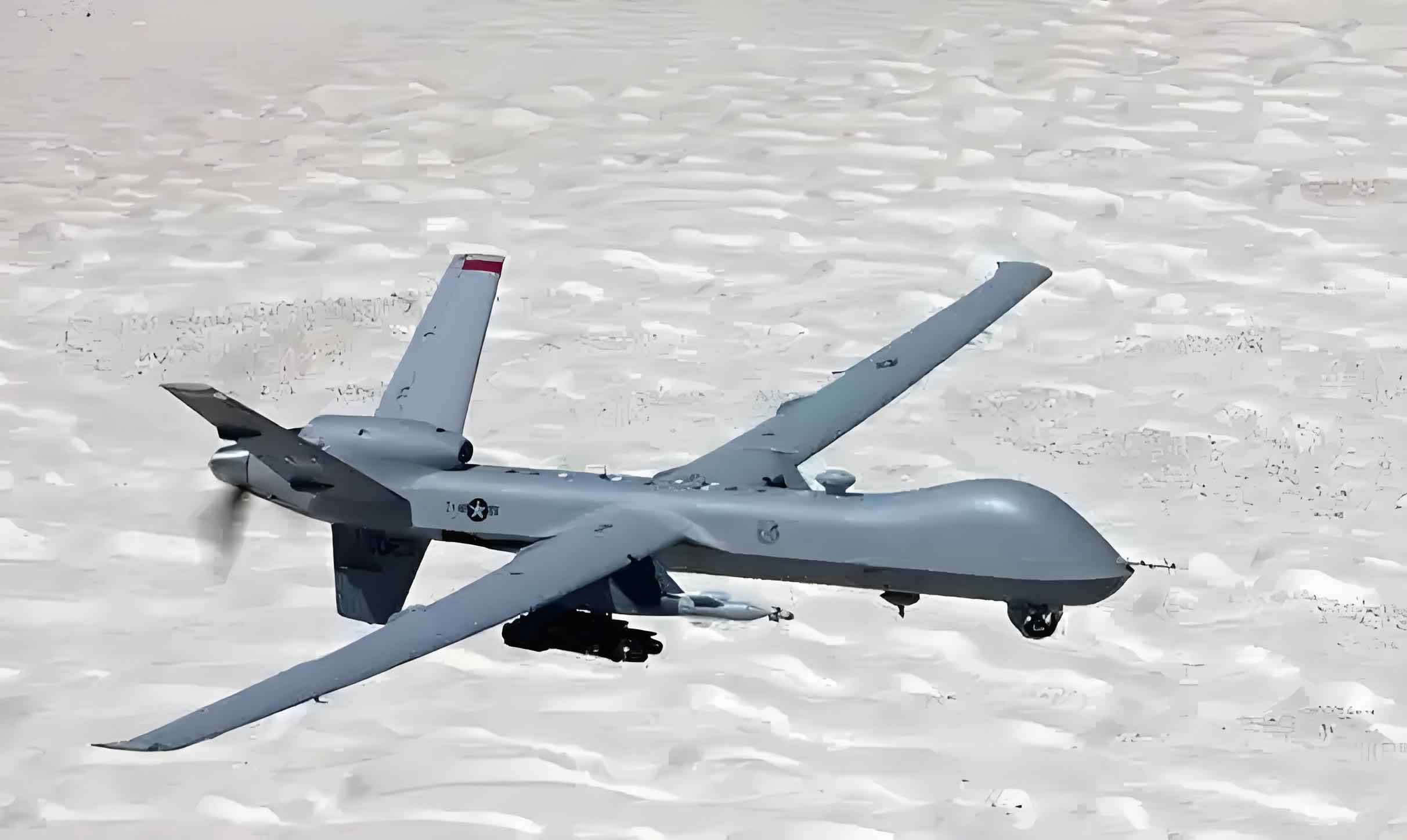
In assessing the current landscape of military UAVs, I note that the U.S. operates a diverse fleet, categorized broadly into micro-small and large-medium types. These systems have expanded beyond basic reconnaissance to encompass electronic attack, strike missions, and network disruption. The most prevalent models include the RQ-11 Raven, RQ-12A Wasp, RQ-20 Puma, and RQ-6A Guardian among micro-small UAVs, and the MQ-1C Gray Eagle, MQ-9 Reaper, RQ-7 Shadow, and RQ-4 Global Hawk among large-medium UAVs. To encapsulate their capabilities, I present a detailed table summarizing key performance parameters, which underscores the versatility and technological sophistication of these military UAVs.
| Model | Quantity in Service | Operating Altitude (m) | Cruise Speed (km/h) | Weight (kg) | Endurance (h) | Propulsion System |
|---|---|---|---|---|---|---|
| RQ-11 Raven | 7,362 | 4,572 | 96 | 1.9 | 1.5 | Simple Electric Motor |
| RQ-12A Wasp | 990 | 1,000 | 65 | 0.43 | 1.5 | Lithium-ion Battery |
| RQ-20 Puma | 1,137 | 7,000 | 83 | 5.6 | 2 | Dual-blade Propeller Engine |
| RQ-6A Guardian | 306 | 5,000 | 130 | 8.39 | 2 | Dual Piston Engine |
| MQ-1C Gray Eagle | 246 | 7,260 | 280 | 1,633 | 36 | Heavy Fuel Engine |
| MQ-9 Reaper | 126 | 15,000 | 460 | 2,223 | 15 | Turboprop Engine |
| RQ-7 Shadow | 491 | 4,570 | 130 | 84 | 7 | Rotary Engine |
| RQ-4 Global Hawk | 33 | 18,000 | 635 | 6,781 | 42 | Turbofan Engine |
Beyond these operational systems, the U.S. is actively developing next-generation military UAVs to address emerging threats and enhance capabilities. The MQ-8C Fire Scout, an upgrade of the MQ-8B, boasts doubled endurance and tripled payload capacity, making it a formidable vertical take-off and landing UAV for naval operations. It integrates electro-optical/infrared sensors, synthetic aperture radar, and can carry Hellfire missiles and Hydra rockets. The MQ-9B Guardian, derived from the MQ-9 Reaper, offers extended endurance of 40 hours and a patrol radius over 7,000 km, significantly boosting maritime and aerial surveillance. With a budget allocation of $1.2 billion, this military UAV is poised to augment the U.S. military’s situational awareness. Perhaps most groundbreaking is the X-47B, a jet-powered, carrier-based UAV with stealth features akin to the B-2 bomber. Its 1,500 km combat radius and autonomous aerial refueling capability enable prolonged missions deep inland, redefining naval aviation strategies. These advancements reflect a concerted effort to push the boundaries of what military UAVs can achieve.
However, despite their proliferation, military UAVs face several technological bottlenecks that hinder their full potential. Interoperability remains a critical issue; many systems operate as closed architectures, limiting seamless coordination between different UAV platforms and with manned assets. This lack of integration prolongs deployment times and increases logistical burdens, as encapsulated in the formula for system efficiency: $$E = \frac{C}{T + L}$$ where \(E\) is efficiency, \(C\) is capability, \(T\) is integration time, and \(L\) is logistical cost. Reducing \(T\) and \(L\) through open standards is essential for enhancing the overall effectiveness of military UAV networks. Autonomy is another major challenge. Current military UAVs rely heavily on human operators, leading to a shortage of trained personnel—over 1,000 drone pilots are needed in the U.S. Air Force alone. Achieving higher autonomy through artificial intelligence (AI) and machine learning could mitigate this, but it raises ethical concerns, such as the high civilian casualty rate in drone strikes. The autonomy level \(A\) can be modeled as: $$A = f(I, D, E)$$ where \(I\) is intelligence input, \(D\) is decision-making algorithms, and \(E\) is environmental adaptability. Improving \(A\) requires substantial investment and robust verification methods to ensure trustworthiness.
Propulsion and power systems also lag behind operational demands. Most military UAVs use conventional internal combustion engines, batteries, or hybrid systems, which impose limitations on endurance and payload. For instance, the energy density \( \rho_E \) of current batteries is often insufficient for long-duration missions, as shown by: $$\rho_E = \frac{E}{m}$$ where \(E\) is energy storage and \(m\) is mass. Research into renewable energy sources, such as solar power, aims to increase \( \rho_E \) and reduce reliance on logistics. Projects by the U.S. Air Force Office of Scientific Research and the University of Michigan explore solar-powered military UAVs that could operate indefinitely in favorable conditions. Additionally, training methodologies are outdated, relying on hands-on practice that is costly and time-consuming. AI-driven simulators, like the ALPHA system, offer a solution by providing realistic training environments, but their integration into military programs is still nascent.
Looking ahead, the future trajectory of military UAVs is shaped by trends toward greater interoperability, enhanced autonomy, and optimized propulsion. Interoperability will be achieved through open system architectures that facilitate data sharing and modular upgrades. The U.S. Department of Defense’s emphasis on the Joint All-Domain Command and Control (JADC2) framework underscores this direction, aiming to connect sensors across all domains. For military UAVs, this means adopting common protocols that allow swarm operations, where multiple UAVs collaborate autonomously. The swarm coordination can be described by: $$S = \sum_{i=1}^{n} (UAV_i \cdot C_i)$$ where \(S\) is swarm effectiveness, \(UAV_i\) represents individual units, and \(C_i\) denotes communication links. Enhancing \(C_i\) through robust networks will enable scalable and resilient military UAV formations.
Autonomy will advance via AI breakthroughs, enabling military UAVs to perform complex tasks with minimal human intervention. Deep learning algorithms, such as convolutional neural networks (CNNs), will improve target recognition and decision-making. The autonomy progression can be expressed as: $$A_{future} = A_{current} + \Delta_{AI} + \Delta_{ML}$$ where \(\Delta_{AI}\) and \(\Delta_{ML}\) are increments from AI and machine learning, respectively. Ethical frameworks will need to evolve alongside, ensuring responsible use of autonomous military UAVs in combat. Moreover, propulsion systems will see innovations in energy harvesting and storage. Solar-powered military UAVs, for example, could leverage photovoltaic efficiency \(\eta_{PV}\) given by: $$\eta_{PV} = \frac{P_{out}}{P_{in}} \times 100\%$$ where \(P_{out}\) is electrical output and \(P_{in}\) is solar input. Advances in materials like perovskite solar cells may boost \(\eta_{PV}\), enabling longer missions. Hybrid-electric systems and fuel cells are also under exploration, promising higher energy densities and reduced emissions.
In conclusion, as I reflect on the evolution of military UAVs, it is evident that they have become indispensable assets in the U.S. military’s arsenal. From cost-effective alternatives to sophisticated swarm platforms, these systems address contemporary challenges in asymmetric warfare and resource constraints. The ongoing development of models like the MQ-8C, MQ-9B, and X-47B highlights a commitment to innovation, while addressing bottlenecks in interoperability, autonomy, and propulsion will unlock further potential. The future will likely witness military UAVs operating as fully integrated, intelligent nodes in a networked battlespace, amplifying combat effectiveness and reshaping defense strategies. As technology progresses, the synergy between human operators and autonomous military UAVs will define the next era of warfare, ensuring that these systems remain at the forefront of military modernization.